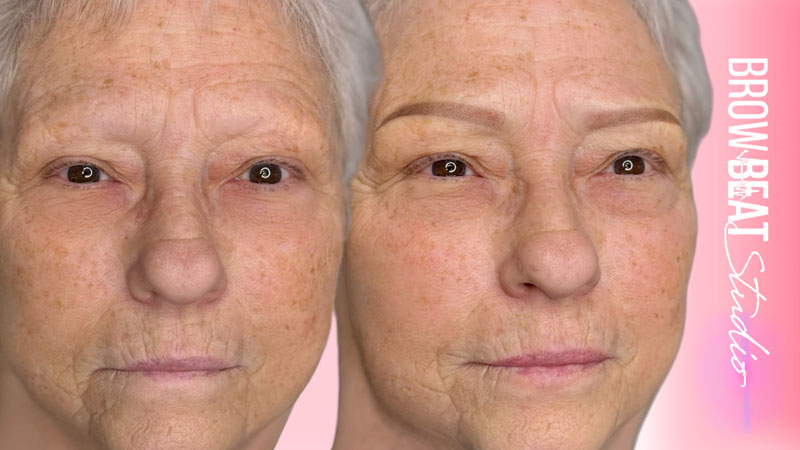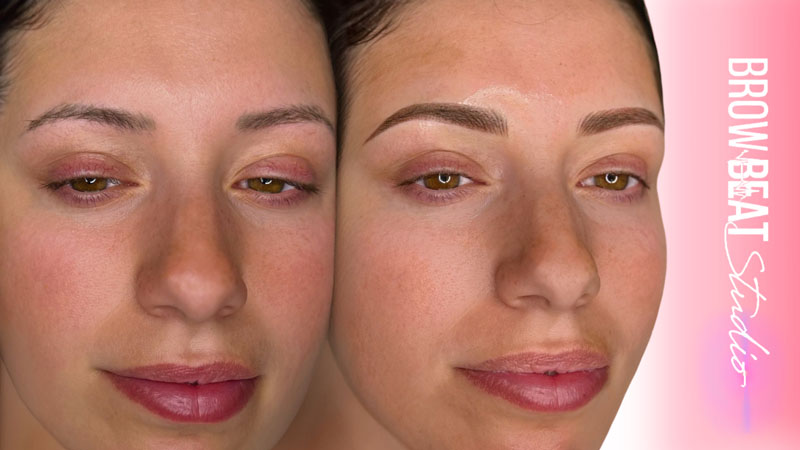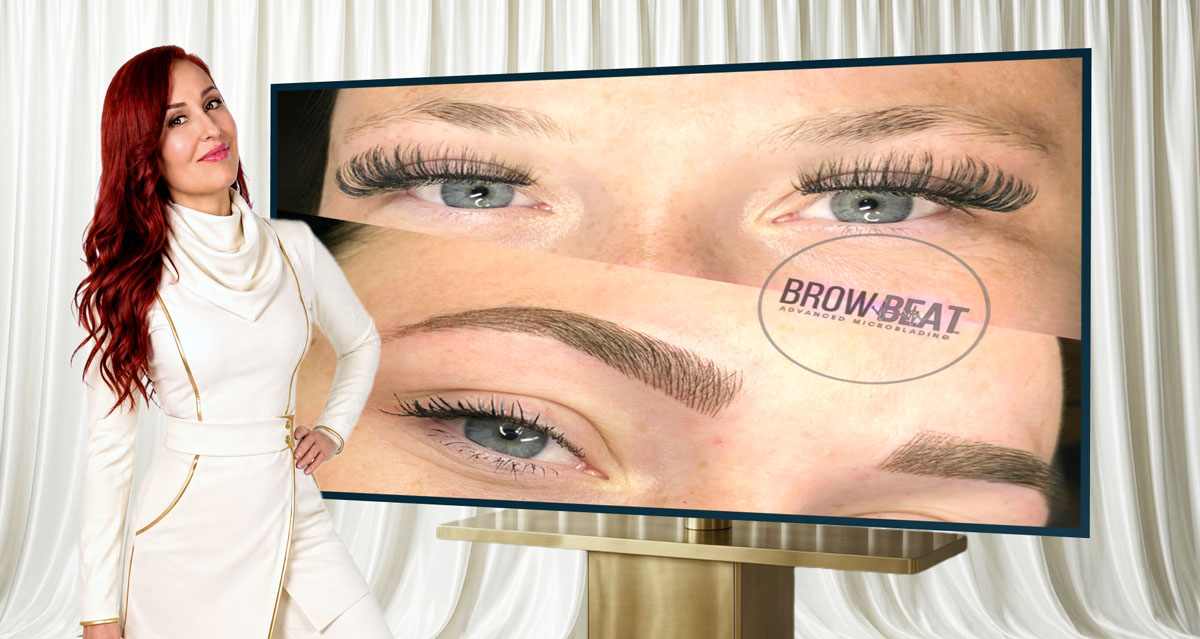
Permanent makeup is a form of cosmetic tattooing used to create lasting color, definition or the appearance of detail within features of the face. It can create individual-looking eyebrow hairs where natural growth is sparse. It can add shaded density and structure to a brow. It can place cosmetic color within the lips or create definition along the upper lash line. Those results may look completely different from one another, but they belong to the same larger category: permanent makeup.
You may also encounter the terms cosmetic tattooing, permanent cosmetics, semi-permanent makeup, PMU and micropigmentation. The terminology overlaps considerably, and understanding those relationships can make permanent makeup much easier to research. The easiest place to begin is with the category itself.
What is permanent makeup? What is actually being made permanent? And how do brows, lips and eyeliner all fit beneath the same permanent makeup umbrella?
Permanent makeup is cosmetic pigment placed into the skin to create lasting visible color, definition or detail. That distinction separates permanent makeup from conventional cosmetics. A brow pencil sits on the surface of the skin. Brow powder sits on the surface. Lipstick sits on the lips. Conventional eyeliner sits around the eyes. Those products can be applied, removed, changed and applied again.
Permanent makeup works differently because cosmetic pigment is placed within the skin. The result therefore remains present when conventional makeup has been removed. Exactly what the pigment creates depends on the procedure.
Within an eyebrow, permanent makeup can create the appearance of individual hairstrokes, shaded color or a combination of both. Within the lips, cosmetic pigment can create more visible permanent lip color. Around the eyes, permanent eyeliner can create lasting definition along the upper lash line.
Different techniques. Different treatment areas. Different visual results. One larger permanent makeup category.
This distinction is important because someone can say, “I want permanent makeup,” without yet identifying what she actually wants permanently enhanced. She may be thinking about her eyebrows. Another client may love her brows and have absolutely no interest in changing them, but she wants more visible color in her lips. Someone else may have worn upper eyeliner for twenty years and be interested primarily in permanent definition around her eyes.
Even two clients interested in permanent eyebrows may be imagining completely different results. One sees individual hair-like detail. Another sees a softly filled brow. Another wants both.
That is why permanent makeup is best understood first as a category containing multiple cosmetic tattoo treatments rather than as one standardized procedure.
Permanent makeup and cosmetic tattooing are overlapping terms for the same broad field of cosmetic pigment procedures. The phrase permanent makeup emphasizes the cosmetic result. The phrase cosmetic tattoo or cosmetic tattooing emphasizes that pigment is being placed within the skin.
That is why someone researching permanent eyebrows may encounter terms such as: Permanent eyebrow makeup. Eyebrow tattoo. Cosmetic eyebrow tattoo. Permanent brows. Eyebrow micropigmentation. Those phrases can sound as though they describe completely separate services when they may actually be different ways of talking about the same broader cosmetic tattoo category.
The same happens with lips. Permanent lip makeup, permanent lip color, cosmetic lip tattoo, lip micropigmentation and lip blushing can appear throughout the same research journey. And around the eyes, clients may encounter permanent eye makeup, permanent eyeliner, cosmetic eyeliner tattoo and lash line enhancement. The terminology changes according to the specific result being discussed, but the larger category remains cosmetic tattooing for the face.

Permanent makeup does not require one age, coloring, skin tone or personal style. Different clients bring different natural brows, lips, eyes and cosmetic preferences into the treatment chair. A strong permanent makeup portfolio should therefore show variation—not because the underlying category changes, but because cosmetic tattooing has to respond to the person who will actually wear the result.
Close photographs are valuable because they show permanent makeup detail clearly. A wider view answers another question: does the result belong to the client? Brow hairstrokes, shading, lip color and upper eyeliner eventually have to coexist with all of the features around them, which makes the complete face an essential part of evaluating cosmetic tattoo results.

Natural results are individual because natural features are individual. A light-haired client may need a different amount of brow contrast from someone with deeper coloring. One person may naturally carry stronger facial definition than another. Permanent makeup can respect those differences without reducing “natural” to one predetermined level of softness for everybody.

Permanent cosmetics is another umbrella term for permanent makeup. It refers broadly to cosmetic procedures that place pigment within the skin to create lasting facial color or definition. Permanent cosmetic services can therefore include eyebrow procedures, permanent lip color and upper permanent eyeliner.
The phrase is useful because it emphasizes something central to the entire category: these procedures are cosmetic. The goal is not simply to place pigment into skin. The pigment has a visual job.
It may need to resemble eyebrow hairs. It may need to create the appearance of softly filled brow density. It may need to add color within natural lip tissue. Or it may need to create definition around an upper lash line. The technique exists to create the cosmetic result.
PMU stands for permanent makeup. It is simply an abbreviation commonly used throughout the permanent makeup industry. Clients may encounter phrases such as PMU brows, PMU lips, PMU eyeliner, PMU treatments or PMU services while researching cosmetic tattooing.
Those phrases do not describe another category of facial tattooing. They are shortened ways of referring to permanent makeup. At BrowBeat Studio Dallas, we generally use the full term permanent makeup when it makes the information clearer for clients, while PMU may appear naturally where the abbreviation is useful.
Micropigmentation is another term associated with placing pigment into the skin for cosmetic purposes. You may encounter cosmetic micropigmentation, facial micropigmentation, eyebrow micropigmentation or lip micropigmentation while researching permanent makeup.
Again, this does not necessarily mean you have discovered an entirely separate category of treatment. Micropigmentation frequently overlaps with the language of permanent cosmetics and cosmetic tattooing. The terminology can be useful, but the terminology should not make a relatively understandable concept feel unnecessarily complicated.
Permanent makeup uses cosmetic pigment to create lasting visible effects within features of the face. That is the larger idea underneath the different names.
Clients researching cosmetic tattooing frequently encounter both permanent makeup and semi-permanent makeup. You may also see semi-permanent cosmetics, semi-permanent eyebrows, semi-permanent lip color or semi-permanent eyeliner. In consumer beauty language, permanent and semi-permanent are often being used to discuss overlapping procedures rather than two completely separate treatment categories.
The word semi-permanent became common because the visible appearance of cosmetic tattoo pigment can change and become lighter over time. That fading is important. But fading does not mean the procedure behaves like conventional makeup that simply washes away. Pigment has been placed within the skin.
This is where the terminology needs a little nuance. Calling a procedure permanent does not mean promising that the visible result will remain exactly the same indefinitely. Permanent makeup can soften and fade. Color can become lighter. Definition can change. Different techniques and treatment areas can behave differently over time.
Skin characteristics, sun exposure, lifestyle, skincare and individual pigment retention can also influence long-term appearance. Those are longevity questions rather than definition questions. Our dedicated guide to how long permanent makeup lasts explores what happens after permanent makeup has healed and why visible results change over time.
For the purpose of understanding the terminology, the important point is simpler: permanent makeup and semi-permanent makeup are frequently consumer terms for overlapping forms of cosmetic tattooing.

Yes, permanent makeup belongs to the broader world of tattooing because pigment is placed into the skin. But understanding that answer requires another distinction. A cosmetic tattoo and a traditional body tattoo do not necessarily have the same purpose, technique or visual goal. Permanent makeup is designed specifically around facial cosmetic results.
A permanent eyebrow may need to imitate individual hairs. A shaded brow may need to create soft density while working with natural eyebrow growth. Lip pigment has to be considered within natural lip tissue. Permanent eyeliner has to relate to the eye and upper lash line. These are highly specific cosmetic applications.
A traditional body tattoo may intentionally create an illustration, symbol, lettering or decorative design that is clearly separate from the body’s natural features. Permanent makeup often has almost the opposite visual challenge. The permanent work usually needs to interact with a feature that already exists.
Microblading hairstrokes sit beside natural eyebrow hairs. Powder shading sits within the eyebrow. Lip blush works within natural lips. Upper eyeliner follows the eye.
The permanent pigment becomes part of an existing facial feature rather than simply occupying an area of skin. That relationship is one of the defining characteristics of cosmetic tattooing.
Permanent eyebrows are cosmetic tattoos. But the phrase eyebrow tattoo still does not tell you what the finished eyebrow will look like. Modern permanent brows can be created in several different ways.
Some use individual hairstrokes. Some use machine shading. Some combine hairstrokes and shading. That means two people can both have permanent eyebrow makeup while wearing results with completely different visual characteristics.
The permanent makeup category tells us what kind of procedure it is. The individual technique tells us more about what the artist is creating.
At BrowBeat Studio Dallas, permanent makeup is centered primarily around brows, lips and the upper lash line. Those three facial areas contain several different treatment possibilities. The brow category is the largest because multiple permanent makeup techniques can be used to create different eyebrow effects.
Lip procedures focus on permanent cosmetic color within the natural lips. Upper permanent eyeliner focuses on lasting definition around the eyes.
A client may be interested in one category and never consider the others. Permanent makeup does not require turning every conventional cosmetic into a permanent procedure.
Permanent eyebrow makeup includes several techniques because clients do not all want their brows to look the same. At the broadest level, permanent brows can be understood through three visual families:
Hairstrokes. Shading. Hairstrokes combined with shading. That simple framework makes the individual service names much easier to understand.

Microblading belongs to the permanent makeup category, but its visual purpose is very specific: creating individual manual hairstrokes within the eyebrow. Instead of simply filling an area with color, the artist builds hair-like detail that eventually needs to sit beside natural eyebrow growth and contribute to the complete permanent brow.
Some clients do not want the appearance of individual hairs to do most of the visual work. They prefer the softly filled effect they already create with conventional brow cosmetics. Powder brows, ombré brows and microshading use machine techniques to create permanent shaded density, giving the permanent eyebrow category a very different visual language from hairstroke work.


Some clients like visible hair-like detail but also want greater density through the eyebrow. Combo, hybrid and 3D brows bring those two permanent makeup effects together. Hairstrokes contribute texture while machine shading contributes coverage, allowing the finished eyebrow to use more than one technique when the desired result genuinely calls for both.
A permanent makeup machine is not limited to creating shaded color. Nano brows use machine work to create individual permanent hairstrokes, giving clients another way to achieve a hair-like eyebrow appearance. This is an important part of understanding modern permanent makeup because the tool alone does not determine whether the finished result will look shaded or hair-like.

Microblading uses a manual technique to create individual permanent hairstrokes within the eyebrow. It belongs to the hairstroke family of permanent brows and is designed around the visual appearance of additional hair-like detail.
Nano brows also create individual permanent hairstrokes. The difference is that nano hairstrokes are created using a permanent makeup machine rather than the manual method used for microblading. That distinction is useful because a permanent makeup machine can be used for more than shading. It can create hairstrokes too.
Powder brows, ombré brows and microshading belong to the machine-shading family. Instead of relying primarily on individual hairstrokes, these techniques create permanent shaded color and density within the eyebrow. The finished effect can vary according to the client and treatment approach rather than requiring every shaded brow to have the same visual intensity.
Combo brows, hybrid brows and 3D brows bring permanent hairstrokes and machine shading together within the same eyebrow. Hairstrokes contribute texture. Shading contributes density. The two can be used together when both effects belong in the permanent brow being created.
For a complete classification of these techniques alongside permanent lip and eye procedures, our types of permanent makeup guide explains what the major permanent makeup options are and how they relate to one another.
Permanent makeup can also be used to add color within natural lip tissue. You may encounter this category described as permanent lip makeup, permanent lip color, cosmetic lip tattoo, lip micropigmentation or lip blushing. At BrowBeat Studio Dallas, lip blushing is the primary permanent lip service.
The permanent color can be worn by itself or become a base underneath conventional lip products. A client can still wear balm. She can still wear gloss. She can still change her lipstick completely. The permanent cosmetic color simply changes what is already present before those temporary products are added.
For appropriate clients with naturally more melanated lip tissue, dark lip neutralization is a specialized permanent lip service. It should not be confused with correcting unwanted permanent makeup created by another artist. Dark lip neutralization begins with the client’s natural lip tissue and requires a different color approach from standard lip blushing.
Permanent eye makeup includes cosmetic tattooing designed around the eyes. BrowBeat Studio Dallas focuses on upper permanent eyeliner and lash line enhancement.
A lash line enhancement concentrates definition close to the upper lashes. Other upper eyeliner designs can create more visible definition depending on the client’s anatomy and familiar makeup style.
Winged permanent eyeliner is considered case by case because eye anatomy matters. BrowBeat does not offer lower permanent eyeliner.
Permanent makeup terminology is useful because different procedures genuinely work in different ways. But technique names can become overwhelming when they are treated as though the client must understand the entire industry before she can understand what she likes. The visual ideas are much simpler.
Hairstrokes create hair-like detail. Shading creates brow density. Combination techniques use both. Lip blushing creates permanent cosmetic lip color. Upper permanent eyeliner creates lasting definition around the lashes.
Once those relationships are clear, the service names have context. And that is the first job of understanding permanent makeup:

At the broadest level, permanent makeup works by placing cosmetic pigment into the skin to create a planned visual effect. That effect depends on the treatment being performed.
For permanent eyebrows, pigment may be used to create individual hairstrokes, shaded density or a combination of both. For lip blushing, pigment creates cosmetic color within the natural lips. For upper permanent eyeliner, pigment creates definition around the upper lash line.
The principle is shared. The way it is applied and the result being created are not.
Some permanent makeup techniques use a manual method. Microblading is the clearest example. Individual eyebrow hairstrokes are created manually.
Other permanent makeup services use a machine. Nano brows use a machine to create hairstrokes. Powder brows, ombré brows and microshading use machine techniques to create shaded brow density. Machine work is also used within lip blushing, permanent eyeliner and the shaded portions of combination brows.
The tool alone therefore does not tell you what the finished permanent makeup will look like. What the artist is using that tool to create matters more.
Permanent makeup is sometimes described so technically that the client disappears from the explanation. The procedure involves pigment and tools, but those things are being used within a much larger cosmetic plan. Before permanent work begins, the artist needs to understand what is being created and why.
For brows, that may involve evaluating natural hair, discussing the client’s usual brow appearance and developing the proposed design. For lips, natural lip color and the client’s preferred color direction matter. For upper eyeliner, the eye itself and the amount of definition the client normally likes become part of the conversation.
The permanent procedure is the point where those earlier decisions are translated into pigment within the skin. Clients who want the complete journey from preparation through design, color, numbing and treatment can continue to Permanent Makeup Process & What to Expect.
The word tattoo can make someone unfamiliar with permanent makeup imagine one very specific kind of result. Modern cosmetic tattooing is much broader than that. A permanent eyebrow can contain extremely fine-looking hairstroke detail. Another can have soft shaded density.
A lip blush can create visible color without attempting to reproduce a heavy lipstick look. Upper eyeliner can be concentrated closely around the lashes rather than becoming the strongest feature on the face.
But there is another side to this. Permanent makeup does not have to be nearly invisible in order to be successful. Some clients genuinely prefer more definition. They have worn defined brows for years. They like seeing color in their lips. Upper eyeliner may already be part of the way they recognize themselves.
The goal is not to force every client toward the same degree of subtlety. It is to create permanent makeup that belongs to the person wearing it.
Natural-looking permanent makeup does not have one universal definition. For one client, it may mean individual permanent eyebrow hairstrokes working among substantial natural hair. For another, it may mean a softly shaded brow because she has worn filled brows for years and that appearance feels completely normal on her face.
Natural permanent lip color may mean a color direction that feels believable with the client’s natural coloring rather than reproducing the appearance of an opaque conventional lipstick. Subtle permanent eyeliner may mean definition concentrated closely along the upper lashes.
Natural-looking permanent makeup is therefore less about making every treatment faint and more about creating a result that makes sense within the client’s features and familiar appearance.
A permanent result can be soft and still accomplish something. A light eyebrow can gain meaningful definition without becoming a dramatically dark brow. A sparse area can gain continuity without requiring the entire eyebrow to become visually heavy.
Lips can have more visible color without looking as though conventional lipstick has been permanently painted onto them. Upper-lash definition can be noticeable without requiring a dramatic eye look.
Subtlety is useful when it serves the client. It should not become a rule that prevents permanent makeup from actually addressing the reason she wanted it.

There is no single reason. Some clients want greater consistency. Some want convenience. Some have natural features they have been supplementing with conventional makeup for years. Some simply like the appearance of defined brows, visible lip color or upper eyeliner and want more of that appearance available before their daily makeup begins.
Permanent makeup can be practical and aesthetic at the same time.
Conventional makeup often begins by recreating the same familiar features. The sparse brow tail. The section that always needs filling. The lip color that disappears when nothing has been applied. The upper eyeliner that is drawn again every morning.
Permanent makeup can establish some of that foundation before the makeup bag opens. The client can still add more. She can still change the look. She simply does not necessarily have to begin from the same starting point every day.
Permanent makeup is frequently discussed as a time-saving beauty service. For many clients, that is useful. But consistency can be just as important.
Conventional makeup is recreated by hand. One brow may look exactly right on Monday and take several attempts on Tuesday. One eyeliner application may happen quickly while the next becomes a negotiation between two naturally different eyes. Lip products change throughout the day.
Permanent makeup can provide a more consistent underlying foundation while conventional cosmetics remain available for temporary changes.
Some of the most practical permanent makeup moments happen when very little other makeup is being worn. First thing in the morning. At the gym. On vacation. After swimming. During a rushed day. Or simply on a morning when the client does not feel like applying much conventional makeup.
Permanent brows, lip color or upper-lash definition can remain present through those different versions of everyday life.
Choosing permanent makeup does not mean choosing one finished makeup look for every future day. Permanent brows can be strengthened with conventional brow products. Lip blush can sit underneath balm, gloss or lipstick. Upper permanent eyeliner can be worn alone or become part of a more complete eye look.
This relationship is important because permanent and conventional makeup have different strengths. Permanent makeup can provide consistency. Conventional makeup can provide temporary change. The two do not have to compete.
Not every permanent makeup client begins with the same concern. One person may have substantial natural eyebrow hair with one sparse area. Another may have brows that have become thinner over time. Another may have significant natural brow loss.
One client’s lips may already have considerable natural color, while another wants more visible color before conventional products are applied. One client may rarely wear eyeliner, while another has considered upper eyeliner part of her face for decades.
The permanent makeup category is broad enough to contain those different starting points, but they do not necessarily belong to the same treatment plan.

Permanent makeup can create hair-like detail within an eyebrow, shaded brow density, cosmetic color within the lips or definition around the upper lash line. These results may look completely different, but they belong to the same broader field of cosmetic tattooing. Seeing the work rather than only reading the terminology makes it easier to understand how several very different facial treatments can all sit beneath the permanent makeup category.
Lip blushing places permanent cosmetic color within the natural lips, but it does not eliminate conventional lip products. The client can wear the permanent color by itself, add gloss or balm, or cover it with a completely different lipstick when she wants another look. Permanent makeup changes the starting point without taking temporary cosmetic choices away.


The upper lash line occupies relatively little space on the face, yet definition in that area can influence how the eyes appear before mascara, shadow or conventional liner is added. Permanent eyeliner demonstrates that cosmetic tattooing does not need to cover a large area to create a visible and useful facial effect.
Sparse natural brows are one reason clients begin researching permanent eyebrow makeup. The amount and pattern of sparseness can vary considerably. There may be a missing tail. A gap through one section. Reduced density across much of the eyebrow. Or natural brows that simply do not create as much visible structure as the client prefers.
Permanent makeup can create additional hairstroke detail, shaded density or both depending on the client’s starting point and desired result. When the issue moves beyond ordinary sparseness into significant natural eyebrow loss, the conversation changes.
Clients experiencing substantial eyebrow loss associated with alopecia, chemotherapy, scarring or other circumstances may be looking for something different from routine brow enhancement. Permanent makeup can be used in an eyebrow restoration context, where establishing a familiar facial feature may be more central than simply adding definition to existing natural hair.
These situations deserve their own focused information because significant brow loss changes the starting point, the amount of natural hair available and the design conversation. BrowBeat’s dedicated Eyebrow Restoration resources explore those circumstances in greater depth rather than reducing them to one general permanent eyebrow category.
Permanent makeup can also become interesting as natural features change with age. Eyebrow hair may become different from what it once was. Lip color can appear different. Applying conventional upper eyeliner may take more effort.
But age alone does not tell us what permanent makeup a person wants. A mature client may have worn almost no makeup throughout her life. Another may have worn defined brows, lipstick and eyeliner every day for decades.
The deeper considerations around changing skin, brows, lips and eyes belong within BrowBeat’s Mature Permanent Makeup resources. The broader permanent makeup principle remains the same: the treatment needs to respond to the person rather than to a demographic label.
Permanent makeup may interest people for many different reasons, but interest alone does not answer every suitability question. Skin characteristics can matter. The treatment area matters. Natural features matter. The client’s goals and expectations matter.
Health history, medications and other screening considerations may also affect whether or when a permanent makeup procedure is appropriate. Those questions deserve more depth than a broad definition page can responsibly provide.
BrowBeat’s guide to who is a good candidate for permanent makeup explores the general suitability factors and explains when more specialized information may be needed.
Even when two people want permanent eyebrows, the right conversation may be different. One may be drawn strongly to individual hairstrokes. Another may like a filled brow. Another may want both.
Skin characteristics, natural hair, desired density and personal style can also affect the discussion. The same principle applies to lips and eyeliner. Permanent makeup becomes more useful when the technique serves the result instead of asking every client to fit the technique.
A client can know what she wants visually without knowing the professional name for it. “I like seeing individual brow hairs.” “I fill my brows every day and want more density.” “I like both the hairs and the filled effect.” “My lips always feel as though they need color.” “I want my upper lashes to look more defined.”
Those statements already contain useful information. Technique terminology can be added afterward. For clients who understand the category but are unsure how to translate a preferred result into a treatment direction, how to choose the right permanent makeup technique takes the next step without requiring the client to become a permanent makeup expert first.

Although individual procedures differ, permanent makeup generally involves more than the period when pigment is actually being placed into the skin. There is preparation. The client’s starting point needs to be evaluated. Preferences need to be discussed. Design and color decisions may need to be made.
Depending on the treatment, mapping or other planning may occur before the permanent procedure begins. Comfort measures and the actual pigment procedure then become part of the appointment. At BrowBeat Studio Dallas, permanent makeup appointments commonly reserve more than three hours because careful permanent work includes the decisions surrounding the procedure, not merely the time a tool is touching the skin.
Permanent makeup is created in skin, so treatment day is not the end of the visual story. Fresh color can appear stronger than the eventual healed appearance. The treatment area then moves through a healing period during which the visible result can change.
Different permanent makeup services do not heal identically, and individual clients can experience the process differently too. That is why a fresh treatment photograph should not automatically be interpreted as the final healed result.
The general journey from fresh permanent makeup through healing and aftercare belongs within Permanent Makeup Healing & Aftercare, while the individual service silos carry the detailed healing information for microblading, nano brows, shading, combination brows, lips and eyeliner.
Healing and longevity are related, but they answer different questions. Healing asks when the treatment area has moved through the post-procedure healing process. Longevity asks what happens to the visible permanent makeup after that healing has occurred.
Once healed, permanent makeup can gradually soften and fade over time. Different techniques, skin characteristics, treatment areas, lifestyle and other factors can influence that longer-term behavior. This is also why permanent makeup should not be sold with the idea that the visible result will remain exactly the same indefinitely.
Permanent makeup is lasting cosmetic tattooing. Its appearance can still evolve.
One of the most important things to understand about permanent makeup is that lasting does not mean visually unchanged forever. Once cosmetic tattooing has healed, the visible result can gradually become lighter and softer over time.
How that happens varies. The treatment itself matters. The technique matters. Skin characteristics matter. The treatment area matters. Sun exposure, skincare and other lifestyle factors can matter. Individual pigment retention matters too.
That variation is why a responsible discussion of permanent makeup longevity cannot be reduced to one expiration date that applies to every person and every procedure.
A permanent eyebrow can become softer. Lip color can gradually lose intensity. Permanent eyeliner can change in visibility over time. Even within eyebrows, hairstrokes and machine shading do not necessarily behave identically over the long term.
Clients may eventually consider maintenance or a refresh depending on how the permanent makeup has changed and what they want it to look like at that stage. The deeper questions around fading, retention, skin characteristics, sun exposure and maintenance belong within BrowBeat’s guide to how long permanent makeup lasts.

Permanent makeup does not have one universal price because permanent makeup is not one universal procedure. A permanent eyebrow service and a lip service are different treatments. Different brow techniques can require different approaches.
Appointment time, complexity, customization, artist experience, geographic market and what is included within the service can all contribute to pricing differences. That makes a broad question such as “How much is permanent makeup?” useful as a starting point, but not necessarily enough to understand the price of one particular treatment.
Two numbers do not automatically represent equivalent services. One provider may structure an appointment differently from another. Experience can differ. Time reserved can differ. The amount of individualized planning can differ. The procedure itself may be different. And the services included within a quoted price may not be identical.
For that reason, permanent makeup pricing is more useful when the client understands what she is comparing rather than simply searching for the smallest number. BrowBeat’s Permanent Makeup Cost & Pricing guide explains broad pricing factors, permanent eyebrow cost, price differences between treatment categories and how to think about cost and value before moving into the individual service price pages.
There is no universal answer because the value of permanent makeup depends on what the individual client wants it to accomplish. A small brow change may have enormous value to someone who has drawn the same missing section every morning for years. Another client may care much more about having visible lip color without applying a product first. Someone who has worn upper eyeliner for decades may value permanent lash-line definition more than any brow or lip procedure.
The service becomes meaningful when it addresses something that matters to the person wearing it.
A subtle permanent makeup result can still create substantial everyday value. The permanent work may save time. It may create greater consistency. It may make low-makeup days easier. It may reduce the need to recreate one familiar feature repeatedly. Or the client may simply prefer seeing more of that feature present before she begins getting ready.
Permanent makeup does not need to create a dramatic transformation to earn its place.
There is an enormous amount of permanent makeup information online. That can be useful. It can also make someone feel as though she needs to understand every technique, pigment and procedure before she is qualified to make an appointment. She does not.
The client needs to understand her own preferences. The artist needs to understand permanent makeup. Those two kinds of knowledge meet during the planning process.
You may not know whether the brow you saved is microblading or nano. You may not know whether the filled appearance you like is best described as powder, ombré or microshading.
You may simply know that you like seeing individual hairs. Or that you prefer more color. Or that you want both. You may know which lip colors you repeatedly choose without knowing anything about professional pigment names. You may know exactly how much upper eyeliner feels familiar without understanding cosmetic tattoo terminology.
Those preferences are useful. Professional language can be added later.
Once a client understands the broad permanent makeup categories, the next question often becomes more personal: Which one makes sense for what I want? That is different from asking what techniques exist.
Knowing that microblading creates manual hairstrokes and nano brows create machine hairstrokes is taxonomy. Deciding which hairstroke approach should be considered for a particular client is technique selection.
Knowing that powder brows create shaded density is taxonomy. Deciding whether shading makes sense for the client’s natural brows, skin characteristics and desired result is selection. Those two questions deserve separate answers.
A client can decide that she loves a particular permanent makeup technique and still need to decide who she trusts to perform it. Those are separate decisions. The service name tells you what type of permanent makeup you are researching. It does not tell you whether one artist’s work is the same as another’s.
Permanent makeup is visual, technical and highly individual work. The person performing it matters.
One result can be beautiful. A broader body of work tells you more. Look at different clients. Different natural starting points. Different coloring. Different ages where available.
Look at whether every client appears to receive the same eyebrow or whether the work changes appropriately from face to face. Look at close photographs for detail. Then look at complete faces.
The permanent makeup eventually has to work at both distances.

Permanent makeup portfolios communicate more than technical ability. They communicate visual judgment. If you repeatedly like the artist’s results across many different clients, that pattern is useful. If you find yourself repeatedly wishing the brows were softer, stronger, more textured or more filled, that is useful information too.
Choosing an artist is not only about finding somebody who offers the service name you searched. It is about deciding whose permanent makeup work you would be comfortable wearing. BrowBeat’s guide to how to choose a permanent makeup artist goes deeper into portfolios, experience, healed work, consultations and the questions clients can consider before selecting a provider.
BrowBeat Studio Dallas has spent approximately a decade focused on permanent makeup and has served more than 5,000 clients. That means seeing thousands of different starting points.
Light natural brows. Deep natural brows. Sparse tails. Dense brows. Mature brows. Different skin tones. Different natural lip colors. Different eye anatomy. Different makeup habits. Different definitions of what looks natural.
Experience should not lead to the conclusion that everybody eventually needs the same result. It should do the opposite. It should make the artist increasingly aware of how many variables can exist within one seemingly simple request.
This may be the simplest way to understand BrowBeat’s approach to the category. Technique matters. Color matters. Placement matters. Experience matters. But all of those decisions eventually have to make sense on a real person.
The eyebrow is seen with the eyes, nose, lips and hair. Lip color is seen within the client’s overall coloring. Upper eyeliner is seen as part of the eye rather than as an isolated line.
Permanent makeup becomes successful when the technical decisions support the complete result instead of becoming more important than the person wearing it.
BrowBeat Studio Dallas provides permanent makeup services from our Dallas studio for clients seeking permanent brows, lip blushing and upper permanent eyeliner. Clients also travel to BrowBeat from communities throughout Dallas–Fort Worth and surrounding North Texas.
This page is not intended to replace the local information available throughout BrowBeat’s Dallas and DFW architecture. Its job is different. This is the subject-matter home for understanding permanent makeup and cosmetic tattooing as a category. Once the category makes sense, the rest of the site can become much easier to navigate.
Permanent makeup begins as one broad subject, but the questions become more specific as a client learns more. The eight guides below each own one part of that deeper permanent makeup journey.
If your first question is What permanent makeup options actually exist?, explore the types of permanent makeup. This guide organizes permanent brows, lip treatments and upper eyeliner by category and explains how hairstrokes, shading and combination techniques fit together.
If you want to understand what happens before and during treatment, continue to Permanent Makeup Process & What to Expect. It follows the appointment from preparation and assessment through design, color, comfort measures, the procedure itself and the immediate finished appearance.
If your questions begin after the procedure ends, explore Permanent Makeup Healing & Aftercare. This guide explains the general healing journey, appearance changes and broad aftercare considerations before routing into each service’s individual healing information.
Once healing is complete, the question changes from recovery to longevity. How Long Does Permanent Makeup Last? explains fading, retention, factors that influence long-term appearance and why permanent makeup does not have one identical lifespan for every client or procedure.
For broad financial questions, Permanent Makeup Cost & Pricing explains why permanent makeup prices vary, how different service categories compare and what clients can consider when evaluating price and value.
If the question is whether permanent makeup may be appropriate for you at all, Who Is a Good Candidate for Permanent Makeup? explores broad suitability factors including skin characteristics, natural features, goals, expectations and screening considerations.
If you understand the options but are unsure which direction fits the result you want, How to Choose the Right Permanent Makeup Technique helps connect visual preferences and starting points with the different permanent makeup approaches.
If you know you want permanent makeup but are deciding who should perform it, How to Choose a Permanent Makeup Artist focuses on evaluating portfolios, experience, healed work, communication and the provider behind the procedure.
What is permanent makeup? That belongs here. What types exist? That has its own guide. What happens during an appointment? Another guide. How does it heal? Another. How long does it last? Another. What does it cost? Another. Am I a candidate? Which technique should I consider? How do I choose an artist?
Each question becomes easier to answer when it is allowed to have its own job. That is also how BrowBeat approaches permanent makeup itself.
Do not make every technique solve every problem. Do not make every client fit the same result. Understand the starting point. Understand the goal. Then let the permanent makeup become specific.
Permanent makeup can mean an eyebrow created with individual hairstrokes. It can mean softly shaded permanent brow density. It can mean both within the same eyebrow. It can mean permanent cosmetic lip color. It can mean definition around the upper lashes.
It can be subtle. It can be more defined. It can reduce a repetitive part of a makeup routine. It can restore greater visual presence to a feature that has changed. And it can give a client a more consistent cosmetic foundation while still leaving conventional makeup completely available.
The category is broad. The result should be personal. That is the difference between understanding permanent makeup as a subject and creating permanent makeup for a person.

Permanent makeup is a form of cosmetic tattooing in which pigment is placed into the skin to create lasting color, definition or hair-like detail within facial features. Permanent makeup can include permanent eyebrows, cosmetic lip color and upper permanent eyeliner.
Cosmetic tattooing is the placement of pigment into the skin for a cosmetic purpose. It is the broader process behind permanent makeup procedures used to create eyebrow definition, permanent lip color and upper-lash definition.
Permanent makeup and cosmetic tattooing are commonly used to describe the same broad field. “Permanent makeup” emphasizes the cosmetic result, while “cosmetic tattooing” emphasizes the placement of pigment into the skin. Both terms can include permanent brows, lip color and eyeliner.
PMU stands for permanent makeup. The abbreviation is commonly used for cosmetic tattoo procedures involving the eyebrows, lips and eyes, so terms such as PMU brows, PMU lips and PMU eyeliner all belong to the broader permanent makeup category.
Permanent cosmetics is another term for permanent makeup. It describes cosmetic procedures that place pigment within the skin to create lasting facial color or definition, including permanent eyebrow makeup, permanent lip color and upper permanent eyeliner.
Micropigmentation refers to the placement of pigment into the skin and is commonly associated with permanent makeup and cosmetic tattooing. Consumers may encounter terms such as eyebrow micropigmentation, lip micropigmentation and facial micropigmentation while researching permanent cosmetic procedures.
Micropigmentation and permanent makeup substantially overlap in cosmetic use. Micropigmentation describes pigment placement, while permanent makeup describes the cosmetic category and visible purpose of the treatment. The terminology may differ even when the procedures being discussed belong to the same field.
Semi-permanent makeup is a consumer term commonly used for cosmetic tattoo procedures whose visible appearance can soften and fade over time. It often refers to the same broader treatment category described as permanent makeup, including permanent brows, lip color and eyeliner.
Permanent makeup and semi-permanent makeup are often overlapping consumer terms rather than two completely separate categories. Cosmetic tattoo pigment is placed within the skin, but its visible appearance can become lighter and change over time. “Semi-permanent” is frequently used to emphasize that fading even though the procedure itself involves pigment placed into skin.
Permanent makeup is called permanent because cosmetic pigment is placed within the skin rather than applied temporarily to its surface. The visible result can still soften, fade and change over time, so permanent does not mean the makeup will remain visually identical forever.
Yes. Permanent makeup is a form of cosmetic tattooing because pigment is placed into the skin. However, cosmetic tattooing has a different purpose from traditional body tattooing: it is designed around facial features and cosmetic effects such as eyebrow hairstrokes, brow shading, lip color and upper-lash definition.
Permanent makeup and traditional tattooing both involve pigment placed into skin, but their visual purposes differ. Traditional tattoos may create decorative artwork, lettering or imagery, while permanent makeup is designed around existing facial features to create cosmetic effects such as eyebrow detail, lip color or eyeliner.
Yes. Permanent eyebrows are a form of cosmetic tattooing. The finished appearance can vary considerably because permanent brows may be created with individual hairstrokes, machine shading or a combination of hairstrokes and shading.
Microblading belongs to the cosmetic tattoo and permanent makeup category. It uses a manual technique to create individual permanent hairstrokes within the eyebrow rather than applying temporary brow makeup to the surface of the skin.
Permanent makeup is commonly used on the eyebrows, lips and eyes. BrowBeat Studio Dallas offers permanent brow techniques, lip blushing and appropriate dark lip neutralization, plus upper permanent eyeliner and lash line enhancement.
Permanent eyebrow makeup is cosmetic tattooing designed to add lasting detail, density or structure to the brows. Permanent brow results can be created with hairstrokes, machine shading or a combination of both, depending on the technique being performed.
Yes. Hairstroke permanent makeup is designed to create the appearance of individual eyebrow hairs. Microblading creates manual hairstrokes, while nano brows create hairstrokes with a permanent makeup machine. The detailed differences between brow techniques are covered within BrowBeat’s individual brow resources.
Yes. Permanent eyebrows can be created with machine shading rather than primarily with individual hairstrokes. Powder brows, ombré brows and microshading belong to this shaded permanent-brow family and can create varying amounts of visible density.
Yes. Combo, hybrid and 3D brows combine permanent hairstrokes with machine shading. Hairstrokes contribute hair-like texture while shading contributes density, allowing both visual effects to exist within the same permanent eyebrow.
Permanent lip makeup is cosmetic tattooing used to place lasting cosmetic color within the natural lips. Lip blushing is a permanent lip service that can create a visible color base while still allowing the client to wear balm, gloss or conventional lipstick over it.
A cosmetic lip tattoo is permanent makeup performed within the lips to create lasting cosmetic color. Terms such as cosmetic lip tattoo, permanent lip color, lip micropigmentation and lip blushing may appear during the same research journey, although specific lip procedures can have different purposes.
Dark lip neutralization is a specialized permanent lip service for appropriate clients with naturally more melanated lip tissue. It begins with the client’s natural lip color and is different from correcting unwanted permanent makeup previously created by another artist.
Permanent eye makeup is cosmetic tattooing designed to create lasting definition around the eyes. BrowBeat Studio Dallas focuses on upper permanent eyeliner and lash line enhancement rather than lower permanent eyeliner.
A lash line enhancement is permanent makeup that concentrates definition close to the upper lashes. It can create a more defined upper lash line without requiring the permanent makeup to become a complete conventional eye-makeup look.
Yes. Permanent makeup can be designed to work naturally with a client’s existing features, coloring and personal style. Natural-looking permanent makeup does not necessarily mean nearly invisible; the appropriate amount of definition depends on the person and the cosmetic result she is accustomed to seeing on herself.
No. “Natural-looking” is not one fixed level of intensity. One client may prefer very soft hairstrokes, while another has worn filled brows or visible upper eyeliner for decades. A permanent result can have definition while still looking appropriate and familiar on the individual face.
People choose permanent makeup for different reasons, including convenience, greater consistency and wanting brows, lip color or upper-lash definition present before conventional makeup is applied. For some clients, the benefit is simply reducing a cosmetic step they have repeatedly recreated for years.
Yes. Permanent makeup can provide a cosmetic foundation without replacing conventional makeup. Brow products can be added over permanent brows, lipstick or gloss can be worn over lip blushing, and mascara, shadow or additional eye makeup can be worn with upper permanent eyeliner.
No. Permanent makeup can involve one feature only. A client may want permanent eyebrows and leave her lips and eyes completely alone, choose lip blushing without permanent brows, or want only upper-lash definition. The appropriate amount of permanent makeup is personal.
BrowBeat Studio Dallas performs permanent makeup at its Dallas studio and serves clients who travel from communities throughout Dallas–Fort Worth and surrounding North Texas. BrowBeat offers permanent brow services, lip blushing and specialized lip services for appropriate clients, plus upper permanent eyeliner and lash line enhancement.