Choosing a permanent makeup artist begins somewhere very simple.
Look at the work.
Not one beautiful photograph.
Not the result pinned to the top of a social media page.
Not the brow with the perfect lighting that made you stop scrolling.
Look at enough permanent makeup to understand what the artist repeatedly creates.
You are choosing someone to place lasting cosmetic work on your face.
The portfolio should tell you much more than whether the artist has ever created one result you love.
This is one of the most useful questions you can ask while looking at a permanent makeup portfolio.
Forget for a moment whether the photograph itself is impressive.
Would you want those brows on an ordinary Tuesday morning?
Would you like that amount of lip color when you have no other makeup on?
Would that upper eyeliner feel familiar on your face?
The photograph may be beautiful.
But you are not taking the photograph home.
You are taking the permanent makeup home.
Most experienced artists have favorite pieces of work.
That is not necessarily the work that tells you the most.
Keep scrolling.
What happens across twenty clients?
Fifty?
Can you still find results you would happily wear?
Does the artist seem capable of changing the result when the person changes?
Or does the same eyebrow keep appearing on different faces?
Consistency means the quality remains recognizable.
Sameness means every client begins looking as though she received the same template.
Those are not the same thing.
One client may want a very soft brow.
Another may have worn stronger brow makeup for twenty years and genuinely prefer more definition.
One may already have substantial natural eyebrow hair.
Another may have almost none.
A permanent makeup and cosmetic tattoo artist should not need those clients to become more alike simply because the artist has a recognizable style.
There is nothing wrong with an artist having an aesthetic.
You may be choosing her precisely because you like it.
But permanent makeup still needs room for the client.
Shape can change.
Density can change.
Color can change.
Softness can change.
The amount of permanent definition can change.
The standard of work can remain consistent while the result remains individual.
An after photograph shows the result.
The before photograph shows what the artist had to work with.
That context matters.
A client who began with substantial natural eyebrow hair and needed a little additional density is a very different case from someone who began with almost no brow hair at all.
Both finished brows may look beautiful.
But the artist had two completely different jobs.

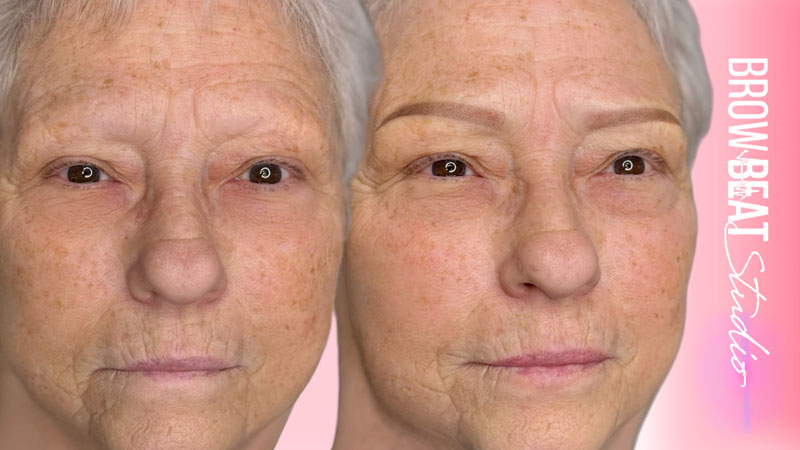
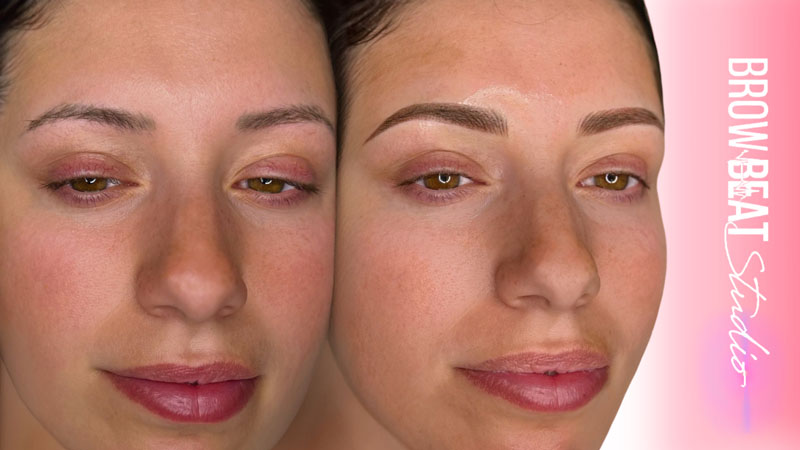
The finished result becomes easier to understand when the natural starting point is visible. A before photograph can show whether the client began with substantial brow hair, sparse areas, limited density or another feature the permanent makeup was designed to address.
An after photograph shows the finished cosmetic effect. The before image shows the artist’s starting point. Looking at both helps clients understand how much structure, texture, density or color the permanent makeup actually contributed.


A close image helps you examine permanent makeup detail. A full-face image helps you judge balance. Looking at both gives a more complete view of an artist’s work than relying entirely on one photographic distance.
Close photography can reveal individual hairstrokes, machine shading, lip color and eyeliner placement. These images are useful when clients want to understand the detail within a technique, especially when viewed alongside photographs showing the complete facial result.

Did the artist preserve the parts of the brow that were already working?
Did she add density where density was missing?
Did she create more of the eyebrow because very little natural hair was present?
Did the permanent work overwhelm the existing brow or support it?
A before-and-after photograph lets you evaluate the decision as well as the finished appearance.
Permanent makeup is often photographed extremely close.
That makes sense.
Clients want to see the hairstrokes.
The shading.
The lip color.
The eyeliner.
But nobody lives at macro-camera distance.
Eventually the brow has to become part of a face.
The lips have to belong to the person around them.
The eyeliner has to work with the eye rather than simply existing as an impressive line.
A close-up can show beautifully executed technical detail.
That matters.
Then step back.
Does the brow still make sense?
Does it overpower the client?
Does it disappear?
Does the color belong?
Does the amount of permanent makeup seem connected to the person wearing it?
Technical precision is important.
Knowing what to do with that precision is another skill entirely.
Fresh permanent makeup photographs are useful.
They show the work the artist has just created.
But they show it at a temporary stage.
Fresh hairstrokes are at their crispest.
Fresh shading is more visible.
Fresh lip blush can be considerably brighter.
Fresh eyeliner has just been treated.
The client spends much more of her time wearing healed permanent makeup than fresh permanent makeup.
Because permanent makeup healed work answers a question the fresh photograph cannot.
What did the work become?
Did the hairstrokes settle into a result you still like?
Did the shading soften beautifully?
What happened to the lip color once the initial brightness disappeared?
How does the upper eyeliner look after healing?
Fresh work shows creation.
Healed work shows outcome.
To photograph healed work, clients have to come back.
The artist has to see what happened after the original appointment.
That matters.
An artist who has spent years seeing returning clients has information that cannot come entirely from fresh photographs.
She sees what softened.
What retained.
What changed.
What she would approach differently next time.
That feedback can change the way an experienced artist works.
A number of years can be useful information.
But experience becomes much more meaningful when you ask what happened during those years.
How many different clients has the artist worked with?
How many of them returned?
Has she seen her own work healed?
Has she worked across different ages and skin characteristics?
Has she had enough experience to change her mind about techniques as she learned more?
Years matter most when they have produced judgment.
Doing something for a long time should not mean performing it the same way forever.
Permanent makeup changes.
Techniques evolve.
Clients return.
The artist gets to see what her decisions looked like years later.
That should influence the decisions she makes today.
A beautiful brow portfolio does not automatically prove that someone is the right Lip Blushing artist for you.
Beautiful Microblading does not tell you what her Powder Brows look like.
And a hundred beautiful fresh results do not tell you what any of them looked like healed.
Look specifically at work relevant to the service you are considering.
Look at the complete eyebrow.
Look at how the permanent strokes work with the client’s existing brow hair.
Look at the spaces between the strokes.
Look at healed examples.
And look at whether the artist appears selective about who actually receives Microblading.
An artist’s ability to create a beautiful hairstroke matters.
Her ability to decide when that hairstroke makes sense matters too.

Nano is a technique name, not proof of expertise.
Look at the machine-created hairstrokes.
Look at different clients.
Look at healed work where available.
Then look at the complete brow rather than judging the artist entirely from the finest line she can produce in a close-up.
Shading should not have one volume setting.
Can the artist create a very soft brow?
Can she create more definition when the client actually wants it?
Can she keep the front lighter?
Can she work underneath substantial natural hair without making the eyebrow unnecessarily heavy?
A strong shading portfolio should show control over density rather than one permanent brow repeated at different angles.
Combination work uses hairstrokes and shading together.
That does not mean the finished result should look like two procedures sharing the same eyebrow.
The texture and density should support each other.
Look at whether both techniques appear to have a reason for being there.
More technique is not automatically more skill.
Look at different natural lip colors.
Look at different color directions.
Look at fresh work.
Then look for healed work.
Does every client seem to receive essentially the same pink?
Or does the artist’s portfolio show that lip color is being considered individually?
Naturally more melanated lip tissue is a different starting point from standard Lip Blushing.
If that is your starting point, look for evidence that the artist actually works with it.
Do not assume a beautiful collection of standard Lip Blushing results automatically answers that question.
Look at subtle lash line enhancement if that is what you want.
Look at more visible upper eyeliner if that is what you normally wear.
Look at different eye shapes.
And if a wing is important to you, pay attention to whether the artist treats wings as an individualized decision rather than one standard extension placed on every eye.
A permanent makeup artist portfolio should give you enough range to understand how the artist works beyond one type of client.
Skin tone changes the visual context around permanent makeup.
Natural brow color changes.
Natural lip color changes.
Contrast changes.
The same pigment decision does not automatically belong on every person.
If you have naturally light coloring, it is useful to see that an artist can create brows that remain appropriately light.
If you have deeper coloring, it is useful to see work with enough presence to belong naturally within those features.
If you are considering Lip Blushing or Dark Lip Neutralization, different natural lip starting points matter enormously.
You are not looking for your exact twin.
You are looking for evidence that the artist has made decisions across more than one kind of client.
Permanent makeup is not a service reserved for young skin.
For many people, it becomes more useful with age.
Natural eyebrows can become thinner.
Genetics and time can leave parts of the brow sparse or almost absent.
Applying conventional brow makeup or eyeliner may become less appealing or simply more difficult.
These clients should not feel as though they sit outside the normal permanent makeup audience.
That is worth knowing before choosing a provider.
Mature skin can require different technical decisions, and not every artist chooses to work extensively with it.
If you are in your 60s, 70s or 80s, look for evidence that mature clients are actually part of the artist’s work rather than assuming age will be treated as an afterthought.
At BrowBeat Studio Dallas, clients in their 60s, 70s and 80s are an important part of our permanent makeup community.
Our oldest client to date has been 86.
For many, age and genetics have gradually reduced the eyebrow they once had.
Some have very little natural brow hair remaining.
Others simply want more definition than their brows now provide.
These are not unusual clients to us.
They are people for whom permanent makeup can have a very practical role.
Relevant experience should change the way the artist thinks.
BrowBeat generally becomes more interested in shading as skin becomes older or more delicate rather than repeatedly relying on fine permanent hairstrokes.
The client can still have a soft brow.
She can still have a defined brow if that is what she likes.
Age does not decide her style.
It does influence how BrowBeat wants to work within the skin.

Clients considering permanent makeup later in life may find it useful to see work on mature skin and different patterns of natural brow hair. BrowBeat Studio Dallas works with the individual client rather than treating age as one permanent makeup category.
No two clients are identical, but a before photograph with similar natural features can provide useful context. A client with sparse brows may learn more from another sparse-brow transformation than from viewing only naturally full eyebrows.


A naturally full eyebrow and a very sparse eyebrow do not ask the artist to solve the same problem. Looking at permanent makeup across different starting points can help clients understand how the artist adapts rather than reproducing one standard treatment regardless of what is naturally present.
This does not mean finding somebody with exactly your face.
It means looking for relevant breadth.
If you have oily skin, has the artist worked successfully with oily-skinned clients?
If you are mature, are mature clients represented?
If you have very little natural brow hair, can you find work where the artist had to create much more of the visible eyebrow?
If your natural lips are more melanated, can you see relevant lip work?
Experience becomes more useful when it overlaps with the problem you are actually asking the artist to solve.
A client with alopecia, chemotherapy-related brow loss or very little natural eyebrow hair has a different starting point from someone filling one small gap.
The permanent makeup may be responsible for creating most of the visible eyebrow.
That requires more than knowing how to make a beautiful individual hairstroke.
The artist has to think about the complete brow and, particularly for clients likely to maintain permanent makeup for years, the longer-term plan.
It can seem obvious to choose Microblading when no natural eyebrow hair is present.
No hair?
Create lines that imitate hair.
But that is only the first appointment.
A client with alopecia may rely on permanent eyebrows for many years.
An experienced artist should be thinking about what happens as permanent hairstrokes soften and what repeated maintenance will mean over time—not simply whether the first set of lines photographs beautifully.
This is one reason it can be useful to choose a permanent makeup artist who genuinely works across more than one technique.
If the only tool available is Microblading, every brow problem has a greater chance of becoming a Microblading problem.
If the artist also has substantial experience with machine shading, Nano and combination work, she has more technical options when the client in front of her needs something different.
There are highly skilled artists who focus deeply on one technique.
That specialization can produce beautiful work.
The question is whether that technique is appropriate for the client seeking it.
If your circumstances require a different approach, technical excellence in one method does not automatically create experience in another.
Choose the expertise that matches the decision you actually need made.
Permanent makeup training provides the technical foundation an artist needs to begin working professionally.
Clients can reasonably want to know about an artist’s background and education.
But training and experience answer different questions.
A certificate can tell you that education occurred.
A long body of work can show what happened after it.
An experienced artist may work efficiently because she has repeated technical skills thousands of times.
But speed is not the most interesting benefit of experience.
An experienced permanent makeup artist may become faster and more technically confident over time.
But speed is not the most valuable thing years of work should produce.
Judgment is.
After enough clients, an artist has seen more than freshly completed permanent makeup.
She has seen clients return.
She has seen what healed beautifully.
She has seen what softened.
She has seen how different skin responds.
She has seen how permanent makeup changes as clients get older.
And she has had opportunities to reconsider decisions she might approach differently today.
A newer artist may know the technique she was taught.
An experienced artist should also have years of real clients against which to compare the person sitting in front of her.
She has seen oily skin.
Dry skin.
Mature skin.
Delicate skin.
Full natural brows.
Sparse brows.
Very little natural brow hair.
Clients who wanted almost no visible makeup effect.
Clients who wanted considerably more definition.
That range gives experience context.
Fresh permanent makeup shows the permanent makeup process, what the artist created that day.
A returning client shows what happened afterward.
That is enormously useful.
The artist gets to see how the work settled.
How it softened.
What remained visible.
How the client felt about living with it.
And what the artist will be working with if permanent makeup is maintained again.
Those lessons accumulate over years.
Ten years of permanent makeup should not necessarily produce ten years of identical decisions.
Experience should be allowed to change an artist’s mind.
A technique she used frequently years ago may now be something she chooses more selectively.
A result she once thought needed hairstrokes may now be something she prefers to create with shading.
A client she once would have approached one way may be approached differently after years of seeing how permanent makeup heals and ages.
That evolution is not inconsistency.
It is one of the reasons experience has value.
Thousands of procedures are not especially meaningful if every client was approached in exactly the same way.
Look for evidence of decisions.
Different levels of density.
Different shapes.
Different color choices.
Different techniques.
Different amounts of permanent makeup.
Different ages and skin tones.
A substantial portfolio should show an artist responding to different people rather than becoming extremely efficient at reproducing one result.
An artist can have years of permanent makeup experience and still have considerably more experience in one service than another.
That is why the portfolio matters alongside the number of years.
If you want Lip Blushing, look at lips.
If you want Permanent Eyeliner, look at eyes.
If you want Nano Brows, look at Nano work.
If you are a mature client, look for mature clients.
If you have very little natural eyebrow hair, look for examples where the artist had to create much more of the visible brow.
The experience becomes more meaningful when it overlaps with what you actually need.

Some artists specialize almost entirely in one procedure.
Others work across several permanent makeup techniques.
Neither fact by itself tells you whether the artist is good.
But it does affect the options available when the client does not fit neatly into the technique she originally requested.
An artist who performs Microblading, Nano, machine shading and combination work has several different ways to approach a permanent eyebrow.
That range can matter when the technique needs to change but the client’s desired appearance does not.
If an artist describes herself as a Microblading specialist, look closely at her Microblading.
If she specializes in Nano Brows, look at Nano.
If she focuses on Lip Blushing, study the lips.
The word specialist should lead you back to evidence.
What does the work look like?
How much of it can you see?
Can you see healed examples?
Does the body of work support the specialization being described?
Clients can reasonably want to know about an artist’s professional background.
Permanent makeup requires training.
Additional education can expand an artist’s techniques and knowledge over time.
But a certificate and a portfolio answer different questions.
Training tells you something about what the artist has studied.
The work shows you what she has done with that education.
A long list of courses can sound impressive.
It still does not tell you whether you want that artist’s eyebrows on your face.
Credentials can support your evaluation.
They should not require you to ignore your own reaction to the portfolio.
The permanent makeup itself remains the strongest visual evidence the artist can provide.
Different skin tones and natural coloring change the visual environment around permanent makeup.
A useful portfolio should not make every client look as though she began from the same coloring.
Look for lighter skin tones.
Medium skin tones.
Deeper skin tones.
Look at how brow color and density change.
If you are considering lips, look at different natural lip colors too.
Range gives you evidence that the artist has made color and design decisions across different clients.
Skin tone is only one part of the visual picture.
Natural brow hair, contrast and the client’s preferred amount of definition all matter.
A strong portfolio should show thoughtful decisions rather than one automatic formula applied according to skin tone.
Standard Lip Blushing photographs do not automatically demonstrate experience with Dark Lip Neutralization.
Naturally more melanated lip tissue creates a different color starting point.
If that starting point resembles yours, relevant examples become much more useful than a large collection of lighter natural lips.
Mature clients are an important permanent makeup population.
For many, brows have become thinner with age and genetics.
Some have lost substantial portions of the eyebrow they once had.
Others still have plenty of natural hair but want more definition or density.
If you are an older client, it is reasonable to look for evidence that the artist actually works with people in your age group.
Some permanent makeup providers choose not to work with clients over a certain age.
BrowBeat does.
Clients in their 60s, 70s and 80s are a familiar part of our work, and our oldest client to date has been 86.
We do not view reaching a particular birthday as the end of permanent makeup candidacy.
We look at the client and make decisions accordingly.
For some clients, permanent brows are primarily convenient.
For others, the need becomes stronger with age.
The brow they were accustomed to seeing may have gradually become thinner.
The tail may have disappeared.
Natural density may have reduced significantly.
Permanent makeup can restore visible structure to a feature that has changed over time.
These clients are not peripheral to BrowBeat’s work.
They are an important part of it.
Accepting mature clients is not enough by itself.
The artist needs to know how age and changing skin affect her technical decisions.
At BrowBeat, we generally favor shading as skin becomes older or more delicate rather than repeatedly relying on fine permanent hairstrokes.
That does not mean every mature client receives the same eyebrow.
It means the artist changes the technical approach while still listening to the client’s preferred result.
There is a considerable difference between adding a few permanent details to an already full eyebrow and creating most of the visible brow for someone with very little natural hair.
If you have substantial brow loss, look for evidence that the artist has worked from that kind of starting point.
The complete shape carries more responsibility.
The permanent color carries more responsibility.
And the long-term technique plan becomes more important.
A client with alopecia may rely on permanent eyebrows for many years.
That makes long-term thinking particularly important.
The artist should not be thinking only about how crisp the first set of permanent hairstrokes will look in a photograph.
She should also understand that the client may return repeatedly and that future permanent work will need to make sense with what remains from earlier treatments.
Those three things together tell you far more than one perfect permanent makeup photograph.
The portfolio shows whether you like what the artist creates.
Range shows whether she can change her approach when the client changes.
Healed work shows what happened after treatment day.
Once those pieces give you confidence, the next question becomes even more important:
How does this artist decide what she should do for you?
The technical procedure matters.
But after years of permanent makeup, the more valuable skill is often knowing when to use a technique, when to modify the plan and when not to use that technique at all.
An artist can become extremely skilled at creating Microblading strokes.
That does not mean Microblading should be performed on every client who asks for it.
The same is true of Nano, Powder, Ombré and Combo Brows.
Technique tells you what an artist knows how to perform. Judgment tells you whether she knows when to perform it.
Clients do not all arrive with the same skin, age, cosmetic history or expectations.
They should not automatically leave with the same technical solution.
One client may genuinely be an excellent Microblading candidate.
Another may want an almost identical-looking brow, but her skin makes BrowBeat prefer shading.
Another may need both hairstrokes and density.
Another may already have enough real brow hair that adding permanent lines solves very little.
The artist needs enough range to recognize those differences.
If you go to someone who performs only one permanent brow technique, understand what that means.
The artist may be exceptionally talented at that technique.
But her technical options are narrower.
If Microblading is the only permanent brow service available, there is less room for the eventual answer to be Powder Brows.
If shading is the only technique performed, there is less room for the answer to be hairstrokes.
That does not automatically make a specialist a poor artist.
It does mean the client should understand the scope of the expertise she is choosing.

This is particularly useful because permanent brow techniques can overlap considerably in appearance when they are performed by an experienced artist.
A soft brow does not automatically require Microblading.
A defined brow does not automatically require Powder Brows.
A natural-looking result does not belong exclusively to hairstrokes.
If the artist genuinely works across several techniques, she has more freedom to preserve the client’s desired appearance while changing the technical method underneath it.
This is one of the most useful questions a client can ask.
Not:
“Which technique is the best?”
Ask:
“Why do you think this technique makes sense for me?”
The answer should connect to something real.
Your skin.
Your age.
How you normally wear your brows.
Relevant medications or healing considerations.
Whether you expect to maintain permanent makeup for years.
What you actually want the healed result to look like.
A recommendation should have a reason behind it.
Booking a service online should not lock the artist into performing it after better information becomes available.
A client may book Microblading because it is the permanent brow term she recognizes.
Then BrowBeat sees her skin, talks through what she actually wants and realizes shading makes more sense.
The correct response is not:
“Well, you booked Microblading.”
The appointment should be able to change direction.
Being client-centered does not mean agreeing with every request.
Sometimes professional judgment means saying:
“I understand why you like that, but I would not create it that way in your skin.”
That answer should come with an explanation.
The client deserves to understand what the artist sees and why another approach is being recommended.
A client with oily skin may arrive asking for Microblading because she believes hairstrokes are the only way to get a soft permanent brow.
An artist who understands several techniques has another option.
At BrowBeat, we generally favor shading for oily skin because the result does not depend on many fine permanent lines remaining distinctly separated.
We can still create softness.
The client does not have to choose between the result she wants and the technique BrowBeat believes makes more sense for her skin.
A mature client may arrive with exactly the same inspiration photograph as a younger client.
That does not mean the artist should automatically use the same technique on both.
At BrowBeat, we generally favor shading as skin becomes older or more delicate.
The aesthetic can remain similar.
The technical decision changes.
Working with older clients is not simply agreeing to put them on the schedule.
The artist needs to be comfortable looking at mature skin and deciding what she does and does not want to ask that skin to support.
She should understand that a client in her seventies may want a very soft brow.
Or she may have worn strong, polished eyebrows for forty years and still want visible definition.
Age affects the technical thinking.
It does not decide the client’s taste.
Permanent makeup can become particularly useful later in life.
Brows may become thinner.
Parts of the eyebrow may disappear.
Creating the same brow every morning can become more difficult or simply more tedious.
For some clients, permanent makeup restores a feature they have been accustomed to seeing for most of their lives.
That is not an unusual reason to seek permanent makeup.
We do not place an upper age limit on who is welcome to explore permanent makeup at BrowBeat Studio Dallas.
Clients in their 60s, 70s and 80s are a familiar part of our work, and our oldest client to date has been 86.
What changes with age is not whether the client deserves permanent makeup.
What changes is the information the artist has to consider when deciding how to perform it.
A client may be perfectly comfortable with permanent makeup while taking medications that affect how BrowBeat thinks about bleeding or healing.
That information should not simply sit on a form and be ignored once the procedure begins.
It can influence the technique.
For example, BrowBeat generally becomes more conservative about Microblading and Nano hairstrokes when bleeding or healing is a greater consideration and may favor machine shading instead.
A client should not independently stop or alter prescribed medication because she wants to qualify for a particular permanent brow technique.
If the medication changes what the artist believes is appropriate, the permanent makeup plan should be reconsidered.
That is another reason provider judgment matters.
A health condition does not automatically mean somebody cannot have permanent makeup.
But an experienced artist should understand when healing deserves greater consideration.
At BrowBeat, those circumstances can make us more likely to favor shading rather than relying on many fine permanent hairstrokes.
The result can still be beautiful and soft.
The technical route changes because the client changed.
Professional guidance does not need to sound dramatic.
The client does not need to leave believing something is wrong with her skin because BrowBeat recommended Powder Brows instead of Microblading.
Sometimes one technique simply gives us a more sensible way to create the result.
That explanation should be clear enough that the client understands the recommendation without feeling as though she has failed a permanent makeup test.
A client with alopecia or very little natural brow hair may initially seem like the perfect Microblading client.
There is no hair.
Hairstrokes look like hair.
Simple.
Except the client may rely on permanent brows for many years.
Now the artist has to think about more than the first photograph.
Fine hairstrokes soften.
The client returns.
Previous permanent work becomes part of what the artist has to work with next.
For someone likely to maintain permanent eyebrows repeatedly, the original technique creates the foundation for future decisions.
That is why BrowBeat does not automatically choose repeated Microblading for a client simply because she has no natural eyebrow hair.
One of the benefits of working with returning clients is that an artist sees what happens beyond the first appointment.
BrowBeat has a large returning-client population.
We see permanent makeup after it has healed.
We see it after it has softened.
We see clients who have maintained their brows repeatedly over many years.
That information changes the way we make decisions for new work.
A beautiful fresh result is important.
So is the way the technique is structured to become older.
Hairstrokes depend on individual lines remaining sufficiently separated to continue reading as hairs.
Shading is designed to read as an area of density.
An experienced artist should understand that the choice between them is not only about what looks best immediately after treatment.
Permanent makeup artists should be allowed to learn.
In fact, you should want them to.
The industry changes.
Techniques change.
But more importantly, years of clients provide feedback.
An artist sees what healed beautifully.
What clients continued to love.
What she became more selective about.
And what she now approaches differently.
Experience should create evolution.
BrowBeat’s approach to permanent brows today is not identical to our approach when Microblading was newer and dominated much of the permanent brow conversation.
We still perform hairstroke work.
But we are more selective about when we believe those strokes genuinely serve the client.
Shading has become a larger part of our work because years of seeing permanent brows heal, soften and return have changed how we think about the long-term result.

Close-up images can make technical detail easy to see, but permanent makeup is worn as part of the complete face. Full-face photographs help show whether the eyebrow, lip color or upper eyeliner works naturally with the client’s overall features.
A varied portfolio should reflect more than one complexion or natural coloring. BrowBeat Studio Dallas works with clients across a range of skin tones, and those results help show how permanent makeup is individualized rather than presented as one cosmetic formula for everyone.


Permanent makeup clients can have very different natural features at different stages of life. Mature skin, natural brow density and cosmetic preferences vary from person to person. Seeing work across different ages can provide useful context for how an artist approaches individual clients.
Consistency does not mean every client should leave with the same eyebrow. Natural features, skin, age and cosmetic preferences vary. A strong portfolio can maintain quality while still showing that the permanent makeup was designed around the individual person wearing it.

Not simply:
“How many years have you been doing this?”
But:
“What have those years taught you?”
Does the artist still make every decision exactly as she did when she started?
Or has seeing thousands of brows, lips and eyes made her more thoughtful about when and how she uses each technique?
Clients can reasonably ask about permanent makeup training, certification and professional background.
Those things matter.
They establish that the artist received education in the work she performs.
But training is where professional development begins.
It cannot replace the judgment that comes from performing permanent makeup repeatedly and then seeing those clients again.
Credentials can tell you something about an artist’s education.
The portfolio tells you something different.
Healed work tells you something different again.
Returning clients add another layer.
No single piece of evidence needs to carry the entire decision.
Together, they create a much more useful picture of the provider.
If you want Lip Blushing, experience with lips matters.
If you want permanent eyeliner, experience around the eyes matters.
If you need Dark Lip Neutralization, relevant work with naturally more melanated lips matters.
If you have substantial brow loss, experience creating more of the visible eyebrow matters.
If you are mature, experience working with mature skin matters.
The word permanent makeup artist covers a broad field.
Relevant experience narrows it to the work you actually need.
A better question is:
“How do you decide when this technique is appropriate?”
Many trained artists can perform a procedure.
Choosing a provider means deciding whether you trust the judgment surrounding that procedure.
Can the artist recognize when the client’s original request makes sense?
Can she recognize when it does not?
Can she offer another route without losing sight of the result the client actually wanted?
The artist is not choosing permanent makeup for herself.
The client still has to wear it.
Professional judgment should create a conversation, not end one.
BrowBeat can explain why we favor one technique.
The client can explain why a particular appearance matters to her.
Sometimes that conversation confirms the original plan.
Sometimes it changes it.
That is how permanent makeup becomes individualized without asking the client to become the technician.
You may know exactly what you want to see in the mirror.
That does not mean you should also have to know which needle, machine or manual method should create it.
A permanent makeup artist should be able to preserve the client’s aesthetic goal while making professional decisions about the technical route.
That is one of the clearest differences between simply performing a permanent makeup technique and practicing permanent makeup with experience.
The artist needs both.
She needs the technical ability to create the work.
She also needs enough experience to know when that work belongs on the client in front of her.
Technique tells you what an artist can do. Judgment tells you whether she knows when she should do it.
A portfolio shows you what an artist can create.
Experience tells you something about the decisions behind that work.
Then there is the appointment itself.
How does the artist get from the face that walks through the door to the permanent makeup the client eventually takes home?
That process matters.
At BrowBeat Studio Dallas, permanent makeup appointments commonly reserve more than three hours because the procedure is only one part of the appointment.
There needs to be time to look.
Talk.
Design.
Make decisions.
Make adjustments.
And then perform the permanent work carefully.
A client may book Microblading because that is the permanent brow term she knows.
She may arrive thinking she wants Powder Brows.
She may know only that she is tired of filling the same eyebrow every morning.
All three are reasonable starting points.
A permanent makeup artist should be able to take the conversation further.
Not simply:
“Which service did you book?”
But:
What do you normally do to your brows?
What bothers you about them?
What do you like about the photographs you saved?
Do you prefer more softness or more definition?
Do you normally fill underneath the entire brow?
What would feel too strong?
What would feel like not enough?
The answers tell the artist much more than a treatment name.
Clients often search for lists of questions to ask a permanent makeup artist.
That can be useful.
But pay attention to the questions coming back in your direction too.
An artist who is trying to understand the client should be gathering information.
Not because the client needs to pass a test.
Because permanent makeup should become more specific as the artist learns more about the person who will wear it.
You should not need to arrive with a fifty-question checklist in order to receive a thoughtful permanent makeup service.
An experienced artist already knows which information tends to matter.
She should explain why she is recommending a technique.
She should prepare you for the difference between fresh and healed permanent makeup.
She should explain the design.
She should discuss the color direction.
She should tell you when something you requested raises a concern.
The client should not have to interrogate the artist to discover the basic reasoning behind her own treatment.
Reference photographs can be extremely useful.
Bring them.
Show the artist what repeatedly catches your attention.
But a good permanent makeup artist should be looking for the preference underneath the photograph.
Maybe you like the softness.
The amount of density.
The tail.
The color.
The way the front of the brow begins.
The fact that the client still looks like herself.
Those observations are more useful than attempting to reproduce somebody else’s permanent makeup exactly.
You do not need to speak permanent makeup.
“I fill this part every morning” is useful.
“I don’t want them that dark” is useful.
“I want more brow than that” is useful.
“I always wear peach lipstick” is useful.
“I have worn eyeliner every day since I was twenty-five” is useful.
The artist’s job is to understand what those statements mean for permanent makeup.

If the artist recommends shading instead of Microblading, you should be able to understand why.
If she thinks your skin makes one approach more sensible than another, she should explain that.
If age or medications influence the technical decision, that should not be a mysterious rule delivered without context.
If she believes a softer result will age more comfortably than the photograph you brought, she should be able to explain her thinking.
You do not need a technical lecture.
You need enough information to understand the decision being made on your face.
A permanent makeup artist is not providing good service simply because she agrees with every request.
Sometimes the most useful professional answer is:
“I would not recommend doing it that way.”
That may involve a technique.
A shape.
The amount of permanent color.
Or an eyeliner design.
What matters is what comes next:
Why?
There is a difference between professional guidance and deciding that the client’s preferences no longer matter.
The artist may see something the client does not.
The client also knows something the artist cannot know without asking:
how she likes to see herself.
Both pieces of information belong in the appointment.
The client is not the technician.
The artist is not the person who will wear the permanent makeup every morning.
That is why neither person should be making the entire decision alone.
The client brings her preferences.
The artist brings professional judgment.
The permanent result is developed where those two things meet.

A technically detailed result still needs to match your own cosmetic preferences. If you love soft permanent brows, look for softness. If you prefer visible hairstrokes or greater shaded density, look for those effects. The artist’s portfolio should contain permanent makeup you could realistically imagine on your own face.
Permanent makeup is visual. Credentials, experience and reviews provide important context, but the client still needs to like what she sees. A strong reputation does not replace personal preference about the result that will be worn on her face.


Fresh permanent makeup is only the beginning of the result. Healed work shows how the cosmetic tattoo looks after the early treatment changes have passed. BrowBeat Studio Dallas includes healed results because clients will spend far more time wearing their permanent makeup healed than fresh.
Temporary mapping creates a proposed permanent eyebrow before treatment begins. It gives BrowBeat and the client something specific to evaluate while adjustments can still be made, making the design process visible rather than leaving the client to imagine the final structure.

For permanent brows, mapping takes an idea that has been discussed and puts it onto the client’s face before permanent work begins.
That changes the conversation.
It is much easier to respond to something you can actually see.
Too thick?
Too thin?
Too high?
Not enough tail?
More definition than expected?
Suddenly the conversation is no longer theoretical.
Permanent brow design needs close attention.
Then everybody needs to move back.
Look at both brows.
Look at the eyes.
Look at the complete face.
Turn the head.
Talk.
Change expression.
A brow is not worn frozen underneath a magnifying lamp.
Human faces are not perfectly symmetrical.
One brow may naturally sit differently.
One eye may open differently.
Facial muscles can pull differently from side to side.
Natural brow growth can be different.
Mapping should work toward visual balance on the face that actually exists rather than forcing a mathematically identical drawing onto two naturally different sides.
This is one of BrowBeat’s simplest beliefs.
We realize it is your face.
If you want to look again, look again.
If you want to see the brow from farther away, do that.
If something feels unfamiliar, say so.
If you need an adjustment, discuss it while the design is still temporary.
The easiest time to change permanent makeup is before it becomes permanent.
Sometimes clients worry that asking another question or requesting another look is taking too much time.
It is not.
Design is part of the permanent makeup appointment.
So is evaluation.
So is feedback.
So are appropriate adjustments.
The procedure does not become more important simply because a tool has finally touched the skin.
That time is not reserved because BrowBeat believes longer automatically means better.
It is reserved because permanent makeup contains several decisions before and during the technical procedure.
We do not want the client looking at the clock and wondering whether asking for another look at her brows is making the appointment run late.
There should be room for the process.
Experience can absolutely make an artist more efficient.
She knows her tools.
She understands her process.
She has repeated the technical movements many times.
But speed becomes less impressive if it removes the parts of the appointment that allow thoughtful decisions to happen.
The goal is not to make permanent makeup take as long as possible.
The goal is not to rush the permanent part because the next appointment is waiting.
BrowBeat does not require every standard new permanent makeup client to make a separate trip for a consultation before her appointment.
The evaluation and design conversation are built into the appointment itself.
That means the important question is not:
“Did I have an appointment called a consultation?”
It is:
“Was there actually time to evaluate, discuss and design before anything became permanent?”
A client does not need to become a pigment specialist.
But she should understand the broad color direction.
For brows, how does the proposed color relate to what she already has and the amount of definition she wants?
For lips, what color families does she normally enjoy?
How does her starting lip color affect the plan?
The artist can carry the technical color knowledge.
The client still gets to have an opinion about the color she will wear.
Permanent makeup pigments need names so artists can identify them.
That does not mean the name on a bottle is the complete color decision.
Skin, existing color, the amount of pigment and the intended result all influence what the client eventually sees.
An artist should understand color beyond simply matching a client to the pigment name that sounds closest.
Clients should not leave an appointment believing the fresh result is the exact permanent appearance they will wear indefinitely.
Fresh brows can appear stronger.
Fresh lip color can be considerably brighter.
The treatment then heals and settles.
An artist should prepare the client for that progression before the client sees it happening at home and assumes something has gone wrong.
If you are having Powder Brows, ask what the shading is expected to look like once it settles.
If you are having hairstrokes, understand that fresh crispness is not the permanent endpoint.
If you are having Lip Blushing, understand that the immediate color is not the color you should judge as the final result.
The artist should be able to connect healing information to the actual procedure being performed.
Permanent makeup is not always a one-appointment story.
At BrowBeat, our standard permanent makeup structure includes a first treatment and a separately priced second treatment for our brow and lip services.
The exact pricing can remain with the booking information, but the client should understand the structure before beginning.
She should not discover halfway through the process that her idea of the service and the studio’s treatment structure were different.
Permanent makeup is a financial decision as well as a cosmetic one.
A client should be able to understand how the service is structured.
Clear pricing and cost conversations and thoughtful permanent makeup can exist in the same conversation.

A professional permanent makeup environment should look and operate like a place where procedures are taken seriously.
The client should not need a dramatic demonstration of cleanliness to feel reassured.
The treatment space should be prepared appropriately.
Surfaces and equipment used around the procedure should be managed appropriately.
Disposable items should be handled as disposable items.
Clean procedure habits should feel built into the way the studio works rather than added as a performance when somebody asks.
Look around.
Does the space feel organized?
Does the artist appear prepared?
Does the treatment area give you confidence that the procedure is being approached professionally?
You do not need to become an inspector.
You are simply allowed to pay attention to the environment in which permanent makeup is about to be performed.
You do not need dozens.
A few useful questions can tell you a great deal:
Those questions cover far more useful ground than trying to test the artist on technical vocabulary.
This matters.
If you ask why a technique is being recommended, you should receive an explanation.
If you ask what healing looks like, you should receive an explanation.
If you ask how the design is approved, you should understand the process.
Permanent makeup contains nuance.
That does not mean every answer has to become vague.
There may still be choices to make.
You may still be nervous.
But the artist’s job is not to bury you underneath permanent makeup terminology.
Good communication should make the important decisions easier to understand.
You should know what BrowBeat is proposing.
You should understand why.
And you should have had a genuine opportunity to say what you think before anything becomes permanent.
This is the balance BrowBeat wants.
We do not want a passive client who feels she cannot speak.
We also do not want the client carrying responsibility for technical decisions she came to an experienced artist to make.
You tell us what you want to see.
You tell us what feels right and what does not.
We explain what we recommend and why.
Together, we arrive at the permanent result.
Anyone evaluating a permanent makeup provider should look beyond the moment the needle or Microblading tool touches the skin.
What happened before that?
Did the artist ask useful questions?
Did she understand what the client wanted?
Could she explain her recommendations?
Was there time to look at the design?
Could the client respond?
Was the color direction understood?
Did the process feel considered rather than hurried?
Those things are not extras surrounding permanent makeup.
They are part of what you are choosing when you choose the artist.
A portfolio shows you the permanent makeup.
Reviews can tell you what it felt like to be the client.
Both matter.
A beautiful before-and-after photograph cannot tell you whether the client felt rushed.
It cannot tell you whether she had time to look at her mapping.
It cannot tell you whether the artist listened when something did not feel right.
And it cannot tell you whether the client understood what to expect once she went home.
That is where reviews become particularly useful.
One glowing review is lovely.
Repeated themes tell you more.
Do clients consistently mention that the artist took her time?
That she listened?
That she explained the process?
That they felt comfortable speaking up?
That they returned?
That the permanent makeup still felt like them?
Those patterns begin to describe the experience behind the photographs.
A review count can tell you that many clients have interacted with a business.
The words tell you more about those interactions.
Pay particular attention when different people independently describe the same qualities.
That kind of repetition can give you a clearer picture of what an appointment commonly feels like.
A highly reviewed artist may provide a wonderful client experience.
You still need to like her permanent makeup.
An artist may have photographs you love.
You may still want to know how clients describe the process.
Use the portfolio to evaluate the work.
Use healed results to understand what that work became.
Use reviews to understand how people experienced the artist and studio.
No single one of those needs to carry the entire decision.
Five stars are easy to understand.
The useful information often sits underneath them.
A client explaining that she was nervous but never felt rushed tells you something.
A mature client describing an artist who understood what she wanted tells you something.
A returning client describing years of appointments tells you something different again.
The details are often more useful than the number beside the review.
Permanent makeup is unusual because a returning client has experienced more than the appointment.
She has also lived with the work.
She saw it heal.
She wore it through ordinary life.
She watched it soften.
Then she chose whether she wanted to return to the same artist.
That history can make repeat-client feedback especially meaningful when you are evaluating a permanent makeup provider.
Permanent makeup costs money.
There is no reason to pretend price does not matter.
Clients have budgets, and the cost of the service needs to make sense for the person paying for it.
But price works best as one piece of the decision rather than as a substitute for evaluating the artist.

A higher price does not automatically create a better eyebrow.
A lower price does not automatically create a poor one.
The number by itself cannot tell you whether the artist’s style suits you.
It cannot show you healed results.
It cannot tell you how the artist makes technical decisions.
And it cannot tell you whether there is enough time in the appointment for design and feedback.
Two permanent makeup prices may not represent identical appointments.
The artist’s experience may differ.
The amount of time reserved may differ.
The treatment structure may differ.
The design process may differ.
The service included may differ.
Understand what you are comparing before deciding that two numbers represent the same thing.
Price can reflect experience, specialization, demand, appointment time and the way a studio operates.
None of those things can make you like work you do not like.
If you would not want to wear the permanent makeup in the portfolio, a premium price does not solve that problem.
Value is not simply paying the smallest number.
You are choosing permanent work for your face.
If one artist’s work, experience and process give you considerably more confidence, that difference may matter more to you than the difference between two prices.
That calculation belongs to the client.
You should understand whether the service involves a first treatment, a second treatment or another planned treatment structure before permanent work begins.
You should also know where to find the current pricing for those appointments.
There is no need for a provider-selection page to turn into a price list.
There is every reason for a client to understand what she is agreeing to financially.
Searching for a permanent makeup artist near me is a perfectly reasonable place to begin.
DFW is large.
Traffic matters.
Appointment times matter.
Nobody receives extra credit for driving farther than necessary.
But distance tells you where an artist is.
It does not tell you whether you want her permanent makeup.
If you find someone nearby whose work you love, whose experience fits your needs and whose process makes sense to you, wonderful.
Convenience becomes another advantage.
There is no reason to travel farther simply because permanent makeup feels important.
If the closest artist’s work does not appeal to you, widen the search.
Clients regularly cross city lines throughout Dallas–Fort Worth for businesses they specifically choose.
Permanent makeup can reasonably be one of them.
The result will be part of your face considerably longer than the drive to the appointment.
It is reasonable to want to know that a permanent makeup artist has received appropriate education for the work she performs.
Training and professional background are legitimate parts of evaluating a provider.
But they are not the complete evaluation.
A certificate does not show you the artist’s current work.
It does not show healed results.
It does not tell you how much experience she has accumulated since training.
And it does not tell you whether you like her style.
Training teaches the artist.
Experience gives her repeated opportunities to apply what she learned.
Judgment develops as she sees what those decisions actually produced.
A strong provider evaluation can consider all three rather than expecting one certificate or one number of years to answer everything.
The permanent makeup industry uses many professional descriptions.
Artist.
Specialist.
Permanent cosmetic artist.
Cosmetic tattoo artist.
PMU artist.
Those labels can describe the profession.
The work tells you what the individual actually does.
If you want Nano Brows, look for Nano work.
If you want Lip Blushing, look for lips.
If you need Dark Lip Neutralization, look for experience with naturally more melanated lip tissue.
If you are a mature client, look for mature clients.
If you have significant brow loss, look for evidence that the artist can create more than a small enhancement within an already full natural brow.
The provider’s experience should overlap with the work you are asking her to perform.
Permanent makeup is a procedure.
The environment should reflect that.
A beautiful studio can be enjoyable.
But beautiful décor and a professionally managed treatment environment are not the same thing.
Pay attention to the treatment area itself.
Cleanliness should not appear only when somebody asks about it.
The treatment area should be prepared appropriately.
The artist should appear organized.
Disposable procedure items should be treated as disposable.
Items and surfaces around the procedure should be managed in a way that gives the client confidence in the environment.
Professional habits should feel routine.
Clients are not expected to arrive with technical knowledge of every procedure protocol.
But you are allowed to notice your surroundings.
If something about the treatment environment makes you uncomfortable, ask about it.
A reasonable question about the procedure environment should not create a defensive response.
Red flags do not need to be dramatic.
Often they are simply signs that you do not have enough information or that the process is not giving a permanent decision the care it deserves.
Pay attention if you cannot find enough work to understand what the artist consistently creates.
Pay attention if the portfolio contains only one type of client while your own situation requires different experience.
Pay attention if the artist cannot explain why a technique is being recommended.
Pay attention if every client appears to receive the same solution.
And pay attention if you feel rushed toward permanent work before you are comfortable with the design.
Fresh work is not a red flag by itself.
Every artist naturally photographs fresh permanent makeup.
But if you are evaluating someone with substantial experience and cannot find any healed work, it is reasonable to ask to see it.
You are trying to understand what the permanent makeup became, not simply what it looked like immediately after treatment.
An artist may specialize deeply in one technique and be excellent at it.
That is different from assuming the technique is appropriate for everybody.
If the answer appears to be Microblading regardless of skin, age, healing considerations or long-term needs, ask why.
If the answer is always Powder Brows, ask the same question.
The recommendation should have a reason.

An experienced artist should be comfortable recommending what she believes is appropriate.
She should also be comfortable giving the client enough information to understand that recommendation.
Confidence does not require:
“Trust me and stop asking.”
It can sound like:
“This is what I recommend, and this is why.”
The temporary design is the easiest part of the appointment to change.
Use that opportunity.
If the artist seems irritated because you want another look, that matters.
If you feel pressured because another appointment is waiting, that matters.
Permanent makeup should not require the client to approve something simply to keep the schedule moving.
Permanent makeup is performed in individual skin.
Healing varies.
Retention varies.
Faces are naturally asymmetrical.
An experienced artist can explain what she intends to create and show evidence of her work without promising that every variable will behave identically for every client.
Confidence and certainty are not the same thing.
A beautiful photograph can introduce you to an artist.
Keep looking.
One viral result does not tell you what happens across the rest of the portfolio.
Follower count does not tell you whether the artist works well with mature skin.
Likes do not show you healed pigment.
A popular post is a reason to investigate.
It is not the investigation itself.
A portfolio is visual evidence.
Detailed permanent makeup information can provide another kind of evidence.
Can the artist explain technique selection?
Does she discuss healing realistically?
Does she understand how permanent makeup changes over time?
Can she explain why different clients may need different approaches?
The client does not need to read the entire website.
But an artist who can explain her work gives you another way to understand the thinking behind it.
You need someone appropriate for the service and situation you are bringing her.
If you want standard permanent brows, evaluate her brow work.
If you want Lip Blushing, evaluate her lip work.
If you are mature, look at her experience with mature clients.
If you have significant brow loss, look for relevant experience there.
The right artist for somebody else does not automatically become the right artist for you.
A good permanent makeup artist should be able to show a substantial body of work you actually like.
She should be able to show healed results.
She should have experience relevant to the procedure and client she is treating.
She should be able to explain why she recommends one approach over another.
She should give the design enough time before permanent work begins.
She should listen without becoming technically passive.
And the treatment environment should give you confidence in the professionalism of the service.
Do not ask one piece of evidence to answer the entire question.
Look at the portfolio.
Look at healed work.
Look at range.
Look for relevant experience.
Read the reviews.
Understand the process.
Listen to how the artist explains her decisions.
Then decide whether those pieces make sense together.
The word best is difficult because clients do not all want the same permanent makeup.
One person may value extremely soft brows.
Another may want considerably more definition.
A mature client may need experience that is irrelevant to a younger client.
Someone seeking Dark Lip Neutralization needs a different portfolio from someone seeking Powder Brows.
A more useful goal is finding an experienced artist whose work you like and whose judgment fits the service you need.
By the time you have done the important work, the decision becomes much simpler.
Do you like what she creates?
Can you see what that work looks like healed?
Does she have experience relevant to you?
Can she explain her decisions?
Does the appointment leave room for your input before anything becomes permanent?
Does the studio environment feel professional?
Does the price make sense for your own budget?
Is the location practical enough for you?
Those questions cover most of what actually matters.
The portfolio comes first.
You should want to wear the permanent makeup you are seeing.
Not because the artist tells you it is beautiful.
Because you keep responding to it yourself.
Fresh work tells you what happened on treatment day.
Healed work tells you what happened afterward.
Both belong in a meaningful evaluation of a permanent makeup artist.
Relevant experience matters.
Different ages.
Different skin characteristics.
Different skin tones.
Different amounts of natural brow hair.
Different permanent makeup services.
The broader the client population, the more opportunities the artist has had to make different decisions.
You should not need to agree with every recommendation immediately.
But you should be able to understand why the recommendation is being made.
If the artist prefers shading for your skin, she should be able to explain why.
If she does not believe Microblading is the right long-term choice for you, there should be reasoning behind that decision.
If she thinks the technique you originally booked can create the look you want, she should be able to explain that too.
Experience becomes much more valuable when the artist can turn it into clear professional guidance.
The artist brings the permanent makeup experience.
You bring years of experience looking at your own face.
You know what you normally draw.
You know what you repeatedly fill.
You know when a brow starts feeling too strong.
You know whether you have worn upper eyeliner for thirty years or almost never.
You know which lip colors keep finding their way back into your makeup bag.
Those preferences should not disappear simply because the artist has more technical knowledge.

You should not have to design your own permanent makeup.
You also should not be expected to sit quietly while somebody else makes every aesthetic decision for your face.
The artist should be able to guide.
The client should be able to respond.
If the two disagree, there should be enough room to understand why.
Sometimes the client changes her mind after hearing the artist’s reasoning.
Sometimes the artist learns something about the client’s preferences that changes the design.
That exchange is useful.
A permanent makeup artist should not need to prove her confidence by agreeing to everything.
Sometimes the professional answer is yes.
Sometimes it is:
“Yes, but I would create that result differently.”
Sometimes it is:
“I would recommend something softer.”
And occasionally it is simply:
“I would not recommend doing that.”
The important part is that the answer has a reason.
Experience should not turn permanent makeup into autopilot.
It should do the opposite.
The more clients an artist sees, the more comparisons she has available.
The more healed work she sees, the more she understands what happened after treatment day.
The more returning clients she works with, the more she understands permanent makeup as something that lives in the skin over time.
That experience should make the artist more thoughtful about the next decision, not less.
BrowBeat Studio Dallas has spent close to a decade working in permanent makeup and has served thousands of clients.
We do not work exactly as we did at the beginning.
We would be concerned if we did.
Seeing permanent makeup heal changes things.
Seeing clients return changes things.
Working with mature clients changes things.
Working with different skin characteristics changes things.
Watching techniques evolve over time changes things.
Experience should leave evidence in the decisions an artist makes.
An artist can have decades of experience and still create work that is not right for you.
You still need to like what you see.
You still need to feel comfortable with the process.
You still need to understand the recommendation.
And you still get to decide whether permanent makeup is something you want on your face.
Experience informs your decision.
It does not make the decision for you.
If you are comparing permanent makeup artists, begin with the work.
Look beyond one photograph.
Look at before-and-after results.
Look at complete faces as well as close-ups.
Look for healed permanent makeup.
Look for clients whose circumstances give you a useful point of reference.
Then look beyond the portfolio.
Does the artist have experience with the service you are considering?
Can she work with more than one technique when the situation requires it?
Can she explain why she is recommending one approach over another?
Does she have relevant experience with clients of different ages, skin characteristics and skin tones?
Does she give the design enough time?
Can you participate without being expected to make the technical decisions yourself?
Do the reviews support what the portfolio and process are telling you?
Does the treatment environment feel professional?
Does the price make sense for you?
And is the location practical enough for the artist you actually want?
There is a difference between recognizing that permanent makeup is technically impressive and genuinely wanting it for yourself.
You are allowed to have a preference.
You may love extremely soft brows.
You may want more definition.
You may love visible lip color.
You may prefer eyeliner that stays almost entirely within the lash line.
Another client may choose completely differently.
The artist you choose should have work that repeatedly makes sense to you.

A recommendation from a friend can be an excellent introduction.
A large review count can give you confidence that many clients have used the business.
A social media following can expose you to an artist you would never otherwise have found.
But eventually you still have to look at the work yourself.
Your friend does not have your face.
The reviewer does not have your preferences.
The follower count does not know what you want your brows to look like.
The visual question is:
Do I like what this artist creates?
The professional question is:
Do I trust how this artist makes decisions?
You need both.
Beautiful work without thoughtful judgment can leave important questions unanswered.
Experience and knowledge do not help much if you consistently dislike the artist’s finished results.
The strongest choice is where those things meet.
Do you repeatedly like the work?
Can you see range without losing quality?
Can you find results relevant to the service you are considering?
Can you imagine wearing the permanent makeup yourself?
Fresh permanent makeup shows technical creation.
Healed permanent makeup shows what happened after the skin had time to settle.
An established artist should understand both stages.
If you are mature, look for mature clients.
If your skin tone or lip color changes the treatment considerations, look for relevant work.
If you have significant brow loss, look for experience creating more than a small enhancement.
If you want Lip Blushing or Permanent Eyeliner, make sure the portfolio extends beyond eyebrows.
Relevant experience matters.
Why this technique?
Why this amount of density?
Why this color direction?
Why not the technique you originally requested?
You do not need an hour-long technical lecture.
You should hear enough to understand that the recommendation came from looking at you rather than from repeating the artist’s favorite procedure.
A permanent makeup appointment can reveal information that was not obvious when the client booked.
The artist may see that shading makes more sense than hairstrokes.
The client’s inspiration photographs may reveal that she wants more density than she originally described.
A mature client’s skin may change the technical plan.
The client may realize after seeing the mapping that she prefers something different.
A good process has enough flexibility to respond.
This may be the simplest criterion on the page.
You should be able to see what is being proposed.
You should be able to respond.
You should be able to ask a reasonable question.
And you should be able to request an appropriate adjustment while the design is still temporary.
Permanent makeup deserves that much time.
You need enough evidence to make a considered choice.
A substantial body of work.
Relevant experience.
Healed results.
Clear professional reasoning.
A process that includes the client.
A professional treatment environment.
Reviews that add useful context.
Pricing and location that work for you.
Then you decide.
Permanent makeup requires technical skill.
But technical skill alone does not decide what should be placed on a particular client’s face.
The artist also needs judgment.
When to use hairstrokes.
When shading makes more sense.
When mature skin changes the approach.
When a client’s health or medication considerations affect the technique.
When a request should be adjusted.
When the client needs more time to look.
And when the best professional decision is to say no to something rather than perform it simply because it was requested.
That judgment develops through training, experience, healed work, returning clients and the willingness to keep learning from all of them.
At BrowBeat Studio Dallas, we think clients should be able to see that experience in the work and feel it in the process.
Look at what the artist creates. Look at what comes back healed. Look at who she has experience working with. Listen to how she explains her decisions. And make sure there is room for you in the process.
That is a much stronger way to choose a permanent makeup artist than simply choosing the closest name, the lowest price or the technique you happened to search first.

Look at the artist’s complete body of work, not one impressive photograph. Look for healed results, before-and-after images, different ages and skin tones, experience with the service you want and enough variety to show that the artist can adapt. Then consider whether the artist can clearly explain her recommendations and gives you time to participate in the design before anything becomes permanent.
Look for several kinds of evidence together. The portfolio should contain work you consistently like. Healed results should show what that work became after treatment day. Relevant experience should match the service and client circumstances you are bringing to the artist. The artist should also be able to explain what she recommends and why.
No. One photograph can introduce you to an artist, but a larger portfolio tells you much more. Keep looking until you understand what the artist repeatedly creates across different clients rather than choosing from one particularly beautiful result.
The after photograph shows what the artist created. The before photograph shows what she had to work with. A client who began with substantial brow hair required a different solution from someone who began with almost none, so seeing the starting point helps you evaluate the artist’s decisions as well as the finished result.
Close-ups show technical detail, but full-face photographs show whether that detail belongs to the person wearing it. A beautiful hairstroke still has to become part of an eyebrow, and the complete eyebrow still has to make sense with the client’s face.
Fresh permanent makeup is temporary in appearance. Healed work shows what the artist’s treatment became after the skin settled and the initial intensity softened. It can give you useful information about hairstrokes, shading, lip color and eyeliner that a fresh photograph alone cannot provide.
Fresh results are normal and useful to show, but if an established artist has a large portfolio and you cannot find healed work, it is reasonable to ask for it. You are choosing the permanent makeup you will wear after healing, not only the result photographed immediately after treatment.
Experience matters most when it has produced judgment. Years of working with clients give an artist opportunities to see healed results, returning clients, different skin characteristics, different ages and the long-term behavior of her own work. Experience should influence the decisions she makes today.
There is no number of years that automatically makes someone the right artist. Consider what happened during those years. A substantial portfolio, healed results, returning clients, relevant service experience and the ability to explain professional decisions can tell you more than the number alone.
Not automatically. A specialist can be exceptionally skilled in one technique. An artist experienced in several techniques has more technical options when the client’s skin or circumstances make the originally requested technique less appropriate. The important question is whether the provider’s expertise matches the decision you need made.
Because the technique a client requests is not always the technique the artist ultimately recommends. An artist experienced in Microblading, Nano, shading and combination work has more than one way to create a similar aesthetic when skin, age, healing or long-term considerations change the technical decision.
No. The booking gives the appointment a starting point, but the artist may learn something during evaluation that changes the recommendation. A good provider should be willing to change direction when another technique makes more sense rather than performing a procedure simply because its name was selected online.
Yes. Professional judgment sometimes means deciding that a requested technique is not the approach the artist recommends for that client. The important part is that the artist can explain the reason and discuss an appropriate alternative rather than simply dismissing the client’s preference.
The artist may believe shading makes more sense because of oily, mature or delicate skin, medications, healing considerations or the client’s long-term maintenance plan. An experienced artist can often preserve the soft aesthetic the client wants while changing the technique used to create it.
Yes. Age does not decide how soft or defined your permanent makeup should be, but age-related changes in the skin can influence the technical approach. BrowBeat generally favors shading as skin becomes older or more delicate rather than repeatedly relying on fine permanent hairstrokes.
Yes. Mature clients are a familiar part of BrowBeat Studio Dallas’s work, and our oldest client to date has been 86. For many older clients, age and genetics have reduced natural brow density, making permanent makeup particularly useful. Age changes the considerations; it does not automatically end candidacy.
Look for mature clients in the artist’s actual portfolio and pay attention to whether the artist changes her technical approach as skin becomes older or more delicate. Experience with mature clients should mean more than simply being willing to accept the appointment.
Look for work where the artist had to create much more of the visible eyebrow rather than only filling small gaps within substantial natural hair. Significant brow loss requires strong design judgment and a technique plan that considers repeated maintenance as well as the first result.
Look for an artist who thinks beyond the first set of crisp hairstrokes. A client with alopecia may rely on permanent eyebrows for many years, so the artist should consider how the technique will soften and how future maintenance will work rather than automatically choosing repeated Microblading because hairstrokes resemble hair.
Yes. Relevant medications can affect how an artist thinks about bleeding or healing and may influence technique selection. At BrowBeat, those considerations can make us more conservative about fine Microblading or Nano hairstrokes and more likely to favor shading.
Do not independently stop, skip or alter prescribed medication to qualify for a cosmetic tattoo technique. If medication changes what is appropriate, the permanent makeup plan can be reconsidered, and medication questions requiring medical direction belong with the prescribing healthcare professional.
A few useful questions are enough. Ask why the artist recommends the technique, whether you can see healed examples, what to expect during healing, how you will see and respond to the design before treatment, and how the treatment and any second appointment are structured. The answers should give you clarity rather than more sales language.
Ask, “Why are you recommending this technique for me?” The answer can reveal whether the artist is responding to your individual situation or simply performing the same technique on everyone.
Yes. Pay attention to whether the artist asks about what you normally do with your brows, what you like, what you dislike, your relevant skin and health information and what you are trying to accomplish. The client should not have to conduct the entire evaluation herself.
Not necessarily. What matters is whether genuine evaluation, discussion and design happen before permanent treatment begins. BrowBeat builds that process into its standard permanent makeup appointments rather than requiring every new client to make a separate consultation trip.
Yes. Temporary brow mapping allows you and the artist to evaluate the proposed shape before pigment makes the decision permanent. You should have time to look at the brows both closely and as part of your complete face and discuss appropriate adjustments before treatment begins.
The goal is visual balance rather than mathematical duplication. Human faces, eyes, muscles and natural eyebrow growth are not perfectly mirrored. An experienced artist should use mapping to work with the face rather than forcing two identical drawings onto naturally different sides.
You should have a meaningful voice in the result without being expected to become the technician. You know how you like to see yourself; the artist understands permanent makeup. The strongest design uses both kinds of information.
It deserves a closer look. Clients have different skin, ages, healing considerations, goals and long-term needs. A specialist may legitimately work primarily in one technique, but the artist should still be able to explain why that technique is appropriate for the individual client.
It can be. Clients do not need a technical lecture, but they should receive a clear explanation of why a particular approach is being recommended for their face and circumstances. Professional confidence should make reasoning easier to explain, not unnecessary.
Yes, feeling pressured to approve a permanent design before you are comfortable deserves attention. Mapping is temporary specifically so the design can be viewed, discussed and adjusted before permanent work begins.
Reviews are useful because they can describe parts of the experience a photograph cannot show. Look for repeated comments about listening, time, communication, comfort, design and returning to the artist rather than relying only on the star rating.
They answer different questions. The portfolio shows what the artist creates. Healed work shows what those results became. Reviews describe how clients experienced the artist and studio. Use all three rather than asking one to prove everything.
They can be. A returning client has not only experienced the appointment; she has lived with the permanent makeup, watched it heal and soften and then decided whether to return to the same artist. That gives her feedback a different kind of context.
Price should fit your budget, but the lowest number does not tell you whether you like the artist’s work, whether she has relevant experience or what is included in the appointment. Compare the service behind the price rather than choosing from price alone.
No. Higher pricing can reflect experience, specialization, demand, appointment time and business structure, but price cannot make you like an artist’s work. Evaluate the portfolio, healed results, relevant experience and process alongside the cost.
Convenience is a legitimate consideration, especially in a large region such as Dallas–Fort Worth. If a nearby artist has work you love and relevant experience, proximity is an advantage. If not, widening the search can make sense because distance does not tell you anything about the permanent makeup itself.
Training provides important professional background, but it should be considered alongside actual work and experience. A certificate shows that education occurred; it does not show the artist’s current portfolio, healed results, range or the judgment developed through years of working with clients.
Look for an organized, professional treatment environment where clean procedure habits appear routine. You do not need to become an inspector, but the treatment area, preparation and handling of procedure items should give you confidence that permanent makeup is being treated as a professional procedure.
Look specifically at lips rather than assuming a strong brow portfolio proves lip experience. Look for different natural lip starting colors, fresh and healed results and enough variation to show that the artist is not placing essentially the same color on every client.
Look for actual experience with naturally more melanated lip tissue. Standard Lip Blushing and Dark Lip Neutralization do not begin from the same color starting point, so relevant examples are particularly important.
Look specifically at eye work. If you want subtle definition, look for lash line enhancement. If you wear more visible upper eyeliner, look for that. If you are considering a wing, choose an artist who evaluates winged work according to the individual eye rather than applying one standard shape to everyone.
Yes, particularly if you want evidence that the artist can make color and design decisions across different clients. A varied portfolio can show how the artist approaches lighter, medium and deeper skin tones rather than assuming the same pigment and contrast decisions belong on everyone.
No. Social media can help you discover an artist, but follower count does not show healed results, mature-skin experience, technical judgment or whether you consistently like the work. Keep looking beyond the post that introduced you to the artist.
A strong choice combines work you genuinely like with relevant experience and professional judgment. Look for a substantial portfolio, healed results, range across clients, clear explanations, thoughtful design, appropriate time before treatment and a professional procedure environment.
Technical ability allows someone to perform a procedure. Experience should add judgment: knowing when a technique makes sense, when another approach would serve the client better and when a requested procedure should not be performed as originally planned.
Choose the judgment behind the work as carefully as you choose the work itself. Look at what the artist creates, what comes back healed, who she has experience working with and whether she can clearly explain the decisions she would make for you.