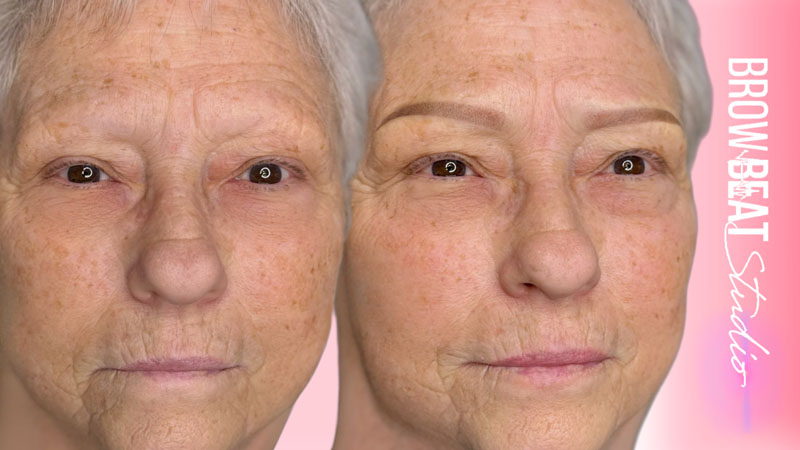
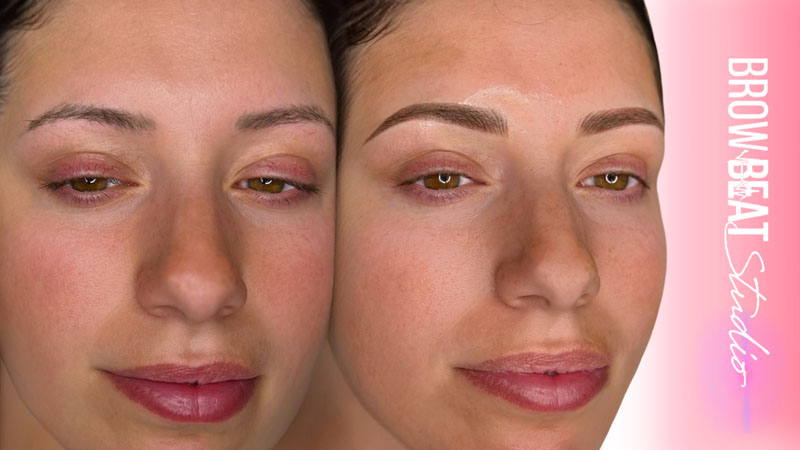
Permanent makeup does not move directly from a fresh treatment to its healed appearance. There is a healing period in between. During that time, permanent brows, lip color and upper eyeliner can look different from the result a client saw immediately after the procedure.
Color may initially appear stronger. The treatment area may feel different. Dryness or light flaking may occur.
Permanent makeup can temporarily look lighter, less even or simply unfamiliar as the skin moves through healing. Then the appearance continues to settle. For a first-time permanent makeup client, these changes can make much more sense when they are understood as stages of healing rather than separate finished results.
This guide explains the broad permanent makeup healing process and aftercare journey from the immediate post-procedure period through the healed result. Individual services still have their own healing details, so microblading, nano brows, powder and microshading, combination brows, lip blushing and permanent eyeliner each retain their dedicated healing information.
The permanent makeup procedure ends when the cosmetic tattoo treatment is complete. Healing begins immediately afterward. At that point, pigment has just been placed into the skin and the treatment area has recently been worked on.
The result the client sees at BrowBeat Studio Dallas is therefore fresh permanent makeup. It is real permanent makeup. It is simply not healed permanent makeup yet.
That distinction explains many of the visual changes clients notice during the following days and weeks.
Fresh brows may look more defined than the client eventually expects them to appear. Fresh lip blush can look considerably brighter or more intense than the eventual healed color. Fresh upper permanent eyeliner has just been completed around newly treated skin.
None of those immediate results should be viewed as though the skin has already finished responding to the procedure. The appointment has ended. The healing process has not.
There is no useful single day that makes every permanent makeup treatment on every client suddenly “healed.” The visible surface changes that clients notice first are only one part of the process. Different treatment areas can progress differently, and individual skin responses vary.
That is why BrowBeat separates the early visible healing period from the point at which the permanent makeup can be evaluated as a more settled healed result. The exact service matters too. Eyebrow skin does not behave exactly like lip tissue.
The upper lash line is another treatment area again. Rather than forcing every cosmetic tattoo into one identical calendar, it is more useful to understand the general sequence and then follow the service-specific instructions for the procedure you received.
Clients sometimes compare what they see on one healing day with the finished permanent makeup they expected and assume something has gone wrong simply because the two do not look identical. But healing permanent makeup is changing. The fresh result is one stage.
The early darker or brighter appearance is another. Dryness and surface changes can create another. A lighter or temporarily uneven-looking stage can follow.
Then the permanent makeup continues settling toward its healed appearance. Those stages should not be interpreted as though each one represents the permanent result the client will continue wearing.
Fresh permanent makeup can appear stronger because the pigment has just been placed and the treatment area has only recently undergone the procedure. This is particularly noticeable with permanent eyebrows. A freshly shaded brow may look more defined than the softer appearance expected later.
Fresh microblading or nano strokes can also look crisp and prominent immediately after treatment. That early intensity does not automatically mean the permanent makeup will remain at exactly that visual strength once healed.

Before any permanent pigment is placed, BrowBeat Studio Dallas maps the brow shape directly onto the skin using careful measurement and symmetry work. This guideline reflects the design plan for the eyebrow, not an early look at color or healing. Recognizing the mapping stage helps clients understand it as groundwork for the fresh, healing and healed stages that follow once the procedure begins.
A treatment-day photograph documents what BrowBeat created during the appointment. Hairstrokes may look crisp, shaded brows can appear strongly defined, lip color may be bright and upper eyeliner is newly completed. These images are valuable, but they represent the starting point of the post-procedure journey rather than the end of it.


Immediately after treatment, permanent eyebrows can appear more defined than they will later. Fresh hairstrokes are crisp and machine shading can carry greater visual intensity. The eyebrow has also just changed, which can make the new definition feel especially noticeable to the client before the brow begins moving through healing.
Lip blushing makes the fresh-versus-healed distinction especially easy to see. At the end of treatment, permanent cosmetic pigment can look bright and saturated within newly treated lip tissue. That immediate color is the starting point of healing rather than the exact permanent lip color the client should expect to see once the lips have settled.


Before any fresh lip-blush color is deposited, BrowBeat Studio Dallas outlines the lip shape to guide the permanent makeup procedure. At this stage, the client’s natural lip color is still visible and no cosmetic pigment has been placed yet. This mapping step is part of the planning that comes before the fresh, healing and healed stages covered throughout this page.
There is another factor beyond pigment intensity: the client is seeing the new permanent brow on her face for the first time. A feature she has looked at one way for years now contains additional permanent definition.
Even when the change is appropriate, unfamiliarity can make it feel especially noticeable on the first day. Healing then introduces further visual change as the permanent eyebrow settles.
Lip blushing provides one of the clearest examples of why fresh and healed permanent makeup should not be treated as the same appearance. Immediately after treatment, cosmetic pigment is fresh within newly treated lip tissue. The color can look brighter, stronger or more saturated than the softer healed result expected later.
That fresh intensity is part of the immediate post-procedure stage. It is not a reason to assume the final permanent lip color will remain identical to the treatment-day photograph.
A photograph taken at the end of a lip blush appointment documents the fresh treatment. A healed photograph documents a different stage. Both images can be useful, but they answer different questions.
The fresh image shows what was created during the procedure. The healed image shows how that permanent cosmetic color appears after the lips have moved through healing.
As permanent makeup begins healing, the treatment area may become dry and develop visible surface changes. Depending on the service and individual response, clients may notice light flaking, peeling or small areas of dry skin. Not every person experiences those changes with the same intensity.
Not every permanent makeup procedure looks identical while healing. The important point is that the surface of the skin is changing after treatment, and those changes can temporarily alter how the pigment underneath appears.
Yes, light flaking or peeling can occur during permanent makeup healing. The amount can vary according to the treatment area and the individual client. Some people notice very little.
Others see the healing surface more clearly. Clients should follow BrowBeat’s aftercare instructions and allow the treatment area to move through its normal surface changes rather than trying to force the process along.
A small healing area can look temporarily different from the permanent makeup around it. That does not make the small section an accurate preview of the complete healed result. The skin is still moving through the post-procedure period.
Permanent makeup is better evaluated after the treatment area has progressed beyond those temporary surface changes.
One of the more confusing stages can occur when fresh intensity has softened and the permanent makeup suddenly appears much lighter. The client may have spent the first few days thinking the color looked strong, only to become concerned when the treatment begins looking faint. That apparent change can be part of the healing journey.
The treatment area is not moving directly from “too dark” to “finished.” It is progressing through multiple stages while the skin settles.
Permanent makeup can temporarily appear less even while the treatment area is healing. Dryness, surface changes and different areas progressing at slightly different rates can affect what the client sees from day to day. This is particularly important because temporary healing patchiness should not immediately be confused with a permanent correction problem.
The cosmetic tattoo has not yet reached the stage at which the healed result can be fairly evaluated.
BrowBeat maintains a separate correction ecosystem for clients with previous permanent makeup requiring assessment. That is a different situation from a newly treated BrowBeat client looking at temporary variation during normal healing. Fresh permanent makeup needs time to complete its healing journey before its settled appearance can be understood.
Some clients become concerned when pigment appears unexpectedly light during the healing period. They may describe the permanent makeup as faded, missing or almost disappeared. During early healing, however, what is visible from the surface can change considerably.
A temporary light stage should not automatically be treated as the final pigment result. The permanent makeup still needs time to settle.

These terms are useful because they stop very different photographs from being compared as though they show the same stage. Fresh permanent makeup has just been completed. Healing permanent makeup is moving through the post-procedure period and may show temporary color and surface changes.
Healed permanent makeup has progressed beyond those early changes and provides a more meaningful view of the settled result. A strong permanent makeup portfolio can show all three, but they should be identified honestly.
This page explains the shared healing principles, and there are many types of permanent makeup but permanent brows, lips and eyeliner involve different treatment areas. Microblading healing has its own detailed journey. Nano brows have their own service-specific healing information.
Powder, ombré and microshading healing involves machine-shaded permanent brows. Combination brows contain both hairstrokes and shading. Lip blushing involves natural lip tissue.
Permanent eyeliner involves the upper lash line. The common principle is that each begins fresh, moves through healing and eventually reaches a more settled appearance. The details belong within the corresponding service silo.
This distinction keeps two very different time questions separate. Healing asks: when has the treatment moved through the post-procedure healing process? Longevity asks: once healed, how does the permanent makeup change over the longer term?
Long-term fading, pigment retention, maintenance and refresh timing belong to BrowBeat’s guide to how long permanent makeup lasts. This page stays with the period between the fresh procedure and the healed result.
Once the permanent makeup procedure is complete, the client’s role changes. The design has been created. The pigment has been placed.
The treatment area is now healing. Permanent makeup aftercare is the care followed during that post-procedure period while the skin moves from fresh cosmetic tattooing toward a healed result. Brows, lips and upper eyeliner are different treatment areas, so aftercare should not be treated as though every permanent makeup procedure requires one identical routine.
BrowBeat Studio Dallas provides instructions according to the service performed. Those instructions should take priority over generic permanent makeup advice collected from unrelated artists, social media posts or older procedures.
Permanent makeup has just been performed within the skin. The treatment area needs time to move through its normal healing process without unnecessary interference. Aftercare provides the client with a framework for how to handle that period.
It can address practical questions such as: How should I care for the treatment area? When can it get wet?
What about my normal skincare? Can I wear makeup? What about exercise, swimming or sun?
Those questions become important precisely because permanent makeup does not finish changing when the client leaves the studio.
A client healing from microblading should follow the instructions associated with her permanent brows. A lip-blushing client should follow the lip-specific protocol provided for her treatment. A permanent-eyeliner client is healing a different facial area again.
Permanent makeup is an umbrella category. Aftercare becomes more specific once the individual procedure is known. This page explains the broad principles, while the dedicated service pages carry the detailed healing information for each treatment.

A healed microblading photograph answers a different question from a fresh image. Instead of documenting newly created permanent strokes, it shows how those hairstrokes appear after the early surface changes have passed and the eyebrow has had time to settle.
Individual hairstrokes and shading can be inspected closely, but the permanent eyebrow is ultimately worn as part of the client’s face. A full-face healed image helps show whether the brow’s settled color, density and structure make sense beyond the magnified technical view.


Permanent makeup does not need to remain as visually intense as it looked immediately after treatment to continue doing its job. Hairstrokes can still add brow detail, shading can still create density, lip blush can still provide color and eyeliner can still define the upper lashes after the fresh appearance has softened.
A healed powder-brow photograph shows machine shading after the stronger fresh stage and temporary surface changes have passed. This is the more useful point for understanding how permanent brow density has settled within the client’s natural features.

Water is one of the most common permanent makeup aftercare questions. The answer should be based on the instructions provided for the specific treatment rather than on the assumption that every cosmetic tattoo should be handled identically. Clients should follow BrowBeat’s directions regarding washing, showering and water exposure during the healing period.
The practical goal is not to become afraid of water. It is to understand how the newly treated area should be handled while healing.
Clients sometimes hear that a treatment should not be soaked or unnecessarily exposed to water and interpret that as meaning the area can never be appropriately cleaned. Those are not necessarily the same instruction. How a permanent makeup area should be cleaned or washed depends on the service and BrowBeat’s specific post-procedure directions.
Follow the provided protocol rather than creating a new one from fragments of internet advice.
Clients can still maintain normal personal hygiene after permanent makeup, but the newly treated area may need to be handled differently during the healing period. Long soaking, direct water exposure or other treatment-area considerations should be managed according to the aftercare instructions for the service received. A shower is therefore not simply a yes-or-no permanent makeup question.
The relevant issue is how the healing area is treated during it.
No. If light flaking or surface shedding develops during healing, clients should not deliberately pick at the treatment area or try to accelerate the process. Healing skin should be allowed to progress naturally according to the aftercare instructions provided. Picking can interfere with the healing surface and makes it harder to distinguish the natural cosmetic tattoo healing process from changes caused by unnecessary manipulation.
It can be tempting to focus on one dry edge or small flaking area because it is visually noticeable. But permanent makeup is not improved by trying to manually create a smoother-looking healing stage. The treatment area is temporary in this form.
Allow it to progress rather than trying to make healing permanent makeup look finished before it actually is.
Conventional makeup around a newly treated permanent makeup area should be handled according to BrowBeat’s aftercare instructions. The fact that the client will eventually be able to wear ordinary cosmetics with permanent makeup does not mean freshly treated skin should immediately be approached as though no procedure occurred. The treatment area is healing.
That temporary stage should guide how products are used around it.
Once the appropriate healing period has passed, permanent makeup can function as a base beneath conventional cosmetics. Brow products can be added over permanent brows when desired. Lip products can change the appearance of healed lip blush.
Conventional eye makeup can be used with healed upper permanent eyeliner. The temporary restrictions of aftercare should not be confused with a permanent limitation on wearing makeup later.
Skincare products should be considered carefully around freshly treated permanent makeup. A normal skincare routine may contain cleansers, moisturizers, exfoliating ingredients, retinoids, acids or other active products that were never designed specifically for newly tattooed skin. Clients should follow BrowBeat’s aftercare guidance for when and how their usual products can be used around the treatment area.
Healing is not the time to assume that a product is appropriate simply because it is part of the client’s normal routine.

A client may have permanent brows while continuing to care for the rest of her face. She may have lip blushing while still using skincare elsewhere. The relevant distinction is the newly treated area.
Aftercare does not necessarily mean abandoning every normal personal-care habit. It means modifying the routine appropriately around healing permanent makeup.
Use only the aftercare products and application approach recommended for the permanent makeup service you received. More product is not automatically better. A product that works well within one person’s unrelated skincare routine should not automatically be introduced onto freshly treated permanent makeup.
BrowBeat’s service-specific instructions should guide what is used and how it is applied during healing.
Exercise matters during permanent makeup aftercare because strenuous activity can involve sweat, heat and repeated moisture around the treatment area. Clients should follow BrowBeat’s instructions regarding when to return to workouts after the procedure. This is especially relevant for clients who exercise frequently and may otherwise return to a high-sweat routine immediately after treatment.
“Can I work out?” is often really a question about what happens around freshly treated permanent makeup during the workout. A gentle activity and an intense session that produces substantial facial sweating are not necessarily equivalent experiences for the healing treatment area. Follow the post-procedure instructions rather than treating every form of movement as though it creates the same conditions.
Saunas, steam rooms and similar environments introduce heat and moisture during a period when permanent makeup is still healing. Clients should avoid returning to these environments until permitted by the aftercare guidance for their procedure. The temporary inconvenience is part of protecting the healing period rather than a permanent restriction on normal activities.
Swimming should also be considered within the healing and water-exposure conversation. Pools, hot tubs, lakes and other swimming environments are not the same as carefully following the cleaning instructions provided for a healing cosmetic tattoo. Clients should wait according to the aftercare instructions for their specific permanent makeup service before returning to swimming.
Sun exposure matters at two different stages of permanent makeup, and those stages should not be confused. During healing, the concern is caring for recently treated skin according to the aftercare instructions. Over the longer term, ultraviolet exposure becomes part of the conversation about how permanent makeup color can change and fade.
Sunscreen becomes useful for long-term skin and permanent makeup color protection, but freshly treated skin needs to be handled according to the immediate aftercare instructions first. Clients should follow BrowBeat’s guidance regarding products around the treatment area during healing rather than automatically applying their usual skincare routine to freshly tattooed skin. Once healed, sun protection becomes part of the longer-term permanent makeup conversation.
The restrictions surrounding fresh permanent makeup are not the client’s permanent lifestyle. The treatment area heals. Normal routines return.
Conventional cosmetics can again become part of the client’s appearance. Exercise resumes. Swimming resumes.
Skincare routines can be adjusted back appropriately. The purpose of aftercare is to guide a specific post-procedure period rather than to permanently reorganize everyday life.

A client can follow her instructions carefully and still see the permanent makeup change while healing. Color may look stronger first. Then lighter.
The treatment area may appear dry. Small areas may progress differently. Those visual changes are not something aftercare is intended to eliminate.
Aftercare supports the healing period. It does not make fresh permanent makeup skip directly to its healed appearance.
Permanent makeup advice online can become confusing because clients often combine instructions from different artists, procedures and treatment areas. A microblading post may be read by someone healing lip blush. An old powder-brow routine may be applied to a completely different service.
A friend may have received different instructions from another provider. The most relevant guidance is the aftercare provided for the permanent makeup procedure you actually received at BrowBeat Studio Dallas. That keeps the healing plan connected to the treatment rather than to a collection of unrelated internet instructions.
The permanent makeup a client sees immediately after treatment is only the beginning of the visible healing journey. Fresh pigment can look strong. The treatment area can then become dry or begin showing surface changes.
Color may appear softer. Some areas may temporarily look lighter or less even. Then the permanent makeup continues settling.
Understanding that progression helps prevent one temporary healing stage from being mistaken for the final result.
Although brows, lips and upper eyeliner do not heal identically, permanent makeup can be understood through a broad sequence. Fresh: the cosmetic tattoo has just been completed and color or definition may appear stronger. Early healing: the treatment area begins responding to the procedure and may develop dryness or other temporary surface changes.
Surface healing: light flaking or peeling may occur depending on the procedure and individual response. Temporary softer stage: permanent makeup can look lighter, less visible or temporarily uneven as the treatment area continues settling. Healed appearance: the early surface changes have passed and the permanent makeup can be viewed more meaningfully as a settled result.
This is a general framework rather than a promise that every client will experience identical changes on identical days.
What to expect from permanent makeup and day-by-day healing searches are common because clients naturally want to know what tomorrow will look like. But permanent makeup does not follow a perfectly synchronized calendar across every person and every procedure. One client’s visible flaking may begin earlier.
Another may experience very little. Lips can behave differently from brows. Upper eyeliner has its own treatment-area considerations.
The sequence is therefore more useful than expecting every permanent makeup client to match an exact photograph on an exact day.
Early healing is often when permanent makeup feels most visually unfamiliar. The client has a newly changed feature. The pigment is fresh.
The skin has recently undergone cosmetic tattooing. And the treatment has not yet had time to settle. This combination can make the first few days a poor time to decide exactly how strong, soft or even the final permanent makeup will appear.wH

Some clients notice light surface flaking as permanent makeup heals. The amount varies by person and procedure, and not everyone experiences it in the same way. When flaking occurs, it represents a temporary skin stage rather than a new permanent makeup design or a finished result.
Close photography magnifies details that may be far less noticeable at normal viewing distance. One dry or flaking section can therefore dominate an image even though it represents only a small part of the healing treatment area. BrowBeat considers the complete progression rather than judging the permanent makeup from one magnified patch.


The healed image allows BrowBeat Studio Dallas clients to see permanent cosmetic lip color after the immediate brightness, dryness and other early healing changes have passed. It provides a more meaningful view of how the lip-blush result has settled.
Fresh microblading strokes may look particularly crisp. Fresh nano hairstrokes can appear highly defined. Powder and ombré brows can show stronger density.
Fresh lip blush can appear bright. Upper eyeliner may look more noticeable immediately after treatment. Healing changes that fresh presentation.
A dry treatment area reflects light and shows texture differently from settled skin. That alone can change how a permanent makeup result appears from one day to another. A brow may look less smooth.
Lips may show visible dryness. Small sections can catch the eye because the healing surface is not visually uniform. The client is seeing the permanent makeup through a temporary skin condition rather than through its eventual healed surface.
If one section has begun flaking while another has not, the visible pigment can appear inconsistent across the treatment area. That does not mean each section has permanently retained a completely different amount of color. The client is comparing areas at different stages of surface healing.
This is why picking apart the result section by section during early healing can create unnecessary concern.
Permanent brows can temporarily show areas that appear lighter than others while surface healing progresses. Hairstrokes may seem less visible in one section. Shading can appear inconsistent.
The brow may simply look different from the fresh result photographed at the studio. That temporary appearance should be given time before the permanent eyebrow is evaluated as healed.
Lips can move from a strong fresh color into a much softer-looking stage as they heal. Because the difference can be visually significant, clients sometimes wonder where the fresh pigment went. The important point is that the lips are still progressing through healing.
The early bright result and the temporary softer stage are not two competing final outcomes.
During healing, clients sometimes describe areas as though the pigment has disappeared. What they can see from the surface is changing while the skin settles. A light-looking stage can therefore create the impression that very little permanent makeup remains.
It is too early to use that temporary appearance as the final measure of retention.
A photograph of another client’s healed brows or lips may be beautiful, but it is not an appropriate visual benchmark for a treatment that is only partway through healing. The two images represent different stages. A fair comparison requires the permanent makeup to reach the corresponding stage first.
The answer depends on the permanent makeup service and the individual healing response. The disappearance of obvious surface flaking does not necessarily mean the permanent makeup should immediately be treated as though every aspect of healing and settling is complete. The treatment needs time beyond the earliest visible changes.

A fresh result tells us what was created at the appointment. A healing result tells us what the treatment looks like during recovery. A healed result provides a much more useful view of how the permanent makeup has settled.
That is why healed photographs matter in permanent makeup. They show the work after the temporary intensity and surface changes of the immediate post-procedure period have passed.
A fresh result can be visually impressive because pigment is newly placed and definition can appear particularly strong. A healed result answers a different question. Neither image is inherently more legitimate.
They simply represent different stages of permanent makeup. Clear labeling helps clients understand what they are actually looking at.
Microblading creates individual manual hairstrokes, so clients often pay close attention to how those strokes look while healing. Fresh strokes can appear crisp and defined. Surface changes can temporarily affect how visible individual strokes seem.
The detailed progression, aftercare and healed appearance belong within BrowBeat’s dedicated Microblading Healing information. This umbrella page establishes only the shared principle: fresh microblading and healed microblading are not expected to look identical.
Nano brows create machine hairstrokes rather than manual microblading strokes. The result still begins fresh and moves through a healing period before the settled hairstroke appearance can be evaluated. Clients interested specifically in machine hairstroke healing should use BrowBeat’s Nano Brow Healing information rather than assuming every detail of microblading healing applies identically.
Machine-shaded permanent eyebrows have a different visual structure from individual hairstroke work. Fresh density can initially appear strong. The shaded result then moves through healing and softens toward its more settled appearance.
The dedicated Powder, Ombré & Microshading Healing information carries the detailed progression for this permanent brow family.
Combination brows include hairstrokes and shading. That means clients may be watching both hair-like detail and permanent density as the eyebrow moves through healing. The complete brow should be evaluated as one healed result rather than assuming each visual element must behave exactly like a separate standalone treatment.
BrowBeat’s Combo & Hybrid Brow Healing information owns that deeper journey.
Lip blushing begins with a fresh color that can be significantly stronger than the appearance expected after healing. The lips then move through their own post-procedure changes as the permanent cosmetic color settles. Because natural lip tissue behaves differently from eyebrow skin, lip healing should not be treated as though it is simply brow aftercare transferred to another facial area.
Dark lip neutralization begins with naturally more melanated lip tissue and a specialized color process. Clients receiving that treatment should follow the instructions and expectations associated with the actual dark lip service rather than comparing their progression directly with a standard lip blush photograph.

Upper permanent eyeliner and lash line enhancement involve a treatment area that is different again from brows and lips. The immediate appearance can change as the upper-eye area moves through healing. BrowBeat’s dedicated Permanent Eyeliner Healing information provides the service-specific detail rather than forcing the eye into a generic brow or lip timeline.
Microblading, nano, shading, combination brows, lip blushing and upper eyeliner are different permanent makeup procedures. But the larger progression remains understandable: fresh → healing → settled.
The details vary. The sequence remains useful. That broad framework allows a client to understand where she is in the permanent makeup journey while still using the correct service-specific information for the procedure she actually received.
Once permanent makeup has reached its healed appearance, another set of questions begins. How long will it remain visible? Why does one technique fade differently from another?
How do skin characteristics, sun exposure and skincare affect long-term retention? When might a client consider maintenance? Those are no longer healing questions.
This page remains focused on getting from fresh permanent makeup to the healed result.
One of the most common permanent makeup questions is also one of the hardest to answer from a single photograph or one isolated moment. Healing is a progression. A treatment area can look different from one day to the next without every change representing a problem.
Fresh color can look strong. Dryness can develop. Light flaking may appear.
Permanent makeup can temporarily look lighter or less even. Then the result continues settling. The most useful comparison is therefore not:
“Does my permanent makeup look exactly like it did on treatment day?” It is: “Is the treatment area progressing through the healing process described for the permanent makeup service I received?”
Permanent makeup has just been performed within the skin, so the treatment area does not necessarily look or feel completely untouched immediately afterward. Depending on the service and individual response, clients may notice temporary redness, sensitivity, dryness or other early post-procedure changes. The exact experience varies.
Brows, lips and upper eyeliner also involve different treatment areas, so one procedure should not automatically be used as the visual standard for another.
One client may notice obvious flaking. Another may see very little. One permanent brow may appear particularly strong during the earliest stage.
Another may soften quickly. Lip-blushing clients may notice color changes that would make little sense if compared directly with eyebrow healing. Variation does not automatically mean the permanent makeup is healing incorrectly.

If something about the treatment area concerns you, appears outside the healing expectations provided for your service or feels meaningfully different from what BrowBeat explained, contact the studio rather than trying to diagnose the situation from internet photographs. BrowBeat Studio Dallas can understand what procedure you received and where you are in the post-procedure period. That context is more useful than comparing your healing permanent makeup with an unrelated image from another artist or treatment.
If symptoms suggest a medical concern or require medical assessment, appropriate medical care should be sought rather than relying on cosmetic tattoo information to provide a diagnosis.
BrowBeat can explain the expected cosmetic tattoo healing journey and the aftercare associated with the permanent makeup service performed. That does not turn a permanent makeup studio into a substitute for medical care. Questions about the appearance of healing permanent makeup can often begin with the studio.
Medical symptoms or concerns requiring diagnosis belong with an appropriate healthcare professional.
If a brow temporarily looks lighter in one area or lip color appears different from the fresh result, the answer is not to manipulate the healing treatment area in an attempt to make it look more even. Do not pick at flaking skin. Do not invent additional aftercare steps because one section looks different today.
Do not apply unapproved products in an attempt to change the healing appearance. Follow the aftercare instructions and allow the permanent makeup to progress through the stage it is actually in.
Looking closely at a cosmetic tattoo several times a day can make normal small changes feel enormous. A dry section becomes the only thing the client sees. One lighter hairstroke suddenly feels more important than the entire eyebrow.
A lip color shift becomes alarming because yesterday’s photograph looked different. Permanent makeup healing is better understood across the progression than through constant inspection of tiny short-term changes.
The appropriate point depends on the permanent makeup service and individual healing response. That is why BrowBeat’s technique-specific healing pages remain important. What matters at the umbrella level is that evaluation should occur after the early post-procedure changes have had time to settle.
A fresh result is too early. A flaking result is too early. A temporary light or uneven stage is too early.
The healed result provides the more useful point for understanding how the permanent makeup has settled.
Healed permanent makeup is the cosmetic tattoo after the early post-procedure healing changes have passed and the result has had time to settle. It is generally softer than the immediate fresh appearance. The treatment area no longer has the same newly worked presentation seen at the end of the appointment.
And the client can evaluate the permanent makeup without temporary flaking or early surface changes dominating what she sees.
For permanent eyebrows, the healed result allows the client to see how the brow has settled after the stronger fresh stage. Microblading and nano can be evaluated for their healed hair-like detail. Powder, ombré and microshading can be viewed for settled permanent density.
Combination brows can be evaluated as one result containing both hairstrokes and shading.
Fresh lip blush can be vivid. The healed result provides a more meaningful view of the permanent color after the lips have progressed beyond the immediate treatment and surface-healing stages. This is why a fresh lip photograph should not be used alone to predict exactly how the client’s permanent lip color will eventually appear.
Upper permanent eyeliner and lash line enhancement also need to progress beyond the newly treated stage before the settled result can be evaluated. Once healed, the client can see the lasting upper-lash definition without the temporary appearance associated with a freshly completed procedure.
Fresh and healed photographs answer different questions. A fresh image asks: What did the artist create during the appointment?
A healed image asks: How did that permanent makeup settle after the post-procedure period? Both are valuable.
But they should not be presented as though they represent the same stage.
Fresh images reveal treatment-day detail. Healed images reveal the settled result. Progression photographs can show what happened between them.
Together, those images give clients a more complete understanding of cosmetic tattooing than a gallery containing only freshly completed permanent makeup.

Softening from the fresh appearance is part of why permanent makeup design needs to account for the fact that treatment-day pigment is not being viewed at its final stage. The fresh result can look crisp, bright or strongly defined. The healed result is viewed after the treatment area has moved beyond those early changes.
This difference is especially visible in lip blushing but also matters across permanent brow and eyeliner procedures.
This is where healing and longevity finally separate. A healed permanent makeup result has completed the post-procedure journey covered by this page. That does not mean the visible cosmetic tattoo remains frozen in that exact appearance indefinitely.
Over the longer term, permanent makeup can gradually soften and fade. Skin characteristics, treatment type, pigment, sun exposure, skincare and other factors can influence how that longer-term change occurs. Those are longevity questions.
A client can therefore think about permanent makeup through three broad time periods. Appointment: the permanent makeup is designed and created. Healing: the fresh treatment progresses toward its settled result.
Longevity: the healed permanent makeup changes gradually over the longer term. Separating those stages makes many permanent makeup questions easier to answer.
Aftercare is temporary. Maintenance is long-term. During aftercare, the client is caring for recently treated permanent makeup while it heals.
Long-term maintenance becomes relevant later, after the permanent makeup has healed and gradually changed over time. Questions about when a client might consider a refresh belong to the longevity stage rather than the immediate post-procedure period.
Sun exposure is another subject that crosses the boundary between healing and longevity. During healing, recently treated skin needs to be handled according to BrowBeat’s aftercare instructions. After healing, UV exposure becomes part of the longer-term conversation about permanent makeup color and fading.
The subject remains relevant. The reason changes.
The fresh intensity is temporary. The dryness is temporary. The flaking stage is temporary.
The moment when the permanent makeup looks unexpectedly light can be temporary. The aftercare restrictions are temporary. The purpose of healing is to move beyond those stages toward the settled permanent makeup result.
This permanent makeup healing guide begins where the procedure page ends. The cosmetic tattoo is fresh. The client leaves BrowBeat Studio Dallas with aftercare instructions.
The treatment area begins healing. Color and surface appearance change. The permanent makeup may look stronger, drier, lighter or temporarily less even at different stages.
The client follows the appropriate aftercare for the procedure she received. Then the early healing changes pass and the permanent makeup reaches its more settled appearance. That is where this page stops.
Once permanent makeup has healed, the next question is no longer: “What will it look like tomorrow?” The questions become longer-term.
How long can the result remain visible? Why does permanent makeup fade? Do hairstrokes and shading behave the same way over time?
How can skin characteristics affect retention? What role do sun exposure and skincare play? When might maintenance eventually be considered?
The permanent makeup journey has moved from fresh → healing → healed. From here, it moves into longevity.

Permanent makeup moves from a fresh treatment through a period of surface and appearance changes before reaching a more settled healed result. Color can initially look stronger, the treatment area may become dry or lightly flake, and the permanent makeup can temporarily appear lighter or less even before healing progresses.
Permanent makeup healing time varies by procedure and individual response. Brows, lips and upper eyeliner involve different treatment areas, so BrowBeat Studio Dallas uses service-specific healing guidance rather than assuming every cosmetic tattoo reaches its healed appearance on exactly the same day.
A broad permanent makeup healing sequence is fresh treatment, early healing, surface changes such as dryness or light flaking, a possible temporary lighter or uneven-looking stage, and then a more settled healed appearance. The exact progression varies by procedure and client.
No. Microblading, nano brows, shaded brows, combination brows, lip blushing and permanent eyeliner involve different techniques and treatment areas. They share the broad fresh-to-healed journey, but their detailed healing stages and aftercare can differ.
Fresh permanent makeup can look stronger because cosmetic pigment has just been placed and the treatment area has only recently undergone the procedure. Permanent brows in particular may appear more defined during the fresh stage than they do once the skin has healed and the result has settled.
Fresh lip blush can appear significantly brighter or more saturated because the pigment is newly placed within recently treated lip tissue. The treatment-day color is not the same stage as healed permanent lip color, so the fresh intensity should not be assumed to remain visually identical.
Yes, permanent makeup commonly appears softer as it moves away from the fresh treatment stage. Clients may also experience a temporary period when the pigment looks unexpectedly light while the treatment area is still healing, so early appearance should not be treated as the final healed result.
Permanent makeup can temporarily appear much lighter during healing as the treatment area moves through surface changes and settles. A light-looking stage does not automatically represent final pigment retention, so the cosmetic tattoo should be given time to reach the appropriate healed stage before it is evaluated.
Yes. Permanent makeup can temporarily look less even while different sections of the treatment area progress through healing. Dryness, flaking and surface changes can affect how visible pigment appears from one area to another before the cosmetic tattoo settles.
No. Temporary unevenness during the healing of newly performed permanent makeup is different from assessing older or previous cosmetic tattoo work for correction. New permanent makeup should first be allowed to progress through its healing period before the settled result is evaluated.
Light flaking or surface shedding can occur during permanent makeup healing, although the amount varies by treatment and client. Some people notice very little, while others see the surface changes more clearly. Follow the aftercare instructions for the procedure you actually received.
No. Do not deliberately pick, peel or remove flaking skin from healing permanent makeup. Allow the treatment area to progress naturally and follow BrowBeat’s aftercare instructions rather than trying to accelerate the surface-healing process.
Different areas can be at slightly different stages of healing, which can temporarily change how visible the pigment appears. An uneven-looking stage after surface flaking is not necessarily an accurate representation of the final healed permanent makeup.
Fresh permanent makeup has just been completed and can appear stronger, brighter or more defined. Healed permanent makeup has progressed beyond the early post-procedure and surface-healing stages, providing a more meaningful view of how the cosmetic tattoo has settled.
Permanent makeup should be evaluated after the early healing changes associated with the specific procedure have had time to settle. A fresh result, flaking result or temporary light stage is too early to fairly evaluate the healed cosmetic tattoo.
Permanent makeup aftercare is the temporary care followed after a cosmetic tattoo procedure while the treatment area heals. It can include service-specific guidance about cleaning, water exposure, products, conventional makeup, exercise, swimming, heat and sun.
No. Permanent brows, lip blushing and upper permanent eyeliner involve different treatment areas, so clients should follow the aftercare instructions associated with their specific BrowBeat procedure rather than assuming one universal PMU aftercare routine applies to everything.
Water exposure should be handled according to the aftercare instructions for the permanent makeup service you received. Washing or cleaning a treatment area according to BrowBeat’s protocol is not necessarily the same as soaking it or exposing it unnecessarily to water during healing.
Clients can maintain normal hygiene after permanent makeup, but the freshly treated area should be handled according to BrowBeat’s service-specific aftercare instructions. The relevant question is how the healing cosmetic tattoo is exposed to water during the shower rather than whether the client can shower at all.
Follow the cleaning and washing instructions provided for the permanent makeup procedure you received. A client healing permanent brows may need to handle the treatment area differently from the rest of her face while still maintaining appropriate personal hygiene.
Conventional cosmetics around freshly treated permanent makeup should be used according to BrowBeat’s aftercare instructions. Once the appropriate healing period has passed, conventional brow products, lip products and eye makeup can still be worn with healed permanent makeup.
Normal skincare may need to be modified around freshly treated permanent makeup. Clients should follow BrowBeat’s instructions regarding cleansers, moisturizers and active skincare products around the healing area rather than assuming their usual routine is appropriate immediately after cosmetic tattooing.
Use only the aftercare products and application approach recommended for the permanent makeup procedure you received. More product is not automatically better, and unrelated skincare products should not be introduced onto freshly treated cosmetic tattooing without appropriate guidance.
Exercise can involve sweat, heat and moisture around freshly treated permanent makeup. Follow BrowBeat’s service-specific instructions regarding when to resume workouts, particularly activities that produce substantial facial sweating during the healing period.
Swimming should wait until permitted by the aftercare instructions for your specific procedure. Pools, hot tubs, lakes and similar environments expose healing permanent makeup to conditions that are different from carefully following the cleaning protocol provided by BrowBeat.
Saunas and steam rooms introduce heat and moisture while permanent makeup is still healing. Clients should wait until the appropriate point in their service-specific aftercare before returning to those environments.
During healing, recently treated permanent makeup should be handled according to BrowBeat’s aftercare instructions regarding sun exposure and products. After healing, UV exposure becomes part of the longer-term conversation about permanent makeup fading and longevity.
Compare the treatment area with the healing expectations provided for the specific permanent makeup procedure rather than expecting it to look identical to treatment day. If something seems outside those expectations or causes concern, contact BrowBeat Studio Dallas for guidance rather than relying on unrelated internet photographs.
Contact BrowBeat if something about the treatment area concerns you or appears meaningfully different from the healing expectations provided for your service. If symptoms require medical diagnosis or treatment, appropriate medical care should be sought rather than relying on cosmetic tattoo information as a substitute.
Once permanent makeup has healed, the immediate aftercare journey is complete and the longer-term longevity stage begins. Questions about gradual fading, pigment retention, sun exposure, skincare, maintenance and eventual refresh timing belong to BrowBeat’s guide to how long permanent makeup lasts.