A permanent makeup appointment begins before pigment is ever placed into the skin.
There is preparation.
There is the client’s natural starting point.
There is a conversation about what she actually wants.
There may be photographs to look through, everyday makeup to discuss, a brow shape to develop or a color direction to establish.
Then comes the permanent procedure itself.
For someone getting permanent makeup for the first time, understanding that sequence can make the appointment feel considerably less mysterious.
The exact process changes depending on whether the treatment involves brows, lips or upper eyeliner, but the broader journey follows a recognizable pattern:
prepare → evaluate → design → select color → address comfort → perform the procedure → review the fresh result.
This guide explains that larger permanent makeup process from beginning to end.
A permanent makeup appointment is not simply the period when an artist is actively working with a manual tool or permanent makeup machine.
The appointment includes the decisions that need to happen before that technical work begins.
At BrowBeat Studio Dallas, permanent makeup appointments commonly reserve more than three hours because permanent work deserves time for the complete process rather than only the procedure itself.
The client arrives with a face that already has natural features, asymmetry, coloring and history.
She also arrives with preferences.
Some of those preferences may be very clear.
Others may still need to be translated into permanent makeup language.
The early part of the appointment gives BrowBeat time to understand both.
A first-time permanent makeup client does not need to arrive speaking fluent PMU.
You do not need to know professional pigment names.
You do not need to understand every permanent makeup machine technique.
You do not need to know the technical language for the eyebrow you have been drawing for the last ten years.
You can show us.
You can bring photographs.
You can explain what you normally do with conventional makeup.
You can point to the part of your brow you always fill.
You can show us the lipstick color you repeatedly buy.
You can explain how much upper eyeliner feels normal on your face.
Those are all useful forms of information.

At the end of the permanent procedure, the temporary planning stage has been replaced by the fresh microblading result. The client can now see the complete eyebrow rather than the individual decisions that built it. This is the immediate treatment result at BrowBeat Studio Dallas—not yet the healed permanent brow.
At the end of treatment, the client does not need to see separate technical categories. She sees one fresh permanent eyebrow containing both hair-like detail and shaded density. The procedure may have required multiple effects, but the finished design should bring them together.


Naturally blonde or lighter eyebrow hair creates a different visual starting point from deeper natural brows. Permanent pigment still needs to be visible enough to accomplish the intended result, but visibility does not require automatically turning a soft brow into a dark one. Color planning belongs to the individual eyebrow.
A microbladed eyebrow does not appear all at once. Individual manual hairstrokes are created progressively through the treatment area. Close photographs can show that process developing from the first permanent detail toward a more complete brow while the mapped structure continues to provide context for where those strokes belong.


Once machine shading is complete, the client sees the fresh permanent brow created during the appointment. The shape, color and density are immediately visible, but the eyebrow has only just been treated. What happens to that fresh result during the following days and weeks belongs to the healing stage.
The front of a permanent eyebrow can show clearly how individual microblading strokes contribute to the larger result. Each stroke is small, but together they begin creating the hair-like texture that distinguishes microblading from machine-shaded permanent brows. The technical detail accumulates until it reads as part of an eyebrow rather than a collection of isolated lines.

Permanent makeup preparation begins with following the pre-care instructions provided for the specific procedure you are having.
Brows, lips and upper eyeliner are different treatment areas, so not every preparation instruction is identical across every permanent makeup service.
That distinction matters.
A generic internet list should not automatically replace the instructions associated with the actual procedure and provider.
At the broadest level, preparation is about arriving with the treatment area and relevant information ready for the permanent makeup appointment.
Pre-care works best when it is read early enough to be useful.
Some preparation considerations occur before the morning of the appointment.
If you wait until you are already driving to the studio to read everything, there may be very little opportunity to change something that should have been addressed earlier.
Review the instructions associated with your permanent makeup service and ask questions when something is unclear.
Whether a particular circumstance affects suitability or timing is a candidacy question rather than something a general process guide should diagnose.
BrowBeat’s permanent makeup candidacy guide addresses those broader suitability considerations separately.
Preparation does not mean making every artistic and technical decision at home.
You may know that you want more brow.
You may know that you like visible hairstrokes.
You may know that you prefer the appearance of a filled brow.
You may know that you want more lip color.
That is enough to begin a meaningful conversation.
The permanent makeup appointment exists partly to turn those preferences into a treatment plan.
Reference photographs can be extremely useful during permanent makeup planning.
They give the client a way to communicate visually when words such as natural, soft, defined, full or subtle mean different things to different people.
One person’s “natural brow” contains visible hairstrokes.
Another person’s natural brow is softly filled.
Another has worn clearly defined brows for years and considers that familiar rather than dramatic.
Pictures give those words context.
One reference photograph can show something you like.
Several can reveal a pattern.
Maybe every brow you saved contains individual hairstrokes.
Maybe nearly all of them have visible shaded density.
Maybe you repeatedly save brows with a softer front.
Perhaps the lip colors you choose consistently lean in a similar direction.
Repeated preferences can be more informative than trying to copy one photograph exactly.
Your everyday cosmetics can sometimes communicate more than an inspiration photograph.
If you fill the entire eyebrow every morning, that tells us something.
If you use a fine brow pencil only through one sparse section, that tells us something different.
If you repeatedly buy the same family of lip colors, that is useful.
If you have worn upper eyeliner in almost the same way for decades, that history matters too.
Permanent makeup is being added to your face, so the way you already use conventional makeup can provide important context.

At BrowBeat, the evaluation and design conversation are part of the permanent makeup appointment rather than requiring a separate consultation appointment for every standard new service.
That gives the artist and client time to look at the actual treatment area together before permanent work begins.
For brows, that means seeing the natural eyebrow hair and how it grows.
For lips, it means seeing the client’s natural lip tissue and color.
For upper eyeliner, it means looking at the individual eye and lash line.
Permanent makeup should begin with the feature that actually exists rather than with an imaginary generic version of it.
The evaluation depends on the treatment, but the purpose is consistent:
understand the starting point before deciding how permanent makeup should add to it.
The artist may consider the existing natural feature, the client’s stated preferences and what the proposed permanent work is intended to contribute.
The conversation should make the permanent makeup more specific, not more generic.
Before permanent brow work begins, existing eyebrow hair provides useful information.
Where is natural growth strong?
Where is it sparse?
Does one area need more visual continuity?
How does the client normally fill the brow herself?
A client with substantial natural hair has a different starting point from someone with very little natural eyebrow remaining.
Those differences matter before the permanent technique ever touches the skin.
Lips already contain color.
That natural tissue becomes part of the permanent lip makeup starting point.
A client may arrive describing a color she loves, but the permanent makeup discussion still needs to begin with the lips that will actually receive the pigment.
For clients with naturally more melanated lip tissue, the starting point may lead to a dark lip neutralization conversation rather than a standard lip blush approach.
Permanent eyeliner is created around an individual eye, not on a blank diagram.
The upper lash line, surrounding anatomy and the client’s familiar amount of eyeliner all provide context for the permanent design.
This is also why winged upper eyeliner is considered case by case at BrowBeat Studio Dallas rather than treated as one automatic design for every client.
A permanent makeup appointment may eventually involve a manual microblading tool or a permanent makeup machine.
But equipment should not be the first thing deciding what the client sees in the mirror.
The visual result comes first.
Does the eyebrow need hair-like detail?
Does the client prefer shaded density?
Is the goal a combination of the two?
What lip color direction feels familiar?
How much upper-eye definition belongs on this particular client?
Once the result has been understood, the technique has a clear job.
For permanent eyebrow services, brow mapping allows the proposed structure to be seen on the client’s own face before the permanent procedure begins.
This is an important transition.
Reference photographs belong to other people.
Words remain abstract.
Mapping brings the permanent brow conversation onto the client’s actual features.
A client may bring a photograph because she loves the softness, hairstrokes or general structure of another brow.
That photograph is useful information.
It is not a stencil.
The client’s own facial features and natural eyebrow growth still exist.
Permanent brow design needs to be developed in that context rather than attempting to transplant another person’s eyebrow onto a different face.
“I want them a little fuller” is useful.
Seeing a temporary mapped design makes the conversation more precise.
The client can look in the mirror.
She can see where the proposed brow begins and ends.
She can react to the overall structure.
She can communicate when something feels unfamiliar.
That visual feedback is part of why BrowBeat reserves meaningful time for permanent makeup appointments.

Temporary mapping moves the eyebrow conversation from words and reference photographs onto the client’s own face. The proposed structure can be seen before pigment is placed into the skin, giving BrowBeat and the client something specific to evaluate rather than asking either person to imagine the permanent brow entirely in her head.
Natural faces contain differences from side to side. Eyebrow hair grows differently, eyes can sit differently and facial muscles do not move as mathematically mirrored halves. BrowBeat uses mapping to work toward visual balance while designing for the real face rather than an imaginary perfectly symmetrical one.


Brow mapping develops progressively. Early marks establish information that can be refined as the design takes shape. A photograph at this stage can help explain that permanent brow planning is a process rather than one line drawn quickly and accepted without further evaluation.
Online inspiration exists on other people’s faces. Temporary mapping allows the proposed permanent eyebrow to be viewed beside the client’s own eyes, natural hair and facial structure. That transition from reference image to real face is one of the most important steps before permanent brow treatment begins.

Human faces naturally contain asymmetry.
Eyebrows grow differently.
Eyes are not perfectly identical.
Muscles move differently from one side of the face to the other.
Permanent brow mapping can work toward visual balance without pretending the face is a perfectly symmetrical drawing.
The goal is a permanent eyebrow design that makes sense on the client’s real face.
This is one of the most important differences between planning and performing permanent makeup.
The proposed result should not exist only inside the artist’s head.
The client needs an opportunity to participate in the conversation before permanent work begins.
For brows, temporary mapping provides something visible to review.
For lips and eyeliner, the planning process is specific to those treatment areas.
The exact method changes.
The principle does not:
understand what is being created before beginning the permanent procedure.
Once the design direction is understood, color becomes another part of the permanent makeup process.
But permanent makeup color selection is not the same as choosing conventional makeup from a shelf.
Permanent pigment is being placed into skin.
The client’s natural coloring remains part of what the finished result is seen beside and through.
For eyebrows, natural brow hair and the overall coloring of the client provide important context.
For lip blushing, the natural lips already contain color before permanent pigment is added.
For upper eyeliner, the color needs to make sense within the eye treatment being created.
The permanent makeup artist therefore considers more than the name printed on a pigment bottle.
Permanent eyebrow pigment does not exist independently from natural eyebrow hair.
The two will eventually be seen together.
A client with naturally light brow hair may need a very different permanent color conversation from someone whose natural brows are considerably deeper.
The goal is not simply to select the darkest color that will be visible.
It is to create permanent brow detail or density that belongs with the eyebrow and client.
This is an important practical distinction.
Permanent makeup adds pigment within the skin.
It does not bleach or lighten the client’s natural eyebrow hair.
If natural brow hairs are deeper than the surrounding permanent work, those hairs remain part of what the client sees.
Permanent eyebrow color therefore needs to be discussed in relation to the natural brow that already exists.
Lip blushing has its own color-selection process because pigment is being added within natural lip tissue.
The client can absolutely bring color preferences.
A favorite lipstick can be useful.
A photograph can be useful.
Words such as pink, peach, coral or rosy can provide direction.
But those preferences are the beginning of the color conversation rather than a professional pigment formula.
BrowBeat considers the client’s natural lip color and the cosmetic direction she wants when planning permanent lip color.

If a client has worn the same lipstick family for years, that tells us something meaningful about her taste.
She may consistently prefer warmer colors.
She may gravitate toward softer pinks.
She may like peachier tones.
Those preferences can help communicate the desired direction.
Permanent lip pigment still has to be considered within the client’s actual natural lips rather than copied from the appearance of a conventional product sitting on the surface.
For appropriate clients with naturally more melanated lip tissue, dark lip neutralization begins from a different natural color base.
The purpose is not simply to select a standard lip blush shade and apply it in exactly the same way.
The client’s natural pigmentation changes the starting point and therefore the permanent makeup color discussion.
That specialized treatment is addressed more deeply within BrowBeat’s Dark Lip Neutralization information.
Upper permanent eyeliner is not being used to imitate eyebrow hair or create lip color.
Its job is lasting definition around the upper lash line.
That means pigment selection belongs within the design of the eye treatment itself.
The color, amount of definition and placement need to work together as one permanent eye result.
A client does not need to research professional permanent makeup pigment names before her appointment.
She does not need to arrive requesting a particular bottle because she saw it used online.
Color names can be useful identifiers for artists, but the name alone does not explain how that pigment belongs within one client’s permanent makeup treatment.
The client can communicate the result she likes.
The artist handles the professional pigment conversation behind it.
By the time the permanent portion of treatment begins, several earlier pieces should already make sense.
The artist has seen the natural treatment area.
The client’s preferences have been discussed.
The design direction has been established.
Relevant color decisions have been made.
For permanent brows, mapping has provided a visible structure to review.
The appointment can then move from planning into the actual cosmetic tattoo procedure.
This is one of the most common questions first-time permanent makeup clients ask.
Permanent makeup involves working in the skin, so clients should not expect the procedure to feel exactly like having conventional makeup applied.
At the same time, the experience is not identical for every person or every treatment area.
Sensation can vary by client, procedure and stage of the treatment.
Comfort measures, including numbing where appropriate to the service, are part of the permanent makeup process.
One person’s description of a procedure cannot predict exactly what another client will feel.
People have different sensitivity levels.
Brows, lips and the upper lash line are also different treatment areas.
Even within the same permanent makeup service, individual experiences can vary.
For that reason, BrowBeat does not need to promise that every client will describe permanent makeup in exactly the same way.
Numbing products may be used as appropriate within the permanent makeup procedure to help manage comfort.
The exact approach can depend on the service being performed and the stage of treatment.
Clients do not need to manage that technical process themselves.
It is part of the appointment and procedure planning.
Once the design and preparation stages are complete, cosmetic pigment is placed into the skin using the technique required for the specific permanent makeup service.
That technique may be manual.
It may use a permanent makeup machine.
Some permanent brow treatments can involve both.
The important point for a client is that the method changes according to what the permanent makeup is intended to create.

By the time a tool reaches the skin, BrowBeat has already gathered information about the client’s natural starting point and desired result. Design and color have been considered. Mapping has been reviewed where appropriate. The technical procedure is therefore not beginning from nothing; it is executing a plan developed earlier in the appointment.
Once the proposed permanent eyebrow has been developed and reviewed, the appointment can move toward the technical procedure. The completed map represents the work that happened before pigment placement: evaluation, design, client feedback and refinement coming together as a visible plan on the client’s own face.


Machines, manual tools and pigments are part of cosmetic tattooing, but they do not need to lead the appointment. First comes the person: what she has naturally, what she normally wears and what she wants the permanent makeup to contribute. Once those things are understood, the technical choices have a much clearer purpose.
Microblading uses a manual technique to create individual permanent hairstrokes. An image of the tool beginning work can visually connect the earlier mapped design with the technical stage that follows. The plan has already established the eyebrow; the manual procedure now begins translating that plan into permanent hair-like detail.

When a permanent makeup procedure is complete, the client is seeing the fresh result.
Fresh permanent makeup is useful because it shows what was created during the appointment.
But it should not automatically be interpreted as the final healed appearance.
Cosmetic pigment has just been placed into the skin.
The treatment area has just been worked on.
Color can appear stronger or more noticeable immediately after treatment than it will later.
The exact fresh appearance also varies according to the permanent makeup service.
Fresh microblading does not look exactly like fresh powder brows.
Fresh permanent brows do not look like fresh lip blushing.
And neither should be expected to look like newly completed upper permanent eyeliner.
They are different procedures moving into their own healing journeys.
This is one of the most useful things for a first-time permanent makeup client to understand before leaving the studio.
The treatment-day result is fresh.
It may appear more defined.
Color may look brighter or deeper.
The treatment area itself may also look different simply because the procedure has just been completed.
That immediate appearance is a stage of the permanent makeup process rather than the final point from which every future result should be judged.
Immediately after a permanent eyebrow procedure, hairstrokes, shading or both may appear more visually prominent than they eventually will after healing.
The client is also seeing the new brow for the first time.
Even a thoughtfully planned change can feel more noticeable simply because it is unfamiliar.
The fresh brow therefore needs to be understood in context:
the permanent procedure has just finished.
Lip blushing provides one of the clearest examples of the difference between fresh and healed permanent makeup.
The color visible at the end of the appointment is fresh pigment within newly treated lip tissue.
That immediate color should not be treated as though it represents the exact final healed intensity.
The lips still have a healing process ahead of them.
Upper permanent eyeliner is newly completed when the client first sees it at the end of treatment.
The surrounding treatment area has just undergone cosmetic tattooing, so the immediate view is again a fresh result rather than the final healed appearance.
The deeper healing information belongs within BrowBeat’s dedicated Permanent Eyeliner resources and the broader permanent makeup healing guide.

During a lash line enhancement, permanent cosmetic definition is concentrated closely around the upper lashes. The treatment image can show how a relatively small area of machine work creates lasting definition without requiring the procedure to become a larger eyeliner design.
A client who prefers stronger upper-eye definition may have a different visual goal from someone choosing a subtle lash enhancement. The process still begins with understanding the eye and intended result before pigment placement. BrowBeat does not treat greater visibility as a reason to skip individualized planning.


Once lip blushing is finished, BrowBeat can review the fresh permanent color with the client. This is the treatment-day result—the point where the procedure ends. It should not be confused with the healed lip color that develops after the post-procedure period.
Before permanent lip pigment is placed, BrowBeat Studio Dallas considers the client’s natural lips and the color direction discussed earlier in the appointment. The technical procedure begins only after that starting point has been understood and the permanent lip treatment has a clear cosmetic goal.

This is the clean dividing line between two different parts of permanent makeup.
Once the client leaves the treatment stage, the questions change.
How will the color change?
What might the treatment area look like over the next several days?
When does permanent makeup begin to look softer?
What aftercare needs to be followed?
When is the treatment considered healed?
Those are no longer procedure questions.
Permanent makeup aftercare is part of what the client takes away from the appointment.
Brows, lips and upper eyeliner do not necessarily have identical aftercare considerations, so clients should follow the instructions associated with the specific procedure they received.
The artist’s job is not finished simply because the permanent pigment has been placed.
The client needs to understand the next stage before leaving.
However, the detailed rules around washing, water, skincare, makeup, exercise, sweating, swimming, sun exposure and the changing appearance of healing permanent makeup belong to the Healing & Aftercare page.
At the end of treatment, the permanent makeup has moved from an idea to something visible.
The mapped brow has become a permanent eyebrow.
The planned lip color has become fresh lip blush.
The upper-eye design has become permanent lash-line definition.
This final view gives the client and artist an opportunity to look at the completed fresh treatment before the appointment ends.
Close-up photographs can show the technical detail created during the procedure.
Individual microblading strokes can be visible.
Nano hairstrokes can be seen separately.
Machine shading can show its density.
Fresh lip pigment can be seen across the treatment area.
Upper permanent eyeliner can be viewed closely around the lashes.
Those details help document what was created.
The client does not leave the studio as a close-up photograph.
She leaves with a complete face.
That wider perspective matters.
A permanent brow needs to work with both eyes, the hair, the skin and the rest of the face.
Lip color needs to sit within the client’s overall coloring.
Permanent eyeliner needs to work with the complete eye rather than only looking precise along one small section of the lash line.
The end-of-appointment review therefore has two useful perspectives:
the detail and the person.

A finished permanent makeup photograph becomes more useful when the natural starting point is also visible.
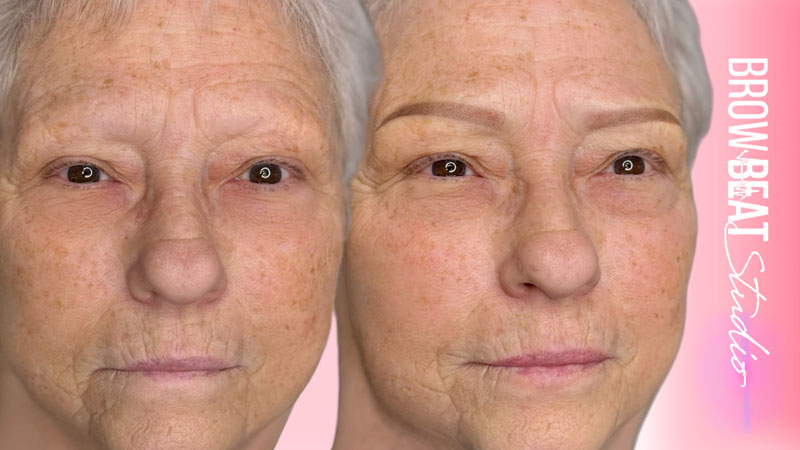
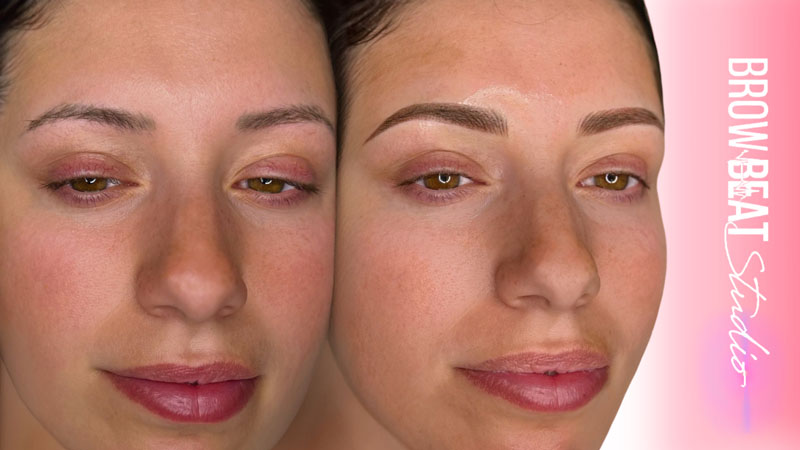
The before image shows what existed before treatment.
The after image shows what the permanent makeup added.
That difference may be dramatic.
It may also be very specific.
A sparse brow tail may now contain permanent detail.
A light eyebrow may have greater definition.
Lips may have more visible color.
The upper lash line may have lasting definition.
Before-and-after photography allows the result to be understood relative to the client rather than judging permanent makeup only by how noticeable the finished photograph appears.
From the outside, the permanent procedure can appear to be the entire service.
From inside the appointment, it is one part of a longer decision-making process.
The client prepares.
The natural feature is evaluated.
Preferences are discussed.
Reference photographs or everyday makeup may provide additional information.
Brows are mapped.
Color is considered.
Comfort measures are addressed.
The appropriate manual or machine technique is used.
The artist checks detailed work and the wider facial result.
The completed fresh permanent makeup is reviewed.
Then the client receives the information needed for the next stage.
That entire sequence is the permanent makeup appointment.
A first permanent makeup appointment should involve more conversation and planning than simply choosing a service name and immediately beginning the procedure.
Expect BrowBeat to look at the actual feature being treated.
Expect questions about what you like.
Expect your natural starting point to matter.
For permanent brows, expect design and mapping before permanent work begins.
Expect color to be considered in relation to you rather than selected because a pigment has an attractive name.
Expect the technical procedure to take time.
And expect the result you see immediately afterward to be fresh permanent makeup rather than the final healed appearance.

Some clients book an appointment already confident about the permanent makeup technique they want.
Others know only the result that attracted them.
Both can provide a useful starting point.
“I love individual eyebrow hairs.”
“I like more filled brows.”
“I want both.”
“I want more lip color.”
“I want my upper lash line defined.”
Those are meaningful statements.
If the technique itself is still unclear, BrowBeat’s guide to choosing the right permanent makeup technique explains how different permanent makeup effects relate to natural features and visual preferences.
The broad permanent makeup journey can be organized into a predictable framework.
Preparation.
Evaluation.
Design.
Color.
Comfort.
Procedure.
Fresh result.
But the details inside that framework change according to the treatment and the client.
A microblading appointment uses a manual hairstroke procedure.
Nano brows use machine-created hairstrokes.
Powder, ombré and microshading use machine shading.
Combination brows contain hairstrokes and shading.
Lip blushing creates permanent cosmetic lip color.
Upper permanent eyeliner creates lasting lash-line definition.
Understanding the permanent makeup process means understanding the shared journey without pretending every service follows an identical technical procedure.
Once the procedure is complete, the appointment process has reached its endpoint.
The permanent makeup is fresh.
The client has seen the immediate result.
Aftercare information has become relevant.
And the treatment area is entering healing.
That is where this page deliberately stops.
The next stage healing and aftercare explains the post treatment journey, fresh-to-healed appearance changes, aftercare and what clients may notice during the days and weeks following cosmetic tattoo treatment.
A client can begin the appointment with a preference that is difficult to explain.
A saved photograph.
A brow pencil.
A favorite lipstick.
A familiar eyeliner shape.
A sentence as simple as, “I want more definition here.”
The permanent makeup process gradually turns that information into something more specific.
The artist sees the natural feature.
The design takes shape.
Color is discussed.
The appropriate technique is used.
And by the end of the appointment, the conversation has become a visible fresh result on the client’s own face.
That is the larger purpose of the permanent makeup process:
to move carefully from what the client wants to permanent cosmetic work that has been planned for the person who will actually wear it.

A permanent makeup appointment generally moves through several stages: evaluating the natural feature, discussing the client’s preferences, developing the design, considering color, addressing comfort, performing the appropriate permanent makeup technique and reviewing the fresh result. At BrowBeat Studio Dallas, the planning and design decisions are part of the appointment rather than something separate from the procedure.
Expect conversation and planning before permanent pigment is placed. BrowBeat evaluates the feature being treated, discusses what you like and what you want to change, and considers your natural starting point. Brows are designed and mapped before permanent application, color is selected deliberately, comfort is addressed and the completed treatment is reviewed before you leave.
The broad process moves from preparation and evaluation into design, color selection, comfort measures and the permanent makeup procedure itself. Once treatment is complete, the fresh result is reviewed and the client receives the information needed for the next stage. The exact technical procedure changes depending on whether the service is brows, lip blushing or upper permanent eyeliner.
No. At BrowBeat, the permanent application is not the first step. We first need to understand what you want, evaluate the natural feature and establish the appropriate design and color direction. For permanent brows, mapping also allows you to see the proposed shape before permanent work begins.
No separate consultation appointment is required for BrowBeat’s standard permanent makeup services. Evaluation, discussion and design are incorporated into the scheduled appointment itself. You can explain what you like, what concerns you and what you hope to change before the permanent portion of the treatment begins.
No. You do not need to arrive knowing the exact shape, pigment or technical procedure you need. It is more useful to tell us what you like, what you currently change with conventional makeup and how you want the treated feature to look. BrowBeat can combine those preferences with the natural feature and professional judgment.
No. Some clients know the technique they want, while others know only the result they are drawn to. Wanting individual brow hairs, more filled brows, additional lip color or upper lash-line definition already gives us useful information. The technique can then be considered in relation to the feature, skin and intended result.
Yes. Reference photographs can help communicate preferences that are difficult to explain in words. BrowBeat does not use them as instructions to copy another person’s feature exactly. Instead, they can help identify recurring preferences such as brow softness, density, lip color or eyeliner definition that can then be interpreted for the individual client.
Yes. The way you repeatedly draw your brows, choose your lip color or define your eyes can provide useful information about what feels familiar to you. Everyday makeup is not automatically copied into permanent makeup, but it can help explain the visual preferences you have already developed over time.
The design begins with the client’s natural feature and desired result. BrowBeat considers existing shape, facial context, coloring and the amount of change the client wants. For permanent brows, mapping creates a visible proposed shape before the permanent procedure begins. The objective is to develop the treatment around the person rather than apply one standard design to every client.
For permanent brow procedures, yes. Mapping allows you to see the proposed eyebrow shape before permanent pigment is applied. This creates an opportunity to look at the design on your own face and discuss appropriate adjustments while the shape is still temporary.
Yes. Client feedback belongs in the design process. If something about the proposed shape, fullness or overall direction feels unfamiliar, tell us before permanent application begins. BrowBeat brings professional experience to the appointment, but the client also brings years of familiarity with her own face.
Permanent makeup color is considered in relation to the feature being treated, the client’s natural coloring and the intended result. Brow color needs to work with natural eyebrow hair and skin, lip color needs to make sense with the client’s natural lip and complexion, and the amount of permanent definition being created also affects how color is perceived.
No. Clients are not expected to select professional pigment formulas. It is more useful to communicate visual preferences: softer, deeper, warmer, more defined or closer to a familiar cosmetic color. BrowBeat uses that information along with the client’s natural coloring to make the professional color decision.
Comfort measures are incorporated according to the permanent makeup procedure being performed. Individual sensitivity varies, so no single description of sensation applies to every client or every treatment area. BrowBeat prefers realistic expectations rather than promising that every permanent makeup procedure feels exactly the same to everyone.
Sensation varies according to the client and the area being treated. Permanent makeup is still a procedure being performed within the skin, so clients may remain aware that treatment is taking place even when comfort measures are used. If discomfort is something you are concerned about, it is appropriate to discuss that during your appointment.
Appointment length depends on the service, but BrowBeat permanent makeup appointments allow time for more than the technical application itself. Evaluation, discussion, design, color decisions, client feedback, preparation, the procedure and review of the completed fresh result are all part of the appointment.
The artist uses the appropriate manual or machine technique for the selected service and progressively develops the permanent result within the established design. Microblading uses manual hairstrokes, Nano Brows use machine-created hairstrokes, Powder and Ombré Brows use machine shading, Combo Brows combine hairstrokes and shading, lip blushing creates permanent lip color and upper permanent eyeliner creates lash-line definition.
No. Permanent makeup services share a broad appointment journey, but the technical procedures differ. Microblading, machine hairstrokes, brow shading, lip blushing and upper permanent eyeliner use different approaches because they are creating different cosmetic effects in different treatment areas.
Immediately after treatment, you are seeing fresh permanent makeup. The design and color are visible, but the treatment area has just been worked on and the pigment is fresh. That immediate appearance is useful for seeing what was created during the appointment, but it should not automatically be interpreted as the final healed result.
Fresh permanent makeup can appear stronger, brighter, deeper or more defined than the eventual healed result. The exact appearance depends on the procedure and the individual client. Treatment day represents the fresh stage of permanent makeup, not the final point from which the healed color should be judged.
Immediately after a permanent brow procedure, the pigment and newly created hairstrokes, shading or combination of techniques are fresh. This can make the brows appear more visually prominent. The client is also seeing the new brow for the first time, which can make even a carefully planned change feel particularly noticeable.
Fresh lip blush shows newly placed pigment within recently treated lip tissue, so the immediate color can appear considerably more noticeable than the eventual healed appearance. The treatment-day color is the beginning of the post-procedure journey rather than the exact intensity the client should expect to wear long term.
Immediately after treatment, upper permanent eyeliner is newly completed and the surrounding area has just undergone cosmetic tattooing. The fresh lash-line definition is visible, but the immediate appearance should still be understood as the beginning of the post-procedure period rather than the final healed presentation.
Yes. At the end of treatment, BrowBeat reviews the completed fresh result as part of the appointment. This allows the permanent makeup to be considered both in close detail and as part of the client’s complete face rather than judging the work only from a highly magnified view.
The close view shows details such as individual brow hairstrokes, shading, lip pigment or lash-line definition. The wider view shows how that permanent makeup works with the client’s complete face. Both perspectives matter because the technical detail may be created close up, but the client wears the result as part of her overall appearance.
Before-and-after photographs show the permanent result in relation to the client’s natural starting point. They can demonstrate what was actually changed, whether that means additional brow detail, greater density, more visible lip color or upper lash-line definition. This provides more context than evaluating an isolated finished photograph.
Once treatment is complete, the fresh result is reviewed and the client receives the instructions relevant to the next stage. The procedure itself has ended, but the treated area is now entering healing. That transition is why understanding the difference between a fresh result and a healed result is important.
Yes. Aftercare becomes relevant as soon as the permanent procedure is complete. Brows, lips and upper eyeliner can have different aftercare considerations, so BrowBeat provides instructions appropriate to the treatment performed. Those instructions explain how to care for the treated area after the appointment.
No. The result visible at the end of the appointment is fresh permanent makeup. It shows the design and treatment that were completed, but the area still has a healing and settling process ahead. The healed appearance should be evaluated after the appropriate recovery period rather than judged solely from the treatment-day result.