Clients often arrive at BrowBeat Studio Dallas believing they need to choose a permanent makeup and cosmetic tattoo technique. Microblading. Nano Brows. Powder Brows. Ombré. Microshading. Combo or Hybrid Brows. Lip Blushing. Permanent Eyeliner. But that is not where BrowBeat begins.
We begin with what you want permanent makeup to do for you. Then we decide how we want to create it. Because one of the most important things BrowBeat has learned after approximately ten years of permanent makeup is this: The technique is not the look.
Different permanent makeup techniques can create surprisingly similar-looking results in experienced hands. What is happening within the skin, however, can be very different. And that difference matters.
The right permanent makeup technique is the one that can create the result you want while also making sense for your skin, age, relevant medications or health considerations, expected healing, desired longevity and how you intend to maintain the work over time. That is a much bigger decision than simply choosing the eyebrow you like most in a photograph. Two clients may want almost identical-looking brows and BrowBeat may recommend different techniques for them.
One may have skin that supports fine hairstroke work beautifully. Another may have oily, mature or delicate skin where BrowBeat would rather create the desired softness with shading. Another may take medications that make bleeding or healing more of a consideration. Another may have no natural eyebrow hair and expect permanent brows to remain part of her life for many years.
The visual goal can stay remarkably similar. The route we use to get there can change.
You should participate in choosing your permanent makeup. It is your face. But that does not mean BrowBeat expects you to determine which technical procedure your skin should receive.
You do not need to diagnose your skin. You do not need to decide whether manual or machine hairstrokes will heal better for you. You do not need to understand how different pigment patterns may change after repeated maintenance. Those are part of the professional decision.
Tell us what you like. Tell us what you do not like. Show us how you normally wear your brows.
Tell us whether you like seeing skin between individual hairstrokes or whether those spaces make the eyebrow feel unfinished to you. Tell us whether you normally fill the complete brow. Tell us how much definition feels familiar.
If the lips are the focus, tell us what colors you repeatedly wear. If you are considering eyeliner, tell us how you normally define your upper eyes. That information gives BrowBeat the result to work toward.
This is where the technical considerations enter. What will your skin comfortably support? Is the skin oily, dry, delicate or mature? Are medications or health circumstances relevant to bleeding or healing?
Are fine permanent lines a sensible choice? Would shading give us a more predictable foundation? How do we expect the work to soften?
Are you likely to maintain permanent makeup repeatedly for many years? What might we want to work with when you return in the future? Those questions can change the technique without changing the eyebrow you asked for.
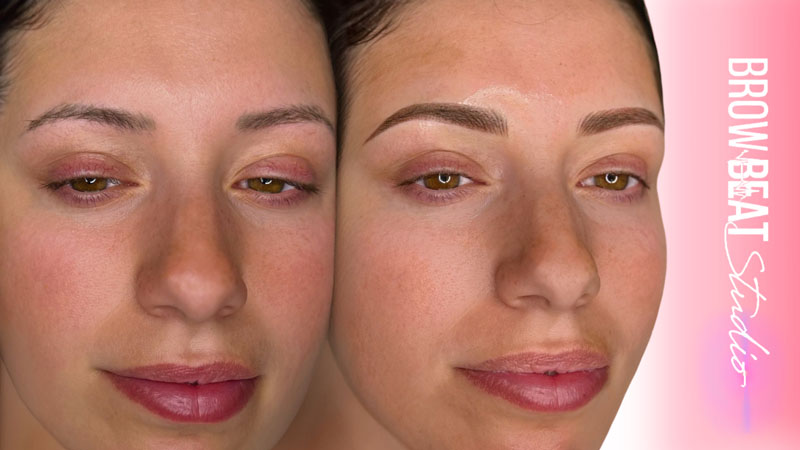
This is where permanent makeup terminology can become misleading. Microblading can look soft. Nano Brows can look soft. Powder Brows can look soft. Ombré Brows can look soft. Combo Brows can look soft.
The fact that a client wants a subtle eyebrow does not automatically choose Microblading for her.
The same principle works in the opposite direction. Shading can be developed with more visible density. Combo Brows can be more defined.
Even a hairstroke-led brow can create considerable visual change when enough of the eyebrow is being built with permanent detail. Technique names do not contain one fixed level of intensity. The artist controls much of that through design, color, placement and density.

A client may have substantial natural eyebrow growth with gaps or a sparse tail. Permanent hairstrokes can add visual texture through those areas while allowing the client’s natural hair to remain an important part of the finished brow.
A client with substantial natural brow hair may not need the permanent makeup to create the whole eyebrow. Small amounts of hair-like detail, subtle density or improved continuity may be enough to achieve the result she wants.


The technique decision is partly about what permanent makeup needs to contribute. Natural hair already provides texture and density of its own. The more that is present, the more selectively permanent detail can often be used.
When natural eyebrow hair is already present, permanent hairstrokes can work among that existing texture. The goal is not for every stroke to stand alone. Natural and permanent hair-like detail should contribute to one complete eyebrow.

Because similar-looking brows can be created through very different kinds of permanent work. Microblading creates manual hairstrokes. Nano creates machine hairstrokes. Powder, Ombré and Microshading create machine-shaded density. Combo and Hybrid Brows use hairstrokes and shading together.
The client may primarily notice the finished eyebrow. BrowBeat also has to think about what kind of permanent detail is being placed into the skin to create it.
A hairstroke needs to remain sufficiently separate from the strokes around it for the eye to continue reading it as a line. That separation is part of what creates the illusion of individual brow hair.
Shading has a different visual job. It is designed to be seen as an area of soft permanent color and density. It does not depend on every tiny piece of pigment remaining individually readable. That difference becomes important when BrowBeat considers skin, healing, fading and repeated maintenance.
Microblading uses a handheld tool to create individual permanent hairstrokes. When the skin is appropriate and the client genuinely values a hairstroke-led result, Microblading can create beautiful detail.
But BrowBeat does not choose Microblading simply because a client says she wants natural brows. We first need to understand what she means by natural and whether manual hairstrokes make sense in her skin.
Nano Brows create individual permanent hairstrokes with a permanent makeup machine. The technical method is different from manual Microblading. But there is an important similarity: both techniques still rely on the skin displaying fine permanent lines as hair-like detail.
That means Nano is not automatically BrowBeat’s answer every time we decide Microblading is not the best direction. Sometimes the bigger question is whether fine hairstrokes themselves are the right long-term choice.
Machine shading works differently. Instead of asking individual lines to create the visual effect, pigment is built through an area to create density. That density can be very soft. It can be more developed. It can change through different areas of the eyebrow.
The front can remain lighter while the body and tail carry more visual strength. This flexibility is one reason shading has become such an important part of BrowBeat’s permanent brow work.
Combination brows bring hairstrokes and machine shading into the same eyebrow. That can be useful when both types of permanent detail genuinely contribute to the result.
But Combo is not automatically a better or more advanced choice because two techniques are being used. If shading can create everything the eyebrow needs, permanent hairstrokes do not become necessary simply because they are available. If the client genuinely values the texture those strokes contribute, then they have a reason to be there.
This is one of the biggest changes BrowBeat has seen in the permanent makeup conversation. Clients regularly tell us:
“I want my brows natural.”
Then they show us a photograph of a brow with substantial coverage, clean structure and very little visible skin. That is useful. Because what the client is calling natural may not actually mean:
“I want an eyebrow constructed from individual hairstrokes.”
She may mean:
“I don’t want my eyebrows to look harsh.”
“I don’t want them blocky.”
“I don’t want them to look like a Sharpie.”
“I don’t want to look obviously tattooed.”
Those are different instructions.
When Microblading became widely popular, individual hairstrokes were a major part of what clients associated with natural permanent eyebrows. Beauty preferences have shifted.
Clients now see enormous numbers of brows every day through social media, beauty content and conventional makeup. Many have become accustomed to seeing more density, more structure and more complete-looking eyebrows. They may still call that natural because it is the brow appearance that now feels normal to them.
Natural eyebrow hair does not form a perfectly filled graphic shape. There are spaces. Hair directions change. Density changes. The edges are not naturally drawn as perfectly crisp lines.
That matters when a client says she wants hairstrokes but becomes uncomfortable when she sees intentional space between those strokes. She may not actually want a hairstroke-led eyebrow. She may want the softness associated with hairstrokes while also wanting the visual completeness of shading.
BrowBeat has heard this many times during hairstroke work. A client looks closely at the brow and notices a small space between permanent strokes. She asks whether we can fill it.
But that space may be intentional. Individual hairstrokes need space around them to continue reading as individual hairstrokes. If every visible gap is filled simply because empty skin makes the client uncomfortable, the desired result may actually be density rather than hairstrokes alone.
This is why a client who wants a more filled brow does not automatically need to accept a heavy result. Machine shading is created through small deposits of pigment that build density gradually. The artist can control how much visual weight is created.
The front can remain soft. Natural eyebrow hair can remain visible. The body can become more connected. The tail can have more presence. Coverage and harshness are not the same thing.

Clients who want the eyebrow to look more consistently filled may be responding to density rather than individual hair-like detail. Powder, ombré and microshading use machine work to create this broader permanent brow effect.
Powder brows use a permanent makeup machine to build cosmetic density through the eyebrow. The result can be soft and refined, giving the brow greater visibility without requiring every part of the design to be constructed from separate hairstrokes.


A client with substantial natural eyebrow hair may need density more than additional texture. Soft machine shading can sit behind that existing hair and make the brow easier to see without creating a heavy permanent makeup appearance.
Look at what you do rather than what permanent makeup service you think you should book. If you spend every morning drawing individual hair-like marks and deliberately leave visible skin between them, that tells us something.
If you fill underneath the entire natural eyebrow until the skin is less visible, that tells us something else. If you create a few hair-like marks and then fill behind them, you are already combining visual effects. Your makeup routine can reveal your preference before you know the permanent makeup terminology for it.
A client may already have substantial natural eyebrow hair. Those hairs are providing real texture.
If what she adds every morning is color underneath them, then the missing component may be density rather than additional permanent lines. In that situation, shading may be doing the job she actually needs.
This sounds obvious, but it is easy to forget when permanent hairstrokes are being discussed. If a client already has plenty of real brow hair, BrowBeat does not automatically need to manufacture more hair-like texture in the skin.
Sometimes the natural hair can do that job beautifully while soft shading provides the background the client has been adding with conventional makeup.
This does not make hairstrokes unnecessary. Some clients truly love seeing individual permanent hair-like detail. They may have areas where additional texture contributes beautifully.
Their skin may support the technique well. And their long-term permanent makeup plan may make hairstrokes a sensible choice. That is when Microblading or Nano has a real job rather than simply being selected because the client recognizes the name.
A client may love hairstrokes through one area but still want the eyebrow to feel more complete overall. Combo or Hybrid Brows can use shading to provide density while hairstrokes contribute texture.
The two techniques should not be included merely so the client receives “more.” They should each solve something.
Microblading does not own natural. Nano does not own natural. Powder does not own defined. Combo does not automatically mean more makeup.
Shape, color, density, softness and artist control can change the visual result enormously. An experienced permanent makeup artist can use different technical routes to create brows that live within a similar aesthetic range.
Once we understand what the client wants to see, we can ask the questions that actually distinguish one technique from another. How does her skin behave? How much fine permanent detail do we want to ask that skin to support?
Does age change how we want to approach it? Are medications, diabetes or other circumstances relevant to bleeding or healing? Does this client expect permanent brows to remain part of her life for years?
How do we want the work to soften? What kind of foundation do we want if she returns for maintenance again and again? Those questions cannot be answered by looking at one beautiful photograph.
You may arrive asking for Microblading. After looking at what you actually want and considering how BrowBeat wants to work in your skin, we may recommend shading.
You may arrive assuming Powder Brows will look too strong and discover that the soft result you wanted can be created with shading. You may think you need Combo because it sounds more complete and discover that one technique already does everything you need. Or you may genuinely be an excellent candidate for the exact technique that originally brought you in.
The goal is not to talk you out of your preference. It is to separate the result you want from the method used to create it.
BrowBeat does not want clients to be passive in permanent makeup decisions. You should look. Ask questions. Explain what you like. Explain what you dislike.
Tell us how you normally wear your makeup. Tell us what you want to see when the permanent work is healed. That is how the result becomes personal.
But the technical method also has to make sense for the skin receiving it. We are not choosing the technique only for the photograph taken when the work is new. We are choosing for the way it needs to heal, soften and live in your skin afterward.
Two clients can show BrowBeat almost identical inspiration photographs and leave with permanent brows that live within a very similar visual style. That does not mean BrowBeat should necessarily perform the same technique on both clients.
One may have dry, resilient skin. Another may have oily skin. One may be thirty. Another may be seventy. One may take very little medication. Another may have medications or health circumstances that make bleeding or healing a greater consideration.
Those differences matter because permanent makeup is not simply being drawn onto the surface. We have to think about how we want to work within the skin that is actually in front of us.
For oily skin, BrowBeat generally favors machine shading over fine hairstroke techniques. That is a much clearer answer than saying oily skin simply “affects” technique selection. Microblading and Nano both depend on fine permanent lines remaining sufficiently separated to continue reading as individual hairstrokes.
Shading does not depend on that same line separation. It is designed from the beginning to create an area of permanent density. For an oily-skinned client, that difference can make shading a more sensible foundation for the permanent brow.

Ombré brows belong to the machine-shading family and use a graduated approach to permanent density. Clients often recognize the softer front and more defined body and tail, although the exact design should still be individualized to the natural eyebrow.
Microshading uses machine work to create permanent eyebrow density rather than primarily creating individual hairs. For clients researching several brow terms, understanding that microshading belongs on the shading side of the decision can make technique comparison easier.


Machine shading does not have to create a dark or strongly made-up eyebrow. Density can be developed softly and adjusted to the client’s natural features and preferred level of definition. Looking at actual healed results gives a more useful impression than assuming all shaded brows look alike.
Some eyebrows do not simply have one missing patch. The entire brow may feel too light or lack consistent definition. Machine shading can address that broader need by creating permanent density across the areas where the brow requires more visual presence.


These terms sit within the same larger machine-shading family, but the distribution and appearance of density can vary. The client does not need to select a label first. Looking at the desired finished effect gives BrowBeat more useful direction.
This is where separating the result from the technique becomes important. A client may tell BrowBeat:
“But I don’t want a makeup-looking brow.”
That does not automatically move us back toward Microblading. Machine shading can be extremely soft. The front can remain light. The density can be controlled.
Natural eyebrow hair can remain visible through the result. We can change the technique without abandoning the softness the client wants.
Nano uses a machine rather than a manual Microblading tool, but it is still creating fine permanent hairstrokes. That matters.
If BrowBeat’s concern is specifically about asking oily skin to support many fine individual lines, simply changing from manual strokes to machine strokes does not eliminate the entire consideration. The larger decision is whether hairstrokes themselves are the best permanent structure for that client.
Dry, resilient skin can provide a very good environment for permanent brow work, including fine hairstroke detail. If a client genuinely loves individual permanent hairs and her skin supports that kind of work, Microblading or Nano can make sense.
But dry skin does not automatically mean BrowBeat chooses hairstrokes. If the client fills her complete eyebrow every day and actually wants density, shading may still be the more appropriate technique. The skin can make a technique possible. It does not make that technique necessary.
Sensitive skin may become red or reactive more easily during permanent makeup. That does not automatically mean the client cannot heal a beautiful result.
BrowBeat considers how the skin actually behaves rather than treating the word sensitive as a complete technical instruction. If sensitivity exists alongside thin, delicate or otherwise reactive skin, that larger picture may push us toward a gentler shaded approach.
For thin or delicate skin, BrowBeat generally favors shading. Fine hairstroke work asks the skin to display a collection of distinct permanent lines.
That may not be the permanent structure BrowBeat wants to rely on when the skin is particularly delicate. Machine shading allows us to build soft color and density without making the entire result dependent on the continued separation of many fine strokes.
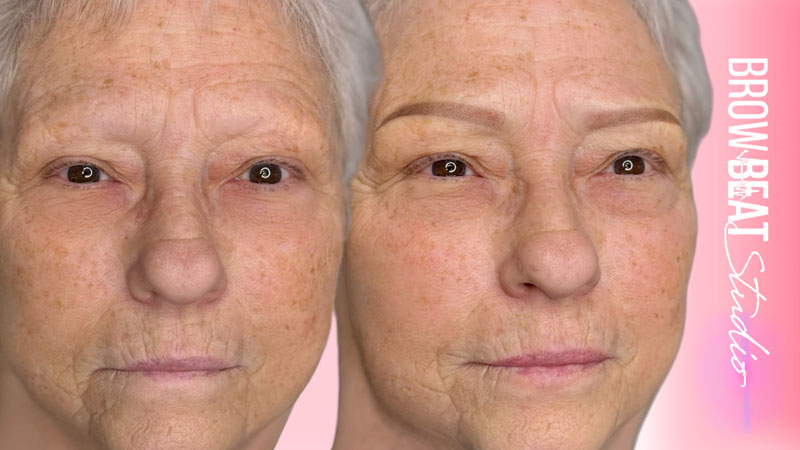
For mature skin, BrowBeat generally favors shading over Microblading or Nano hairstrokes. This is not because mature clients need stronger eyebrows.
It is not because they cannot have beautiful, natural-looking permanent makeup. And it is certainly not because age determines how much makeup a woman should wear. It is because aging skin changes the technical decision.
A freshly created set of hairstrokes can be beautiful. But BrowBeat is not only thinking about the first photograph. Many mature clients will continue maintaining permanent brows because the service solves something they genuinely rely on.
That means we have to think about the next appointment. And the appointment after that. And what kind of permanent foundation we want to continue working with as the client gets older.
Fine permanent strokes rely on space and separation to maintain their hair-like appearance. As permanent makeup is maintained repeatedly, BrowBeat does not want to approach every new appointment as though the skin has never been worked on before.
What was created previously matters to the long-term plan. For a mature client who expects permanent brows to remain part of her life, BrowBeat generally prefers the flexibility of shading rather than repeatedly building the result around new fine lines.
Choosing Powder, Ombré or another shaded approach does not mean BrowBeat is giving every mature client a dark, heavily made-up eyebrow. Quite the opposite.
Shading can be controlled carefully. It can provide a whisper of background color. It can support natural brow hair. It can strengthen a tail without overwhelming the front.
Or it can create more definition for the mature client who has genuinely worn stronger brows throughout her life. The technique can change while the client’s personal style remains hers.
A woman in her seventies may love visible definition. Another woman in her seventies may want almost none.
BrowBeat does not use age to decide their taste. We use age and skin condition as part of deciding how we want to create the result they choose.
Taking medication does not automatically mean someone cannot have permanent makeup. But medication is relevant when it affects the way BrowBeat expects the skin to behave during treatment or healing.
That information can change which permanent brow technique we prefer. The client should disclose the medications requested during screening rather than trying to decide independently whether they matter.

Microblading can produce more visible bleeding during treatment than the soft machine shading BrowBeat performs. Fine hairstrokes also depend on clean, individual permanent detail. When blood-thinning medication is part of the client’s circumstances, BrowBeat generally favors shading over Microblading or Nano hairstrokes.
The goal is not to take necessary medication away from the client so she can qualify for a technique. The goal is to choose a technique that makes more sense for the client as she actually is.
A permanent makeup trend is not more important than prescribed medical treatment. BrowBeat does not want a client independently stopping, skipping or changing medication because she has decided she must have Microblading.
If medication changes what we are comfortable asking the skin to do, we change the permanent makeup plan.
Clients with diabetes can still be permanent makeup candidates. But healing considerations matter. When diabetes is part of the client’s health picture, BrowBeat generally prefers a shaded permanent brow rather than building the result around fine Microblading or Nano hairstrokes.
The client can still have softness. She can still have shape. She can still have beautiful permanent eyebrows. We are changing the technical route—not deciding that she cannot have the result.
Health circumstances are individual, and BrowBeat does not use a diagnosis alone to predict exactly how every client’s skin will behave. But when healing is a greater consideration, we become more conservative about relying on fine permanent lines.
In those situations, BrowBeat generally favors shading because the result does not depend on many individual hairstrokes remaining distinctly readable.
Sometimes there is no single medication that tells the entire story. A mature client may take several medications and have delicate skin at the same time.
Another client may have a health condition plus medication that affects how BrowBeat thinks about bleeding or healing. Technique selection should respond to the complete situation rather than pretending every consideration exists separately.
This is often how permanent makeup decisions work in real life. The client is older. Her skin is delicate. She takes several medications.
She has been drawing her brows every day for twenty years. She expects to maintain permanent brows indefinitely. Any one of those facts may not determine the entire procedure.
Together, they can make BrowBeat very comfortable saying: Shading is the better direction for this client.
This is the part clients sometimes misunderstand. Choosing shading does not mean abandoning the aesthetic goal.
If she wants soft brows, we create soft shading. If she likes more definition, we can build more definition. If she wants a light front, the front can remain light. The technique is being chosen partly for what is happening underneath the visible result.
This can happen. A client may arrive convinced that Microblading is the only way to avoid a tattooed-looking eyebrow. If her skin, age or healing considerations make BrowBeat prefer shading, we do not need to force fine lines into the plan simply because the word Microblading brought her through the door.
We can show her what soft shading actually looks like. Then the decision becomes about the finished brow rather than loyalty to a technique name.
BrowBeat has not become anti-hairstroke. A client may have skin that supports fine detail beautifully. She may genuinely love visible individual strokes.
She may understand the spaces between them and actually want that texture. There may be no stronger skin, healing or long-term reason to choose another structure. In that situation, Microblading or Nano can have a legitimate role.
The obvious technical distinction is simple: Microblading creates manual hairstrokes. Nano creates machine hairstrokes.
But BrowBeat also considers why the client is being directed toward hairstrokes in the first place. If fine lines make sense, then we can consider which hairstroke method is appropriate. If fine lines themselves do not make sense, switching tools does not solve the larger problem.
Approximately ten years of permanent brow work changes the way an artist thinks about technique. BrowBeat has seen clients return. We have seen brows after the excitement of the first treatment has passed.
We have worked with clients who have maintained permanent makeup repeatedly. That longer view has made us more selective about when fine hairstrokes genuinely add enough value to justify making them the foundation of a brow.
A client with substantial natural eyebrow hair already has real texture. If what she does every morning is fill the skin underneath those hairs, the problem may not be missing hairstrokes at all.
She may simply want density. In that situation, shading can support the real hair rather than adding permanent lines underneath hair that already exists.
Wiry brow hair already creates strong linear texture. If the eyebrow still looks patchy, adding more permanent lines may not be the most useful solution.
Soft shading underneath the natural hair can create greater visual continuity while allowing the real hair to remain the texture.
This is another common assumption. A sparse brow may need hair-like detail. But it may also need density.
If a client repeatedly fills the entire sparse area with brow makeup, that tells BrowBeat something important about what she actually wants to see. The fact that natural hair is missing does not automatically mean the replacement has to be permanent lines.
When little or no natural eyebrow hair is present, permanent makeup may be responsible for creating most of the visible brow. That can make the service enormously valuable.
It also means BrowBeat needs to think beyond the first treatment. A client with significant brow loss may depend on permanent eyebrows for many years. That changes how seriously we consider repeated maintenance from the beginning.
A client with alopecia may understandably be drawn to Microblading because hairstrokes imitate hair. But if there is no natural brow hair present and the client expects to maintain permanent eyebrows repeatedly, BrowBeat has to think about more than the first set of crisp lines.
We have to consider what happens as those lines soften and as future permanent work is added over the years. Repeated Microblading simply because the client has no natural hair is not BrowBeat’s preferred long-term strategy.
Shading is designed to create density rather than depending on every permanent mark remaining a separate line. That can provide a more flexible long-term foundation when permanent makeup is responsible for most of the visible eyebrow and the client expects to maintain the result repeatedly.
The brow can still be designed softly. It can still have dimension. It can still avoid looking heavy. The technical strategy simply changes because the long-term responsibility of the permanent makeup is greater.
Imagine two clients both show BrowBeat the same soft eyebrow. One is younger with dry, resilient skin and genuinely loves visible hairstroke detail. The other is older with delicate skin, takes several medications and expects to maintain permanent brows for years.
They can like the same photograph. BrowBeat does not have to use the same technique to move both clients toward that aesthetic. Same desired result. Different skin. Different long-term considerations. Different technical decision.

It is not asking which service name sounds best. It is not automatically choosing Microblading because the client said natural. It is not automatically choosing Nano because a machine sounds newer. And it is not choosing Powder simply because BrowBeat performs more shading today.
It is looking at everything that matters and deciding what we are comfortable asking this client’s skin to support.
The client should not have to accept a brow she does not like because of her skin type. That is not the goal.
The goal is to use the technique that gives BrowBeat the strongest route toward the appearance she wants while respecting the realities of her skin and circumstances. Sometimes choosing well means changing the technique while protecting the look.
A technique can create a beautiful result today and still deserve a longer conversation. At BrowBeat Studio Dallas, we think about what happens after the first appointment too. How will the work soften? What part of the result depends on fine detail remaining visible?
What happens if the client wants more permanent color later? Is this likely to be something she maintains once or twice, or something she expects to maintain for many years? Those questions can influence the technique we choose from the beginning.
This is a question BrowBeat thinks deserves more attention. Some clients are curious about permanent makeup because it is popular right now. Others have drawn essentially the same eyebrows for twenty years and already know they want permanent brows to remain part of their routine.
Another client has alopecia or significant brow loss and expects permanent eyebrows to continue providing something she no longer has naturally. Those clients may want similar-looking brows. They do not necessarily have the same long-term relationship with permanent makeup.
If a client thinks she may try permanent makeup once and never maintain it again, BrowBeat still cares about how the work heals and fades. But when a client already knows she expects to maintain permanent brows for years, future treatments become part of the decision from the beginning.
We are not only asking:
“What can we create today?”
We are also asking:
“What kind of permanent work do we want to continue working with later?”
Approximately eighty percent of BrowBeat’s clients are returning clients. Some have had permanent makeup once before. Others have had it several times over many years. That changes the way we think about technique.
A new permanent brow does not exist only in the moment it is photographed. Clients live with it. It softens. They return. And the artist eventually works with a brow that already has a permanent makeup history.
Early in an artist’s career, it is easy to become focused on creating the most beautiful result at the first appointment. That still matters enormously. But years of returning clients add another perspective. You begin thinking about the second, third and later chapters of the eyebrow too.
What remains? What has softened? What still looks good? What does the client want more of now? And what kind of permanent foundation are we working with?
All permanent makeup changes over time. But the visual structure of the technique matters.
Hairstrokes are created to look like individual lines. Shading is created to look like an area of soft color. That difference affects what each technique needs to preserve in order to continue producing its original visual effect.
A hairstroke looks like a hair because the eye can distinguish it from the strokes around it. The space between the lines is part of the result.
As fine permanent detail softens over time, those lines may become less crisp and less individually readable. That does not mean the pigment suddenly disappears. It means the visual effect can change.
Shading begins with a different visual purpose. The individual deposits of pigment are used together to create soft density. The result is not dependent on the eye continuing to identify each pigment deposit as an individual line.
As the shading becomes lighter, it can still read as shading. That difference is one reason BrowBeat increasingly considers shading when long-term maintenance is likely to be important.
Clients often think of fading as a percentage. How much will be left? How many months will it last? But BrowBeat also considers how the remaining permanent makeup will read visually.
A lighter shaded brow is still a shaded brow. A softened hairstroke result may gradually lose some of the crisp line separation that originally created its hair-like effect. That distinction matters when choosing a technique.
There is no single lifespan that applies to every client. Skin, color, technique, density, lifestyle and individual retention all contribute.
But BrowBeat does not choose permanent brows by asking only which technique can remain visible longest. We also ask how we want that technique to look as it becomes older. Longevity is not only about staying. It is about aging well enough that the result continues to make sense.
A permanent brow lasting longer is only useful if the client continues to like what remains. More retention is not automatically more value. And faster fading is not automatically evidence that the original technique was wrong.
The goal is not to make permanent makeup resist every possible change. The goal is to choose a technique whose long-term behavior makes sense for the client who will wear and maintain it.
This is particularly important for clients who expect to maintain permanent makeup repeatedly. A later appointment is not simply the first appointment repeated on completely untouched skin.
The artist has to consider what remains from the previous work. That makes long-term planning part of responsible technique selection.
The skin has a history. The pigment has a history. The client has a history with the result. Those things accumulate information.
A technique that made sense at the beginning may eventually need to evolve as the client’s permanent makeup history becomes longer.
If the original permanent brow relied heavily on individual hairstrokes, the long-term answer is not automatically to keep placing new fine lines every time the client returns. Some of the previous work may still be visible. Some may have softened.
The spaces that made the original strokes easy to distinguish may no longer look exactly as they did after the first treatment. BrowBeat considers what is already there before deciding what the next treatment should add.
BrowBeat’s permanent brow approach today is not identical to the approach we had when Microblading first became a major part of the industry. Years of returning clients have changed what we value. We still appreciate beautiful hairstrokes.
But we are much more conscious of the complete eyebrow, the long-term result and what repeated maintenance asks of the skin. Shading gives us a great deal of control over density while creating a permanent structure that is not dependent on preserving hundreds of fine lines indefinitely.
Microblading can still be appropriate for the right client. Beautiful manual hairstrokes can create exactly the detail someone wants. But BrowBeat is more selective about choosing it than simply saying:
“You want natural brows, so you need Microblading.”
We know more now than we did when the industry was younger. Our technique decisions should be allowed to evolve too.

Nano brows use a permanent makeup machine to create individual hair-like strokes. The visual goal remains brow texture, but the technical approach differs from manual microblading. This gives clients another hairstroke option when permanent brow detail is the desired effect.
Microblading uses a handheld tool to create individual hair-like permanent eyebrow strokes. For clients drawn to the appearance of fine manual detail, microblading remains one of BrowBeat Studio Dallas’s permanent brow options.


The hairstrokes and shading in a combination brow are not intended to look like separate treatments. Hair-like texture and density should work together to create one coordinated permanent brow designed around the client’s natural features.
A client can have plenty of natural eyebrow hair and still feel that the brow looks visually light. Soft permanent shading can work behind the existing hair to create greater density while allowing the natural eyebrow to remain visible.


Close-up shading may be easy to see, while the same permanent eyebrow can look soft at normal viewing distance. BrowBeat Studio Dallas considers how permanent density works within the complete face rather than judging a shaded brow only through magnified photography.
Nano changes how the hairstroke is created. It does not change the fact that the visual result relies on fine permanent lines.
That means BrowBeat still considers how those lines are likely to soften and how repeated maintenance fits into the client’s long-term plan. A machine can change the method. It does not make long-term planning unnecessary.
A client with alopecia may have little or no natural eyebrow hair helping the permanent work visually. The cosmetic tattoo may create most of the eyebrow the client sees every day.
And because that eyebrow may continue to be important for years, repeated maintenance is not a remote possibility. It may be an expected part of the plan.
At first glance, Microblading can seem like the obvious answer. No natural hair? Create permanent lines that look like hair.
But BrowBeat has to think beyond that first set of lines. If the client intends to maintain permanent brows for many years, repeatedly building the eyebrow around new Microblading strokes is not automatically our preferred strategy.
Fine lines soften. Previous pigment remains part of the starting point. And future treatments need something sensible to work with.
For a client who expects to rely heavily on permanent brows, shading can give BrowBeat a foundation that can be softened, strengthened and maintained without requiring the eyebrow to remain dependent on the separation of individual permanent lines.
That does not mean the brow has to look flat. It does not mean it has to look heavy. And it does not mean every alopecia client receives exactly the same eyebrow. It means the long-term technical plan is being considered alongside the immediate appearance.
There is nothing wrong with wanting permanent makeup simply because you like it. Beauty is allowed to be enough. But someone who wants to try permanent brows because they are fashionable today has a different relationship with the service from someone who depends on permanent brows because natural eyebrow hair is absent.
One may be experimenting. The other may already know she expects to maintain the result for years. That difference can influence how BrowBeat thinks about permanence from the beginning.
If you enjoy changing your eyebrow shape with trends, that matters. The brow you love today may not be the brow you want five years from now.
Temporary cosmetics are extremely good at following fashion. Permanent makeup should be approached more carefully when the client’s preferences are still moving quickly.
If a client says:
“I’ve drawn my brows like this for twenty years and I’m going to keep doing them,”
that tells BrowBeat something important. We are not trying to predict whether she will still like eyebrows next year. We are thinking about how to create and maintain a permanent foundation that can continue making sense as she gets older.
Nobody needs to promise BrowBeat that she will maintain permanent makeup for the rest of her life. People change. Styles change. Priorities change.
The useful question is simply whether this feels like an established part of how you like to see yourself or a temporary curiosity you are trying for the first time.
Clients understandably spend more time thinking about how permanent makeup will look when it is finished than how it will look as it becomes older. BrowBeat thinks both deserve consideration.
Do we want the brow built around fine lines whose visual identity depends on separation? Or do we want a shaded foundation designed to soften as an area of color? Neither question can be answered from a fresh photograph alone.
Some clients prefer to return when their permanent makeup becomes noticeably lighter. Others enjoy the softer stage for longer. The exact maintenance schedule is individual.
But if a client already knows she expects to maintain her brows repeatedly, BrowBeat takes that expectation seriously when choosing the original technique.
This is one of the clearest ways BrowBeat’s philosophy has changed with experience. We want today’s permanent makeup to look beautiful.
We also want to think responsibly about the permanent makeup that may still be present when the client returns. That does not mean trying to predict every future appointment. It means refusing to pretend the future does not exist.
Then tell us. That is useful information too.
BrowBeat still chooses a technique with healing and fading in mind, but the client’s intention matters. A one-time permanent makeup experience and an expected fifteen-year maintenance relationship are not identical planning conversations.
Then long-term flexibility becomes more important. BrowBeat becomes especially interested in how the permanent structure can soften, how future maintenance can be approached and whether the technique remains sensible as the client’s skin changes over time.
This is one reason shading often becomes increasingly attractive for clients who know permanent brows are going to remain part of their lives.
Fresh results matter. Healed results matter. Fading matters. Maintenance matters. The client’s age today matters. How her skin may change matters. Whether she intends to continue permanent makeup matters. And what BrowBeat may need to work with later matters.
We choose today’s technique with some consideration for tomorrow’s appointment.
By this point, one thing should be clear: BrowBeat does not choose a permanent makeup technique from one photograph, one trend or one word such as “natural.”
We look at what the client wants. Then we consider the skin, age, relevant medications and health considerations, expected healing, how the work is likely to soften and whether permanent makeup is likely to become something the client maintains repeatedly.
Sometimes all of those considerations point in the same direction immediately. Sometimes the client arrives asking for one technique and BrowBeat recommends another. Here is what that looks like in real life.
BrowBeat generally chooses shading. We do not need Microblading simply to make the brow look soft.
Powder, Ombré and Microshading can all be controlled to create gentle permanent density without making the eyebrow look dark or blocky. For oily skin, BrowBeat generally prefers that shaded structure over asking many fine permanent hairstrokes to remain distinctly separated.

Microblading or Nano may make sense. This is the kind of situation where BrowBeat is more comfortable considering fine permanent detail.
The client actually likes seeing individual strokes. She understands that visible space between those strokes is part of the effect. And there is no stronger reason for BrowBeat to build the eyebrow around shading instead.
BrowBeat generally chooses shading. We can still create a very soft eyebrow. We can still respect how much definition the client likes.
But BrowBeat does not generally want repeated fine Microblading or Nano hairstrokes to become the long-term foundation of an aging or delicate brow. We are thinking about the result today and the permanent makeup that client may continue maintaining as the years pass.
BrowBeat generally favors shading rather than Microblading or Nano hairstrokes. Microblading can produce more visible bleeding during treatment, while the soft machine shading BrowBeat performs typically produces very little pinpoint bleeding in our practice.
The client should not independently stop prescribed medication to qualify for a particular brow technique. We would rather change the permanent makeup plan than ask the client to change necessary medical treatment on her own.
BrowBeat generally leans toward shading when healing is a greater consideration. That does not mean every person with a medical condition receives an identical eyebrow.
It means BrowBeat becomes more conservative about making the finished result dependent on many fine permanent lines. The aesthetic can remain soft. The technical route changes.
Sometimes there is no need to pretend the decision remains perfectly balanced between every technique. Several factors can point in the same direction. Older skin. Delicate skin. Multiple medications. A client who expects to maintain permanent brows for years.
That combination would make BrowBeat much more likely to choose shading.
BrowBeat would look very seriously at shading. You already have real hair providing texture.
If what you repeatedly add with conventional makeup is background color and density, permanent hairstrokes may not be the missing piece. Soft shading can sit underneath the natural hair and create the visual continuity the client has already been drawing for herself.
Shading may make considerably more sense than adding more lines. Wiry natural hair already creates plenty of linear texture.
The problem may be the inconsistent density underneath it. Machine shading can connect those areas visually while allowing the real brow hair to continue providing the texture.
Hairstrokes may have a useful job. This is different from assuming every sparse eyebrow needs Microblading.
If the skin supports fine detail, the client likes visible hairstrokes and a few permanent lines genuinely improve the brow, Microblading or Nano can make sense. The technique is being used because the strokes contribute something—not because sparse automatically equals Microblading.
BrowBeat would focus on creating soft density rather than assuming you need Microblading. If every reference photograph you love shows a filled eyebrow, that is useful information.
You may be using the word natural to mean:
not harsh, not blocky, not overly dark, and not obviously tattooed.
Shading can satisfy all of those requirements while still giving you the coverage you actually like.
Combo or Hybrid Brows may make more sense than hairstrokes alone. This is the client who likes visible hair-like texture but does not want the eyebrow to rely entirely on lines and intentional spaces.
Shading can provide background density while hairstrokes contribute texture. Both techniques have a job.
BrowBeat does not need to add hairstrokes simply to turn Powder Brows into Combo Brows. More technique is not automatically better technique.
If the client likes the shape, density, softness and definition created through shading, additional permanent lines do not automatically improve the result. The simplest appropriate technique can sometimes be the better decision.
BrowBeat thinks long term from the beginning. These clients can be excellent permanent brow candidates and may depend on their permanent eyebrows more consistently than someone seeking a small cosmetic enhancement.
But no natural hair does not automatically mean Microblading. If the client expects to maintain permanent brows repeatedly, BrowBeat generally prefers a strategy that does not depend indefinitely on adding new fine Microblading strokes into the same brow area. Shading can provide a more flexible permanent foundation while still allowing the complete eyebrow to be designed with softness and dimension.
Maintenance history becomes part of technique selection. If you know permanent eyebrows are likely to remain part of your life for many years, BrowBeat considers more than what looks beautiful immediately after the first procedure.
We think about how the work softens. What future treatments may need to work with. And whether the original technique gives us a sensible foundation for repeated maintenance. This is another situation where shading often becomes increasingly attractive.

BrowBeat would rather you experiment with conventional makeup first. Wear the shape. Wear the stronger front. Try the dramatic tail.
See whether you still love it when it is no longer the newest thing on your screen. Permanent makeup is much better suited to a preference that has survived long enough to become yours.
Tell BrowBeat. That does not automatically choose the technique, but it is useful information.
Someone approaching permanent makeup as a one-time experience has a different maintenance expectation from a client who already knows she intends to continue permanent brows for the next decade or longer. Technique selection should be allowed to consider that difference.
BrowBeat would not choose from longevity alone. How the permanent makeup remains visible matters. How it softens matters.
How you feel about the appearance matters. And what we may need to work with later matters. A technique remaining visible longer does not automatically make it the best permanent makeup technique for you.
Think about what each technique is designed to look like. Hairstrokes depend on individual lines remaining sufficiently separated to continue reading as hairs. Shading is designed to read as an area of color and density.
Both soften, but they do not rely on the same visual structure as they age. For clients expecting repeated long-term maintenance, BrowBeat considers that difference from the beginning.
Budget matters. But BrowBeat does not recommend choosing a permanent makeup technique simply because one service has a different price. The more useful question is whether the technique makes sense for the client and creates the permanent result she actually wants.
A less expensive technique is not good value if it is the wrong permanent approach. A more expensive technique is not automatically better because more work or more components are involved.
The relevant permanent makeup direction is Lip Blushing. Lip Blushing creates permanent cosmetic color within the natural lips.
It can provide a visible color base without requiring the lips to look like opaque lipstick every day. A client can wear the healed result alone, add gloss or completely change the appearance with conventional lipstick whenever she wants.
You may be an especially natural fit for Lip Blushing. You already know that you like seeing color in your lips.
The question is not whether permanent lip color is a completely unfamiliar idea. It is how BrowBeat should create a permanent base that makes sense with the color direction you consistently enjoy.
Dark Lip Neutralization may need to be part of the permanent lip approach. BrowBeat works differently with naturally more melanated lip tissue because the existing lip color participates in the eventual result.
For appropriate clients, including Fitzpatrick 4–6 skin types, neutralization can be part of establishing the color direction before treating the lips as though they have the same starting point as lighter natural lip tissue.
BrowBeat still begins with the natural lip tissue that is actually present. Lip Blushing can add permanent cosmetic color, but the goal is not to pretend natural lips are a blank sheet of paper.
The starting color influences the permanent color plan. That is part of choosing the technique correctly rather than simply selecting a pigment from a photograph.

A lash line enhancement may be the appropriate direction. The permanent definition remains concentrated close to the upper lashes rather than becoming a prominent eyeliner design.
This can work particularly well for clients who want the eyes to appear more defined without feeling as though they are wearing obvious eyeliner every day.
Upper-lash definition can be particularly useful. Permanent pigment close to the lash line can give the upper eye more visible structure even before mascara or other conventional eye makeup is added.
The result can remain subtle or become more visible depending on the established style the client prefers.
Upper Permanent Eyeliner may make more sense than an extremely subtle lash enhancement. A client who has worn visible eyeliner for years already knows that she likes seeing a line around the upper eye.
There is no need to pretend every permanent eyeliner client wants the least visible version of the service.
BrowBeat considers wings case by case. A permanent wing is not simply a longer line.
Eye anatomy, skin and the way the area changes with expression all matter. For that reason, BrowBeat does not promise the same winged design to every eyeliner client simply because she likes the appearance in a photograph.
If you want brow structure, density or texture, we choose within the permanent brow techniques. If you want lasting lip color, we look at Lip Blushing and, where appropriate, Dark Lip Neutralization. If you want upper-eye definition, we look at lash line enhancement or Upper Permanent Eyeliner.
The treatment area tells us which family we are working within. The client’s circumstances help determine how we approach it.
That happens. Permanent makeup is not always a situation where three choices are wrong and one is scientifically perfect. Sometimes more than one technique could reasonably create a beautiful result. Then BrowBeat weighs the differences.
Which approach asks less of the skin? Which gives us the long-term behavior we prefer? Which gives the client the appearance she wants without adding permanent work that has no useful job? Which gives us a foundation we are comfortable maintaining later? Those questions can break the tie.
Technical guidance does not mean BrowBeat takes the decision away from the client. You can say you love hairstrokes. You can say you hate a heavily filled brow. You can say you want more definition.
You can say a proposed result does not feel like you. You can ask why BrowBeat is recommending shading when you originally asked for Microblading. Those are useful conversations.
Clients come to BrowBeat for permanent makeup, not for an examination in permanent makeup theory. You do not need to know how different techniques behave in different skin before you arrive.
You do not need to determine whether your age or medication changes the technical approach. You do not need to predict how repeated maintenance should be planned over the next decade. That is part of what experience is for.
BrowBeat needs your preferences. We need to know what you want to see. We need to know what feels too much and what feels like not enough.
We need you to tell us about relevant skin, medication and health considerations. Then we combine that information with what years of permanent makeup work have taught us about technique, healing, fading and repeated maintenance.
The goal is not to convince every client to choose the same procedure. It is to choose a permanent makeup artist and approach for a reason.

Start with the result you want, but do not choose from appearance alone. BrowBeat also considers your skin, age, relevant medications and health considerations, healing, expected maintenance and how the permanent work is likely to soften over time. Two clients can want very similar-looking results and still be better served by different techniques.
No. You should have a reasonably clear idea of what you want to see, but you do not need to decide whether Microblading, Nano, Powder, Ombré or Combo is technically appropriate for you. The result is worked out together, while BrowBeat uses your skin and individual circumstances to help determine how that result should be created.
Yes. In experienced hands, Microblading, Nano, Powder and Combo Brows can overlap considerably in softness, definition and overall appearance. The important differences are not always obvious in a photograph because the techniques place and organize pigment in the skin differently.
No. Microblading can create natural-looking hairstrokes, but soft machine shading can also create an extremely natural-looking eyebrow. Shape, color, density and artist control influence the final appearance, so “natural” does not automatically mean Microblading.
Yes. Powder Brows can be created with very soft density, a light front and natural brow hair remaining visible through the result. BrowBeat can therefore recommend shading for technical reasons without requiring the client to accept a heavy or obviously made-up eyebrow.
BrowBeat may prefer shading when your skin, age, medications, healing considerations or long-term maintenance plan make fine hairstrokes a less desirable foundation. The recommendation does not necessarily change the look you want; it changes how BrowBeat creates that look in the skin.
BrowBeat generally favors machine shading for oily skin. Powder, Ombré and Microshading create density without depending on many fine permanent lines remaining distinctly separated, and the shading can still be kept very soft.
Not automatically. Nano uses a machine while Microblading is manual, but both techniques create fine permanent hairstrokes. If BrowBeat’s concern is whether oily skin is the right environment for a brow built around fine lines, changing from Microblading to Nano does not remove that underlying consideration.
Dry, resilient skin can support fine hairstroke work well, so Microblading or Nano may make sense when the client genuinely wants visible hair-like detail. Dry skin does not automatically require hairstrokes, however; a client who wants density may still be better served by shading.
BrowBeat generally favors machine shading for mature skin. Shading can create anything from very soft density to a more defined brow without making the long-term result dependent on repeated fine Microblading or Nano hairstrokes as the skin continues to age.
Yes. Choosing shading for mature skin does not mean choosing a dark or heavy eyebrow. BrowBeat can control the density, keep the front soft and allow natural brow hair to remain part of the finished result.
BrowBeat thinks beyond the first set of fresh hairstrokes. Fine permanent lines depend on separation to continue reading as hairs, and a mature client may maintain permanent brows repeatedly for years. BrowBeat generally prefers the long-term flexibility of shading rather than continually building the brow around new fine strokes.
It can. Medications that affect bleeding or healing can change what BrowBeat is comfortable asking the skin to support. When those considerations are significant, BrowBeat generally becomes more conservative about fine hairstroke techniques and favors shading.
BrowBeat generally favors machine shading rather than Microblading or Nano hairstrokes when blood-thinning medication is part of the picture. Clients should not independently stop or change prescribed medication to qualify for a particular cosmetic tattoo technique.
When diabetes creates additional healing considerations, BrowBeat generally favors shading rather than building the brow around fine Microblading or Nano hairstrokes. The cosmetic goal can remain soft and natural even though the technical approach changes.
Yes. Individual circumstances vary, but when healing is a greater consideration BrowBeat generally favors a shaded permanent brow rather than making the result dependent on many fine permanent lines. Relevant health information should always be disclosed before treatment.
Both can create hair-like permanent detail. Microblading creates strokes manually, while Nano creates them with a permanent makeup machine. BrowBeat first decides whether fine hairstrokes themselves make sense for your skin and long-term plan; if they do, the manual-versus-machine decision can then be considered.
No. Nano changes the tool used to create the hairstroke, but the finished effect still relies on fine permanent lines. If BrowBeat’s concern is the long-term suitability of hairstrokes themselves, switching from Microblading to Nano does not necessarily solve the problem.
Often it can make excellent sense. Natural brow hair already provides real texture. If what you repeatedly add with conventional makeup is color underneath that hair, soft shading may supply the missing density without adding permanent lines simply for the sake of having hairstrokes.
Wiry brow hair already provides strong linear texture, so BrowBeat may favor shading when the real problem is inconsistent background density. Soft shading can visually connect patchier areas while allowing the client’s natural hair to provide the texture.
No. Sparse brows may need texture, density or both. If you normally fill the entire sparse area with conventional brow makeup, shading may be closer to the result you actually want than individual permanent hairstrokes alone.
Combo or Hybrid Brows make sense when both permanent hairstroke texture and shaded density genuinely contribute to the result. BrowBeat does not add hairstrokes simply because two techniques sound more valuable; both components should have a useful job.
Not necessarily. If shading alone gives you the shape, density, softness and definition you want, adding permanent hairstrokes does not automatically improve the result. More technique is not automatically better technique.
BrowBeat generally thinks beyond repeated Microblading when little or no natural brow hair is present and the client expects to maintain permanent eyebrows for many years. Shading can provide a more flexible long-term foundation because the result does not depend on continually preserving or recreating many separate fine lines.
Hairstrokes imitate hair, but the first fresh result is only part of the decision. A client with no natural brow hair may depend on permanent brows for years, so BrowBeat also considers how fine lines will soften and what future treatments will need to work with before choosing the original technique.
No. Longevity matters, but BrowBeat also considers how the permanent makeup looks as it becomes older. Hairstrokes depend on line separation, while shading is designed to remain readable as an area of color. The longest-lasting option is not automatically the best-looking long-term option for every client.
They age differently. Hairstrokes rely on individual lines remaining sufficiently separated to continue looking hair-like, while shading is intended to read as soft density even as it becomes lighter. For clients expecting repeated long-term maintenance, BrowBeat often prefers the flexibility of shading.
Yes. BrowBeat considers repeated maintenance when choosing the original technique because future appointments are not performed on completely untouched skin. If permanent brows are likely to remain part of your life for years, the long-term foundation matters from the first treatment.
BrowBeat would generally recommend experimenting with conventional makeup first. Permanent makeup is better suited to an established preference than a brow shape or style you are trying for the first time because it is currently fashionable.
Tell BrowBeat. A one-time permanent makeup experience and a client expecting fifteen years of repeated maintenance create different long-term considerations. Your intention does not choose the technique by itself, but it is useful information when BrowBeat plans how the work should heal and soften.
Lip Blushing can make excellent sense for someone who consistently likes seeing color in her lips. It creates a permanent color base that can be worn alone or underneath balm, gloss and conventional lipstick.
Naturally more melanated lip tissue can require a different color approach. For appropriate clients, including higher Fitzpatrick skin types, BrowBeat may begin with a neutralization approach rather than treating the lips as though they have the same starting color as lighter natural lip tissue.
Choose based on how much upper-eye definition you consistently like. A lash line enhancement keeps the permanent effect close to the upper lashes, while upper permanent eyeliner creates a more visibly recognizable line. BrowBeat designs both around the client’s eye and established cosmetic style.
Possibly. BrowBeat considers permanent wings case by case because eye anatomy and the surrounding skin affect whether a winged design makes sense. A wing is not treated as an automatic extension that should be placed identically on every eye.
Then BrowBeat looks at which approach asks the right things of your skin, gives the preferred long-term behavior and creates the result without adding unnecessary permanent work. Technique selection is not always about one option being possible and every other option being wrong.
There is no single factor. BrowBeat considers the result you want together with your skin, age, relevant medications and health considerations, expected healing, how the work should soften and whether you expect to maintain permanent makeup repeatedly. The best technique is the one that makes sense across that complete picture.