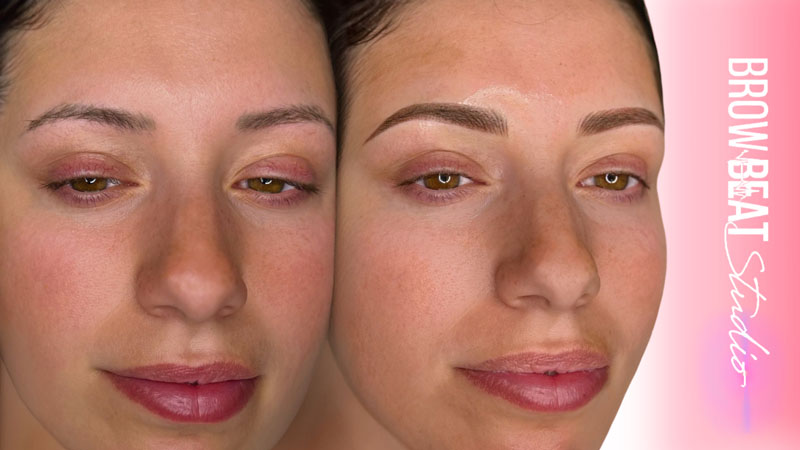
A good candidate for permanent makeup and cosmetic tattooing is not one particular type of person.
Clients come to BrowBeat Studio Dallas with different skin characteristics, natural features, ages, routines and cosmetic preferences.
Most adults can consider permanent makeup if they genuinely want it.
You do not need a particular type of face.
You do not need perfect skin.
You do not need to have lost your eyebrows.
You do not need to wear a full face of makeup every day.
And you certainly do not need to fit one version of what a permanent makeup client is supposed to look like.
At BrowBeat Studio Dallas, the more useful candidacy question is:
Is there something you consistently want permanent makeup to do for you?
That word consistently matters.
If you have filled your brows in a similar way for years, wear upper eyeliner almost every day, repeatedly reach for lip color or have a feature you are tired of recreating with conventional makeup, you already have a strong reason for considering permanent makeup.
If you are still experimenting with your appearance every week and have no idea what you will want six months from now, permanent makeup deserves more thought.
It is a lasting cosmetic decision.
Being sure about what you like is one of the best places to begin.
Permanent makeup is for adults who want lasting cosmetic definition within the brows, lips or upper lash line.
Some clients want it because something is missing.
Some want it because something is inconsistent.
Some already create essentially the same result every morning and are simply tired of rebuilding it.
And some like the convenience of waking up with more of their familiar face already there.
Those are all legitimate reasons.
You do not need to know which permanent makeup technique you need.
That is different.
But knowing how you like to see yourself is extremely useful.
A woman who has drawn essentially the same eyebrow shape for fifteen years has already learned something important about her preferences.
So has someone who has worn upper eyeliner almost every day for twenty years.
So has the client who keeps buying variations of the same rosy or peach lip color.
There is history behind those choices.
Permanent makeup is not introducing a completely unfamiliar idea onto the face. It is giving a more lasting foundation to something the client already knows she likes.
Think about what you repeatedly do when you get ready.
Do you always fill the same brow tail?
Do you add color underneath naturally full brows because you prefer more density?
Do you draw upper eyeliner before you feel finished?
Do you nearly always add something to your lips because you prefer seeing more color?
Repetition is useful information.
You have already been test-driving the appearance.
You simply happen to be creating it with temporary cosmetics.
Some permanent makeup clients love conventional makeup.
They like getting ready.
They like lipstick.
They own brow products.
They enjoy changing their eye makeup.
Permanent makeup can still make sense.
It does not have to replace everything.
A permanent brow can provide a foundation and still be made stronger with makeup.
Lip blushing can provide color underneath gloss or lipstick.
Upper permanent eyeliner can remain underneath mascara, shadow or additional conventional liner.
You can want consistency without wanting exactly the same finished makeup every day.


Sometimes the reason for considering permanent makeup is incredibly specific.
One tail disappears.
There is a gap in one eyebrow.
The brows are naturally light.
The natural hair is thin.
The lips have less visible color than the client prefers.
The upper lash line never feels defined without eyeliner.
A relatively small feature can require attention every single morning.
If permanent makeup can take over part of that repetitive job, the client may be an excellent candidate even if the change itself is subtle.
Thin or sparse natural eyebrows are one of the clearest reasons to consider permanent brows.
There is already a visible job for the permanent makeup to do.
It can add structure where the natural brow is weak.
It can add density where skin repeatedly shows through.
It can create more continuity through areas the client normally fills with makeup.
And it can give a light or incomplete tail more presence.
The exact technique can vary, but thin or sparse natural brow hair certainly does not prevent someone from being a good permanent makeup candidate.
Having plenty of eyebrow hair does not mean permanent brows have nothing to contribute.
Some clients have substantial natural hair but still see a lot of skin underneath it.
One area may be denser than another.
The tail may be lighter.
The lower shape may disappear unless it is filled.
Or the client may simply prefer the more polished appearance she creates with brow makeup.
In those cases, permanent makeup can work underneath and among the natural hair rather than trying to replace it.
Yes.
In fact, clients with significant natural brow loss can be some of the people for whom permanent eyebrows matter most.
The starting point is different because the permanent work may be responsible for creating much more of the visible eyebrow.
But having little or no natural brow hair does not exclude someone from permanent makeup.
There is a difference.
One client may want a more polished brow because she likes how it looks.
Another may have lost much of her natural eyebrow through alopecia, chemotherapy, scarring or another form of significant brow loss.
For that client, the eyebrow can have a different role.
Brows contribute to facial expression.
They frame the eyes.
They are part of how we recognize a face.
Re-establishing an eyebrow can therefore feel less like adding a beauty extra and more like restoring something familiar.
BrowBeat welcomes those clients.
Clients with alopecia can be excellent permanent eyebrow candidates.
The absence or reduction of natural brow hair simply changes how much of the visible eyebrow the permanent makeup needs to create.
Shape, density, color and the amount of texture appropriate for the individual become especially important when there is less natural hair available to support the result.
BrowBeat has worked with clients whose natural eyebrow hair has been affected by chemotherapy.
These clients can be very good candidates for permanent brows when the timing and individual circumstances are appropriate.
BrowBeat does not approach these clients as routine Microblading cases. When health, medications or healing considerations are part of the picture, shading is generally the direction we favor over fine hairstroke work.

A scar can interrupt natural eyebrow growth and leave an area the client repeatedly fills.
Permanent makeup may help create greater visual continuity through the eyebrow.
Scar tissue is individual, so the actual area still needs to be looked at rather than assuming every scar behaves identically.
But the presence of a brow scar does not by itself mean permanent makeup is off the table.
Wanting a natural result does not make someone a poor candidate for permanent makeup.
Permanent does not have to mean heavy.
Brows can be soft.
Lip color can be understated.
Upper eyeliner can sit close to the lashes.
And permanent makeup can contribute something meaningful without becoming the first feature another person notices.
This is something BrowBeat has learned after years of talking to clients.
Two women can both say:
“I want it natural.”
Then show us completely different photographs.
One wants visible skin and delicate hairstroke texture.
The other wants a beautifully filled brow with a soft front, defined body and polished tail.
What they often have in common is not the amount of permanent makeup.
They do not want to look harsh.
They do not want to look blocky.
They do not want to feel as though the permanent makeup entered the room before they did.
That is useful information.
There is nothing wrong with liking makeup.
There is nothing wrong with liking a defined brow.
There is nothing wrong with wanting visible lip color or upper eyeliner.
Permanent makeup does not have to pretend that every client wants an untouched appearance.
The important thing is that the result reflects what the client genuinely likes rather than what she thinks she is supposed to ask for.
An active lifestyle is not a reason to avoid permanent makeup once the treatment has appropriately healed.
It can be one of the reasons clients appreciate it.
Exercise.
Sweat.
Swimming.
Travel.
Early mornings.
Long days.
Permanent makeup can provide a cosmetic foundation that does not need to be recreated from zero every time the client’s routine changes.
Not every permanent makeup benefit needs to sound profound.
Sometimes it is practical.
The brows are already there.
The lips already have some color.
The upper lash line already has definition.
The client can add more makeup if she wants it.
Or she can leave.
For someone who consistently likes those features defined, that convenience can make her a very natural permanent makeup candidate.
The clearest answer is not necessarily somebody with a particular age or skin type.
It is often somebody who is not sure she actually wants something lasting.
If you change your brow shape constantly, move between dramatically different makeup styles or are trying a look for the first time because it is currently popular, permanent makeup may be worth postponing.
Temporary makeup is excellent for experimentation.
Permanent makeup is better suited to preferences that have had time to become familiar.
BrowBeat wants clients to participate in their permanent makeup decisions.
Questions are welcome.
Nervousness is normal.
You do not need to walk into the studio without a single concern.
But there is a difference between being nervous about a permanent procedure and being genuinely unsure whether you want the result at all.
If BrowBeat asks how sure you are about having permanent makeup and your answer is nowhere near confident, that matters.
There is no reason to force a lasting cosmetic decision simply because an appointment was booked.

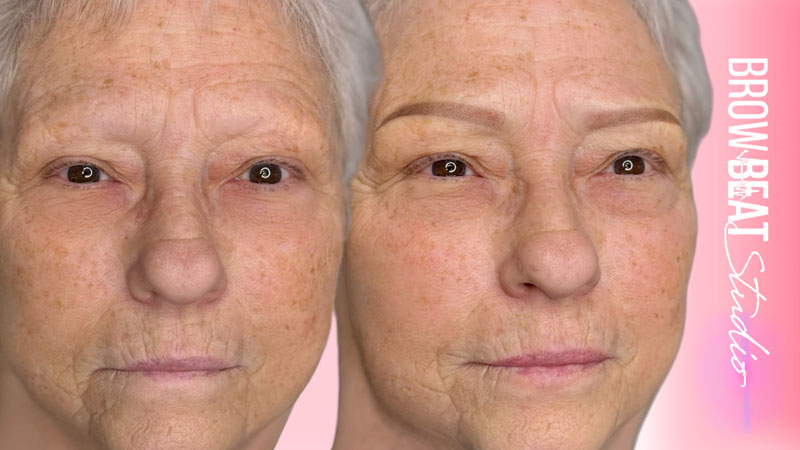
High melanin mature brows require specialized pigment selection and advanced microshading techniques. At BrowBeat Studio Dallas, carefully balanced brown tones are used to enhance depth while maintaining softness on aging skin. Semi-permanent brow tattoo application focuses on smooth transitions and even coverage, delivering elegant results trusted by mature clients across the Dallas–Fort Worth area.
Dark brown powder brows provide deeper structure for mature Dallas clients who prefer stronger definition without heaviness. Rich neutral brown pigments are applied using precise microshading to maintain softness on aging skin. BrowBeat Studio Dallas tailors each semi-permanent brow tattoo treatment to deliver smooth blending, refined shaping, and polished results trusted throughout the DFW metroplex.


Brown powder brows are a classic choice for Dallas clients ages 50–80 who want natural warmth and balanced enhancement. Medium brown pigments provide gentle contrast while preserving softness on mature skin. BrowBeat Studio Dallas uses layered microshading and semi-permanent makeup techniques to create brow tattoo results that remain timeless, wearable, and beautifully proportioned for DFW clients.
Dark brown powder brows provide deeper structure for mature Dallas clients who prefer stronger definition without heaviness. Rich neutral brown pigments are applied using precise microshading to maintain softness on aging skin. BrowBeat Studio Dallas tailors each semi-permanent brow tattoo treatment to deliver smooth blending, refined shaping, and polished results trusted throughout the DFW metroplex.

Beauty changes.
Brow shapes change.
Lip colors move in and out of fashion.
Eyeliner styles change.
There is nothing wrong with enjoying any of those trends.
Try them with conventional makeup.
Wear them.
See whether you still like them after the excitement wears off.
If a look becomes part of how you consistently like to see yourself, the permanent makeup conversation becomes much stronger.
Permanent makeup fades and softens over time.
That does not make it temporary makeup.
Pigment is being placed into the skin.
The decision deserves more thought than trying a new brow pencil, lipstick or eyeliner for the weekend.
A good candidate understands that difference.
A good permanent makeup candidate does not need to understand every technical detail.
But she should understand what the service can and cannot reasonably do.
Permanent makeup can add color.
It can add definition.
It can create more visible brow structure.
It can reduce how much conventional makeup the client repeatedly applies.
It cannot turn one person’s natural anatomy into another person’s face.
And it does not make normal facial asymmetry disappear completely.
This is another place clients sometimes put unnecessary pressure on themselves.
You can be an excellent permanent makeup candidate and have absolutely no idea whether you need microblading, nano brows, powder brows, ombré, microshading or a combination.
You do not need to arrive speaking permanent makeup.
You need to be able to tell us what you like.
Show us what you normally do.
Tell us which eyebrow you always fix first.
Tell us whether you fill between your natural brow hairs or draw individual lines.
Tell us whether you like a very soft front or a clearly defined brow.
Tell us whether your favorite lip colors are peach, pink, coral or something deeper.
Tell us how you normally wear your upper eyeliner.
Those answers are often more useful than arriving with a service name you chose from the internet.
The artist can explain the terminology.
The client brings something the artist cannot know without asking:
how she likes to see herself.
That is the real starting point for permanent makeup candidacy.
You do not have to know exactly how the result should be created. You should have a reasonably clear idea that you want the result to be there.
One of the biggest misunderstandings around permanent makeup candidacy is the idea that there is one perfect skin type.
There isn’t.
BrowBeat works with oily skin.
Dry skin.
Sensitive skin.
Thin and delicate skin.
Mature skin.
Skin that sits somewhere between all of those descriptions.
The more useful question is not:
“Is my skin good enough for permanent makeup?”
It is:
“What kind of permanent makeup makes sense in my skin?”
That distinction matters because being a candidate for permanent makeup does not mean every technique is equally appropriate for you.
Different types of permanent makeup suit different types of skin. Oily skin does not exclude someone from permanent brows.
But it does influence the way BrowBeat thinks about technique.
Fine hairstrokes depend on the skin being able to display individual lines with enough separation for the eye to continue reading them as hair-like details.
On oilier skin, that fine detail can be less predictable over time.
Shading does not depend on maintaining a collection of tiny separated lines.
It is designed to be read as soft background color and density.
For oily skin, BrowBeat generally favors shading over fine hairstroke work.

Choosing shading because of skin characteristics does not mean accepting a heavy eyebrow.
This is important.
Machine shading can be soft.
The front can remain lighter.
Natural eyebrow hair can remain visible.
The body can carry more density without becoming a solid block.
So when BrowBeat recommends a shaded direction for oily skin, we are not automatically recommending a dramatic brow.
We are changing the way the permanent pigment creates the result.
Dry skin can be an excellent starting point for permanent makeup.
It often supports pigment retention well, including finer permanent detail when the rest of the client’s candidacy supports that approach.
That does not mean every client with dry skin should automatically receive hairstrokes.
She may prefer a filled brow.
She may already have substantial natural hair and simply want density underneath it.
Or she may genuinely love individual permanent hair-like detail.
The skin gives BrowBeat useful information.
It does not make the entire aesthetic decision.
Clients often tell BrowBeat:
“My skin is really sensitive.”
That does not automatically make permanent makeup inappropriate.
Sensitive skin may become more reactive during treatment.
It may become red or inflamed more easily.
But sensitivity during the procedure does not automatically mean the skin cannot heal successfully afterward.
BrowBeat wants to know about that sensitivity before treatment so it becomes part of how the skin is approached rather than a surprise once the procedure begins.
Delicate skin deserves respect.
Trying to force fine permanent hairstrokes into skin that is not a good environment for them does not make the technique more appropriate simply because the client likes the word Microblading.
When skin is thinner or more delicate, BrowBeat generally favors machine shading rather than relying heavily on fine hairstroke techniques.
Shading allows us to create permanent density without asking the skin to hold a large collection of individually separated lines and this decision directly affects how long permanent makeup lasts.
BrowBeat enjoys working with mature clients.
We have worked with women into their late eighties.
Age does not remove someone from the permanent makeup conversation.
In many cases, permanent makeup becomes increasingly useful as natural features and everyday routines change.
Natural brow hair may become thinner.
A tail that was once easy to see may become lighter.
Applying conventional makeup may take more time.
Upper eyeliner may become harder to recreate consistently.
Lip color may appear less visible than it once did.
Those clients can have very clear reasons for wanting permanent makeup.
Age tells BrowBeat something about the client.
It does not tell us her personality.
A woman in her seventies may have worn defined eyebrows and eyeliner for forty years.
Another client of exactly the same age may have worn almost no conventional makeup throughout her life.
They should not automatically receive the same permanent result because they share a decade of birth.
Personal style does not retire.
As skin becomes thinner or more delicate, BrowBeat becomes less interested in asking it to hold a large amount of fine hairstroke detail.
That includes manual Microblading strokes and machine-created Nano hairstrokes.
For mature or delicate skin, BrowBeat generally prefers shading.
That preference is not because mature clients need stronger-looking brows.
It is because shading can create a soft permanent result without depending on many fine lines healing and remaining individually readable.
The word powder can make some clients imagine a dark, solid eyebrow.
That is not what the technique has to look like.
Shading can be very soft.
It can work underneath existing natural hair.
It can create just enough density to give the brow more presence.
It can also be developed more strongly for a client who genuinely likes greater definition.
The technique and the intensity are not the same decision.
BrowBeat works with clients who take medications.
The existence of medication by itself does not tell us everything we need to know about candidacy.
What matters is knowing what the client takes and considering that information before treatment.
For clients taking multiple medications or where healing and bleeding are greater considerations, BrowBeat generally leans toward shading rather than fine hairstroke work.

Blood-thinning medication is particularly relevant because Microblading creates a different kind of skin interaction from machine shading and can produce more visible bleeding during treatment.
BrowBeat does not want clients independently stopping or changing prescribed medication for a cosmetic procedure.
Instead, the medication should be disclosed.
When blood thinning is part of the picture, BrowBeat generally favors shading over Microblading or Nano hairstrokes.
Powder-style machine shading typically produces very little pinpoint bleeding in comparison with manual Microblading in our practice.
This deserves to be very clear.
Permanent makeup is elective.
A client should not stop, skip or change prescribed medication simply because she wants a particular permanent makeup technique.
If medication changes what BrowBeat is comfortable performing, we change the permanent makeup plan rather than asking the client to change her medical treatment on her own.
BrowBeat has worked with clients who have diabetes.
The diagnosis does not automatically make somebody a poor permanent makeup candidate.
But it does make healing considerations more important.
For that reason, BrowBeat generally favors shaded permanent brow techniques rather than fine Microblading or Nano hairstrokes when diabetes is part of the client’s health picture.
The same broad principle applies when a client has an autoimmune condition.
The diagnosis should be disclosed.
Individual circumstances matter.
But BrowBeat does not automatically assume that permanent makeup is impossible.
When healing is a greater consideration, shading is generally our preferred brow direction rather than fine hairstroke work.
Because candidacy and technique are connected even though they are not the same question.
A client may be an excellent candidate for permanent eyebrows while being a poor candidate for a particular type of permanent detail.
That distinction lets us say:
“Yes, permanent brows can make sense for you.”
without automatically saying:
“Every permanent brow technique makes equal sense for you.”
Microblading and Nano are different techniques.
Microblading creates hairstrokes manually.
Nano creates hairstrokes with a permanent makeup machine.
But visually, both ask the skin to display fine permanent lines as hair-like detail.
When BrowBeat is concerned about the suitability of fine hairstrokes because of mature skin, delicate skin, bleeding or healing variables, switching from Microblading to Nano does not automatically remove the underlying consideration.
Machine shading is designed to create soft permanent density rather than individual hair-like lines.
That makes it a useful option when BrowBeat wants the permanent brow to rely less heavily on fine line separation.
And because shading can be adjusted from very soft to more defined, choosing it does not force every client into the same eyebrow style.
This is another distinction BrowBeat thinks matters.
An oily-skinned client may love a barely there eyebrow.
A dry-skinned client may love substantial definition.
A mature client may want a polished brow.
A younger client may want almost no visible makeup effect.
Skin helps us decide how to approach the permanent work.
It does not decide the client’s taste.
BrowBeat does not perform permanent makeup during pregnancy.
That does not mean the client is permanently unsuitable.
It means this is not the right time for an elective cosmetic tattoo procedure.
The permanent makeup can wait.
BrowBeat does not perform permanent makeup while a client is nursing.
Again, this is about timing rather than declaring that the client can never be a permanent makeup candidate.
Once that stage has passed, candidacy can be considered again based on the service, skin and individual circumstances at that time.
This is important because permanent makeup candidacy is not always a permanent yes or permanent no.
A client may be an excellent future candidate and still need to wait today.
Pregnancy or nursing can create that situation.
An active problem in the treatment area can create it too.
Timing is part of candidacy.
BrowBeat wants to work on skin that is ready to be treated.
If the brow, lip or upper-eye area is actively irritated, injured or otherwise compromised, adding an elective cosmetic tattoo at that moment does not make sense.
Allowing the area to settle first can turn a poor candidate today into a perfectly reasonable candidate later.
That is the larger message.
Oily skin does not disqualify you.
Dry skin does not disqualify you.
Sensitive skin does not automatically disqualify you.
Mature skin certainly does not disqualify you.
Taking medication does not automatically disqualify you.
Having diabetes or an autoimmune condition does not automatically mean permanent makeup is impossible.
These factors give BrowBeat information.
Sometimes that information changes the technique.
Sometimes it changes the timing.
Sometimes it simply tells us to pay closer attention.
This is an important distinction.
The easiest skin for one particular technique is not the definition of a good permanent makeup client.
A woman in her eighties with delicate skin and very little natural brow hair may require considerably more thought than a younger client with dry skin and full brows.
That does not make the older client less deserving of permanent makeup.
She may actually have a much clearer reason for wanting it.

High melanin mature brows require specialized pigment selection and advanced microshading techniques. At BrowBeat Studio Dallas, carefully balanced brown tones are used to enhance depth while maintaining softness on aging skin. Semi-permanent brow tattoo application focuses on smooth transitions and even coverage, delivering elegant results trusted by mature clients across the Dallas–Fort Worth area.
Dark brown powder brows provide deeper structure for mature Dallas clients who prefer stronger definition without heaviness. Rich neutral brown pigments are applied using precise microshading to maintain softness on aging skin. BrowBeat Studio Dallas tailors each semi-permanent brow tattoo treatment to deliver smooth blending, refined shaping, and polished results trusted throughout the DFW metroplex.


High melanin mature brows require specialized pigment selection and advanced microshading techniques. At BrowBeat Studio Dallas, carefully balanced brown tones are used to enhance depth while maintaining softness on aging skin. Semi-permanent brow tattoo application focuses on smooth transitions and even coverage, delivering elegant results trusted by mature clients across the Dallas–Fort Worth area.
Dark brown powder brows provide deeper structure for mature Dallas clients who prefer stronger definition without heaviness. Rich neutral brown pigments are applied using precise microshading to maintain softness on aging skin. BrowBeat Studio Dallas tailors each semi-permanent brow tattoo treatment to deliver smooth blending, refined shaping, and polished results trusted throughout the DFW metroplex.

The goal is not to sort clients into:
perfect skin
and
bad skin.
It is to look at what the client wants, what her natural features and skin give us to work with, and which permanent approach asks the right things of that starting point.
Sometimes the answer is hairstrokes. Sometimes the answer is shading. Being a good permanent makeup candidate means finding the approach that makes sense for the person—not forcing the person to fit the technique.
Most of the candidacy conversation is not about finding reasons to exclude people.
It is about deciding whether permanent makeup makes sense for this person, for this feature, at this point in her life.
Sometimes the skin is suitable.
The client is healthy enough to proceed.
The service is technically possible.
And BrowBeat still thinks waiting is the better decision.
Why?
Because permanent makeup is also a decision about certainty.
Conventional makeup is brilliant for experimentation.
Change the brow shape.
Try the trend.
Wear the dramatic eyeliner.
Buy the completely different lipstick.
See what survives six months of looking at yourself.
Permanent makeup does not need to be the testing ground.
Brow trends change.
So do eyeliner styles.
Lip colors come and go.
There is nothing wrong with enjoying any of them.
But something being fashionable today is not, by itself, a particularly strong reason to make it semi-permanent.
BrowBeat is much more comfortable making permanent decisions around preferences the client has already lived with.
If you have drawn essentially the same brow for ten years, that tells us something.
If you have worn upper eyeliner since your twenties and still love it in your sixties, that tells us something.
If you own twelve lip products and somehow ten of them are variations of the same color family, that tells us something too.
You have evidence of your own taste.
That is useful when the next decision lasts considerably longer than tomorrow’s makeup.
That does not automatically mean you should never have permanent makeup.
Ask what changes and what stays consistent.
You may wear completely different eye shadow every week but always want upper-lash definition.
You may own dozens of lip colors but consistently prefer seeing more color in your natural lips underneath them.
You may change your overall makeup dramatically while keeping essentially the same brow shape.
The permanent part should usually come from the preference that survives the changes.
BrowBeat expects some nervousness.
This is your face.
Being thoughtful about permanent makeup is healthy.
But nervous and unsure are not exactly the same thing.
A nervous client can still know:
“Yes, I want permanent brows. I am just nervous about having them done.”
An unsure client may be thinking:
“I don’t actually know whether I want permanent brows at all.”
Those are very different starting points.
Very sure that you want the cosmetic result to be part of your face.
You do not need to be 100% certain about every technical decision.
You may not know which brow technique is appropriate.
You may not know the exact pigment.
You may not know precisely how the artist will distribute density.
Those are professional decisions that can be worked through during the appointment.
But the underlying desire should be clear.
If the question is whether you want permanent makeup at all, uncertainty is a reason to give yourself more time.
Plenty of good candidates are nervous.
They worry about the shape.
The color.
Whether it will look too strong.
Whether they will still recognize themselves.
Those concerns can be discussed.
What matters is whether the fear comes from the seriousness of the decision or from a genuine feeling that the client does not want the procedure.
BrowBeat hears versions of this concern regularly.
A client may absolutely want permanent brows while being afraid of a heavy, blocky result.
She may want lip color without wanting opaque lipstick.
She may want upper-eye definition without wanting a dramatic eyeliner shape.
Those are result preferences.
They do not make her a poor candidate.
Sometimes a client struggles to explain what she wants but responds immediately to photographs.
“Too dark.”
“Too thin.”
“I like that front.”
“That is too much shading for me.”
“I want more definition than that.”
“That lip color is too cool.”
Those reactions are useful.
You do not have to describe your ideal permanent makeup perfectly in professional language.
You do need to participate honestly in the conversation.
Another person’s eyebrow exists on another person’s face.
Her natural hair is different.
Her skin is different.
Her coloring is different.
Her facial structure is different.
A photograph can show BrowBeat what you like about a result.
It cannot require your face to become hers.

Permanent makeup can create meaningful changes.
It can add brow structure and density.
It can add visible lip color.
It can add definition along the upper lash line.
But it still works on a real human face.
Natural anatomy remains.
Natural asymmetry remains.
Skin remains skin.
The goal is improvement and visual balance—not turning a living face into a perfectly mirrored graphic.
Natural eyebrows are usually different before permanent makeup begins.
One may contain more hair.
One muscle may lift more strongly.
One tail may naturally sit differently.
Mapping can create greater visual balance.
It cannot make the two sides of a human face biologically identical.
A client who understands that is entering permanent makeup with a much more realistic expectation.
Quite the opposite.
You are allowed to care.
You are allowed to look closely.
You are allowed to say:
“I want that slightly softer.”
“That feels too thick.”
“I normally wear my tail differently.”
“I don’t think that feels like me.”
BrowBeat permanent makeup appointments reserve more than three hours partly because permanent decisions deserve time.
Participating in the design is useful.
Expecting a living face to become mathematically perfect is not realistic.
The client and artist should be working toward the same goal:
a permanent result that feels balanced, appropriate and familiar on the person who will wear it.
Fresh permanent makeup can look stronger than the settled result.
Brows can initially appear more defined.
Lip color can appear brighter.
The treatment area then moves through healing.
A client who expects the appointment-day appearance to remain completely unchanged may unnecessarily worry during a normal healing process.
Permanent makeup is not:
procedure today, completely settled result tomorrow.
The treated area needs time.
Appearance changes.
Aftercare matters.
Some normal routines may need temporary adjustment.
A good candidate plans for that instead of scheduling permanent makeup as though nothing happens between the appointment and the final result.
If you have an important event immediately ahead, think carefully about when permanent makeup fits into the calendar.
You do not want to discover after booking that you expected the treatment area to look completely settled for something happening almost immediately afterward.
Permanent makeup should be given room to move through its normal early stages.
The word permanent can create the wrong expectation if it is interpreted as:
“This will look exactly the same forever.”
It will not.
Pigment gradually changes in appearance.
Hairstrokes soften.
Shading becomes lighter.
Lip color becomes softer.
Upper eyeliner can gradually lose intensity.
A good candidate understands that a lasting cosmetic result can still evolve.
This is the other side of the same conversation.
Yes, permanent makeup changes and fades.
No, that does not mean a client should approach it as though an unwanted result will conveniently disappear next month.
The decision still deserves respect.
Some clients eventually want more color or definition as their permanent makeup becomes softer.
Others are happy wearing a lighter result for longer.
Being a good candidate does not require committing to an endless calendar of appointments.
It does mean understanding that permanent makeup is something you may choose to maintain in the future rather than a one-day cosmetic purchase that remains visually unchanged forever.
Permanent makeup has an initial financial commitment.
BrowBeat also structures permanent makeup with a first treatment and a separately priced second treatment.
Future maintenance may eventually become another financial consideration.
A good candidate should understand the service structure before beginning rather than discovering halfway through that she had budgeted for a completely different process.
Plenty of clients with existing permanent makeup can eventually have additional work.
But what is already in the skin matters.
Previous pigment may be very light.
It may still be dark.
The old shape may work beautifully.
It may not.
The color may have changed.
There may be one previous treatment or several layers accumulated over time.
Those things affect what makes sense next.
Do not assume old work is too faded to matter.
And do not hide it under brow makeup in photographs because you are worried it will prevent you from booking.
BrowBeat needs to see the actual starting point.
Existing pigment does not automatically create a no.
It creates information.
Sometimes.
But not every old cosmetic tattoo should simply receive another layer of pigment.
If the existing work is too dark, too saturated, significantly outside the desired shape or otherwise unsuitable as a foundation, adding more pigment may not solve the problem.
The old work has to make sense with what the client wants next.
If you have just had permanent makeup performed elsewhere and immediately dislike it, BrowBeat does not treat that as an ordinary new permanent makeup appointment.
Freshly treated skin should not simply receive another cosmetic tattoo because the client is understandably anxious about the result.
Where removal is appropriate, BrowBeat may recommend an appropriate removal specialist.
BrowBeat does not offer saline removal.
Your natural features matter.
Your skin matters.
Your preferences matter.
And previous permanent work matters.
The best plan begins with the actual face and skin BrowBeat will be working with—not an edited version of the starting point.
Someone who is still genuinely unsure she wants it.
Someone testing a new cosmetic style for the first time.
Someone whose treatment area is currently irritated or not ready to be worked on.
Someone who is pregnant or nursing under BrowBeat’s policy.
Someone expecting another person’s exact face or mathematical symmetry.
Someone with very fresh unwanted PMU who is looking for immediate additional tattooing as the solution.
And anyone who simply needs more time.

Permanent makeup will still exist later.
If you need another month to look at photographs, take it.
If you want to wear a different brow shape with conventional makeup before deciding whether you really like it, do that.
If you are still changing your mind every week, keep changing it with temporary cosmetics.
Waiting is much easier than trying to make yourself love a permanent decision you were never sure about.
Someone who understands that the result is lasting.
Someone with a reasonably established sense of how she likes to see herself.
Someone who can communicate what she likes and dislikes even if she does not know the technical terminology.
Someone willing to participate in the design.
Someone prepared for healing and gradual long-term fading.
Someone willing to disclose relevant skin, health, medication and previous-PMU information.
And, most importantly, someone who actually wants the result.
You may arrive without knowing whether the eventual answer is Microblading, Nano, Powder, Ombré, Microshading or Combo Brows.
That is fine.
You may not know exactly which lip pigment belongs in your skin.
You may not know precisely how upper permanent eyeliner should be designed.
That is what the professional side of the appointment is for.
What BrowBeat cannot decide for you is whether you want permanent makeup to become part of your face.
The technique can be worked out. The desire to have it should already belong to you.
By this point, the broad candidacy question should be much clearer.
You want something lasting.
You have a reasonably established idea of how you like to see yourself.
You understand that permanent makeup heals, softens and changes over time.
Your skin, age, medications and individual circumstances have been considered.
And there is something you actually want permanent makeup to do.
That can make you a very good permanent makeup candidate.
But it does not mean every permanent makeup technique should be treated as interchangeable.
Some clients arrive because of their eyebrows.
Some because of their lips.
Some because they have worn upper eyeliner for years and are tired of recreating it.
That sounds obvious, but it keeps candidacy practical.
You do not need permanent makeup everywhere simply because one service makes sense for you.
Start with the feature that consistently matters to you.
Permanent brows can make sense for an enormous range of clients.
You may have naturally thin brows.
Sparse areas.
A weak tail.
Full brows with visible skin underneath them.
Uneven natural density.
Very light natural hair.
Or very little natural eyebrow hair at all.
You may simply be tired of drawing essentially the same eyebrow every morning.
All of those can be strong reasons to consider permanent brows.
Some clients need significant eyebrow reconstruction.
Many do not.
A woman can have plenty of natural brow hair and still prefer more density, continuity or definition than her natural brows provide.
Permanent makeup can work with the eyebrow that already exists rather than requiring the natural brow to be absent before the service becomes useful.
At the other end of the spectrum, very little or no natural eyebrow hair does not automatically remove permanent makeup as an option.
Clients with substantial brow loss can be excellent candidates.
The permanent work simply carries more responsibility because more of the visible eyebrow needs to be created within the skin rather than supported by existing natural hair.
Microblading makes the most sense when permanent hairstrokes are genuinely part of the result the client wants and the skin is a good environment for fine manual detail.
BrowBeat is more selective about Microblading today than we were earlier in our ten years of permanent brow work.
Dry, resilient skin with an appropriate natural brow can be a good starting point for manual hairstrokes.
A client should also genuinely like seeing individual permanent lines and the intentional space between them.
This is one of the most important candidacy distinctions BrowBeat has learned over time.
A client may ask for Microblading because she has heard that hairstrokes are natural.
Then she shows us photographs of brows with substantial density and very little visible skin.
She may actually want more coverage than Microblading alone is designed to provide.
Being a candidate for permanent brows does not require being a candidate for Microblading specifically.
Nano brows create machine hairstrokes rather than manual Microblading strokes.
They can make sense for clients who genuinely want a hairstroke-led result and whose skin and natural brow support fine permanent detail.
But Nano should not be treated as an automatic solution every time BrowBeat decides against Microblading.
Both techniques ultimately ask the skin to display fine permanent lines.
A very broad range of permanent brow clients can be good candidates for machine shading.
That includes clients who already like the appearance of a softly filled brow.
Clients who want more density underneath natural brow hair.
Clients with oily skin.
Mature clients.
Clients with thinner or more delicate skin.
And clients whose health or medication picture makes BrowBeat less enthusiastic about relying on fine hairstroke work.
Shading is one of the most flexible tools we have because the amount of density can be adjusted considerably.
This misconception unnecessarily eliminates a lot of good candidates from considering shading.
Powder does not describe one intensity.
A shaded brow can be soft.
The front can remain light.
Natural hair can remain visible.
Or the result can carry considerably more definition when that is what the client genuinely likes.
The technique creates density.
The design determines how much.
Combo and Hybrid Brows can make sense for someone who genuinely wants both visual effects:
hair-like permanent texture
and
shaded density.
She may like seeing hairstrokes through the front but want more coverage through the body and tail.
She may want texture without relying on hairstrokes to create the entire eyebrow.
The important thing is that both components have a reason to be there.
Combo Brows are not an automatic upgrade simply because they contain hairstrokes and shading.
If a client only wants shading, adding permanent lines does not make the brow better.
If she genuinely wants both, the combination can make perfect sense.
Permanent makeup candidacy is not about fitting the maximum number of techniques onto one face.
A good lip-blushing candidate generally wants more visible permanent color within the natural lips.
She may wear lip color frequently.
She may feel that her natural lips look less colorful than she prefers without lipstick or gloss.
She may want a permanent color base that can be worn alone on some days and underneath conventional lip products on others.
She does not need to want the appearance of opaque lipstick to benefit from lip blushing.
If you have reached for similar lip colors for years, that history is useful.
You already know that you like seeing color there.
You may still change between peach, pink, coral, rose or other conventional lip products, but the underlying preference for visible lip color has remained.
That kind of consistency can make the permanent decision easier.

Natural lip tissue already contains color.
Permanent pigment is being added to that starting point rather than painted onto a blank surface.
The natural lip color therefore matters when BrowBeat considers the eventual result.
A client can be an excellent lip-blushing candidate without needing to choose or understand the pigment herself.
Dark lip neutralization is intended for appropriate clients with naturally more melanated lip tissue where the starting color changes how permanent lip color needs to be approached.
These clients can be excellent permanent makeup candidates.
The service begins from a different natural color base than standard lip blushing and is planned accordingly.
Someone who consistently likes seeing definition around the upper lash line can be an excellent candidate.
That may be a client who has worn eyeliner every day for years.
It may be someone whose natural lashes are light or sparse and who likes the appearance of greater definition close to them.
It may be someone who struggles to apply eyeliner evenly.
Or it may simply be someone who likes the way her eyes look with upper-lash definition already present.
When the natural lash line has less visual density, permanent upper-lash definition can create more presence around the eye without requiring a client to draw it from scratch every day.
The client can still add mascara, eye shadow or conventional liner whenever she wants a stronger look.
This sounds almost too obvious to say.
But it follows the same rule as every other permanent makeup service.
Permanent makeup should not be the first place you experiment with an appearance you are not sure you like.
If you have never enjoyed seeing eyeliner on yourself, making it permanent is not a sensible way to test the idea.
If upper eyeliner has been part of your face for years, the candidacy conversation is very different.
BrowBeat focuses on upper permanent eyeliner and lash line enhancement.
Some clients want subtle definition concentrated close to the lashes.
Others like more visible upper eyeliner.
Winged work is considered individually because eye anatomy matters.
Being a good eyeliner candidate does not require wanting the strongest version of the service.
Yes.
A client may consistently fill her brows, wear lip color and apply upper eyeliner.
She may eventually decide that more than one permanent makeup service makes sense for her.
But there is no requirement to solve everything at once.
One useful permanent change can be enough.
If your eyebrows are the only feature you repeatedly change, start there.
If you love your natural brows but never leave the house without lip color, lips may be the more meaningful service.
If upper eyeliner is the one cosmetic step you have recreated for thirty years, that may be the obvious candidate.
The best permanent makeup candidate is not the person who books the longest list of services.
It is the person who knows what she wants permanent makeup to contribute.
Absolutely.
Permanent makeup can be particularly appealing to someone who does not want to apply much conventional makeup.
A soft brow, subtle lip color or understated upper-lash enhancement can give the face more definition while keeping the everyday routine minimal.
Absolutely.
Permanent makeup does not require choosing between being a makeup person and a no-makeup person.
It can become the foundation underneath conventional cosmetics.
A client can add more brow product.
Change her lipstick.
Add eye makeup.
The permanent work simply gives her somewhere to begin.
Yes, particularly when they repeatedly recreate the same cosmetic features.
The practical benefit is not that permanent makeup somehow completes an entire beauty routine.
It is that certain familiar features no longer need to begin from zero every morning.
For someone with work, family, travel, exercise or simply a preference for a shorter routine, that can be useful.
Yes.
Once appropriately healed, permanent makeup can be especially convenient for clients who exercise, swim, travel or simply do not want their basic brow, lip or upper-eye definition to depend entirely on temporary cosmetics.
The client can still add more makeup whenever she wants it.
Ask yourself a few straightforward questions.
If most of those answers are yes, you may be a very good permanent makeup candidate.
They are not one age.
One skin type.
One level of natural brow hair.
Or one kind of makeup wearer.
Some are in their twenties.
Some are in their eighties.
Some have full brows.
Some have almost none.
Some love makeup.
Some barely wear it.
The strongest common thread is much simpler:
They know there is something they consistently want permanent makeup to do for them.
Usually, it is not simply having oily skin, being older, taking medication or having sparse natural features.
Those things can change how BrowBeat approaches the service.
The bigger concern is uncertainty.
If the client does not know whether she wants the result to be permanent, continually changes the look she wants, is trying a trend for the first time or expects permanent makeup to create something her natural anatomy cannot reasonably support, waiting is often the better decision.
This is the idea that brings the entire page together.
BrowBeat does not begin with a technique and search for clients who fit it.
We begin with the client.
What does she want?
What does she already have?
What does she repeatedly create with conventional makeup?
What does her skin ask us to consider?
What result would actually be useful to her?
Then the permanent makeup approach can be built around those answers.
Once you know that permanent makeup itself makes sense, the next question becomes more specific.
Do you want individual hairstrokes?
Soft shaded density?
Both?
Permanent lip color?
Upper-lash definition?
Your skin, natural features and preferences all help narrow those choices.
Our guide to choosing the right permanent makeup technique takes those same candidacy factors and turns them into the next decision: which permanent makeup approach actually fits the result you want.

An ideal permanent makeup candidate is someone who consistently likes seeing a particular feature defined and wants a lasting cosmetic foundation. She does not need perfect skin, sparse features or a particular makeup style. At BrowBeat, certainty about the result matters more than fitting one ideal client profile.
Think about what you repeatedly create with conventional makeup. If you have filled the same brow areas, worn upper eyeliner or preferred visible lip color consistently for years, permanent makeup may be a natural extension of an established preference rather than an experiment.
No. Most adults can consider permanent makeup, but timing, skin condition, pregnancy or nursing, existing permanent makeup and individual health or medication circumstances can affect whether treatment should proceed and which approach BrowBeat is comfortable performing.
Someone who is pregnant or nursing under BrowBeat’s policy, has active irritation in the treatment area, is still experimenting heavily with her appearance or is genuinely unsure she wants something lasting should wait. “Not right now” does not necessarily mean “not ever.”
Look for the part that does not change. You may experiment with lipstick but always want visible lip color, or change your eye makeup while consistently wearing upper eyeliner. Permanent makeup is better suited to the preferences that remain stable than the parts of your appearance you enjoy changing.
Nervousness does not make someone a poor candidate. Many clients are nervous because permanent makeup is a serious decision involving their face. The bigger concern is uncertainty: being nervous about a result you know you want is different from not knowing whether you want permanent makeup at all.
No. It is more useful to know what you want the finished feature to look like. BrowBeat can work through whether hairstrokes, shading, a combination, lip color or upper-lash definition makes sense from there. Know your preferences before worrying about PMU vocabulary.
Yes. Natural-looking permanent makeup can include soft hairstrokes, subtle shading, understated lip color or delicate upper-lash definition. “Natural” describes the relationship between the result and the person wearing it; it does not belong to one permanent makeup technique.
No. Clients with sparse brows can be excellent candidates, but so can clients with substantial natural eyebrow hair. Full brows may still benefit from background density, greater continuity, a stronger tail or more consistent definition.
Yes. Clients with little or no natural brow hair can be excellent permanent eyebrow candidates. Permanent makeup simply carries more of the visual responsibility for creating the eyebrow when there is less natural hair available to support the result.
Permanent eyebrows can be particularly meaningful for clients with alopecia-related brow loss. When much of the natural eyebrow is absent, permanent makeup can help re-establish shape and visible brow presence rather than simply enhancing an already full natural brow.
Yes, when timing and individual circumstances make treatment appropriate. BrowBeat has worked with clients affected by chemotherapy-related brow loss. In these situations, BrowBeat generally favors shaded permanent-brow approaches rather than relying on fine Microblading hairstrokes.
Potentially, yes. A scar can interrupt natural brow growth and create an area the client repeatedly fills. Scar tissue varies, so BrowBeat needs to assess the actual area, but scar-related hair loss does not automatically eliminate permanent eyebrows as an option.
There is no single best skin type for permanent makeup. Oily, dry, sensitive, delicate and mature skin can all be considered. Skin characteristics become useful because they help BrowBeat decide which type of permanent detail is more likely to make sense.
Yes. Oily skin can absolutely have permanent makeup. For permanent brows, BrowBeat generally favors machine shading over fine hairstroke techniques because the result does not depend on many individual permanent lines remaining clearly separated.
Dry skin can be an excellent starting point for permanent makeup and often supports pigment retention well. It may also support fine permanent detail when the client’s other characteristics and desired result make hairstrokes appropriate.
Yes, sensitive skin does not automatically prevent permanent makeup. Sensitive skin may become red or reactive more easily during treatment, so BrowBeat wants to know about that sensitivity beforehand and consider the client’s actual skin rather than relying only on the label.
BrowBeat generally favors machine shading for thin or delicate skin rather than asking the skin to hold a large amount of fine Microblading or Nano hairstroke detail. Shading can still be kept extremely soft when the client wants a natural-looking result.
Yes. BrowBeat enjoys working with mature permanent makeup clients and has treated women into their late eighties. Age does not remove someone from candidacy, although mature or delicate skin often changes the permanent-brow approach BrowBeat prefers.
BrowBeat generally favors shading for mature skin rather than relying heavily on fine Microblading or Nano hairstrokes. Shading can create soft brow density without requiring many individual permanent lines to heal and remain distinctly readable.
Taking medication does not automatically exclude someone from permanent makeup. BrowBeat needs to know what the client takes before treatment. When medication, bleeding or healing creates additional considerations, BrowBeat may favor shading rather than fine hairstroke work.
Blood-thinning medication needs to be disclosed before treatment and should never be stopped or changed independently for a cosmetic procedure. In BrowBeat’s practice, when blood thinning is a consideration, we generally favor machine shading over Microblading or Nano hairstrokes.
Diabetes does not automatically exclude someone from permanent makeup. Individual circumstances still matter, and the condition should be disclosed during screening. For permanent brows, BrowBeat generally favors shading when healing is a greater consideration rather than relying on fine hairstroke detail.
An autoimmune condition does not automatically mean permanent makeup is impossible. BrowBeat needs the relevant information before treatment, and individual circumstances matter. When healing is a greater concern, BrowBeat generally favors shaded permanent brows over fine hairstroke techniques.
No. BrowBeat does not perform permanent makeup during pregnancy. This is a timing issue rather than a statement that the client can never be a permanent makeup candidate.
BrowBeat does not perform permanent makeup while a client is nursing. Once that stage has passed, candidacy can be considered again based on the service, skin and individual circumstances at that time.
A strong lip-blushing candidate wants more visible permanent color within her natural lips. Clients who have consistently worn lip color for years can be particularly good candidates because they already know that seeing color in the lips is an established preference.
Someone who consistently likes upper-lash definition can be an excellent permanent-eyeliner candidate. This can include clients who wear eyeliner daily, struggle to apply it consistently or have light or sparse lashes and prefer greater visible definition around the upper lash line.
Yes. Permanent makeup can act as a foundation rather than replacing conventional cosmetics. Brow products can be added over healed permanent brows, lipstick or gloss can change a lip-blush result, and additional eye makeup can be worn with healed upper permanent eyeliner.
You consistently know what you want the permanent makeup to do. You may not know the technique, pigment or technical terminology yet, but the result itself feels familiar rather than experimental. At BrowBeat, that certainty is one of the strongest foundations for good permanent makeup candidacy.