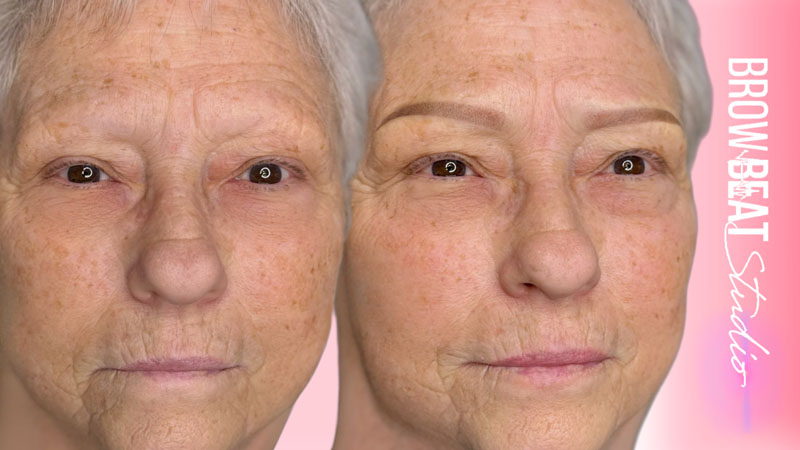
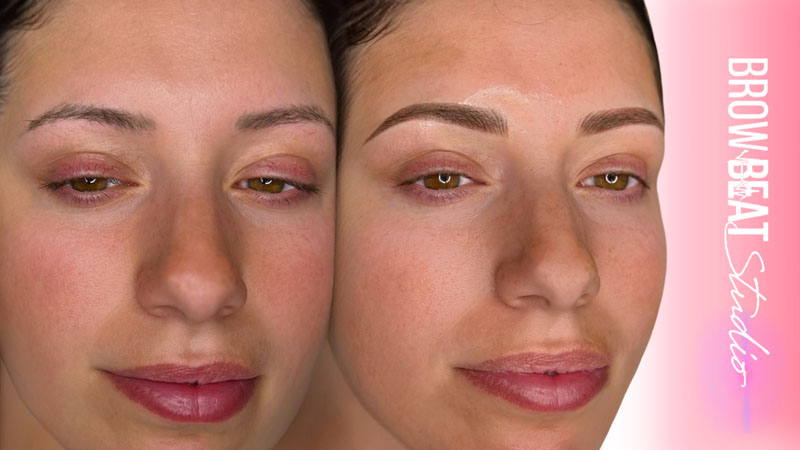
Permanent makeup is one category, but it can create several very different cosmetic results.
An eyebrow can contain individual hair-like strokes.
It can have softly shaded permanent color.
It can combine hairstrokes and shading within the same brow.
Permanent makeup can also add cosmetic color to the lips or lasting definition around the upper lash line.
Understanding the different types of permanent makeup becomes much easier when the techniques are organized by what they actually create rather than treated as a long list of unrelated service names.
At the broadest level, permanent makeup can be divided by facial area:
Within those categories are the individual permanent makeup techniques.
This guide explains what they are and how they relate to one another.
The permanent makeup services offered at BrowBeat Studio Dallas include:
That list becomes easier to understand when the services are grouped by the visual effect they create.
For eyebrows, there are three major permanent brow families:
Hairstrokes.
Shading.
Hairstrokes plus shading.
Lips and eyes then form their own permanent makeup categories.
Permanent eyebrows contain the largest number of technique names within permanent makeup.
That can make the category seem more complicated than it really is.
A client may encounter microblading, nano brows, powder brows, ombré brows, microshading, combo brows, hybrid brows and 3D brows during the same evening of research.
Those names do not represent eight completely unrelated ideas.
They can be organized into three visual groups.
Hairstroke brows are designed around the appearance of individual eyebrow hairs.
Within BrowBeat’s permanent makeup services, the two primary hairstroke approaches are:
The method changes.
The broad visual family remains hair-like detail.
Shaded brows create permanent color and density through the eyebrow rather than relying primarily on individual hairstrokes.
This family includes:
All three belong within the larger machine-shading conversation.
The terminology may emphasize different aspects of the finished brow, but the shared principle is permanent shaded density.
The third category brings the first two together.
Combo brows, hybrid brows and 3D brows combine permanent hairstrokes with machine shading.
The hairstrokes contribute hair-like texture.
The shading contributes color and density.
Understanding those three categories—hairstrokes, shading and combination—provides a framework for nearly every permanent brow term a client is likely to encounter.
Understanding the different types of permanent makeup is only part of the decision. Your natural features, skin, existing brow hair, everyday makeup habits and the result you hope to achieve can all influence what may be appropriate to consider. Our guide to who is a good candidate for permanent makeup looks more closely at those factors and the questions worth considering before choosing a treatment.
Microblading is a type of permanent eyebrow makeup that creates individual hairstrokes using a manual technique.
Rather than filling the entire eyebrow with shaded color, the artist creates separate hair-like marks that become part of the larger brow.
This makes microblading one of the easiest permanent makeup techniques to classify.
It belongs to the hairstroke category.
Microblading creates the visual appearance of additional eyebrow hairs.
Those permanent hairstrokes can be placed through areas where the natural brow is sparse, where continuity is missing or where additional hair-like detail is part of the planned eyebrow.
The complete result still includes the client’s natural brow.
Existing hair direction, density and coloring remain visually relevant because the permanent strokes eventually sit beside the real hairs.
This distinction is particularly important.
Microblading became such a familiar consumer term that it is sometimes used as though it means permanent eyebrows in general.
It does not.
A powder brow is permanent eyebrow makeup but is not microblading.
A nano brow can contain individual hairstrokes but is not microblading.
A combination brow may contain microblading hairstrokes together with shading, but the shaded portion is not microblading.
Microblading is one specific manual hairstroke technique within the much larger permanent eyebrow category.
Clients who want deeper information about manual hairstroke work can continue into BrowBeat’s dedicated Microblading resources rather than relying on this taxonomy page to replace the full technique guide.
Nano brows also belong to the hairstroke category of permanent eyebrow makeup.
The defining difference is the method used to create the strokes.
Microblading hairstrokes are created manually.
Nano hairstrokes are created with a permanent makeup machine.
Both can produce the visual appearance of individual eyebrow hairs.
The two services can look related because both may contain visible hair-like detail.
But the permanent makeup techniques are not identical.
One is manual.
One is machine-created.
This distinction helps explain why permanent makeup can sometimes reach a similar visual goal through more than one technical approach.
This is another common point of confusion.
Nano brows and powder brows can both involve a permanent makeup machine.
But the machine is being used to create different visual effects.
With nano brows, the machine creates individual hairstrokes.
With powder brows, the machine creates shaded density.
The equipment alone therefore does not define the type of permanent eyebrow.
The cosmetic effect being created does.
Clients interested specifically in machine-created hairstrokes can continue into BrowBeat’s dedicated Nano Brows information for greater depth.

Grouping microblading and nano brows together as hairstroke permanent makeup creates a useful higher-level distinction.
Both techniques are built around individual hair-like detail.
That separates them visually from brows whose primary effect is shaded color.
It also helps clients understand that the phrase hairstroke brow does not automatically identify the tool that created it.
A hairstroke can be manual.
A hairstroke can be machine-created.
The word describes the visual element first.
Powder brows belong to the shaded family of permanent eyebrow makeup.
Instead of building the brow primarily from individual hair-like strokes, a permanent makeup machine is used to create color and density through the eyebrow.
The result is more closely related to the appearance of a filled brow than to an eyebrow composed primarily of individual permanent hairstrokes.
The term can make some clients imagine a very strong or heavily filled eyebrow.
Machine shading is not limited to one amount of density.
A permanent powder brow can be approached with different levels of visual definition depending on the result being created.
The defining feature is not that the brow must be dark or dramatic.
It is that shading is creating the permanent density.
Ombré brows also belong within the machine-shading family.
The term describes a permanent brow in which shaded density can transition through the eyebrow rather than remaining visually identical from beginning to end.
A softer front with greater definition through the body and tail is one recognizable way that graduated shading may appear.
This makes ombré easier to understand when it is placed inside the larger powder-brow category rather than treated as an entirely unrelated permanent makeup technique.
Microshading is another term clients encounter while researching machine-shaded permanent eyebrows.
At the taxonomy level, it belongs alongside powder and ombré brows because the visual purpose is shaded color and density rather than primarily individual manual hairstrokes.
Keeping microshading explicitly represented is useful because clients search the term independently even though it belongs to a broader technique family.
Powder brows, ombré brows and microshading therefore share an important relationship:
they are permanent brow approaches built around shading.
The dedicated Powder, Ombré & Microshading resources explore that family in greater depth.
This is one of the most useful distinctions in the entire permanent eyebrow category.
Hairstroke brows create texture.
Shaded brows create density.
A client looking at microblading or nano brows may notice individual hair-like marks within the eyebrow.
A client looking at powder, ombré or microshading may notice more continuous permanent color through the brow.
Neither category automatically tells us which technique a particular client should choose.
That is a separate question.
Here, the important job is simply to understand that the two permanent brow families create different kinds of visual information.


Permanent eyebrows do not always have to sit entirely within the hairstroke or shading category.
Some brows use both.
Combo brows, hybrid brows and 3D brows combine permanent hairstrokes with machine shading within the same eyebrow.
This creates the third major permanent brow family:
Hairstrokes + shading.
The hairstrokes contribute hair-like texture.
The shading contributes color and density.
Those two effects can then work together within one complete permanent eyebrow.
A powder brow is built around machine shading.
A combination brow includes hairstrokes as well.
That distinction matters because the permanent brow contains two different visual elements rather than relying primarily on shaded color.
A client looking closely at a combo or hybrid brow may be able to identify individual hairstrokes in one area and greater shaded density through another.
The finished result, however, should still read as one eyebrow.
Permanent makeup terminology can vary between artists and studios.
Clients may encounter combo brows, combination brows, hybrid brows or 3D brows while researching an eyebrow that includes both hairstrokes and shading.
At the broader taxonomy level, these terms belong within the same combination family.
The useful concept is more important than memorizing every label:
the permanent eyebrow contains hair-like detail together with machine-shaded density.
BrowBeat’s dedicated Combo, Hybrid & 3D Brow information explores that permanent brow family in greater depth.
Once the permanent eyebrow options are grouped, the larger taxonomy becomes much clearer.
Microblading creates manual hairstrokes.
Nano brows create machine hairstrokes.
Both belong to the hair-like permanent brow family.
Powder brows, ombré brows and microshading use machine shading to create permanent brow density.
The finished appearance can vary, but the broad visual family is shading rather than primarily individual hairstrokes.
Combo, hybrid and 3D brows bring hairstrokes and machine shading together.
They occupy the space between a primarily hairstroke-based brow and a primarily shaded brow because both visual effects are deliberately present.
Clients sometimes search for permanent eyebrow styles expecting to find a long menu of completely separate eyebrow designs.
But many permanent brow terms describe technique rather than one fixed shape or style.
Microblading does not dictate one eyebrow shape.
Nano brows do not dictate one shape.
Powder brows do not require every client to wear the same degree of arch, thickness or density.
Combo brows do not create one universal eyebrow.
The technique tells us something about how the permanent visual effect is being created.
The actual eyebrow still has to be designed around the individual client.
This distinction prevents two separate permanent makeup ideas from becoming confused.
Technique describes how the permanent brow effect is created.
Shape describes the structure of the eyebrow itself.
A softly shaped eyebrow can contain microblading hairstrokes.
A different client may have a similarly soft overall shape created with powder shading.
Likewise, two clients receiving the same technique should not be expected to leave with identical brow shapes.
The permanent makeup method and the permanent brow design work together, but they are not the same decision.
Microblading and nano brows demonstrate another useful permanent makeup distinction.
The method can change while the broad visual category remains the same.
Microblading creates hairstrokes manually.
Nano creates hairstrokes with a permanent makeup machine.
Both are designed around individual hair-like detail.
This is why classifying permanent makeup only by equipment can become confusing.
A machine can create hairstrokes.
A machine can create shading.
The permanent makeup machine is the tool.
The visual result tells us which category of permanent brow is being created.
The word machine does not describe one permanent eyebrow appearance.
Nano brows use machine work to create individual hairstrokes.
Powder brows, ombré brows and microshading use machine work to create shaded density.
Combination brows may include machine shading together with hairstrokes.
That makes the cosmetic effect a more useful classification system than simply asking whether a permanent makeup machine is involved.

Lip blushing is a permanent makeup procedure that places cosmetic pigment within the natural lips to create lasting color.
Clients may encounter several related search terms:
Permanent lip makeup.
Permanent lip color.
Lip tattoo.
Cosmetic lip tattoo.
Lip micropigmentation.
Lip blush.
These phrases belong within the broader permanent lip makeup category.
At BrowBeat Studio Dallas, lip blushing is the primary standard permanent lip service.
This sounds obvious, but it helps establish the permanent makeup taxonomy.
A permanent eyebrow technique may create hair-like marks or shaded density.
Lip blushing has a different job.
It creates cosmetic color within lip tissue.
The natural lips already have their own coloring, so permanent lip makeup begins with a different surface and a different visual goal from permanent brows.
Lip blushing creates a permanent cosmetic color base.
It does not require the client to stop using lipstick, balm or gloss.
The permanent result can be worn by itself or sit underneath temporary cosmetics when the client wants another color or finish.
This makes lip blushing a permanent makeup category while still leaving conventional lip makeup available for day-to-day variation.
The deeper discussion of permanent lip color belongs within BrowBeat’s dedicated Lip Blushing information.
Dark lip neutralization also belongs within BrowBeat’s permanent lip services, but it has a different starting point from standard lip blushing.
It is intended for appropriate clients with naturally more melanated lip tissue, including clients within higher Fitzpatrick skin types.
The service involves working with the client’s natural lip pigmentation rather than simply approaching the lips as a standard lip blush color selection.
The word neutralization can create confusion because color correction terminology is also used elsewhere in permanent makeup.
At BrowBeat, dark lip neutralization refers to working with naturally melanated lip tissue.
It does not mean correcting unwanted permanent lip pigment performed by another artist.
Those are different treatment situations.
Dark lip neutralization therefore sits as a specialized application within the permanent lip category rather than within previous-PMU correction.
Permanent makeup can also create lasting definition around the eyes.
Clients may encounter terms such as:
Permanent eye makeup.
Permanent eyeliner.
Eyeliner tattoo.
Cosmetic eyeliner tattoo.
Lash line enhancement.
Permanent lash enhancement.
These terms belong within the permanent eye makeup category.
At BrowBeat Studio Dallas, the focus is on upper permanent eyeliner and upper lash line enhancement.
Upper permanent eyeliner places cosmetic tattoo pigment around the upper lash line to create lasting definition.
The amount of visible eyeliner can vary according to the individual eye and planned result.
The permanent treatment does not need to become the client’s entire eye-makeup look.
Conventional mascara, eye shadow and additional temporary eyeliner can still be added when desired.
Lash line enhancement belongs within the permanent eyeliner category but emphasizes definition concentrated closely around the upper lashes.
It can create a more understated permanent eye effect for clients who want the lash line to have greater presence without making a larger eyeliner design the primary visual feature.
This helps show why permanent eye makeup, like permanent brows, can contain more than one degree of visible definition.
BrowBeat Studio Dallas does not offer lower permanent eyeliner.
Our permanent eye makeup services focus on the upper lash line.
Winged upper eyeliner is considered case by case because individual eye anatomy affects whether a wing is appropriate.
The dedicated Permanent Eyeliner information explores the service in greater depth.
The major facial permanent makeup categories can now be separated clearly.
Brows can create hair-like texture, shaded density or both.
Lips can create permanent cosmetic color within natural lip tissue.
Eyes can create lasting definition around the upper lash line.
All three involve cosmetic tattooing.
But they are not interchangeable treatments.
The treatment area changes.
The visual goal changes.
The techniques change.
And the result the client sees in the mirror changes.

Permanent makeup terminology becomes far less overwhelming when each name is connected to a visual job.
Microblading:
manual hairstrokes.
Nano brows:
machine hairstrokes.
Powder, ombré and microshading:
machine-shaded brow density.
Combo, hybrid and 3D brows:
hairstrokes plus shading.
Lip blushing:
permanent cosmetic lip color.
Dark lip neutralization:
a specialized permanent lip approach for appropriate naturally melanated lips.
Upper permanent eyeliner and lash line enhancement:
lasting definition around the upper lashes.
That is the permanent makeup taxonomy in its simplest form.
The next layer is understanding where specialized applications such as mature permanent makeup and eyebrow restoration fit without incorrectly treating them as separate permanent makeup techniques.
Not every phrase used in permanent makeup describes a separate technique.
This distinction becomes especially important when clients encounter terms such as mature permanent makeup or eyebrow restoration.
Microblading is a technique.
Nano brows are a technique.
Powder and ombré brows describe approaches within machine shading.
Combination brows bring hairstrokes and shading together.
But mature permanent makeup does not mean there is one technique called a “mature brow.”
Eyebrow restoration does not automatically identify one permanent brow method either.
Those terms describe a client, starting point or application of permanent makeup rather than adding another technique to the primary taxonomy.
Permanent makeup for mature clients deserves focused attention because natural brows, skin, lips and eyes can change over time.
But age does not create an entirely new permanent makeup procedure.
A mature client may still be considering hairstrokes.
She may be considering machine shading.
She may be interested in permanent lip color.
She may want upper permanent eyeliner because creating conventional liner has become more difficult.
The established permanent makeup techniques remain available for discussion.
What changes is the context in which those techniques are being considered.
Two clients of the same age can have very different brows.
One may retain substantial natural eyebrow hair.
Another may have experienced considerable thinning.
One may have skin characteristics that differ significantly from the other.
One may have worn very soft brows her entire life.
The other may have worn clearly defined brows for decades.
Calling both clients mature tells us something about their stage of life.
It does not tell us exactly what permanent eyebrow should be created.
That is why mature permanent makeup belongs within BrowBeat’s architecture as a specialized client/application silo rather than as another technique sitting beside microblading or powder brows.
Eyebrow restoration is another specialized use of permanent makeup.
The starting point can be very different from ordinary brow enhancement.
A client may have significant natural eyebrow loss associated with alopecia.
Another may have experienced brow loss during or after chemotherapy.
Scarring or other circumstances may have changed the amount or pattern of natural eyebrow hair.
In those situations, permanent makeup may be used to help establish more of a familiar eyebrow where natural hair is substantially reduced or absent.
The word restoration describes the purpose and starting point.
It does not automatically define the permanent makeup technique used to create the brow.
Hairstroke and shading approaches can still be part of the broader permanent eyebrow conversation depending on the individual situation.
The important distinction on this taxonomy page is that restoration is an application of permanent eyebrow makeup rather than a fourth major brow-effect category.
BrowBeat’s dedicated Eyebrow Restoration information owns the deeper discussion of significant brow loss, alopecia, chemotherapy-related brow changes and scar-related considerations.
There is a spectrum between having a small sparse area and experiencing substantial natural brow loss.
A client may have healthy natural growth through most of the eyebrow but repeatedly fill one gap.
She may have a tail that has become thinner.
She may want more density through an otherwise established natural brow.
Those situations can belong to standard permanent eyebrow enhancement.
Restoration becomes a more useful category when significant brow loss itself is central to the client’s starting point.
Keeping those ideas separate helps the permanent makeup architecture remain understandable without creating a new service label for every variation in natural eyebrow density.

High melanin mature brows require specialized pigment selection and advanced microshading techniques. At BrowBeat Studio Dallas, carefully balanced brown tones are used to enhance depth while maintaining softness on aging skin. Semi-permanent brow tattoo application focuses on smooth transitions and even coverage, delivering elegant results trusted by mature clients across the Dallas–Fort Worth area.
Dark brown powder brows provide deeper structure for mature Dallas clients who prefer stronger definition without heaviness. Rich neutral brown pigments are applied using precise microshading to maintain softness on aging skin. BrowBeat Studio Dallas tailors each semi-permanent brow tattoo treatment to deliver smooth blending, refined shaping, and polished results trusted throughout the DFW metroplex.


High melanin mature brows require specialized pigment selection and advanced microshading techniques. At BrowBeat Studio Dallas, carefully balanced brown tones are used to enhance depth while maintaining softness on aging skin. Semi-permanent brow tattoo application focuses on smooth transitions and even coverage, delivering elegant results trusted by mature clients across the Dallas–Fort Worth area.
Clients also search for natural permanent makeup, natural-looking permanent eyebrows, subtle permanent makeup and soft cosmetic tattoo results.
Those are important preferences.
But “natural” is not a permanent makeup technique.
Microblading can be designed to look natural on an appropriate client.
Nano brows can create natural-looking hair-like detail.
A softly shaded powder brow can look natural on someone accustomed to seeing her eyebrows filled.
Lip blushing can create permanent color that works naturally with the client’s face.
A lash line enhancement can provide subtle upper-eye definition.
Natural-looking results can therefore exist across several permanent makeup categories.
A client who wants a soft result should not assume that only one permanent makeup technique can provide it.
Softness can come from the overall design, color, density and amount of permanent definition being created.
The service still needs to be identified by what it actually does.
Hairstrokes remain hairstrokes.
Shading remains shading.
Lip blushing remains permanent lip color.
Upper eyeliner remains permanent eye makeup.
Subtle describes how the result is experienced, not a new category of cosmetic tattooing.
Permanent makeup becomes easier to organize when the words are separated into two groups.
Technique words tell us more about how the permanent makeup is created.
Microblading.
Nano.
Powder.
Ombré.
Microshading.
Combo.
Lip blushing.
Permanent eyeliner.
Result words tell us what the client sees or how the work appears.
Hairstrokes.
Density.
Shading.
Color.
Definition.
Soft.
Natural-looking.
More defined.
Understanding both kinds of language helps explain why permanent makeup terminology sometimes overlaps without every term representing a completely separate procedure.
This is particularly clear in permanent eyebrows.
A client may say she wants hairstroke brows.
That tells us something important about the visual effect she likes.
It does not yet tell us whether those hairstrokes will be created manually through microblading or with a machine through nano technique.
The effect and the method are related, but they are not identical pieces of information.
Likewise, a client may say she prefers shaded brows.
That immediately separates her visual preference from a primarily hairstroke-based eyebrow.
Within that shaded family, she may encounter powder brows, ombré brows and microshading.
Those terms provide greater specificity inside a larger permanent brow effect that she may already understand visually.
When a permanent eyebrow contains hairstrokes and shading, it enters the combination family.
This is why combo, hybrid and 3D brow terminology becomes easier to understand after the hairstroke and shading categories have already been established.
The client is not learning a completely unrelated permanent makeup concept.
She is seeing two existing effects used together.
A taxonomy page has one important job:
explain what exists.
It does not need to declare one permanent makeup technique better than another.
Microblading has a particular method and visual effect.
Nano has another technical approach to hairstrokes.
Powder, ombré and microshading create shaded density.
Combination brows use more than one brow effect.
Lip blushing creates permanent cosmetic lip color.
Upper eyeliner creates permanent eye definition.
Those facts allow the categories to be understood without turning the page into a competition between services.

A client who wants individual-looking eyebrow hairs is describing a different visual problem from someone who wants a filled permanent brow.
A client who wants more visible lip color is not solving an eyebrow problem at all.
A client who wants definition around the upper lashes is working in another facial area entirely.
The permanent makeup options exist because the desired cosmetic outcomes are different.
This is why a complete permanent makeup menu contains more than one technique.
For clients who want the simplest possible way to organize the category, use two steps.
First: Which facial area?
Brows.
Lips.
Eyes.
Second: What permanent cosmetic effect exists within that area?
For brows:
hairstrokes, shading or a combination.
For lips:
permanent cosmetic color, with dark lip neutralization representing a specialized approach for appropriate naturally melanated lips.
For eyes:
upper permanent eyeliner or definition concentrated closely around the lash line.
That framework captures the major types of permanent makeup without requiring a new client to memorize every industry term at once.
This is the boundary that matters most on this page.
Understanding that microblading creates manual hairstrokes is classification.
Understanding that nano brows create machine hairstrokes is classification.
Knowing that powder, ombré and microshading create permanent shaded density is classification.
Knowing that combo brows contain hairstrokes and shading is classification.
But deciding which of those approaches makes sense for one particular client’s skin, natural brows, preferences and desired result is a different question.
That decision belongs within BrowBeat’s guide to how to choose the right permanent makeup technique.
This page stays focused on the step before that:
understanding the options that exist.
One reason permanent makeup can initially feel complicated is that the vocabulary is not always perfectly standardized.
A client may search for powder brows and encounter ombré brows.
She may search microshading and find information about powder techniques.
She may see combo brows described elsewhere as hybrid brows.
Nano brows may appear beside terms such as nano eyebrows, nanoblading or machine hairstrokes.
Permanent lip makeup may be described as lip blushing, lip tattooing or lip micropigmentation.
Upper permanent eyeliner may also be described as cosmetic eyeliner tattooing or permanent eye makeup.
That overlap does not mean every term is interchangeable in every technical context.
It means the permanent makeup industry contains several related vocabularies describing techniques, visual effects and treatment areas.
Grouping those terms into families makes the category easier to understand without pretending every variation is a completely separate procedure.
If the permanent eyebrow contains individual hair-like detail, the client is looking at the hairstroke side of the permanent brow category.
Microblading and nano brows both belong there.
The difference is not whether one creates hairs and the other creates shading.
Both can create hairstrokes.
The distinction is the method.
Microblading creates manual hairstrokes.
Nano brows create machine hairstrokes.
That relationship is useful because it prevents nano brows from being incorrectly grouped with powder brows simply because both can involve a permanent makeup machine.
If the permanent eyebrow is being created primarily through shaded color and density, the client is looking at the shading side of the permanent brow category.
Powder brows, ombré brows and microshading belong within that family.
These terms may emphasize different characteristics of the technique or finished appearance, but they share the broader use of machine shading to create permanent brow density.
This is fundamentally different from creating an eyebrow primarily through individual hairstrokes.

Combination brows are easy to place once the first two families are understood.
They contain both.
Permanent hairstrokes contribute texture.
Machine shading contributes density.
Terms such as combo brows, hybrid brows and 3D brows therefore describe a permanent eyebrow family that intentionally combines the visual language of hairstroke and shaded techniques.
This is perhaps the simplest permanent eyebrow classification to remember.
Texture: individual permanent hairstrokes.
Density: permanent machine shading.
Both: a combination brow.
The individual technique names then sit beneath those larger ideas.
Microblading and nano provide two ways of creating hair-like texture.
Powder, ombré and microshading belong to permanent shaded density.
Combo, hybrid and 3D brows use both.
Once those relationships are clear, permanent eyebrow terminology becomes much less fragmented.
Trying to force lip procedures into the brow framework would make permanent makeup harder to understand rather than easier.
Lips do not need eyebrow-like hairstrokes.
The primary cosmetic effect is color.
Lip blushing creates permanent cosmetic color within natural lip tissue.
Dark lip neutralization is a specialized permanent lip application for appropriate clients with naturally more melanated lips.
These procedures belong to permanent makeup because they use cosmetic tattooing to create lasting facial color, but their visual purpose is fundamentally different from permanent eyebrow work.
Permanent eye makeup is similarly distinct.
Its job is definition.
At BrowBeat Studio Dallas, permanent eye services focus on the upper eye.
Upper permanent eyeliner creates lasting definition around the upper lash line.
Lash line enhancement concentrates that definition closer to the lashes.
The amount and design can vary, but both belong to the larger permanent eye makeup category.
Permanent makeup is connected by the broader concept of cosmetic tattooing, not by the requirement that every service look alike.
A microblading stroke looks nothing like lip blush color.
Powder shading looks nothing like upper eyeliner.
Nano hairstrokes and a lash line enhancement have completely different visual purposes.
Yet all of them use permanent cosmetic techniques to create lasting effects within facial features.
That is why permanent makeup works best as the umbrella category while individual services maintain their own technique-specific information underneath it.
Another way to understand the available permanent makeup options is to begin with the visible result rather than the service name.
If the result contains individual brow hairs, it belongs within the hairstroke conversation.
If it contains filled permanent brow color, it belongs within the shading conversation.
If it contains both hair-like detail and filled density, it belongs within combination brows.
If it creates permanent cosmetic color within the lips, it belongs within permanent lip makeup.
If it creates lasting definition around the upper lashes, it belongs within permanent eye makeup.
This result-first framework can help clients recognize what they are looking at before they know every permanent makeup term attached to it.
A client may save photographs without knowing which permanent makeup technique created them.
That does not make the images less useful.
If the saved brows repeatedly contain visible individual hairs, there is a clear hairstroke preference worth discussing.
If they repeatedly show filled density, the images are pointing toward the shading family.
If both effects appear again and again, combination brows may be represented throughout the references.
Likewise, lip and eyeliner photographs can help communicate the amount of color or definition the client finds visually appealing.
The photograph does not need to function as a treatment prescription.
It can simply help identify which permanent makeup language belongs in the conversation.
Classification should not be confused with standardization.
Two microblading clients can both receive manual hairstrokes and leave with eyebrows that look different.
Two powder-brow clients can both receive machine shading while wearing different amounts of density.
Two lip-blushing clients can have different natural lip colors and different color preferences.
Two permanent-eyeliner clients can prefer different amounts of upper-eye definition.
The service category tells us what kind of permanent makeup is being performed.
It does not require the finished work to become identical across different faces.
Skin tone and natural coloring matter to permanent makeup, but they do not create an entirely new set of technique names.
Microblading remains microblading across different clients.
Nano remains machine hairstroke work.
Powder and ombré remain shading techniques.
Lip blushing remains permanent cosmetic lip color.
What changes is how the permanent makeup is planned and applied for the individual person.
This distinction allows permanent makeup to recognize differences in skin tone and coloring without incorrectly turning every client characteristic into another treatment category.
The same principle applies to age.
A mature client may be interested in permanent eyebrows, lip blushing or upper eyeliner.
Within permanent brows, different techniques may still be part of the discussion.
The client’s age does not rename those techniques.
Instead, mature permanent makeup considers how the existing techniques relate to changing skin, natural features and the client’s individual style.
This is why BrowBeat maintains dedicated Mature Permanent Makeup information while keeping the primary permanent makeup taxonomy based on the actual procedures and visual effects.
Eyebrow restoration also demonstrates the difference between a technique and an application.
When significant natural brow loss is present, permanent makeup may be used to create more of an eyebrow where substantially less natural hair remains.
The purpose can be restorative.
The permanent makeup itself still needs to be created through an appropriate brow approach.
That is why eyebrow restoration belongs within the broader permanent makeup landscape without becoming another technique category equal to microblading, nano or powder brows.
Two major BrowBeat permanent brow techniques create individual hairstrokes:
Microblading creates manual hairstrokes.
Nano brows create machine hairstrokes.
Both belong to the permanent hairstroke category, although the methods used to create the strokes differ.
Powder brows, ombré brows and microshading belong to the permanent brow shading family.
These techniques use machine shading to create color and density within the eyebrow rather than relying primarily on individual hairstrokes.
Combo brows, hybrid brows and 3D brows combine permanent hairstrokes with machine shading.
They belong to the combination family because both hair-like texture and shaded density are present within the permanent eyebrow.
Lip blushing creates permanent cosmetic color within natural lip tissue.
For appropriate clients with naturally more melanated lips, dark lip neutralization is a specialized permanent lip service with a different treatment starting point.
Upper permanent eyeliner and lash line enhancement create lasting definition around the upper lashes.
BrowBeat Studio Dallas focuses on upper-eye permanent makeup and does not offer lower permanent eyeliner.
At this point, the permanent makeup categories can be clearly separated.
Microblading and nano brows create hairstrokes.
Powder, ombré and microshading create shaded brow density.
Combo, hybrid and 3D brows combine hairstrokes and shading.
Lip blushing creates permanent cosmetic lip color.
Dark lip neutralization is a specialized permanent lip application for appropriate naturally melanated lips.
Upper permanent eyeliner and lash line enhancement create lasting eye definition.
That answers the question this page was built to answer:
What types of permanent makeup are there?
The next question is personal rather than taxonomic.
Which permanent makeup technique makes sense for the result you want?
This page provides the map.
The individual service hubs provide the depth.
For manual hair-like eyebrow detail, continue into BrowBeat’s Microblading information.
For machine-created hairstrokes, explore Nano Brows.
For machine-shaded eyebrow density, continue into Powder Brows, Ombré Brows & Microshading.
For hairstrokes and shading together, explore Combo, Hybrid & 3D Brows.
For permanent cosmetic lip color, continue into Lip Blushing.
For specialized treatment of naturally more melanated lips, explore Dark Lip Neutralization.
For lasting upper-eye definition, continue into Permanent Eyeliner & Lash Line Enhancement.
For age-specific permanent makeup considerations, BrowBeat’s Mature Permanent Makeup resources provide the more appropriate next step.
And for significant natural eyebrow loss, the Eyebrow Restoration silo addresses that different starting point in depth.
Microblading does not need to be powder brows.
Nano does not need to be microblading.
Shading does not need to imitate hairstrokes.
Combination brows do not need to pretend only one effect is present.
Lip blushing does not need to behave like eyebrow tattooing.
Permanent eyeliner does not need to solve a brow or lip concern.
Each permanent makeup technique becomes easier to understand when it is allowed to do its own job.
Together, those individual procedures form the larger permanent makeup category.
Separately, they give clients different ways to create permanent brows, lip color and upper-eye definition without expecting one technique to become the answer to every cosmetic goal.
Taking all of these differences into consideration is one part of choosing permanent makeup. The next is finding an artist who can look beyond a single technique and understand how your natural features, preferences and desired result fit together. Our guide to how to choose a permanent makeup artist explains what to look for when comparing experience, portfolios, results and approach before deciding who you trust with your face.

The main types of permanent makeup include permanent eyebrow techniques, permanent lip makeup and permanent eye makeup. Brow techniques include microblading, nano brows, powder brows, ombré brows, microshading and combo or hybrid brows. Lip blushing creates permanent cosmetic lip color, while permanent eyeliner and lash line enhancement create upper-eye definition.
Facial cosmetic tattooing can include permanent eyebrow makeup, permanent lip color and permanent eyeliner. Within permanent eyebrows, cosmetic tattoo techniques can create individual hairstrokes, shaded density or a combination of both.
Consumers often use semi-permanent makeup to describe the same broad categories as permanent makeup: permanent brows, cosmetic lip color and eyeliner. Common techniques include microblading, nano brows, powder or ombré brows, microshading, combination brows, lip blushing and permanent eyeliner.
Permanent eyebrows can be organized into three main visual families: hairstroke brows, shaded brows and combination brows. Microblading and nano create hairstrokes; powder, ombré and microshading create shaded density; combo, hybrid and 3D brows combine hairstrokes with shading.
Microblading and nano brows are the two primary permanent hairstroke techniques offered by BrowBeat. Microblading creates hairstrokes manually, while nano brows create individual hairstrokes using a permanent makeup machine.
Microblading is a permanent eyebrow technique that creates individual manual hairstrokes within the brow. It belongs to the hairstroke family of permanent makeup rather than the machine-shading family.
No. Microblading is only one type of permanent eyebrow makeup. Nano brows create machine hairstrokes, powder and ombré brows use machine shading, and combination brows contain hairstrokes together with shading.
Nano brows are a type of permanent eyebrow makeup that creates individual hairstrokes with a permanent makeup machine. They belong to the hairstroke category alongside microblading, although the method used to create the strokes is different.
No. Both can create hair-like permanent eyebrow detail, but microblading creates hairstrokes manually while nano brows create them with a permanent makeup machine. They share a visual category without being the same technique.
No. Nano brows use a permanent makeup machine to create individual hairstrokes. Powder brows also use machine work, but the machine creates shaded eyebrow density rather than primarily hair-like strokes.
Powder brows, ombré brows and microshading belong to the permanent brow shading family. These techniques use machine shading to create color and density through the eyebrow rather than relying primarily on individual hairstrokes.
Powder brows are machine-shaded permanent eyebrows. Cosmetic pigment is used to create permanent brow density and a filled effect rather than building the eyebrow primarily from individual hairstrokes.
Ombré brows are a type of machine-shaded permanent eyebrow in which the visual density can transition through different areas of the brow. A softer front with greater definition through the body and tail is one recognizable ombré effect.
Microshading is a permanent eyebrow technique within the machine-shading family. It creates permanent color and density rather than relying primarily on individual manual hairstrokes.
Yes. Powder brows, ombré brows and microshading all belong within the broader permanent brow shading family. The terminology and specific visual approach can vary, but each uses machine shading to create permanent eyebrow density.
Combo brows are permanent eyebrows that combine hairstrokes with machine shading. The hairstrokes contribute hair-like texture while the shading contributes additional color and density within the same eyebrow.
Hybrid brows belong to the combination family of permanent eyebrows. The term is commonly used for brows that contain both permanent hairstrokes and machine shading rather than relying exclusively on one effect.
Within BrowBeat’s permanent makeup terminology, 3D brows belong to the combination brow family. They combine hair-like permanent detail with shading to create texture and density within the same eyebrow.
Hairstroke brows are built around individual hair-like marks, while shaded brows create more continuous permanent color and density. Microblading and nano belong to the hairstroke family; powder, ombré and microshading belong to the shading family.
Manual hairstrokes are created through microblading, while machine hairstrokes are created through nano brow technique. Both belong to the permanent hairstroke category because both are designed to create the appearance of individual eyebrow hairs.
Yes. Combo, hybrid and 3D brows combine permanent hairstrokes with machine shading. These techniques form the combination category between primarily hairstroke-based and primarily shaded permanent brows.
No. Natural-looking permanent makeup describes a desired appearance rather than one specific technique. Microblading, nano brows, shaded brows, lip blushing and permanent eyeliner can all be designed with different levels of softness and definition.
No. Mature permanent makeup describes specialized application considerations rather than one technique. Mature clients may still consider established permanent brow, lip or eyeliner procedures, while age-related skin and feature changes are addressed within BrowBeat’s dedicated Mature Permanent Makeup information.
Eyebrow restoration is a specialized application of permanent eyebrow makeup for clients with significant natural brow loss. It describes the starting point and purpose rather than one separate technique called restoration.
Lip blushing is BrowBeat’s primary standard permanent lip makeup service. It places cosmetic pigment within natural lip tissue to create lasting color while allowing conventional balm, gloss and lipstick to remain optional.
Dark lip neutralization is a specialized permanent lip service for appropriate clients with naturally more melanated lip tissue. It has a different starting point from standard lip blushing and is not the same as correcting unwanted previous permanent makeup.
BrowBeat Studio Dallas offers upper permanent eyeliner and upper lash line enhancement. These procedures create lasting definition around the upper lashes. BrowBeat does not offer lower permanent eyeliner.
A lash line enhancement is a type of upper permanent eye makeup that concentrates cosmetic tattoo pigment close to the lashes. It creates lasting lash-line definition without requiring the result to become a larger eyeliner design.
At BrowBeat Studio Dallas, permanent makeup focuses on three primary facial areas: eyebrows, lips and the upper lash line. Each area contains techniques designed for a different cosmetic purpose, including hairstrokes, shading, lip color and eye definition.
First understand the available categories: hairstrokes, shaded brows, combination brows, permanent lip color and upper-eye definition. Choosing between those techniques requires a more individual discussion of natural features, skin characteristics and desired results, which BrowBeat covers separately in its guide to choosing the right permanent makeup technique.