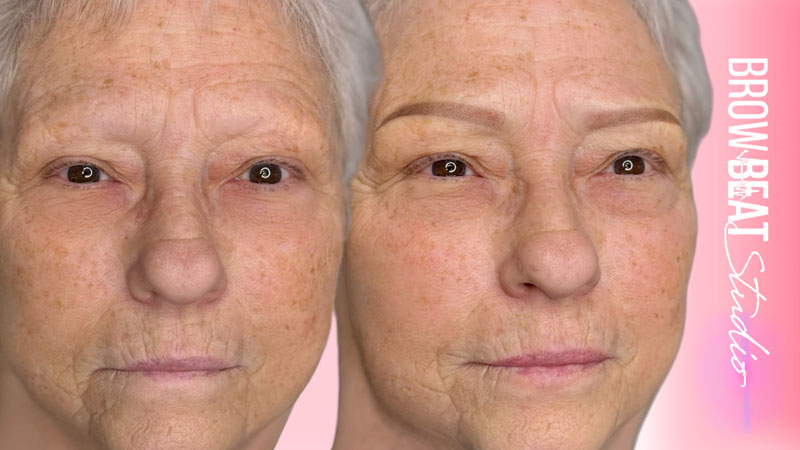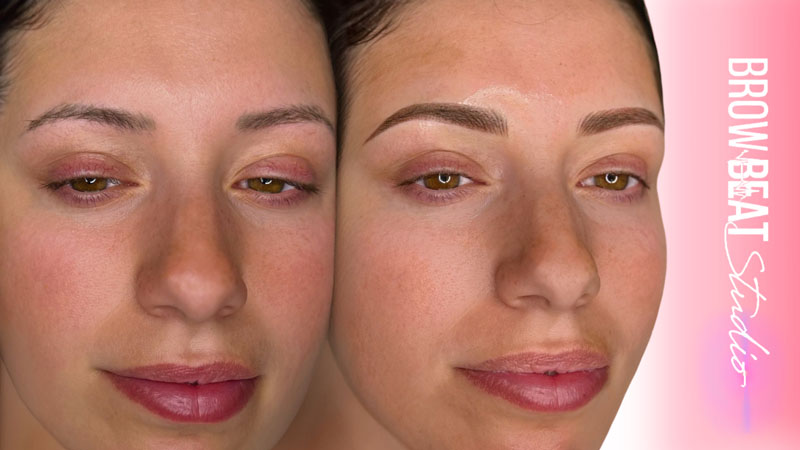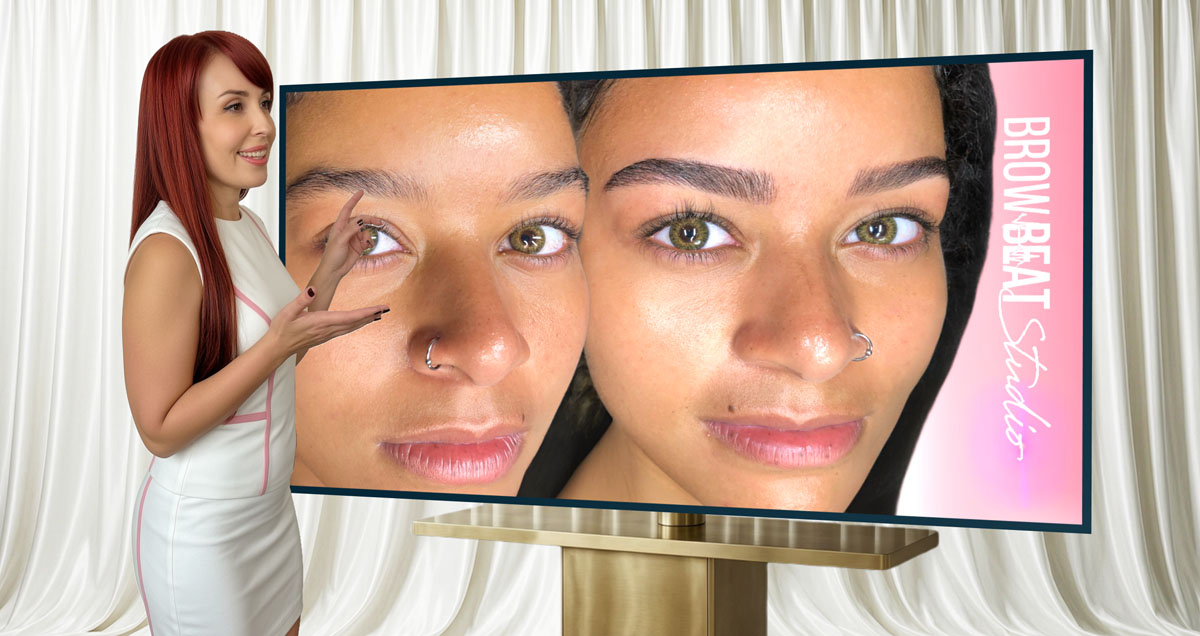
For many clients, microblading can provide useful visible hairstroke definition for approximately one year to 18 months. Some deeper brow colors may remain visibly defined closer to one to two years. But after 10 years of watching microbladed brows return to BrowBeat Studio Dallas, we do not believe one number can accurately describe how long microblading lasts for everyone.
There are simply too many variables.
We think about microblading longevity through three broad influences: firstly, understanding what microblading is helps understand why is has the time frame it does in the skin. But biology, the original microblading work and lifestyle are three key factors.
Your skin matters. The pigment and the way the original work was performed matter. Sun exposure, skincare and what you routinely use near or on your eyebrows can matter considerably.
Color depth plays a role too.
Very light blonde hairstrokes begin with less visible pigment depth than a deep brown. As both gradually soften, the lighter result may reach the point where the client wants additional definition sooner.
So when someone asks, “How long does microblading last?” we can give realistic ranges based on years of seeing the results come back.
What we cannot responsibly give is an expiration date.
For many BrowBeat clients, approximately one year to 18 months is a useful expectation for microblading longevity.
Lighter blonde microblading often falls toward the shorter end of that range. A client with very soft hairstrokes may begin wanting additional definition around one year to 18 months because there was less visible pigment depth in the brow from the beginning.
Deeper brown microblading can sometimes remain useful longer. Depending on the client, pigment, skin and lifestyle, richer colors may continue providing visible definition closer to one to two years.
These are ranges, not guarantees.
One blonde client can retain beautifully while another softens sooner. A deeper brunette result can also fade faster than expected when other longevity factors are working against it.
The calendar gives us context.
The eyebrow tells us much more.

When the microblading blade enters the skin, artist pressure becomes part of the longevity equation. The goal is not to work more aggressively simply to make pigment stay longer. Microblading needs controlled, intentional application that creates the hairstroke result while respecting the skin. At BrowBeat Studio Dallas, we think of longevity as a balance: useful pigment retention without chasing permanence through excessive pressure.
It would be easy to assume that placing microblading pigment more aggressively should make the result last longer. But the longest possible retention is not our goal. Artist technique and pressure are only part of a larger equation that also includes pigment, skin biology and lifestyle. The objective is to create beautiful individual hairstrokes that provide useful longevity while still being allowed to soften naturally over time.


Each time the manual blade creates a microblading stroke, another small amount of pigment becomes part of the finished eyebrow. How those individual strokes retain over time contributes to the overall lifespan of the result. This is why microblading longevity is about more than whether color remains in the brow. What matters is how long those separate hair-like strokes continue providing useful texture and definition.
This close view of the blade working within the brow shows the artist-controlled part of microblading longevity. Technique and pressure matter, but once the procedure is complete, the result continues living in the client’s skin. Biology, pigment depth, UV exposure, skincare and lifestyle then become part of the story. That is why even technically similar microblading can have very different retention from one client to another.

Permanent makeup has changed considerably over the years, and so has the way experienced artists talk about longevity.
Earlier in the development of the microblading industry, two to three years was commonly repeated as an expected lifespan for the service.
After years of actually seeing healed and aged microblading in Dallas return to the studio, we think that expectation is too broad to be particularly useful.
Some pigment may certainly remain visible for two or three years on some people.
But there is an important difference between saying, “I can still see some pigment,” and saying, “My microblading still has enough hairstroke definition that I do not want maintenance.”
Those are not necessarily the same thing.
When clients ask how long microblading lasts, they usually are not asking how long the final trace of pigment can possibly remain in their skin.
They want to know how long their brows may continue providing the hair-like definition that made them choose microblading in the first place.
For that question, we prefer realistic expectations over impressive numbers.
Yes. Microblading fades over time.
Once the brows have completed their initial healing process, the individual hairstrokes begin a much slower long-term evolution. Pigment gradually becomes less visually prominent, and the definition of the hair-like strokes can soften over months and years.
This is different from the temporary lightness, patchiness or color changes that can occur during the first few weeks of healing.
Healing describes what happens while freshly treated skin recovers.
Long-term fading describes what happens after the microblading has healed and continues aging.
That temporal distinction matters because a light-looking brow on day ten and a faded brow 18 months later are two completely different stages of microblading.
Fading is not automatically a failure of microblading.
It is part of the long-term behavior of the service.
The individual hairstrokes are not intended to remain visually identical year after year. Over time, pigment becomes lighter and the definition of the strokes gradually changes.
That natural regression is important.
A client may initially think that permanent makeup lasting as long as physically possible must always be better. With a hairstroke technique, that is not necessarily the goal.
Brows change. Faces change. Natural eyebrow hair changes. Preferences can change too.
And when additional microblading is considered in the future, we also need to consider the pigment already present in the skin.
Allowing earlier hairstrokes to soften gives the brow room to evolve rather than continually placing new work over pigment that remains heavily defined.
We want longevity.
We also want evolution.
Microblading gets its characteristic appearance from individual hairstrokes and the visible space between them.
Now imagine creating a complete set of hairstrokes and later placing another full set over pigment that remained equally strong.
Then doing it again.
If every previous stroke retained maximum intensity indefinitely, the brow could gradually carry more pigment while losing some of the visual separation that made the technique look hair-like in the first place.
This is why the natural regression of microblading can actually be useful.
We do not need to move into correction to understand the principle.
When future maintenance is considered, the amount of pigment already present matters.
The objective is not to preserve every individual stroke forever.
It is to maintain an eyebrow that continues to make sense over time.

Microblading stacking describes the accumulation that can occur when new hairstroke work is repeatedly placed over substantial existing pigment without enough softening between treatments.
Individual microblading strokes depend on visible separation to retain their hair-like character.
If additional pigment is continually introduced while earlier strokes remain strongly visible, the brow can gradually contain more overall color and less negative space between individual hairstrokes.
This is one reason BrowBeat does not measure successful longevity by asking how long we can make pigment refuse to move.
We want enough retention for the client to enjoy meaningful longevity.
We also want enough natural fading to preserve options for the future.
Microblading begins with individual hair-like pigment strokes.
Once healed, those strokes work visually with the client’s natural eyebrow hair. Over the longer term, they gradually become lighter and less distinct.
The change may not appear identical throughout the entire eyebrow.
Some areas can remain more visible than others because natural brow density, skin characteristics, exposure and daily habits are not necessarily uniform across every part of the brow.
Eventually, a client may notice that pigment is still present but the original hairstroke definition is not contributing as much structure as it once did.
That is an important distinction in microblading longevity.
We are not only asking whether pigment remains.
We are asking what that remaining pigment is still doing for the eyebrow.
Microblading retention refers to how much of the pigment and visible hairstroke result remains after healing and as time passes.
Good retention does not mean every hairstroke remains unchanged indefinitely.
Instead, we look at how the pigment settled, how long the individual strokes remained useful and how the overall eyebrow continues to look as the result gradually softens.
Retention is individual.
Two clients can receive microblading during the same week and return a year later with very different-looking brows.
One may still have substantial visible definition.
The other may already be reaching for her brow pencil again.
Neither result can be understood from the calendar alone. There are just quite simply better microblading candidates than others.

How long microblading lasts matters, but longevity should not be pursued by simply increasing artist pressure. The objective is controlled pigment placement appropriate for the technique and the client’s skin—not forcing the hairstrokes to remain as dark as possible for as long as possible. At BrowBeat, we want useful retention followed by natural softening, giving the eyebrow room to fade naturally over time.
Microblading strokes placed too deeply can lose the fine, crisp appearance that allows individual hairstrokes to read naturally through the skin. Greater depth can also influence how pigment color appears, with strokes potentially healing cooler or greyer. Because skin thickness varies from person to person, correct microblading depth is not exactly the same for every client.


When pigment is placed at an appropriate depth, healed microblading strokes can maintain clearer separation and a more natural brown appearance through the skin. Pigment generally appears warmer when it sits closer to the surface and can appear cooler when implanted too deeply. The artist must adjust technique for the individual skin rather than relying on one fixed depth for every client.
After years of watching microblading age, we find it useful to organize longevity around three broad categories.
Your skin is part of the result. Oil production, skin characteristics, natural cell turnover and individual pigment retention can all influence how visible the hairstrokes remain over time.
Biology creates tendencies.
It does not create a guaranteed expiration date.
The work placed into the skin is another part of the equation. Artist technique, pressure, pigment choice and the amount and depth of visible color can all influence how microblading behaves over time.
This is why retention cannot be discussed as though the client’s body is responsible for every difference in longevity.
The original work matters too.
Then there is everything that happens after the brows have healed.
Sun exposure, skincare, exfoliating products, skin-renewal treatments and other long-term habits can influence how quickly visible pigment softens.
Some influences are modest.
Others can make a substantial difference.
Understanding all three categories gives clients a much more realistic explanation of microblading longevity than one universal number ever could.
Very light microblading begins with less visible pigment depth.
That matters.
A soft blonde result is intentionally designed not to overpower fine, light natural eyebrow hair. The same restraint that makes the brow appropriate for the client can mean that loss of definition becomes noticeable sooner.
If a very light hairstroke becomes lighter, even a relatively small change can have a noticeable visual effect.
A deeper brown stroke begins with more visible depth before the same amount of softening becomes equally obvious.
This does not make blonde microblading unsuccessful.
It simply gives it a different longevity profile.
For many blonde clients, approximately one year to 18 months is a realistic range to keep in mind before additional definition may become desirable.
Deeper microblading colors can remain visibly defined longer for some clients because they begin with greater pigment depth.
For some deeper brown results, useful visible definition may extend closer to one to two years.
That does not mean we choose an unnecessarily dark pigment simply to make the brows last longer.
Color still has to make sense for the client’s natural brow hair, coloring and overall result.
A darker pigment exposed repeatedly to strong UV or aggressive skin-renewal products can also soften sooner than expected.
Longevity is one consideration.
The color still has to belong on the face.
One of the most important long-term skincare conversations we have with microblading clients involves products designed to accelerate skin renewal.
Retinol, Retin-A and tretinoin are three of the biggest examples.
When these products are routinely used near or on the eyebrow area, they can contribute to substantially faster visible fading for some clients.
This is particularly relevant now because active, rejuvenating skincare has become a normal part of many people’s routines.
We do not expect clients to abandon an entire skincare philosophy for their eyebrows.
We do want them to understand the relationship.
The skincare may be doing exactly what it was designed to do.
It just does not know that you would prefer it to leave your microblading alone.
If preserving hairstroke longevity matters to you, what you repeatedly place near or on the brows deserves consideration too.

Microblading lives in skin, so the characteristics of that skin naturally influence how the hairstrokes behave over time.
Some clients retain individual strokes exceptionally well. Others notice the definition softening sooner. Oil production, skin texture, natural cell turnover and the way an individual’s skin retains pigment can all contribute to those differences.
This is why two clients can receive similar microblading and have very different-looking brows 12 months later.
The calendar is the same.
The biology is not.
There is also an important distinction between asking whether microblading is appropriate for a particular skin type and asking how skin characteristics may affect longevity once the work has healed.
Here, we are talking about longevity and retention—not deciding which brow technique someone should receive.
Oilier skin can be associated with softer microblading retention over time, particularly when we are looking at the clarity of individual hairstrokes.
That does not mean every client with oily skin will have the same experience or that we can assign a precise lifespan based on oil production alone.
Skin is more complicated than one characteristic.
For microblading longevity, the important point is that fine pigment strokes are living within an individual skin environment. That environment can influence how distinctly those strokes remain visible as time passes.
Oil production therefore becomes one part of the retention picture alongside pigment depth, original technique, sun exposure, skincare and lifestyle.
Because several longevity factors are operating at the same time.
One client may naturally retain pigment well, use relatively gentle skincare around the brows and have limited cumulative sun exposure.
Another may have faster skin turnover, regularly use strong rejuvenating products near the eyebrows and spend considerably more time outdoors.
Then we add the original microblading itself.
Were the hairstrokes created with a very soft blonde pigment or a deeper brown? How did that client’s skin retain the original work? What was the artist’s technique and pressure?
Those variables help explain why one person’s microblading can still provide substantial definition while another client from the same time period is already noticing significant softening.
Individual retention really is individual.

Repeated sun and UV exposure can contribute to permanent makeup fading over time.
This is different from protecting freshly microbladed skin from sun during the initial healing period.
Here, we are talking about cumulative exposure after the brows have healed.
Over months and years, UV becomes one of the lifestyle factors that can influence how long pigment remains visibly strong.
A client who spends substantial time outdoors may therefore have a different retention experience from someone whose brows receive considerably less cumulative exposure.
Sun is not the only answer to microblading longevity.
It is one piece of it.
Once microblading is fully healed and ordinary skincare has resumed, protecting the brow area from repeated UV exposure can be part of sensible long-term permanent makeup care.
Sunscreen does not make microblading permanent forever.
Nothing does.
The purpose is not to stop natural fading entirely. It is to reduce one avoidable factor that can contribute to faster pigment softening over time.
We want clients to enjoy their lives, not spend every sunny day worrying about their eyebrows.
Reasonable long-term protection is enough.
Modern skincare can be remarkably effective at changing the skin.
That becomes relevant to microblading because the pigment is living within that same skin.
Products and treatments intended to increase exfoliation or accelerate skin renewal can contribute to faster visible fading, particularly when they are routinely used near or directly on the eyebrows.
This is why long-term skincare belongs in a serious discussion about microblading retention.
A client can follow every instruction perfectly during the initial healing period and still influence the lifespan of her hairstrokes through what she repeatedly does over the following months.
Aftercare protects the fresh procedure.
Long-term habits influence what happens after it has healed.
Retin-A, retinol and tretinoin are used because clients want them to influence skin renewal.
That same activity can work against the longevity of shallow permanent makeup when these products are repeatedly used near or on the eyebrow area.
In our experience, clients who regularly bring strong rejuvenating skincare into the brow area can see their microblading soften considerably sooner.
That does not mean the skincare is doing something wrong.
Quite the opposite.
It may be doing exactly what it was designed to do.
The tradeoff is that the microblading may not retain visible hairstroke definition for as long.
Repeated exfoliation around the eyebrow area can contribute to faster visible fading of microblading over time.
This can include exfoliating skincare, acids, resurfacing treatments and other approaches intended to encourage skin renewal.
We are not suggesting those products are inherently bad.
Many clients use them because they value what they do for their skin.
The important question is where they are being used and what the client expects from her permanent makeup.
If preserving individual hairstroke visibility for as long as reasonably possible is important, repeatedly encouraging skin renewal near or on the brow area can work against that goal.
Lifestyle is a broad category because eyebrows do not exist separately from the person wearing them.
Cumulative sun exposure matters. Skincare matters. Repeated exfoliation and skin treatments can matter. The overall environment and routine surrounding the brows can influence how the pigment ages.
That does not mean clients should organize their lives around preserving every hairstroke.
Permanent makeup is supposed to make life easier.
We simply want clients to understand the difference between natural fading and repeatedly exposing the brows to factors that may accelerate that fading.
Once you understand the relationship, you can decide what matters most to you.

Blonde microblading begins with less visible pigment depth, which can influence how long the individual hairstrokes continue giving the brow noticeable definition. A soft blonde pigment is chosen because it belongs with lighter natural brow hair—not because we are trying to create the longest-lasting color possible. At BrowBeat Studio Dallas, longevity begins with appropriate color selection. Making a blonde brow unnecessarily dark just to extend its lifespan would miss the point of creating an individualized result.
Deeper brow colors begin with greater visible pigment depth, which can give some clients more time before loss of definition becomes noticeable. Depending on biology, original artist work and lifestyle, deeper microblading colors may remain visibly useful closer to one to two years for some people. That does not make darker pigment automatically better. At BrowBeat Studio Dallas, color is chosen for the client’s natural brow and features first; potential longevity is only one part of that decision.


Skin biology is one of the three major influences on how long microblading can remain visibly defined. Individual pigment retention, oil production, skin characteristics and natural cell turnover can all affect the staying power of hair-like strokes. This reinforces an important point: we cannot predict longevity from complexion alone. The client’s individual skin behavior matters.
Once the brows are completely healed, occasional swimming is very different from getting freshly microbladed skin wet during the initial aftercare period.
For long-term longevity, we think about cumulative lifestyle patterns rather than suggesting that one afternoon in a pool determines how long your brows will last.
Someone who spends significant time swimming outdoors may also have other factors involved, including repeated sun exposure and the skincare associated with that lifestyle.
Those influences work together.
Microblading longevity is rarely explained by one isolated activity.
Once microblading is fully healed, ordinary exercise is part of normal life.
The concerns about heavy sweating around freshly treated skin belong to the initial healing period.
Long-term retention is different.
We do not tell clients that going to the gym removes a predictable number of months from their microblading.
Skin characteristics, cumulative sun exposure, skincare, skin treatments, pigment depth and individual retention generally give us a much more useful longevity picture than exercise alone.
After healing, microblading color gradually becomes less visually intense as the pigment ages.
With a hairstroke technique, color and stroke definition are closely connected.
As a stroke becomes lighter, it can become less distinct against the skin and natural eyebrow hair. As more of the individual strokes soften, the overall brow may begin losing some of the structure the client originally enjoyed.
The process is usually gradual.
A client is unlikely to wake up one morning and discover that a year’s worth of microblading vanished overnight.
More often, she begins noticing small things.
The tail needs a little pencil again.
A sparse area does not look quite as complete without makeup.
The brows are still there, but they are asking her for a little more help than they used to.
No.
The crisp individual hairstrokes visible in healed microblading naturally change over time.
They can become lighter and less distinct as the pigment ages. How quickly that happens depends on the same factors influencing overall retention: skin, pigment depth, original technique, sun exposure, skincare and lifestyle.
This is why we do not judge microblading longevity solely by whether any pigment remains.
A brow can still contain visible color while the original hair-like definition has softened enough that the client begins wanting more structure.
For microblading, the quality of the visible hairstrokes matters just as much as the presence of pigment.
At approximately one year, there can be a wide range of normal long-term microblading results.
Some clients still have clearly visible hairstrokes and feel no urgency to do anything.
Others—particularly those wearing very light pigment or living with stronger fading influences—may notice considerably softer definition.
A blonde client may begin seeing the tail disappear again or find herself using brow makeup more frequently.
A deeper brunette client may still have substantial visible structure.
The one-year mark is therefore useful as a reference point.
It is not an automatic maintenance appointment.
By approximately two years, many clients will have experienced substantial softening of their original microblading, although the amount of pigment remaining can vary considerably.
Some deeper colors may still be clearly visible. Other clients may have only a softer suggestion of the earlier hairstroke result.
At this stage, the useful question is not simply whether pigment can still be found.
Does the remaining work still provide useful brow definition?
Are individual hairstrokes still contributing to the eyebrow?
Has the client returned to filling significant areas with makeup?
Those questions tell us more than the age of the original appointment alone.
Microblading can fade until very little is visibly noticeable for some clients, while others retain traces of pigment for considerably longer.
We do not promise that every person’s microblading will completely disappear on a particular timeline.
Skin processes and retains pigment differently.
Color depth, original technique, lifestyle and repeated maintenance can all influence what remains visible over time.
This is why we prefer the language of fading and softening rather than saying microblading simply “wears off” like ordinary makeup.
It is permanent makeup living in changing skin.
How far it ultimately fades is individual.

There is no single maintenance date that every microblading client should automatically follow.
Has the original hairstroke definition softened significantly? Is the client beginning to fill her brows with makeup again? Are the tails becoming less visible? Does the remaining pigment still provide enough structure that she is happy with the result?
Those questions are more useful than deciding every client must return at exactly 12, 15 or 18 months.
For many people, the maintenance conversation may begin somewhere around the one-year to 18-month range. Deeper colors and stronger individual retention can extend that timeline.
The appropriate time for maintenance is when the aged brow and the client’s preferences tell us it would be useful.
A microblading refresh is normal maintenance of BrowBeat’s existing work after the original hairstrokes have softened over time.
It is not about automatically recreating the entire original treatment every year.
We first look at what remains.
If the earlier microblading has faded enough to allow additional hairstroke definition to be introduced thoughtfully, maintenance can restore areas where the client has begun losing the structure she enjoyed.
Sometimes the client notices the change before she ever thinks about the age of her microblading.
She starts drawing the tail again.
She adds a little pencil through a sparse area she had stopped touching.
The brows are still there, but they no longer give her quite the same effortless definition.
That is a much more meaningful reason to begin thinking about maintenance than simply asking whether a year has passed.
A maintenance appointment does not begin with an empty eyebrow.
We need to consider the pigment already present in the skin.
Some hairstrokes may still be clearly visible. Others may have softened considerably. The overall brow may retain useful shape even though one particular area has lost definition.
Those details influence what should happen next. At this time, some clients wish to compare Powder brows and microshading to Microblading.
If substantial pigment remains, automatically adding more everywhere can create unnecessary accumulation over time.
If the earlier work has softened appropriately, there may be more room to restore hair-like detail where it is genuinely useful.
This is why BrowBeat approaches maintenance as an evaluation of the existing brow rather than an automatic repetition of the first appointment.
Think in terms of protecting the brows reasonably rather than trying to freeze them in time.
Once healed, reducing unnecessary cumulative UV exposure can remove one avoidable fading influence. Being thoughtful about strong exfoliating or skin-renewal products near or on the brows can make a difference too.
Retinol, Retin-A and tretinoin deserve particular attention because repeated use around the eyebrow area can contribute to substantially faster visible fading for some clients.
At the same time, some natural fading should happen.
You do not need to organize your entire life around preserving every hairstroke.
The goal is useful longevity followed by graceful regression—not permanent makeup that never changes.

Permanent makeup should fit into your life, not take control of it.
Many clients value their skincare just as much as they value their brows.
The important thing is understanding the relationship between the two.
Retinol, Retin-A and tretinoin are used because they influence skin renewal. When repeatedly used near or directly on microbladed eyebrows, that same activity can contribute to faster fading of the shallow pigment.
If you choose to continue using these products near or on the brows, you may find that your microblading needs maintenance sooner.
That is an informed tradeoff rather than a failure of the treatment.
Allow the brows to change.
Protect the healed result reasonably. Be aware of strong skincare near or on the eyebrow area. Understand that the hairstrokes will gradually soften, and pay attention to how much useful definition remains.
You do not need to panic the first time an individual stroke becomes lighter.
You also do not necessarily need to wait until every trace of pigment has disappeared before discussing maintenance.
The appropriate point sits somewhere between those extremes and depends on the individual eyebrow.
Long-term microblading maintenance is not about keeping the brows permanently frozen at their freshest healed stage.
It is about allowing them to age well and responding thoughtfully when they genuinely need more.
That is very common.
Microblading does not need to go from clearly visible to completely absent before the result has noticeably changed.
The individual hairstrokes can soften while some underlying pigment remains. The eyebrow may still have color but less of the hair-like definition that originally gave it structure.
This is why we distinguish pigment presence from useful microblading definition.
When considering maintenance, we look at both.
How much pigment remains?
And what is that pigment still contributing to the eyebrow?
Normal maintenance of BrowBeat’s established work and working over permanent makeup performed elsewhere are not automatically the same thing.
If a client arrives with existing external microblading or other previous permanent brow pigment, that work needs to be evaluated as existing permanent makeup rather than assumed to be a routine BrowBeat refresh.
The age, color, density and amount of pigment already present all matter.
This page is about normal long-term microblading fading, retention and maintenance.
Previously healed external work that needs to be altered or corrected belongs to a different evaluation process.
No.
Longevity is valuable, but it is not the only goal.
We want clients to receive enough useful time from their brows that permanent makeup makes a meaningful difference in everyday life.
At the same time, microblading is a hairstroke technique. Those individual strokes need visual separation to retain their character.
Natural fading creates space.
It allows the eyebrow to evolve. It allows us to see what remains before adding more. It gives future maintenance somewhere to go.
A result that lasts appropriately and fades gracefully can be more valuable long-term than pigment that simply refuses to move.
Because experience changes the questions you ask.
Early in the microblading industry, longevity was often discussed as though the longest possible lifespan automatically represented the best result.
After 10 years, we are much more interested in what the brows look like during that lifespan.
Did the individual hairstrokes remain useful?
Did the pigment soften naturally?
Did the client receive enough time from the treatment without creating unnecessary pigment accumulation through overly frequent maintenance?
Those questions give us a more mature way to think about permanent brows.
We still want retention.
We simply do not confuse retention with permanence at any cost.
For many clients, approximately one year to 18 months is a realistic expectation for useful visible hairstroke definition, particularly with softer and lighter brow colors.
Deeper pigments may remain useful closer to one to two years for some people.
But the best answer remains individual.
Your biology matters. The original microblading work matters. Pigment depth matters. Sun exposure and skincare matter. Retinol, Retin-A and tretinoin used near or on the eyebrows can contribute to substantially faster fading for some clients.
The amount of pigment already remaining also matters when it is time to consider maintenance.
At BrowBeat Studio Dallas, we would rather give clients a realistic range and explain the variables than promise a lifespan their skin never agreed to.
Microblading is designed to give you lasting hairstroke definition.
It is also designed to change.
For long-term brows, both of those things matter.
Long-term microblading does not move from perfectly visible hairstrokes to completely gone in one clean step.
There is a large middle ground.
The brows can still contain visible pigment while the individual hairstrokes have become softer. The overall shape may remain, but the tail may no longer have quite the definition it once did. A client may still appreciate the structure in her brows while beginning to use a little makeup in selected areas again.
That middle stage is normal.
It is part of what microblading looks like over time.
When we evaluate longevity at BrowBeat Studio Dallas, we are interested in more than whether pigment can technically still be seen.
We want to know whether that pigment is still giving the client the eyebrow she wants.

Faded microblading does not necessarily mean every hairstroke has disappeared.
More often, the visible strength of the original result has gradually reduced.
The color may be lighter. Individual strokes may be less distinct. Areas that once provided obvious structure may now contribute only softer background definition.
The change can be subtle enough that the client notices it through her routine before she notices it in a photograph.
She starts reaching for her brow pencil again.
She adds definition to the tail.
She realizes that an area she had stopped thinking about suddenly needs a little help.
That is often what long-term microblading fading looks like in real life.
The tail can make fading particularly noticeable because it often contains less natural eyebrow hair than the front or body of the brow.
Where substantial natural hair remains, that hair continues contributing texture and visual density even as the permanent hairstrokes underneath become softer.
If the tail relied more heavily on microblading for its definition, the loss of pigment strength can become obvious there sooner.
This does not necessarily mean the pigment throughout the eyebrow aged at completely different speeds.
It can mean the microblading was doing more visual work in one area than another.
Natural eyebrow hair can make gradual microblading fading less obvious.
In areas with good natural density, the brow may continue looking relatively complete while the permanent hairstrokes underneath become lighter.
In sparse areas, the same reduction in pigment strength can be much easier to see.
This is why microblading longevity is not only about measuring pigment retention.
We also consider how much work those retained strokes are still doing within the eyebrow.
A softer hairstroke surrounded by natural hair may remain useful much longer than the same stroke in an area with very little natural brow hair.
The defining characteristic of microblading is its individual hair-like strokes, so long-term aging is often noticed through changes in those strokes.
They become softer.
The contrast against the skin decreases.
Some areas may retain more visible definition than others.
Eventually, the eye may stop reading every permanent stroke as clearly as it once did, even though pigment remains in the brow.
This gradual change is very different from temporary lightness during healing.
We are now talking about healed microblading aging over months and years.
That is what we want.
Microblading should have enough retention to provide meaningful longevity while gradually becoming softer as it ages.
For a hairstroke technique, graceful fading is particularly valuable because it preserves room for future decisions.
We do not want to treat every reduction in pigment strength as something that needs to be immediately replaced.
Sometimes allowing the brows to become softer is exactly what creates better options later.
Aging well is part of a good permanent makeup result.
They are related, but they are not identical.
Pigment retention describes how much of the implanted color remains visible.
Microblading longevity is broader.
It includes how long the hairstrokes remain useful, how the color changes, how the individual marks soften and how long the overall result continues giving the client the brow definition she wanted.
A brow can therefore retain pigment without retaining the same level of hair-like definition.
That distinction is especially important for a technique built around individual strokes rather than one continuous area of color.
Useful retention means the remaining microblading is still contributing something positive to the eyebrow.
The hairstrokes may be softer than they were earlier, but the client can still see structure. The tail may still have enough presence. Sparse areas may still feel more complete without daily makeup.
The result does not need to look freshly healed to remain useful.
In fact, many clients enjoy a softer stage of their microblading for quite some time.
The question is not whether the work has changed.
It is whether the client is still benefiting from what remains.
Then you may enjoy the later stages of your microblading longer than someone who prefers stronger definition.
Two clients can have essentially the same amount of fading and feel completely differently about it.
One may miss the sharper hairstroke definition and begin thinking about maintenance.
Another may love the softer eyebrow and feel no reason to change anything yet.
This is why maintenance frequency cannot be determined by pigment retention alone.
The client’s preferred aesthetic matters too.
One year. Eighteen months. Two years.
Those numbers are useful for setting expectations, but they are not expiration dates.
For many lighter microblading clients, approximately one year to 18 months is a realistic range for useful visible definition before maintenance may become desirable.
For some deeper colors and stronger retainers, that result can remain useful closer to one to two years.
Then biology, original artist technique, pigment choice, skincare, sun exposure and lifestyle begin moving those numbers around.
That is why we prefer ranges.
They are honest enough to be useful without pretending every client’s skin will behave the same way.
We want microblading to last.
We also want it to age in a way that gives the eyebrow somewhere to go next.
Those ideas are not contradictory.
A client should receive enough useful time from her hairstrokes for permanent makeup to make a meaningful difference in daily life. But we do not need every stroke to remain at maximum intensity indefinitely to call the result successful.
Natural fading creates flexibility.
It allows us to see what remains before more permanent makeup is considered. It gives the individual hairstrokes room to soften and allows the brow to evolve rather than simply accumulate pigment.
For BrowBeat, longevity is not a competition to see how long pigment can possibly remain visible.
It is about giving the client useful hairstroke definition for an appropriate period of time and allowing that work to regress naturally as the brow ages.
Permanent makeup is long-lasting, but it lives in living skin.
That skin changes. Pigment changes. Hairstrokes change. The client may change too.
That is why realistic expectations are more valuable than promising a number that sounds impressive.
For many BrowBeat clients, microblading provides approximately one year to 18 months of useful visible definition, with deeper colors sometimes extending closer to one to two years.
Your experience may be shorter or longer depending on your biology, the original microblading work, pigment depth and lifestyle.
Protect healed brows reasonably. Be aware of strong skin-renewal products such as retinol, Retin-A and tretinoin near or on the eyebrow area. Understand that some fading is expected rather than treating every bit of regression as a problem.
Then pay attention to what your brows are actually giving you.
When the hairstrokes no longer provide the definition you want—and the existing pigment has softened enough for thoughtful maintenance—that is when the next conversation becomes useful.
For many clients, approximately one year to 18 months is a realistic range for useful visible microblading definition. Deeper brow colors may remain visibly useful closer to one to two years for some people. These are ranges rather than guarantees because biology, the original microblading work, pigment depth, skincare, sun exposure and lifestyle can all influence how quickly individual hairstrokes soften.
Because microblading longevity depends on more than the appointment itself. At BrowBeat Studio Dallas, we think about three broad influences: your biology, the original microblading work and your lifestyle. Two clients can receive similar brows and retain them very differently. A realistic range is useful; an exact expiration date would imply a level of predictability that living skin simply does not provide.
Yes. Microblading is long-lasting permanent makeup, but the visible pigment and individual hairstrokes gradually soften over time. Fading is expected and is not automatically evidence that something went wrong. In fact, natural regression is important with a hairstroke technique because it allows the brow to evolve and gives future maintenance room to be considered without continually adding pigment over strongly retained work.
Not necessarily. Some clients eventually retain very little visible pigment, while others can retain traces of microblading considerably longer. We do not promise that every hairstroke will completely disappear within a particular number of years. Skin, pigment depth, original technique and maintenance history all influence what remains. Microblading generally fades and softens; the extent of that fading is individual.
Because pigment retention and useful hairstroke definition are not exactly the same thing. Microblading can become lighter and less distinct while some underlying pigment remains visible. At BrowBeat, we look beyond whether pigment is technically still present. We want to know whether the remaining strokes are still contributing the shape, texture and definition the client wants from her eyebrows.
Blonde microblading can appear to lose useful definition sooner because it begins with less visible pigment depth. A very light hairstroke does not have as much visual depth available to lose before the change becomes noticeable. For many blonde clients, approximately one year to 18 months is a reasonable longevity range, although individual retention and lifestyle can move that timeline in either direction.
Deeper brown pigment can remain visibly defined longer for some clients because it begins with greater visual depth. Some deeper microblading results may remain useful closer to one to two years. That does not mean choosing darker pigment simply to gain longevity is appropriate. Brow color still needs to complement the client’s natural hair, coloring and desired result.
Healed microblading hairstrokes gradually become lighter and less distinct as the pigment ages. Some areas may remain more visible than others, and the separation between individual strokes can become less obvious over time. Eventually, the brow may still contain pigment while providing less of the crisp hair-like structure the client originally enjoyed. That gradual evolution is part of normal microblading longevity.
No. Even beautifully healed microblading changes with time. Individual strokes can soften, lighten and become less visually distinct as the pigment ages in the skin. How quickly that happens varies with skin characteristics, pigment depth, the original work, skincare, UV exposure and individual retention. Long-term success does not require every hairstroke to remain frozen at its freshest healed appearance.
The tail can make fading more noticeable because it often contains less natural eyebrow hair than the front or body of the brow. If permanent hairstrokes were providing much of the tail’s visual structure, their gradual softening becomes easier to see. Areas with greater natural hair density may continue looking fuller even while the microblading underneath is fading at a similar rate.
Oilier skin can be associated with softer hairstroke retention over time, but oil production alone cannot predict exactly how long someone’s microblading will last. Skin characteristics are only one part of the longevity picture. Pigment depth, original artist technique, skincare, sun exposure and individual biology also contribute to how distinctly the hairstrokes remain visible.
Some skin characteristics can be associated with stronger hairstroke retention, but we would not promise a longer lifespan simply because someone describes her skin as dry. Microblading longevity results from several factors working together. Skin is part of the equation, not the entire equation, which is why BrowBeat prefers realistic ranges over assigning a specific number of months to a skin type.
Yes. Longevity is not determined entirely by the client. The original microblading work matters too. Artist technique, pressure, pigment choice and how the work is placed all contribute to the way the result behaves over time. This is why BrowBeat describes longevity through biology, original work and lifestyle rather than placing every retention difference on the client’s skin.
Yes. Pigment depth influences how long a result can remain visually noticeable. Very light blonde hairstrokes can reach the point of looking faded sooner because they begin with less visible depth. Deeper brown strokes may have more visual runway before the same amount of softening becomes obvious. Color should still be chosen for the client rather than selected solely for maximum longevity.
Repeated UV exposure can contribute to permanent makeup fading over time. This is a long-term longevity issue and is different from protecting freshly treated brows during healing. Once the brows are healed, reasonable UV protection can help reduce one avoidable fading influence. Sun exposure is still only one factor among skin characteristics, skincare, pigment depth and individual retention.
Sunscreen cannot stop microblading from naturally fading, but protecting fully healed brows from repeated UV exposure can help reduce one factor associated with pigment fading. The goal is not to preserve every hairstroke indefinitely. It is to avoid unnecessarily accelerating the normal softening process while still allowing permanent makeup to fit comfortably into everyday life.
Retinol used repeatedly near or on the eyebrows can contribute to faster visible fading for some clients because it is designed to influence skin renewal. That does not mean retinol is a bad skincare product. It means its intended effect on the skin can work against the goal of preserving shallow microblading pigment for as long as possible.
Yes, tretinoin can contribute to faster visible microblading fading when it is routinely used near or directly on the eyebrow area. Tretinoin is intended to affect skin turnover, so the same activity clients value for skincare can shorten the period that shallow permanent makeup remains visibly defined. Clients can decide how they want to balance their skincare priorities with brow longevity.
Retin-A can contribute to faster fading when repeatedly used near or on microbladed eyebrows. At BrowBeat Studio Dallas, this is one of the long-term skincare factors we want clients to understand because it can help explain why one person’s hairstrokes soften much sooner than another’s. The product may be working exactly as intended for the skin while also reducing permanent makeup retention.
Repeated exfoliation and skin-renewal products around the eyebrows can contribute to faster visible fading. Acids, resurfacing products and other treatments designed to increase skin turnover may influence how long shallow pigment remains distinct. This does not mean clients must abandon effective skincare; it means where those products are used can become part of the microblading longevity conversation.
Ordinary exercise after the brows are fully healed is not something we treat as a predictable microblading lifespan reducer. Long-term retention is better understood through the complete picture: skin, pigment, original technique, cumulative UV exposure, skincare and individual biology. Concerns about heavy sweating around freshly treated brows belong to aftercare rather than long-term longevity.
Occasional swimming after microblading is completely healed is different from exposing fresh brows to water during healing. For longevity, BrowBeat looks at cumulative lifestyle patterns rather than treating one swim as a major fading event. Frequent outdoor exposure, UV and the skincare surrounding a client’s lifestyle can collectively influence how permanent makeup ages over time.
At one year, some clients still have clearly visible individual hairstrokes and substantial brow definition, while others have softened considerably. Lighter pigment can show more noticeable loss of definition by this point, while deeper colors may remain stronger. One year is therefore a useful reference point, not an automatic refresh date. The actual brow matters more than the anniversary.
By approximately two years, many clients have experienced substantial softening, although some deeper pigment may remain clearly visible. Individual hairstrokes may be less distinct even when underlying color remains. At this stage, BrowBeat looks at whether the remaining pigment is still providing useful brow structure rather than judging longevity solely by whether any permanent makeup can still be seen.
There is no automatic refresh date for every client. For many people, the conversation may begin around one year to 18 months, while deeper pigment or stronger retention can extend that timeline. A more useful clue is when the hairstroke definition has softened enough that you begin filling areas with makeup again. Existing pigment should also be evaluated before additional work is considered.
Because adding more pigment simply because 12 months have passed is not always the best long-term decision. If substantial hairstroke pigment remains, additional work would be placed over an already occupied brow. BrowBeat prefers enough natural regression to occur that we can see what the eyebrow actually needs rather than treating maintenance as an automatic yearly repetition.
Microblading stacking refers to repeated hairstroke treatments being placed over substantial existing pigment before enough of the earlier work has softened. Because microblading relies on visible separation between individual strokes, excessive accumulation can reduce that hair-like character over time. This is one reason natural fading can be useful and why maximum pigment retention is not our only measure of a successful result.
No. Clients deserve meaningful longevity, but the longest possible pigment lifespan is not automatically the best long-term outcome. Microblading is a hairstroke technique, and gradual fading creates room for the eyebrow to evolve and for future maintenance to be considered thoughtfully. BrowBeat wants useful retention followed by graceful softening—not pigment permanence at any cost.
Pay attention to what the brows are doing for you rather than only how old they are. You may start filling the tail again, adding pencil through sparse areas or noticing that the original hairstroke definition no longer gives you the structure you want. The remaining pigment also matters. Maintenance makes more sense when both the client’s preference and the condition of the existing brow support it.
Microblading is designed to last, and it is also designed to change. For many clients, useful visible definition lasts approximately one year to 18 months, with some deeper colors remaining useful closer to one to two years. Biology, original artist work and lifestyle all influence that range. At BrowBeat Studio Dallas, we consider natural fading part of responsible long-term microblading—not something that must be prevented forever.