Microblading is a permanent makeup technique used to create the appearance of individual eyebrow hairs. A manual hand tool is used to create fine, hair-like pigment strokes within a carefully designed brow, adding visual texture and definition where the natural eyebrow needs it.
That explains the technique. For the person considering microblading, the reason for having it is usually much more personal.
It may be a tail that seems to disappear unless you draw it in every morning. Small gaps may interrupt an otherwise beautiful natural brow. Fine eyebrow hair may leave the face feeling less defined than you would like, or perhaps your brows are simply the one feature you feel you have to finish before you feel completely put together.
Microblading can create some of that structure before you ever reach for a brow pencil.
At BrowBeat Studio Dallas, we have spent 10 years working with permanent makeup clients, and our approach has become increasingly refined over that time. We look at what the natural eyebrow already gives us, what the client actually wants to change and where individual hairstrokes can contribute something meaningful.
The brows do not have to become the first thing someone notices. Sometimes they simply need to feel complete.
Eyebrow microblading is a manual hairstroke form of permanent makeup. Individual stroke-style incisions are created in the skin with a specialized hand tool, and pigment is introduced as part of that process. The strokes are designed to resemble the visual appearance of eyebrow hairs.
This is why microblading is often described as a hair-stroke brow technique. You may also encounter terms such as microblading hairstrokes, manual hairstrokes, hair-like strokes or microbladed eyebrows.
The defining idea is the same. Microblading builds visible brow texture through individual manual strokes.
When natural eyebrow hair is present, those permanent hairstrokes can work among it. A lighter tail can gain more definition. Small gaps can become less noticeable. Fine eyebrows can appear fuller without requiring the entire brow to become a solid area of color.
The amount of microblading needed depends on the eyebrow in front of us.
If an area already has beautiful natural density, we do not need to compete with it. If another area loses definition, that may be where additional hair-like detail contributes most. The objective is It is a more complete eyebrow.

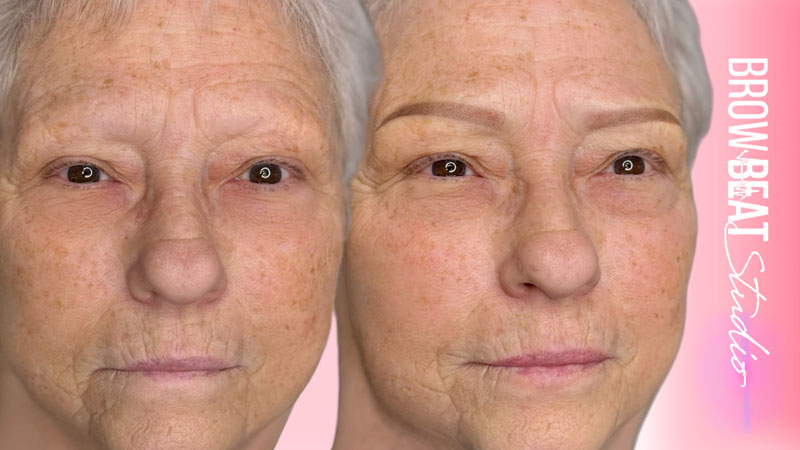
Very light blonde brows call for a restrained approach to color. The microblading hairstrokes need enough presence to create definition without becoming significantly deeper than the natural eyebrow hair. This result shows how a softer pigment choice can add texture and shape while preserving the delicate quality of a blonde brow. At BrowBeat Studio Dallas, we want the color to support the eyebrow rather than become the first thing you notice.
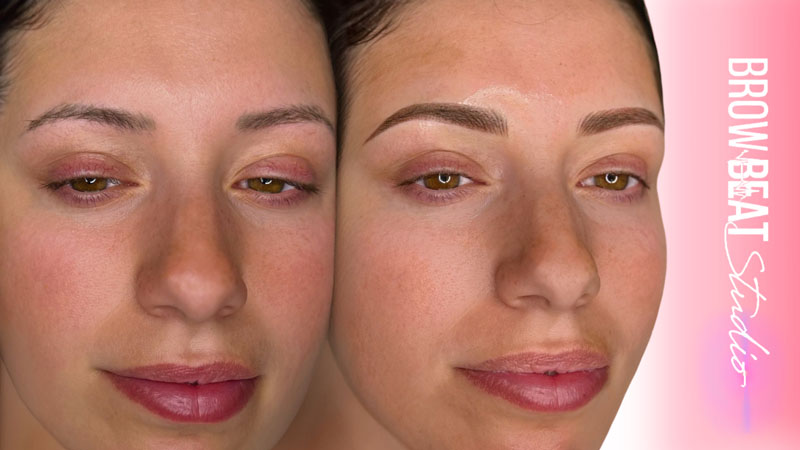
A soft light brown allows the individual microblading hairstrokes to carry slightly more depth while still maintaining a natural appearance. Here, the color works with the client’s existing brow hair to create additional continuity and definition without making the eyebrow feel heavy. Color selection is part of the overall microblading design, and even a small increase in pigment depth can change how naturally the permanent strokes integrate with the brow.


Medium brown brows can support greater pigment depth while still retaining the visible hair-like texture that defines microblading. The individual manual hairstrokes create additional structure through the eyebrow without turning the result into one continuous area of color. The objective is not simply to make the brow darker. It is to select enough depth for the permanent hairstrokes to work naturally alongside the client’s existing eyebrow hair.
Deeper natural brow hair requires a color with enough presence to participate in the finished eyebrow. This dark brown microblading result shows how richer pigment can create clearly defined hairstrokes while maintaining the texture of a hair-stroke technique. Even with a deeper color, our approach remains considered: the pigment should complement the client’s natural brow and coloring rather than create unnecessary intensity.

Microblading works by using a manual hand tool to create individual hairstroke-style marks and introduce pigment into those strokes in the skin. The important word is manual.
Traditional microblading is defined by the hand-held technique used to create the hairstrokes. That manual application gives microblading its identity within permanent brow services. But the procedure does not begin with the tool.
Before any permanent hairstrokes are created, we need to understand the client’s starting brows and the result she wants.
Where is the natural eyebrow already strong? Where does it become sparse? Is the client trying to preserve most of her existing shape? Does she want to complete a tail, improve continuity through a gap or give fine brows more visible structure? Those questions influence the design first.
Once the brow shape has been established and approved, the permanent hairstrokes are created progressively within that framework. Each stroke contributes a small amount of texture or visual density until the eyebrow has the definition the design requires.
Microblading is therefore not simply drawing an outline and filling everything inside it. The finished result comes from the relationship between the brow design, natural eyebrow hair, pigment color and individual manual hairstrokes.
The hair-like appearance of the individual strokes explains the “hairstroke” part of the description. The way those strokes are created explains the “manual” part.
A microblading artist uses a hand-held tool to create the permanent stroke-style marks individually rather than relying on a machine to create the microblading hairstrokes.
From a client’s perspective, there is no need to learn professional blade configurations, tool brands or technical stroke patterns to understand the service. Those details belong to artist education. What matters is understanding what the technique is designed to create.
At close range, you can see separate hair-like strokes within the eyebrow.
At a normal viewing distance, we want those strokes to participate in the brow rather than become the only thing you see. That transition from individual detail to a complete eyebrow is central to the appearance of microblading.
The manual instrument used during the procedure may be described as a microblading blade, microblade, microblading hand tool, handpiece or sometimes a microblading pen. The terminology can sound more complicated—or more intimidating—than it needs to.
For a client, the important point is that the tool allows the artist to create the individual stroke-style marks that characterize microblading. It is not being used to shave away or replace your natural eyebrow hair.
When you see a close photograph of a microblading tool working at the skin, you are seeing the point where an individual permanent hairstroke is being created. One stroke is only a tiny part of the result.
As those individual details are added within the approved design, they begin contributing to the appearance of a fuller, more defined eyebrow.
Microblading belongs within the permanent makeup and cosmetic tattooing family because pigment is introduced into the skin rather than temporarily applied to its surface. This is why microblading remains visible after conventional eyebrow makeup has been washed away.
You may see the service described as permanent makeup, semi-permanent makeup, cosmetic tattooing or eyebrow tattooing. The language surrounding the industry varies, and that can make a relatively straightforward concept sound confusing.
For a client, the useful distinction is this: microblading is not ordinary brow makeup that sits on top of the skin and disappears when you cleanse your face. The hair-like pigment strokes are placed within the skin as part of a permanent makeup procedure.
The visible result does soften and fade over time, but exactly how long microblading lasts is a different question from what the technique is. Longevity involves its own variables and deserves a fuller discussion rather than being reduced to a sentence here.
Before deciding what permanent makeup should be added, we look at what the client already has. Natural eyebrow hair gives us useful information about shape, density, texture and where additional definition may actually be needed.
A client may have beautiful natural density through the front and body of the brow but lose most of the visual structure through the tail. Another may have fine hair throughout with several small gaps. Someone else may already have a strong overall shape and want only a subtle improvement.
Those are different starting points. They should not automatically produce the same microbladed eyebrow.
When natural brow hair is present, we want it to remain part of the result. It provides real texture and dimension that permanent hairstrokes can work alongside rather than trying to replace.
This is one of the reasons a natural-looking microblading result can be surprisingly subtle. Sometimes the permanent makeup is doing less work than the client’s own eyebrow hair. It is simply helping in the places where the natural brow needs support.

The conversation about your brows happens within your scheduled appointment. It is not a separate consultation service that you need to book before moving forward.
We want to understand what you currently see when you look at your eyebrows and what you would like to see differently. Some clients know immediately.
“I have no tail.” “This gap drives me crazy.” “I want them fuller, but I don’t want them heavy.” Others have spent years filling their brows without ever thinking about exactly which part they are correcting.
You do not need to arrive knowing how to design an eyebrow or which pigment you need. That is our job.
What helps us is understanding your preferences. If you love the softness of your natural brow fronts, tell us. If you are concerned about the brows becoming too dark or too dominant, we want to know. If you have worn essentially the same brow shape for years and want to preserve that familiarity, that matters too.
The better we understand what you mean by a beautiful result, the more useful the design process becomes.
Microblading mapping establishes a visible framework for the eyebrow before the permanent hairstrokes are created. We consider the existing brows, the client’s features and the overall balance of the proposed shape. Mapping provides structure, but we do not treat a face like a flat mathematical diagram.
Natural eyebrows are rarely perfectly identical. Hair growth can vary from one side to the other. Facial movement can influence how each brow sits, and the underlying structure of the face affects how the design appears when we step back.
So measurements are part of the process, but observation matters too. The mapped design gives the client something real to look at before the permanent application begins. That is important because words such as “natural,” “soft,” “full” and “defined” mean different things to different people.
Once the shape is visible on your own face, the conversation becomes much clearer. If you want to discuss an adjustment, we can do that while we are still designing. We believe that is exactly when those conversations should happen.
Yes. You have an opportunity to see the proposed brow design before the permanent hairstroke application moves forward. This is not a ceremonial step where we expect you to glance at the brows and automatically agree. Look at them.
If something feels unfamiliar, tell us. If you imagined the tail differently, if the fullness surprises you or if you want to discuss the overall shape, this is the appropriate time to do it.
We bring professional design judgment to the appointment, but you bring something we cannot replace: familiarity with your own face. You know what you are accustomed to seeing in the mirror. The strongest design process makes room for both perspectives.
Color is selected in relation to the client’s natural eyebrow hair, overall coloring and the result we are trying to create. At BrowBeat Studio Dallas, we favor a thoughtful, conservative approach to microblading color.
A very light blonde eyebrow and a naturally deep brunette brow do not need the same pigment depth. Even two clients who describe themselves using the same hair-color category may have very different natural eyebrow tones once we look at them closely.
We want the permanent hairstrokes to have enough presence to participate in the brow without unnecessarily overpowering the natural hair.
For lighter eyebrows, excessive depth can quickly make the permanent makeup dominate the face. For deeper natural brows, the pigment still needs enough visible strength to work alongside the existing hair.
The client does not need to choose a technical pigment formula. You can tell us what you want the brows to feel like. Soft. Defined. Natural. More visible. Never too dark. We take those preferences and make the professional color decision from there.
Our philosophy is simple: enough color to accomplish the result, without making the pigment louder than the eyebrow.
Once the brow design and color direction have been established, the manual hairstroke portion of the procedure begins. This is the part of microblading clients often recognize from close-up photographs: the hand tool working directly within the eyebrow as individual hair-like strokes are created.
Each stroke contributes a small piece of the finished result.
The purpose is not to create as many strokes as possible. It is to add hair-like detail where it contributes to the design and creates the visual density the eyebrow needs.
A sparse tail may require more definition. A small gap may need enough texture to visually connect the surrounding brow. An area with strong natural hair may need very little additional work.
As the application progresses, those individual decisions begin to form a complete eyebrow. At close range, you can see the separate microblading strokes. Step back, and the goal is for them to become part of the brow.

The first hairstrokes begin turning the mapped design into a microbladed eyebrow. At this close distance, you can see the manual tool meeting the skin as individual hair-like pigment strokes are created. Each stroke contributes only a small amount of texture, allowing the eyebrow to develop gradually rather than becoming heavily defined all at once. Natural brow hair remains part of the result as the permanent hairstrokes begin adding structure.
Further into the procedure, the relationship between the natural brow and the added hairstrokes becomes more apparent. Individual pigment strokes continue developing the shape, adding visual fullness where the eyebrow needs greater presence. Because microblading is created manually, the result builds incrementally. Each new stroke contributes to the larger design while allowing the hair-stroke texture of the technique to remain visible.


As the procedure progresses, additional manual hairstrokes begin creating more continuity and visible density through the eyebrow. The tool works directly within the skin as each new stroke becomes part of the developing brow. This stage shows why microblading is considered a manual hairstroke technique: the finished eyebrow is constructed through individual hair-like incisions rather than one continuous application of brow color.
During microblading, the manual tool creates the hairstroke-style marks and pigment is introduced into those strokes in the skin.
This is what separates microblading from drawing temporary hairs with an eyebrow pencil. Brow makeup sits on the surface and can be removed. Microblading pigment is placed within the skin as part of the permanent makeup procedure.
The hairstroke itself is part of that pigment-placement process. Rather than creating one continuous area of brow color, individual strokes are developed progressively within the approved design. This allows the finished eyebrow to retain visible hair-like texture.
Clients do not need to understand the technical mechanics an artist learns in professional training to understand what is happening during the procedure.
The client-level explanation is much simpler. Pigment is being placed in carefully created individual strokes so those marks can contribute the appearance of eyebrow hair.
The word “blade” can make microblading sound more intimidating than it needs to.
The microblading hand tool is used to create the fine stroke-style marks that give the technique its characteristic appearance. It is not being used to shave off the eyebrow or remove the client’s natural hair.
When you see a close-up photograph of the tool meeting the skin, you are seeing an individual permanent hairstroke being created. One stroke by itself is a tiny detail. As the application continues, those details begin contributing to the larger brow design.
This is why progression images can be particularly useful when explaining how microblading works. A traditional before-and-after photograph shows where the brow started and where it finished. A progression lets you see what happens between those two moments.
You can see the natural starting brow, the manual application and the gradual development of additional hair-like detail.
Pain is one of the most common practical concerns clients have before microblading. Everyone experiences sensation differently, so we do not promise that every client will describe the procedure in exactly the same way.
Numbing is used as part of the appointment to help with comfort during the microblading procedure.
You may still be aware that work is being performed in the brow area. Clients can describe pressure, scratching-type sensations or general awareness of the manual application, but individual sensitivity varies. If discomfort is something you are worried about, tell us. There is no reason to sit quietly pretending you are not nervous.
Knowing what is happening can also make the procedure feel much less mysterious. We would rather answer a client’s question than have her spend the appointment worrying about what comes next.
Numbing is used to help make the procedure more comfortable while the manual hairstrokes are being created. It is incorporated into the appointment rather than being something a client is expected to independently arrange before arriving. Comfort is part of the procedure.
We also recognize that sensitivity is individual. One person’s experience does not tell us exactly how another person will feel. That is why we prefer realistic expectations over promising that every client will experience microblading in precisely the same way.

A Dallas microblading procedure is a sequence rather than one continuous application beginning the moment you sit down. At BrowBeat Studio Dallas, we begin with the eyebrows you already have and the result you want to achieve.
We discuss your preferences and evaluate the natural brow. The shape is developed through mapping and design so you can see the proposed eyebrow on your own face before the permanent application begins.
Once the design is established, color is considered in relation to your natural brow hair and the desired result. Numbing is incorporated for comfort. Then the manual microblading application begins.
Individual hairstrokes are created progressively within the approved design, adding texture and visual density where the eyebrow needs it.
As the work develops, we are not simply focusing on isolated strokes. We continue evaluating how those details contribute to the complete brow. At the end of the procedure, the result is viewed as part of the face rather than only from inches away.
That complete sequence—from understanding what you want through to the finished hairstroke work—is what actually happens during a microblading appointment.
At BrowBeat, a brow appointment typically takes three or more hours. That does not mean the entire appointment is spent creating hairstrokes.
The time includes discussing what you want, evaluating the natural eyebrows, mapping and designing the shape, allowing you to review that design, considering color, preparing for comfort and completing the permanent makeup application.
We reserve substantial time because the decisions surrounding the procedure are part of the procedure. If you look at the proposed brows and want to discuss something, there should be time for that. If the design deserves another adjustment once we step back and look at your face, there should be time for that too.
Efficiency matters in a professional studio. Rushing someone’s face does not.
The permanent hairstrokes need a clear direction before they are created. Mapping and design establish that larger framework. Without it, the procedure would become a collection of individual strokes without enough consideration for the eyebrow they are supposed to create.
The design allows us to evaluate the overall shape first. The manual hairstrokes then provide the detail within it. This also gives the client an opportunity to respond before the permanent portion of the procedure moves forward.
It is much easier to discuss fullness, shape or a tail while we are still looking at a proposed design than after permanent hairstrokes have already been created.
That is why we do not view mapping as something to rush through on the way to the “real” procedure. It is part of the real procedure.
Natural eyebrow hair gives the microblading strokes something to work with. It already provides texture and density in some areas, which means permanent hairstrokes do not need to contribute equally everywhere.
If the front of the brow already has beautiful natural hair, preserving that softness may be more important. If the tail becomes progressively lighter, that area may benefit from more visual support. The permanent makeup can respond accordingly.
Microblading can create the visual appearance of greater brow fullness by adding hair-like pigment strokes where additional density is useful. It does not cause new eyebrow hair to grow.
Instead, the permanent strokes can make a sparse area appear more complete by visually participating with the natural hair around it.
That may mean strengthening a fine tail, reducing the appearance of a small gap or giving a naturally light eyebrow more visible structure. Fuller does not automatically mean bigger or heavier. A relatively small amount of additional hairstroke detail can sometimes change the way an entire eyebrow reads on the face.
The question is not how much permanent makeup can be added. It is how much the brow actually needs to match your desired outcome.
Microbladed eyebrows are defined by hair-like detail.
Up close, individual pigment strokes can be visible within the brow. Those strokes create texture and can add visual density through areas where natural hair is finer, lighter or less complete.
From a normal viewing distance, however, we want those individual elements to come together. We want you to see an eyebrow. The permanent hairstrokes should work with the natural hair rather than appearing as a separate layer sitting on the face.
This is why microblading can look quite different from one client to another. A client with substantial natural brow hair may need only selective definition, while someone with finer brows may require more visible hairstroke work before the eyebrow feels complete. The technique remains microblading.
The result changes because the person changes.

Yes. Microblading does not need to create a dominant eyebrow. For clients who prefer a softer result, the design can respect the natural character of the brow rather than trying to make every area equally strong. Softness does not mean the work has to disappear.
The eyebrow can still have definition. A tail can be more complete. Sparse areas can gain visible texture. The overall shape can feel more polished. What matters is proportion.
At BrowBeat, we prefer permanent makeup that has enough presence to accomplish the client’s goal without demanding more attention than the face around it. Sometimes the most refined brow is not the one that creates the biggest transformation. It is the one that makes the client look finished without making the procedure obvious.
Traditional eyebrow makeup and microblading can both be used to create more visible brow definition, but they do it very differently.
An eyebrow pencil or other brow cosmetic sits on the surface of the skin. You can draw hair-like strokes, fill sparse areas, alter the shape and then remove everything when you wash your face. Microblading creates hair-like pigment strokes within the skin as part of a permanent makeup procedure.
For someone who has spent years drawing the same tail or filling the same gap every morning, that difference can be significant. There is something wonderfully uncomplicated about looking in the mirror before you have done anything else and already seeing eyebrows that feel groomed.
You can still wear eyebrow makeup after microblading if you want additional definition for a particular look. The difference is that you are no longer necessarily starting from the same unfinished point.
No. Microblading does not create new eyebrow hair, nor does the service depend on removing the natural hair you already have. A microblading stroke is pigment in the skin designed to create the visual impression of hair. Natural eyebrow hair is actual hair growing from the follicle. They are different things.
When natural brow hair is present, it can be one of the strongest parts of the finished result because it provides real dimension and texture.
The permanent hairstrokes can then contribute where the natural eyebrow needs additional visual support. We are not trying to replace a beautiful natural brow with permanent makeup. We are looking at where microblading can help complete it.
A sparse eyebrow does not always mean the entire brow lacks hair. Sometimes the front is relatively full while the tail fades away. There may be one area where hair has become noticeably thinner or several small gaps that interrupt the overall shape.
Microblading can create the appearance of additional hair through those areas by introducing individual hairstrokes. The effect is visual rather than biological. The procedure does not stimulate new hair growth.
Instead, the pigment strokes can help connect areas of existing hair and make the eyebrow appear more continuous. How much work is appropriate depends on the starting brow.
Yes. A light or sparse tail is a common reason someone may be interested in microblading. The tail contributes to the overall shape of the eyebrow, so when it loses definition the brow can appear to end earlier than the client would like.
Manual hairstrokes can create additional visual structure through that area while still relating to the natural hair and shape closer to the front of the brow. The tail should not look like a separate piece attached to the rest of the eyebrow. It needs to belong to the same design.
This is where looking at the complete brow matters more than simply filling the place where hair is missing.

As the microblading application approaches completion, the overall eyebrow is already visible and the remaining work becomes increasingly selective. The manual tool continues creating hair-like strokes in areas where a little more texture or continuity benefits the result. This stage demonstrates an important part of the BrowBeat approach: finishing the eyebrow does not mean filling every possible space. It means recognizing when the design has the definition it needs.
The completed eyebrow brings together everything that happened earlier in the progression. The initial design established the shape, individual manual strokes created hair-like texture, and the client’s natural brow remained part of the finished result. What began as separate decisions now reads as one eyebrow. The final result is fresh microblading, so it still has a settling process ahead, but the completed design and hairstroke structure can now be seen together.


Pigment selection is part of creating a microblading result that works naturally with the client rather than standing apart from her features. At BrowBeat Studio Dallas, we prefer a conservative approach to brow color, considering the existing eyebrow hair and the amount of definition the finished result needs. The products used during the appointment support the technique, but the decision is always about the person: enough pigment depth for the hairstrokes to be visible without making color more important than the eyebrow itself.
Tell us.
Those concerns are useful information, and we would much rather know them before the permanent application begins. Words such as soft, dark, full and bold are subjective. What feels understated to one person may feel significantly more defined to another.
That is why the design and color conversations matter.
You can see the proposed brow shape before the permanent hairstrokes are created, and we can discuss your preferences around color and definition as part of the appointment.
We believe in a conservative approach, but conservative does not mean making every client wear the same faint eyebrow. It means considering how much shape, color and definition make sense for the individual person.
Permanent makeup should enhance the face without making the client feel as though her eyebrows arrived before she did.
We want the eyebrows to feel balanced, but perfect mathematical duplication is not the same thing as natural facial balance. Human faces have asymmetry.
One brow may naturally sit slightly differently from the other. Hair density can vary, facial muscles can affect brow position and the underlying structure of the face is not identical from side to side.
Mapping helps us evaluate proportion and create a structured design. Then we step back. The brows need to make sense on the actual face rather than existing only as measurements viewed from a few inches away.
Our goal is refinement and visual balance without trying to erase every natural difference that makes a face human.
Yes. In fact, that is one of the reasons many clients are drawn to a hairstroke technique. Microblading can create additional brow structure while retaining visible texture rather than requiring the eyebrow to look like a solid application of cosmetics.
For someone who wants to wake up looking a little more polished, that can be a meaningful change.
The benefit often shows up in ordinary moments. Getting out of the shower. Leaving the house early. Going to the gym. Looking in the mirror before the rest of your makeup is on. The eyebrow already has a foundation.
It may be a small detail on the scale of the entire face, but for someone who has manually recreated that detail every day for years, it can feel remarkably freeing.
Immediately after microblading, the brows are fresh permanent makeup. The completed shape and hairstroke work are visible, but the appearance at that moment should not be mistaken for the final settled result.
The skin has just been worked, and the brows still have a healing process ahead of them. That means their appearance will change.
We want clients to understand that before they leave the studio so the fresh result is viewed in the correct context. The end of the appointment is the end of the procedure. It is not the end of the brow’s journey.
At the end of the procedure, we look at the brows as a complete result. The individual pieces of the appointment have now come together: the natural starting brow, the approved shape, the selected color and the manual hairstrokes.
We are no longer evaluating only one small area or one individual stroke. We are looking at the face.
Does the eyebrow have the definition we intended? Does the shape feel balanced? Has the permanent makeup addressed the areas we wanted to improve without unnecessarily overwhelming what was already there?
Microblading may be created one stroke at a time. It is ultimately worn as an eyebrow. That complete view is what matters at the end.

Microblading creates the visual appearance of individual eyebrow hairs through pigment strokes placed in the skin.
It can add the appearance of density where natural hair is sparse, strengthen a tail that has become difficult to see, create more continuity through small gaps and give a fine eyebrow greater visible structure.
It does not grow new eyebrow hair. It does not make two naturally different sides of a face perfectly identical. And it does not require every client to leave with dramatically different eyebrows. Those distinctions matter because permanent makeup works best when it is being asked to accomplish something realistic and specific.
For one client, the improvement may be obvious. For another, the success of the treatment may be that people cannot immediately identify what has changed. The brows simply look better.
Eyebrows occupy a relatively small area of the face, but they have an enormous influence on expression and overall definition. That is why a change does not have to be dramatic to feel significant.
A client may already have a beautiful natural eyebrow except for the final third. Once the tail has enough visual structure, the entire brow can suddenly feel finished.
Another person may have a gap that catches her attention every time she looks in the mirror. Adding enough hair-like detail to reduce that interruption can change how she sees the whole eyebrow.
Microblading does not need to reinvent the face. Sometimes refinement comes from solving one very specific problem well.
Because the starting point is different. Natural brow density varies. Hair color varies. Facial features vary. The amount of definition someone wants varies.
A client with very light, fine eyebrows may need a softer color direction and relatively delicate definition. Someone with deeper natural brow hair may require enough pigment presence for the permanent hairstrokes to work visually alongside the existing hair.
The desired result matters too. One person may want the smallest possible improvement. Another may want a brow with more visible structure. The technique is still microblading. What changes is how it is used.
This is why a varied portfolio is more useful than seeing the same brow repeated across different faces. It demonstrates whether the work responds to the client rather than asking the client to fit the work.
Permanent makeup is an additive service. We are introducing something that was not previously there. That makes knowing when to stop important.
A brow can reach the point where it has enough shape, enough texture and enough visual density to accomplish the goal. Continuing to add simply because more strokes are possible does not automatically make the result better.
At BrowBeat, our conservative approach is not about making every eyebrow faint or minimal. It is about proportion.
A stronger natural brow may support greater definition. A delicate brow may need considerably less. An area that already has beautiful natural hair may need nothing added at all.
We want the finished result to show what the client needed, not everything that could have been done.

Permanent makeup involves trust. You are allowing someone to make decisions about a feature you will see every time you look in the mirror. We do not think the response to that should simply be, “Don’t worry about it.”
You should understand the basic process. You should know that the brow is designed before the permanent hairstrokes begin. You should be able to see that design. You should understand that color is selected deliberately, that numbing is incorporated for comfort and that microblading creates individual pigment strokes through a manual technique.
You should also understand that the brows you see immediately after the procedure are fresh and still have a settling process ahead. That does not mean turning your appointment into a technical class. You do not need to learn how to perform microblading.
You simply deserve to understand what is being done to your face.
No. You do not need to know professional tool configurations, pigment formulas or artist terminology before having microblading. That is not the client’s job. What is helpful is understanding your own preferences.
You may know that you love visible hairstrokes. You may want a particularly soft brow. You may be concerned about color becoming too deep, or you may know that your disappearing tails are the main reason you are considering permanent makeup.
Those are useful things to bring to the appointment. We can handle the professional decisions required to translate those preferences into the procedure.
Yes. Reference photographs can be useful because they often communicate preferences more clearly than a single descriptive word. A client may tell us she wants “natural” eyebrows, but that word covers an enormous visual range.
A few photographs can reveal what she actually responds to. Perhaps she consistently likes soft fronts. Maybe visible hairstrokes are the feature that attracts her. She may prefer a particular amount of fullness or a more restrained overall shape.
We are not looking at those photographs because we intend to copy another person’s eyebrows onto your face. We are looking for the pattern in what you like. Then we can consider how those preferences translate to your own brows.
No. You are not expected to arrive having already made professional design and color decisions. You may know what you like, and that is different.
If you have worn your eyebrows a particular way for years, tell us. If there is something about your natural shape that you absolutely want to preserve, that matters. If you are drawn to very soft color or are nervous about excessive definition, say so.
We take that information and evaluate it alongside the brows in front of us. The purpose of the appointment is not to ask the client to design her own permanent makeup. It is to combine her preferences with professional judgment.
You do not need to become an expert in permanent makeup before considering microblading. But understanding the basic identity of the service helps.
Microblading is a manual permanent makeup technique that creates individual hair-like pigment strokes within a designed eyebrow.
The process begins with understanding the client’s goals and existing brows. The shape is mapped and reviewed before the permanent application proceeds. Color is considered in relation to the client, numbing is incorporated for comfort and the hairstrokes are created progressively within the approved design.
The result immediately after the procedure is fresh permanent makeup and will not remain visually identical as the brows settle. That is the procedure in client terms.
From there, other questions become important: what healing looks like, how the brows change over time, whether microblading is appropriate for a particular client and how it differs from other permanent brow options.
Those subjects deserve their own complete explanations rather than being crowded into the definition of microblading itself.
Technically, microblading is straightforward to define. It is a manual permanent makeup technique used to create individual hair-like pigment strokes within the eyebrow.
But after 10 years of working with permanent makeup clients, we think the reason people choose it is often much simpler. They want to feel finished.
They want the tail to still be there when the makeup comes off. They want to stop thinking about the same small gap every morning. They want to look groomed without necessarily looking heavily made up.
For the right candidate, microblading can create some of that structure through a remarkably small amount of visual change.
We believe in thoughtful brow design, soft and appropriate color choices, individual hairstrokes and enough restraint to allow the client’s own features to remain the most important part of the result.
Beautiful permanent makeup should not make someone feel as though she has been given another person’s eyebrows. It should help her look in the mirror and feel that her own finally make sense.

Microblading is a permanent makeup technique used to create the appearance of individual eyebrow hairs. A manual hand tool is used to create fine, hair-like pigment strokes within a carefully designed brow. Those strokes can add visual texture, definition and continuity where the natural eyebrow needs additional support.
Microblading works by using a manual hand tool to create individual hairstroke-style marks while pigment is placed within the skin to form the visible strokes. Before the permanent application begins, the eyebrow is evaluated, mapped and designed. The hairstrokes are then created progressively within the approved shape so they contribute to the complete eyebrow rather than existing as isolated lines.
At BrowBeat Studio Dallas, the appointment begins with discussing what you want and evaluating your natural eyebrows. The proposed shape is developed through mapping and design, and you have an opportunity to review it before the permanent application begins. Color is considered, numbing is incorporated for comfort, and individual manual hairstrokes are then created within the approved design.
Yes. Microblading is a form of cosmetic tattooing and permanent makeup because pigment is placed within the skin rather than temporarily applied to its surface. The visible result can soften and change over time, but microblading should still be approached as a lasting cosmetic procedure rather than ordinary eyebrow makeup that washes away.
Microblading is a form of cosmetic eyebrow tattooing, but the term describes a specific manual hairstroke technique. Instead of creating one continuous area of brow color, microblading uses individual hair-like pigment strokes to build visible texture and definition within the eyebrow. This is why a microbladed brow can look very different from what someone may picture when they hear the broader term “eyebrow tattoo.”
Microblading hairstrokes are fine pigment marks designed to create the visual appearance of individual eyebrow hairs. They are created manually and can be placed among natural brow hair or through areas where additional visual texture is useful. Together, the individual strokes contribute to the appearance of a more complete eyebrow.
The word “hairstroke” describes the appearance being created, while “manual” describes how the strokes are made. Traditional microblading uses a hand-held tool rather than a permanent makeup machine to create the individual stroke-style marks that characterize the technique.
Microblading is performed with a specialized manual hand tool, which may also be described as a microblading blade, microblade, handpiece or microblading pen. The tool allows the artist to create the individual stroke-style marks that give microblading its characteristic hair-like appearance.
Microbladed eyebrows are characterized by visible hair-like detail. Up close, individual pigment strokes can be seen within the brow. From a normal viewing distance, the goal is for those strokes and the natural eyebrow hair to work together so the eye reads one complete eyebrow rather than a collection of separate permanent lines.
During microblading, the manual tool creates fine hairstroke-style marks while pigment is deposited within the skin to form the visible strokes. Rather than creating one continuous area of permanent color, microblading develops individual pigment marks so the finished eyebrow can retain visible hair-like texture.
Once the shape and color direction have been established, individual manual hairstrokes are created progressively within the approved design. The goal is not to create as many strokes as possible. Each stroke should contribute something useful to the eyebrow, whether that means supporting a sparse tail, connecting a small gap or adding texture where natural hair becomes lighter.
No. Microblading does not grow new eyebrow hair. It creates pigment strokes within the skin that visually resemble individual hairs. Natural eyebrow hair is actual hair growing from the follicle, while a microblading hairstroke is permanent makeup designed to work visually alongside that natural hair.
No. Natural eyebrow hair can be an important part of a microblading result and does not need to be removed simply because permanent hairstrokes are being added. Existing hair provides real texture and dimension, while microblading can contribute additional visual support where the natural eyebrow is lighter or less complete.
Natural brow hair helps determine where permanent hairstrokes may actually be useful. An area with substantial natural density may need very little additional work, while a sparse tail or small gap may benefit from more visual support. Microblading does not need to contribute equally to every section of the eyebrow.
Yes. Microblading can create the visual appearance of greater fullness by adding hair-like pigment strokes where additional density is useful. Fuller does not automatically mean larger or heavier. Sometimes a relatively small amount of hairstroke detail is enough to make the complete eyebrow appear more defined and continuous.
Microblading mapping is the temporary design process used to establish the proposed eyebrow shape before permanent hairstrokes are created. It allows the overall front, body, arch and tail to be evaluated on the client’s face while changes can still be discussed before the permanent application begins.
The hairstrokes need a clear framework before they are created. Mapping allows BrowBeat to evaluate the complete eyebrow shape first rather than treating microblading as a collection of unrelated individual strokes. It also gives the client an opportunity to see and respond to the proposed design before permanent work begins.
Yes. At BrowBeat Studio Dallas, you have an opportunity to see the proposed design before the permanent hairstroke application moves forward. If you want to discuss the fullness, tail, overall shape or something that feels unfamiliar, the design stage is the appropriate time to have that conversation.
Microblading color is considered in relation to natural eyebrow hair, the client’s overall coloring and the amount of definition being created. The objective is for the permanent hairstrokes to have enough presence to contribute to the eyebrow without unnecessarily overpowering the natural hair or becoming the dominant feature.
No. You are not expected to choose a professional pigment formula. It is more useful to communicate how you want your eyebrows to feel: soft, visible, defined, natural or perhaps specifically not too dark. BrowBeat can use those preferences alongside your natural brow hair and coloring to make the professional color decision.
Everyone experiences sensation differently, so no single description applies to every client. Numbing is used as part of the BrowBeat appointment to help with comfort. Clients may still be aware that work is being performed and can describe pressure, scratching-type sensations or general awareness of the manual application.
Yes. Numbing is incorporated into the appointment to help with comfort while the manual hairstrokes are being created. Individual sensitivity varies, so we prefer realistic expectations rather than promising that every person will experience the procedure in exactly the same way.
At BrowBeat Studio Dallas, a brow appointment typically takes three or more hours. That time includes discussing your goals, evaluating the natural eyebrows, mapping and designing the shape, allowing you to review the design, considering color, preparing for comfort and completing the permanent makeup application.
Yes. Microblading can help reduce the visual appearance of small gaps by creating hair-like pigment strokes through areas where natural growth is less consistent. The goal is to connect that area naturally with the surrounding eyebrow rather than simply filling every available space with permanent strokes.
Yes. A light or sparse tail is a common reason someone may consider microblading. Manual hairstrokes can add visual structure where natural hair becomes finer or disappears, helping the tail feel connected to the rest of the eyebrow while remaining part of the same overall design.
Yes. Microblading does not have to create a dominant or dramatically different eyebrow. A softer result may use permanent hairstrokes selectively to improve a tail, connect a gap or add enough visual texture to make the existing eyebrow feel more complete while allowing the client’s natural features to remain central to the result.
Yes. Because microblading creates hair-like detail rather than one continuous area of filled color, it can add structure while retaining visible texture. For someone who repeatedly draws the same tail or fills the same sparse area, that permanent foundation can make the brows appear more finished without requiring a heavily made-up result.
Eyebrow pencil sits on the surface of the skin and can be removed when you cleanse your face. Microblading creates hair-like pigment strokes within the skin as part of a permanent makeup procedure. Both can add visual definition, but microblading provides a lasting brow foundation rather than something that must be recreated every morning.
No. BrowBeat works toward visual balance rather than artificial mathematical duplication. Human faces naturally have asymmetry, and eyebrow growth, facial movement and underlying structure can differ from one side to the other. Mapping provides structure, but the final design also needs to make sense when the eyebrows are viewed as part of the complete face.
You should understand that microblading is a manual permanent makeup technique that creates individual hair-like pigment strokes within a designed eyebrow. The brow is evaluated and mapped before the permanent application begins, color is selected deliberately, numbing is incorporated for comfort and the hairstrokes are created progressively within the approved design. You do not need to understand professional tools, pigment formulas or technical stroke patterns to be an informed client.