Lip blushing is permanent makeup for the lips designed to add lasting color, improve visible definition and create a more consistent lip appearance without depending on lipstick every day. For some clients, the goal is extremely natural.
They want to wake up, look in the mirror and see lips that simply appear to have more color of their own. No obvious makeup effect. No dramatic change. Just healthier-looking color and a lip border that is easier to see.
Other clients want considerably more. They are lipstick people.
They do not leave the house without color on their lips. They know exactly how much more alive their face feels when their lips are pink, rosy, peach, coral or another shade they love. They are also tired of maintaining it.
Lipstick disappears through the center when you eat. It transfers onto cups. It can crack when the lips are dry. You can put it on before dinner and discover halfway through the evening that the outside is still there while the middle has disappeared.
Drink red wine and you can end up with a completely different lip color than the one you started with. Kiss someone and lipstick moves. Lick dry lips often enough and conventional color does not stand much of a chance.
Lip blushing is appealing because the color is not sitting on top of the lips waiting to be wiped away. Once healed, the pigment is within the lips.
You can still wear lipstick. You can still wear gloss. You can still change your cosmetic lip color whenever you feel like it. But when all of that comes off, there is already color underneath.
At BrowBeat Studio Dallas, lip blushing is customized to the person wearing it. We are not trying to give every client the same pale pink wash or force every set of lips into one idea of what permanent lip color is supposed to look like.
Some clients want soft. Some want vibrant. Most fall somewhere in between. All of those results can belong within lip blushing.

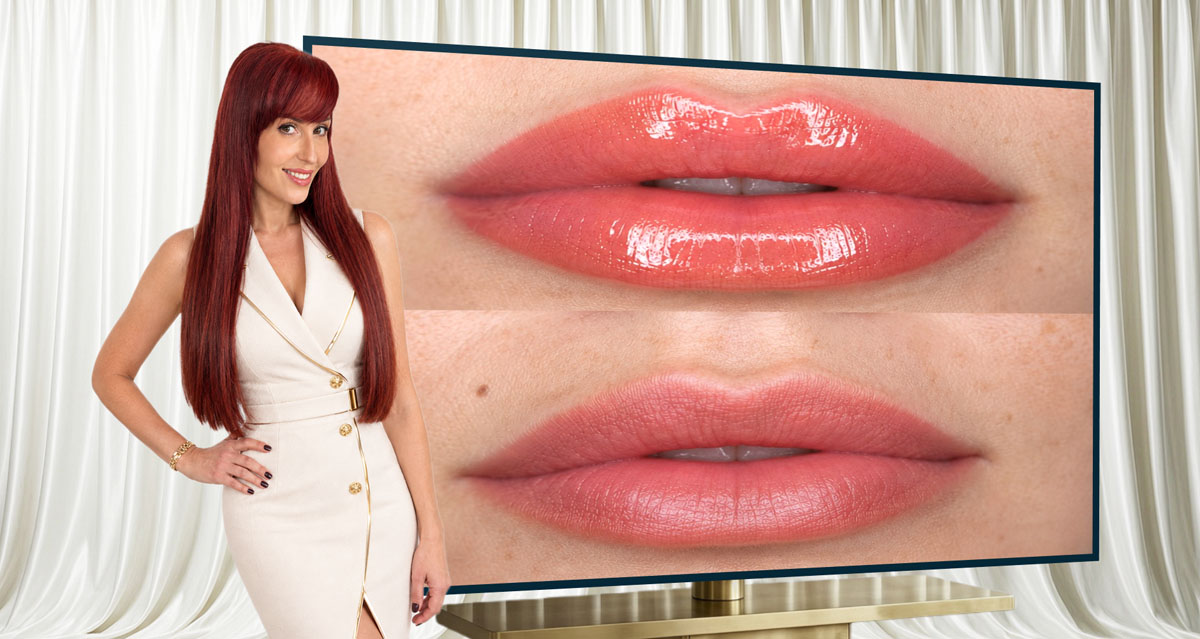
A beautiful cherry-stained lip has personality, but conventional stains fade by lunch, coffee, or a busy day. This before-and-after shows how lip blushing creates that lively cherry color permanently, without a surface product. At BrowBeat Studio Dallas, permanent lip color doesn’t have to mean barely-there pink — some clients want a noticeable pop they love waking up to, reflecting the shade they actually enjoy wearing.
Your lips haven’t shrunk — a patchy, pale vermilion border can simply blend into the surrounding skin, making the lip shape look smaller or less defined. This stronger lip blushing result shows how restoring visible color around the border makes the existing lip shape easier to recognize. At BrowBeat Studio Dallas, we connect the border and interior through one cohesive result rather than a harsh outline, making the lips you already have more visible.


A favorite lipstick looks different on every lip, and permanent color works the same way — everyone starts with a different base. This medium-melanin client’s naturally brown pigmentation shows why lip blushing should be individualized rather than one standard pink pigment. At BrowBeat Studio Dallas, we consider the starting lip color, the shade she loves, and the look she wants without makeup. Your favorite lipstick is the destination; your starting lips help determine the journey.
Some lips have a naturally darker outline, with a pink or rosy center and deeper gray-purple perimeter creating noticeable contrast. This high-melanin example shows how permanent color is approached when the border and center begin with different pigmentation. At BrowBeat Studio Dallas, the goal isn’t just a stronger outline — it’s a more cohesive appearance that respects the client’s starting color, sometimes starting with a color-balancing stage before the final shade.

Lip blushing is a form of cosmetic tattooing in which pigment is implanted into the lips to create lasting color and visible definition. You may also hear it described as a lip blush tattoo, permanent lip color, permanent makeup for the lips, cosmetic lip tattoo or semi-permanent lip color. The terminology has changed considerably over the years, but the underlying concept is straightforward: pigment is placed into the lips so visible color remains after the surface has healed. The word blushing can make the treatment sound as though the finished result must be extremely faint. It does not. Modern lip blushing gives the artist control over how pigment is built through the lips. That makes it possible to create a delicate enhancement for one client and considerably more visible color for another.
A client who rarely wears makeup may want a subtle shade that looks close to something her lips could naturally have produced. A client who has worn lipstick every day for twenty years may look at that same result and think there is nowhere near enough color. Neither client is wrong. The important question is not how much color lip blushing is “supposed” to have. It is how much color the person wearing it actually wants.
Although the modern term is lip blushing, the procedure is still cosmetic tattooing. That is worth saying clearly because the softer name can sometimes make the service sound more temporary or superficial than it actually is. Permanent pigment is implanted into the lip tissue and is intended to remain visible after healing. What has changed is the range of results that can be created. Older permanent lip tattooing is often remembered as solid, opaque color or a strongly defined lip-liner effect. Modern lip blushing can be much more adaptable.
Pigment can be gradually layered. Saturation can be controlled. The border and body of the lips can be treated as one complete color result rather than creating a dark outline around a lighter center. That does not mean every modern lip blush needs to be barely visible. Some of our clients specifically want more color. The advantage is having the ability to decide.
There is no single lip blushing client because there is no single reason people want permanent lip color. Some clients are motivated almost entirely by convenience. They like their lips when they are wearing lipstick. They simply do not want to keep applying it.
Others are less concerned about conventional makeup and more concerned about what their natural lips look like without it. Their lips may be pale. The color may feel washed out. The border may blend into the surrounding facial skin. The upper lip and lower lip may not appear equally colorful. Or the client may simply feel that her face looks more vibrant whenever there is visible color on her lips.
For some clients, lip blushing becomes particularly appealing after years of automatically reaching for lipstick before they leave the house. It is not necessarily because they want to stop wearing lipstick. They want to stop needing it in order to feel like their lips are visible. That is a very different thing.
“Natural” is one of those words that sounds specific until two people use it and mean completely different things. For one client, natural means the faintest possible wash of pink. For another, natural means a warm coral because that color looks completely at home against her complexion.
Someone else may naturally gravitate toward rose, peach, muted pink or a richer lip color and still want the result to look believable without conventional makeup. There is no universal natural lip blush shade. There is also no universal natural level of saturation.
At BrowBeat, we are interested in what looks natural on you and what you actually want to see when you look in the mirror. If you normally wear almost no makeup, an understated permanent lip color may make perfect sense. If you have always loved a visibly colored lip, giving you an almost invisible healed result simply because “lip blush should be subtle” would miss the point of why you came in.
One of the most useful things to understand about lip blushing is that the color is built. It is not one pass of pigment that produces one predetermined level of saturation. The artist gradually layers color through the lips, and the amount and quality of that layering influence how much pigment remains visible after healing.
This gives us considerable control. A client wanting a soft result does not need the same degree of saturation as someone wanting a more colorful healed lip. But even a soft result requires enough pigment to survive the healing process. That distinction is important.
If the artist becomes frightened by the brightness of freshly implanted pigment and stops too early, the lips may heal much lighter than intended. Lip blushing is one of those procedures where what looks like “enough” while the treatment is fresh may not be enough once the lips have healed.

Freshly treated lips can look dramatically brighter than the color a client expects to wear long term. That is normal. As the lips heal, the visible intensity can reduce substantially—sometimes by around 50 percent. That does not mean every client loses exactly half of her color. Retention varies from person to person. It does mean that the artist has to think beyond the photograph taken immediately after treatment.
The goal is not to create lips that look perfect for the first twenty-four hours. The goal is to build enough appropriate pigment for the color to still make sense after healing. This is why the amount of layering matters so much. A freshly treated lip may initially look brighter, stronger or more saturated than expected and then settle into a much softer result. Clients need to know that before treatment so they do not look at the immediate color and assume that is what they will be wearing permanently.
Lip blushing primarily changes color and visible definition. It can add color to pale or washed-out lips, create greater visual consistency through the colored portion of the lips and make a faint natural border easier to see. Those changes can affect the appearance of the entire lip more than people sometimes expect.
If part of the natural lip is very pale, the eye may visually lose that portion of the lip against the surrounding facial skin. Add color back into that area and suddenly more of the natural lip becomes visible.
The physical lip has not grown. You can simply see it more clearly. That is one reason lip blushing can sometimes give the appearance of slightly fuller lips even though pigment does not physically add volume.
It can make the lips look slightly fuller in appropriate cases, but it does not create physical volume. Lip blushing and lip filler are doing different jobs. Filler changes physical volume and structure. Lip blushing changes color and visible definition. When a pale vermilion border becomes clearly visible again, the eye may recognize more of the existing lip area. That alone can make the lips appear larger.
There can also be a very small amount of flexibility around the vermilion border in certain cases. Approximately 1–2 millimeters of carefully considered color may sometimes be used to improve visual balance or subtly increase the appearance of the colored lip area. This is case by case. We are not drawing a substantially larger mouth outside the natural lip structure. The objective is to work with the anatomy that already exists and determine what can be improved through color.
The vermilion border is the transition between the colored portion of your lip and the surrounding facial skin. On some people, that transition is naturally crisp and easy to see. On others, it is soft.
It can also become less visually distinct with age. When the border fades into the surrounding skin, the lip can look less defined even though its underlying anatomy has not changed. It can also make applying lipstick more frustrating because there is less obvious natural color to follow.
Lip blushing can strengthen that visual transition while keeping the border connected to the rest of the lip color. The goal is not a dark ring around a pale center. The border, Cupid’s bow and body of the lips should make sense together.
Younger clients choose lip blushing for many of the same reasons they wear conventional lip color. They may want more vibrancy, a different shade, a more consistent appearance or simply the convenience of waking up with color already there.
Some naturally have very pale lips. Others already have plenty of natural color but prefer a different overall tone.
A client in her twenties may want soft, barely detectable permanent color. Another client of exactly the same age may want a much richer result because she has always preferred visible lipstick. Age alone does not tell us what the finished lips should look like.
Lip blushing can become especially appealing as natural lip color and definition change with age. Younger lips often have greater visible color because of the way blood flow shows through the lip tissue. As we get older, that youthful vibrancy can diminish. The vermilion border may also become less distinct against the surrounding skin. For some mature clients, this means the lips begin to look paler, less defined or simply less visible within the face than they once did.
Adding color back can make an enormous visual difference without trying to make the client look like someone else. A mature client may want a soft restoration of the color she remembers having naturally. Another may have worn lipstick for decades and want considerably more saturation. Both are legitimate goals. BrowBeat works with adult lip blushing clients across a broad age range, including women in their twenties and women well into their seventies. The treatment is not defined by age. The desired result is defined by the person wearing it.

Beautifully full lips can still look less defined when a pale vermilion border blends into the surrounding skin. Lip blushing restores color to the existing lip area so that natural fullness becomes visually apparent, without adding physical volume. At BrowBeat Studio Dallas, we map the natural lip border, Cupid’s bow, and upper-lower relationship before placing color — taking advantage of the beautiful lip structure that’s already there.
Some women remember naturally pink lips from years ago; others have worn their favorite pink lipstick for decades. This mature lip blushing result adds visible pink color without an exaggerated shape. At BrowBeat Studio Dallas, age doesn’t determine how much color someone should wear — the existing lip tissue, border, personal style, and desired saturation all shape the design. You don’t have to give up colorful lips as the years go by.


Not everyone wants bigger lips — some love their smaller mouth and simply want more definition. When thin, pale lips lose visible border, the shape can look less prominent. Lip blushing improves that definition without adding volume. At BrowBeat Studio Dallas, careful mapping respects the available lip area, keeping the Cupid’s bow, corners, and border in proportion — so small lips can be beautifully defined without becoming someone else’s idea of perfect.
A lip blushing appointment is not simply choosing a pigment and filling in the lips. The treatment moves through several deliberate stages: numbing, mapping, setting the design, establishing the border and gradually building pigment through the lips. Each stage affects the next. At BrowBeat Studio Dallas, the shape is established before permanent color is built so we have a clear framework for where that pigment should sit.
The appointment begins with lidocaine to make the procedure more comfortable. Lips are sensitive, and lip blushing generally has a higher discomfort level than permanent brow procedures. Numbing helps manage that sensitivity before the pigment work begins. Every client experiences sensation differently, and different areas of the same lip can also feel different during treatment.
Before permanent pigment is placed, the lips are mapped using white makeup. The mapping is then powdered to help set it in place. This gives us a clear visual reference for the border, Cupid’s bow, overall shape and balance before permanent work begins.
Natural lips are not perfectly identical from side to side. Mapping is not about pretending they are. It allows us to look carefully at the anatomy that already exists and decide where the permanent color should begin and end.
Once the mapping is established, the full lip outline is lined. This creates the framework for the color that will be built through the rest of the lips.
Lining the border during treatment does not mean the finished result should look like permanent lip liner. The outline is the beginning of the color structure. As pigment is layered through the body of the lips, the border and interior become part of one complete result.
Once the framework is established, the color is gradually layered through the lips. Depending on the starting lips and the desired intensity, approximately six to twelve layers of pigment may be used during treatment. This is where the final saturation begins to be built.
The more appropriate pigment layering that is established, the more visible color can remain after healing. A client wanting a delicate result and a client wanting a richer permanent lip color therefore do not necessarily receive exactly the same saturation.
But there still has to be enough pigment deposited for the chosen result to survive the significant softening that occurs through healing. This is one of the most important technical balances in lip blushing: creating enough color without losing sight of what the client ultimately wants the healed lips to look like.
Color is one of the most exciting parts of lip blushing because the options extend far beyond “pink.” Pink itself covers an enormous range. There are warm pinks, cool pinks, muted pinks, brighter pinks and pinks with peach, rose or coral influences. The same is true of peach, coral, rose, berry, nude, mauve and red color families.
Choosing permanent lip color is also different from choosing lipstick. Lipstick sits on top of the lips and visually covers much of the color underneath it. Lip blush pigment heals within the lips, so the natural starting color remains part of the overall color equation.
That means two clients could use the same pigment and not necessarily heal to an identical visible shade. The starting lips matter.
Absolutely. A lipstick, gloss, stain or photograph can be extremely helpful when discussing color. It tells us something about what you naturally gravitate toward.
Do you consistently choose warm colors? Do you love coral? Do you always buy rose shades? Do you say you want “natural” but then show us a lipstick with considerably more color?
That information is useful. A cosmetic product should be treated as inspiration rather than a guarantee that permanent pigment can reproduce the exact same appearance once healed. The goal is to understand what you love about that color and translate it appropriately to permanent lip pigment.

A pink lower lip and a noticeably purple upper lip can make an otherwise lovely mouth feel visually mismatched. This image shows how dramatically lip color can vary within the same mouth. At BrowBeat Studio Dallas, we don’t assume the same pink will create identical results on both lips — the upper and lower begin with different pigmentation, and the treatment plan accounts for that rather than forcing one standard shade.
Some lips mix brown and pink pigmentation around the edges or across the mouth, making lipstick shades look inconsistent. Permanent color requires the same awareness of that starting pigmentation. This brown-and-pink example shows why BrowBeat Studio Dallas considers the entire lip rather than one small area — whether the client wants a softer, more unified result or to retain some natural variation while adding warmth.


A mouth can carry several undertones at once — pink through the center, mauve at the border, cooler purple elsewhere. This mauve-purple and pink example shows why permanent color needs more thought than picking a shade off a chart. At BrowBeat Studio Dallas, we consider the natural lip base, preferred color family, and whether balancing is appropriate, designing for the person wearing it rather than one universal idea of pink lips.
Not every natural lip begins with a pale or pink base. Some clients have significantly more visible natural melanin within the lips. This is particularly common in Fitzpatrick IV, V and VI skin types, although visible lip melanin can also occur in Fitzpatrick III. High-melanin lips can contain brown, purple, grey or cooler natural tones. Some lips are relatively even in color, while others are noticeably two-toned or contain areas with different levels of melanin.
The upper lip may be darker than the lower lip. The outer portion of the lips may contain more visible melanin than the center. Every natural pattern is different. That starting color matters because permanent pigment does not exist independently of the natural lip underneath it. When significant melanin is present, the color already within the lips has to be considered when planning the result.
Dark lip neutralization is used when naturally high-melanin lips require color balancing as part of the process of moving toward the desired lip color. It is not simply ordinary lip blushing performed with a brighter pigment. If the natural lip contains significant cool, brown, purple or grey tones, warmth may be necessary to help neutralize that starting color.
This is why the pigment used during neutralization may look very different from the final lip color the client ultimately wants. A client may eventually want pink, for example, while the color needed during an earlier neutralization stage has an entirely different purpose. Neutralization and final color are not always the same step.
Some naturally high-melanin lips require a staged approach. The amount, distribution and visible tone of the melanin vary considerably from person to person, so there is no single treatment formula that applies to every client.
The lips also need to heal before the effect of a neutralization stage can be properly evaluated. Once healed, we can see how the natural color responded, what pigment remains visible and what direction makes sense next.
The goal is not to rush high-melanin lips toward a predetermined color. It is to work with the natural lip base that is actually present and make each color decision from there.
Before-and-after photographs are one of the most useful ways to understand what lip blushing can actually change. Color names only tell part of the story. A photograph can show how a pale lip gains greater presence, how an indistinct border becomes easier to see, how the Cupid’s bow becomes more visible or how more consistent color changes the overall appearance of the lips.
It can also show how different lip blushing can look from one client to another. That matters. If every result in a portfolio looks identical despite completely different clients, that tells you something. Customized permanent makeup should reflect differences in starting color, anatomy, personal style and desired saturation.
Not every lip blush photograph represents the same stage. Fresh results can appear considerably brighter and more saturated than healed results. The lips may also be temporarily swollen, which can make them look fuller immediately after treatment. As healing progresses, the swelling subsides and the initial color intensity reduces. Healed photographs are particularly valuable because they show how the pigment actually settled into the lips after that initial treatment appearance changed.
Fresh photographs still have value. They can demonstrate placement, shape, immediate saturation and the treatment itself. But fresh and healed photographs should be understood for what they are. They are two different stages of the same process.
There is no single correct healed lip blush result. A good result should make sense for the client who requested it. For one person, that might mean soft rosy color that is difficult to identify as permanent makeup. For another, it might mean noticeably more peach, coral, pink or another shade because she wants to see color when she is wearing nothing else on her lips.
The border should work with the rest of the lip rather than looking like a separate ring. The Cupid’s bow should remain believable. The color should move through the lips as a complete result. And the finished lips should still look like they belong to the person wearing them. Permanent makeup should enhance the client, not replace her with somebody else’s idea of the perfect lip.

A good lip blushing candidate is generally someone who wants a change that can realistically be created through permanent color and visible definition. That covers a surprisingly wide range of clients. You may have naturally pale lips and want more color. You may have a beautiful natural lip shape but feel that the border disappears into your surrounding skin. You may already have visible natural color but prefer a different shade.
You may wear lipstick every day and want color underneath it. Or you may simply like the way your entire face looks when your lips are more visible. The starting condition of the lips matters as well. Healthy lip tissue provides a better treatment surface than lips that are severely dry, cracked, irritated or otherwise compromised at the time of the appointment. Individual health considerations and medications can also affect whether treatment is appropriate or whether an appointment needs to wait.
Pale lips are one of the most straightforward examples of how much difference permanent color can make. The client may already have an attractive natural shape, but if there is very little contrast between the lips and surrounding skin, much of that shape can visually disappear.
Adding color makes the existing lip easier to see. It can also bring more visible color to the face without requiring lipstick.
For some clients, that is the entire goal. They are not trying to look dramatically made up. They simply want their lips to stop looking washed out.
Other clients have more color through the center of the lips and very little at the perimeter. The vermilion border can look faded or blurred, making the edge of the lips difficult to distinguish.
Lip blushing can create greater visual continuity between the border and the rest of the lip. This does not require creating a harsh outline. The objective is to make the natural lip area more visible while keeping the border connected to the overall color.
Daily lipstick wearers often already know something important before they ever walk into a lip blushing appointment: They like themselves with lip color.
That can make the color conversation much easier. They may already know whether they prefer warm shades, cool shades, pinks, corals, roses or stronger colors.
What they are looking for is often convenience. Permanent lip color does not prevent them from wearing lipstick. It simply means there is already a colored base underneath when the lipstick disappears.
There are circumstances when the best decision is not to treat the lips that day. Severely dry, cracked, chapped or irritated lips do not provide the same treatment surface as healthy lip tissue. An active cold sore or another active issue around the treatment area also needs to be taken seriously. Medical history and medications can matter as well, which is why clients should provide accurate screening information before permanent makeup is performed.
This is not about making lip blushing sound complicated. It is about recognizing that permanent makeup is a real procedure and treating the lips accordingly.
A history of cold sores is particularly important to disclose before a lip procedure. The physical stimulation involved in tattooing the lips can be associated with recurrence of herpes simplex in someone who carries the virus. Clients with a known history should discuss appropriate prevention with their healthcare provider before their appointment.
BrowBeat does not prescribe medication or replace medical advice. Lip blushing should not be performed over an active cold sore or suspicious active lesion.
Lip blushing does not move directly from fresh treatment to finished color. There is a healing process in between, and the lips can look quite different at different stages of it.
Immediately after treatment, the color is stronger. The lips may also be swollen and can temporarily appear larger than normal. As the surface begins to heal, the lips can become dry, start to flake or peel and lose much of that initial visible intensity.
At certain points, the color may look much lighter than the client expected. That can be alarming if you assume every change you see during healing is permanent. It is not. The lips need time to move through the surface-healing stage and settle before the retained color can be properly evaluated.
Temporary swelling is a normal possibility after lip blushing because the lips are a sensitive, vascular area. Some clients swell very little. Others have a much more noticeable response.
This temporary swelling is also why freshly treated lip photographs can make the lips appear larger than they will once healed. Lip blushing has not physically added volume. As the swelling subsides, the lips return toward their normal physical dimensions while the pigment continues through its healing process.
Dryness, flaking and surface peeling can occur as lip blushing heals. The healing surface should be allowed to progress without picking or pulling away flakes.
The temptation can be strong, particularly when the lips feel dry or when the color underneath looks different. But unnecessary interference with healing skin is not helpful. The goal is to keep aftercare simple, follow the instructions provided and allow the lips to do what healing lips need to do.
One of the more confusing parts of lip-blush healing is how dramatically the visible color can change. The lips begin bright. Then the surface changes and the color can suddenly appear much softer.
For some clients, there may be a stage when they wonder whether almost all of the pigment has disappeared. That temporary appearance should not be treated as the final result. Healing needs to progress before pigment retention can be judged accurately.

When lips carry very little visible color, the mouth can lose definition in photos, especially without lipstick. This result shows how permanent color creates more contrast between the lips and surrounding skin. At BrowBeat Studio Dallas, the goal doesn’t have to be dramatic — a soft, appropriately chosen shade may be enough for one client, while another with the same starting lips may prefer something considerably brighter.
Naturally pigmented lips may already show considerable color, but that doesn’t mean it’s the shade a client wants. Some love their pigmentation and want only subtle enhancement; others prefer a different direction entirely. This high-melanin example shows why BrowBeat Studio Dallas designs permanent color around each client’s actual starting lips, never assuming darker lips must become pale pink or need the same degree of change.


Not every lip blush needs to be obvious — some clients want just a little more pink, a slightly clearer border, enough to look less washed out without resembling fresh lipstick. This subtle result shows how permanent makeup creates understated enhancement. At BrowBeat Studio Dallas, softness is a deliberate design choice, not an unfinished treatment — the best result is the one that feels right to the person wearing it.
Lips are involved in eating, drinking, speaking and almost everything else we do throughout the day, so aftercare requires some awareness while the area is fresh. Clients receive instructions for caring for their treated lips during the initial healing period.
The lips should be treated gently. Peeling skin should not be picked. Unnecessary irritation should be avoided, and care should be taken with products being applied directly to the fresh treatment area.
Once healing is complete, lipstick, gloss and other conventional lip products can return to the client’s normal routine. The point of aftercare is not to make the healing process complicated. It is to give the freshly treated lips an appropriate environment to heal.
Lip blushing is permanent makeup, but permanent does not mean the visible color remains at exactly the same intensity forever. Over time, permanent lip pigment gradually softens and fades. How quickly that happens varies from client to client.
The original saturation, pigment selection, individual retention, lifestyle and environmental exposure can all influence how the color ages. A very soft healed lip blush may appear to fade sooner because there was less visible saturation to begin with. A more saturated result may remain visibly colorful for longer.
Neither should be treated as a guarantee of an exact number of months or years. Permanent lip color ages gradually rather than reaching a date when it suddenly switches off.
Clients should not assume that permanent lip pigment will completely disappear on a predictable schedule or that the lips will necessarily return to their exact pre-treatment appearance. The pigment becomes softer as it ages. How much remains visible and how that color changes over time depend on the individual client. That is one reason we prefer to evaluate the lips themselves rather than deciding that every client automatically needs additional pigment after a predetermined period.
A refresh is intended to bring additional color back into lip blushing that has softened over time. Some clients love a consistently colorful lip and may want to restore saturation sooner. Others are happy as the result gradually becomes more subtle and may wait considerably longer. The right time is usually when the existing color has become softer than the client wants it to be—not simply because a calendar says a certain amount of time has passed.
When people compare lip blushing prices in Dallas, it is easy to look at the number and assume they are comparing the same service. They may not be.
A lip blushing appointment includes much more than the period when the tattoo machine is physically touching the lips. The artist has to evaluate the starting lip color, understand what the client wants, discuss color direction, numb the lips, map the shape, establish the border and build pigment carefully through multiple layers. Each decision affects the next.
A beautiful pigment choice cannot compensate for poor placement. A carefully mapped shape still needs consistent pigment implantation. And color that looks impressive immediately after treatment still has to make sense after the lips have healed and the intensity has softened. When comparing lip blush cost, look at the artist’s actual lip work, healed results, experience, range of clients and approach to color alongside the appointment price itself.
That depends on how much permanent lip color would change your everyday life. If you rarely wear lip color and already love your natural lips exactly as they are, lip blushing may not offer much value to you.
If you apply lipstick every morning because you feel washed out without it, that calculation can be very different. The same is true if your natural lip border has become difficult to see, your lips have very little natural color or you simply feel more like yourself when your lips are visibly colored.
Lip blushing is not valuable because everyone needs it. It becomes valuable when it solves something that particular client actually cares about.

Searching for a lip blush artist in Dallas or “lip blushing near me” can give you plenty of options. The harder part is deciding whose work actually reflects what you want. Lips are highly visible, and permanent color deserves more consideration than choosing the closest appointment or simply comparing prices. Start with the artist’s actual work. Look at different clients, different ages, different natural lip colors and different levels of saturation. If every result looks almost identical, it may be difficult to know how much the treatment is really being customized. A client who wants barely-there permanent color should be able to communicate that. A client who wants a richer healed result should be able to communicate that too. The portfolio should give you some idea of whether the artist understands both.
Healed results are particularly useful because they show what happened after the initial brightness and swelling settled. Clients with naturally high-melanin lips should also look for an artist who understands that the starting melanin changes the way color needs to be approached. Good lip blushing is not about finding one favorite pigment and using it on everyone. It is about making color decisions based on the person sitting in front of you.
Start with how you actually like your lips to look. Do not worry about giving the “right” answer. If you love lipstick, say so. If you want permanent lip color that nobody would immediately identify as cosmetic tattooing, say that too. If you always choose coral, bring the coral lipstick. If you think you want pink but every photograph you save is peachy, that is useful information.
If you want more visible definition around the Cupid’s bow, talk about it. If you are worried about looking too bright, say that before the color is selected. It is equally useful to explain what you do not want. Words such as “natural,” “soft,” “pink” and “bright” are subjective. Two people can use exactly the same word while imagining completely different lips. The consultation is where those differences should become clear.
Yes. Lip blushing does not lock you into one cosmetic look for the rest of your life. Once the lips are healed, you can wear lipstick, gloss, stain or other conventional lip products normally.
Your healed lip blush becomes the color underneath. On a makeup-free day, you already have visible lip color. Add clear gloss and you have another look. Apply lipstick over the top and you can still wear a completely different shade whenever you choose.
For many clients, this is exactly the appeal. They are not giving up lipstick. They are giving themselves a better starting point when they are not wearing it.
You do not need lip filler to have lip blushing. The two treatments address different characteristics of the lips. Filler physically changes volume and structure. Lip blushing changes color and visual definition.
A client can be completely happy with the natural size of her lips and still want more visible color, a clearer Cupid’s bow or greater definition around a pale border. In those cases, color may be the only change she is looking for.
Because better definition can make more of the natural lip area visible, lip blushing can sometimes create the impression of slightly fuller lips without adding physical volume. That visual effect should not be confused with what filler does.
One of the reasons lip blushing has such broad appeal is that lips are difficult makeup to maintain. We eat with them. We drink with them. We talk, kiss and lick them.
They become dry and chapped. Lip products transfer. Color wears away unevenly. Even long-wearing conventional lip products still sit on the surface.
Permanent lip pigment changes the starting point because the color is already within the lips. That does not mean every day will look as though you applied a fresh coat of lipstick. It means your natural, makeup-free lips can already have visible color. For someone who has spent years applying lipstick simply to avoid looking washed out, that can be a significant everyday difference.
It can create some of the visual effect people like about lipstick—more color, greater definition and a more finished-looking lip—but healed lip blushing and topical lipstick are not identical. Lipstick sits on the surface and can create opacity, shine, texture and dramatic color changes. Lip blush pigment heals within the lip tissue.
That is why even a more saturated lip blush still has the character of the client’s own lips. The natural texture remains visible. If a client wants additional shine or a completely different cosmetic finish, lipstick and gloss can still be applied over the healed color.
Every natural mouth has some degree of asymmetry. One side of the Cupid’s bow may sit slightly differently from the other. One portion of the border may be more visible. Color may also make one side appear stronger even when the physical anatomy is very similar.
Mapping allows us to evaluate those visual differences before permanent pigment is placed. Color and border definition can sometimes improve the appearance of balance, particularly when the asymmetry is partly being created by uneven visibility of the natural lip color.
There are limits. Pigment does not move lip tissue or change the underlying anatomy. The goal is visual balance within the natural structure, not forcing perfectly mirrored lips onto a face that was never naturally symmetrical.

The Cupid’s bow is an important part of the natural character of the upper lip. For some clients it is already sharply visible. For others it is softer, or part of the border has very little natural color.
During mapping, the Cupid’s bow is considered as part of the overall lip design. Permanent color can make an existing Cupid’s bow easier to see, but the objective is not to create an exaggerated shape that does not belong to the client’s natural lips. A beautiful lip result should still look believable when the client is wearing no other makeup.
Fresh lip blushing photographs can be beautiful. They are also only the beginning of the story. Fresh pigment is stronger. The lips may be swollen. The surface has not yet moved through healing.
A healed photograph answers a different question: What did the color actually become? Healed results can show whether sufficient pigment remained, whether the saturation makes sense, how the border settled and how the overall color works with the client’s natural features. When possible, look at both. A strong portfolio should help you understand not only what the artist can create immediately after treatment, but what those decisions are intended to become.
Lips vary enormously. Some are naturally pale. Some are highly colorful. Some have a very crisp border and others have almost no visible transition between lip and surrounding skin.
Some clients want barely-there color. Others want substantial saturation. Some natural lips contain significant melanin and require an entirely different color conversation. Age changes the starting point too.
Working with that variety matters because lip blushing should not be treated as though every client is starting with the same canvas. The artist has to look at what is already there before deciding what to add.
BrowBeat Studio Dallas approaches lip blushing as customized permanent color rather than a standardized treatment with one predetermined result. We have spent years working with permanent makeup clients whose goals, ages, coloring and starting features are very different from one another. That experience matters when the service itself requires individual decisions. Some lip clients come to us wanting the lightest natural enhancement possible. Others have spent decades wearing lipstick and want a visibly colored healed lip. Some are in their twenties. Others are in their seventies.
Some have pale natural lips and others have significantly more natural melanin. Those clients should not all leave with the same color or saturation. The starting lips matter. The desired color matters. The border matters. The amount of pigment layered through the lips matters. And the way that pigment is expected to soften through healing matters. Our job is to bring those decisions together into a result that makes sense on the client who will actually be wearing it.
Lip blushing can make everyday life easier, but convenience should never make the decision itself casual. This is permanent makeup on your face.
Color should be discussed carefully. The design should be mapped before permanent work begins. The client should understand that fresh color will look different from healed color. And there should be room to communicate preferences before pigment is implanted.
A client should never feel that she has to accept someone else’s definition of the perfect lip simply because she is sitting in the treatment chair. You are the person who will see those lips every morning.
If you are considering lip blushing at BrowBeat Studio Dallas, start by thinking about what you actually want permanent lip color to change for you. Maybe you want to wake up with more color in your face. Maybe you are tired of putting lipstick on before you leave the house. Maybe your lipstick disappears every time you eat. Maybe your natural lip border has become difficult to see. Maybe your lips feel washed out without makeup. Maybe you have always loved a colorful lip and simply want more of that color to stay with you. Or perhaps you want the smallest possible change—just enough pigment to make your natural lips look a little more vibrant.
There is no single correct reason. Your appointment gives us time to evaluate the starting lips, talk about the color you like, discuss how much saturation you want, map the shape and build the pigment carefully through the treatment. The goal is not simply to leave BrowBeat with freshly colored lips. It is to make decisions that still make sense when those lips are healed. It is your face. We realize that matters.

Lip blushing is permanent makeup for the lips. Pigment is implanted into the lip tissue to create lasting color and improve visible definition. The healed result can range from a soft, natural-looking enhancement to more noticeable permanent lip color depending on the client’s starting lips and desired saturation.
Lip blushing works by gradually building pigment through the lips. At BrowBeat Studio Dallas, the lips are numbed, mapped with white makeup, the mapping is set with powder, the full border is lined and color is then layered through the lips with the healed result in mind.
Lip blush is permanent makeup, but the visible color gradually softens and fades over time. How it ages varies according to the original saturation, pigment, individual retention, lifestyle and environmental exposure. It is better understood as gradually fading permanent color than a treatment with a fixed expiration date.
Lip blushing prices in Dallas vary by artist, experience and what is included in the appointment. When comparing cost, consider the artist’s lip portfolio, healed work, color experience and the time dedicated to evaluating the lips, mapping the design and carefully building permanent pigment.
Lips are sensitive, and lip blushing can be more uncomfortable than permanent brow procedures. BrowBeat begins with lidocaine to make treatment more comfortable. Individual sensitivity varies, and different areas of the lips can feel different during the procedure.
A lip blushing appointment includes numbing, color discussion, mapping, setting the design, lining the lip border and gradually layering pigment. Treatment time varies according to the individual lips and the result being created because the tattooing itself is only one part of the appointment.
Lip blushing moves through several visible healing stages. Initial swelling and strong color subside, followed by dryness, flaking or peeling and changes in visible color intensity. The lips need time beyond the earliest surface changes before the settled color should be evaluated.
Lip blush can lose a substantial amount of its initial visible intensity during healing, sometimes around 50 percent. That percentage is not identical for every client, but significant softening is expected and is considered when pigment is layered during treatment.
Freshly implanted pigment appears much stronger before the lips heal. Temporary swelling can make the immediate result look more dramatic as well. The color then softens substantially, which is why the appearance immediately after treatment should not be mistaken for the final healed result.
Yes. Lip blushing can create a soft increase in natural-looking color and definition without making the lips appear heavily made up. Natural does not have to mean pale pink; the appropriate shade may be rosy, peachy, coral, warm pink or another color that suits the individual client.
Yes. Lip blushing does not have to produce a barely visible wash of color. Because pigment is built through layers, the treatment can be planned for greater healed saturation when a client prefers a more visibly colored lip.
The right lip blush color depends on your natural lip base, coloring, personal preferences and how much visible color you want. Pink, rose, peach, coral, berry and other color families contain many variations, so permanent lip color should be selected individually rather than from one universal shade.
Yes. A favorite lipstick, gloss, stain or photograph can help show the colors and intensity you normally prefer. It serves as inspiration rather than an exact formula because permanent pigment heals within the lips and behaves differently from cosmetic color applied to the surface.
It can create the appearance of greater fullness by making a pale or indistinct vermilion border easier to see and creating more continuous color through the natural lip area. Lip blushing does not physically add volume.
In appropriate cases, there may be approximately 1–2 millimeters of flexibility around the natural vermilion border to improve visual balance or the appearance of the colored lip area. This is case by case and is not intended to create a substantially larger lip outside the natural anatomy.
Lip blushing changes color and visible definition. Lip filler changes physical volume and structure. Better color and border definition can make the lips appear more prominent, but permanent pigment does not physically enlarge them.
No. Lip filler is not required. Clients who like their natural lip volume but want more visible color, a clearer border or greater definition can have lip blushing without adding filler.
Good candidates may include clients with pale or washed-out lips, an indistinct natural border, people who want greater permanent lip color and clients who regularly wear lipstick and want color underneath their conventional makeup. The condition of the lips and individual health considerations also need to be assessed.
Yes. Lip blushing can be particularly appealing when natural lip color and border definition become less visible with age. The shade and saturation can be customized to the individual client rather than assuming mature lips require one particular type of result.
Yes. Once the lips are healed, lipstick, gloss, stain and other lip products can be worn normally. The lip blush becomes the permanent color underneath, so clients can still change their cosmetic lip look whenever they choose.
Temporary swelling can occur because the lips are a sensitive and vascular treatment area. Some clients swell more than others. The swelling subsides, so the size of freshly treated lips should not be interpreted as the permanent result.
Dryness, flaking and surface peeling can occur during healing. The healing skin should be allowed to progress naturally rather than being picked or pulled away, and clients should follow the aftercare instructions provided for their lips.
Lip color can appear dramatically lighter during certain stages of healing, particularly as the initial surface changes occur. This temporary appearance does not necessarily represent the final pigment retention. The lips need time to settle before the healed color can be judged accurately.
Lip blush aftercare is the care given to the treated lips while the surface heals. The lips should be treated gently, peeling skin should not be picked and unnecessary irritation should be avoided. Clients receive instructions for caring for the area during this period.
A history of cold sores should be disclosed before treatment because physical stimulation of the lips can be associated with recurrence of herpes simplex. Clients with a known history should discuss appropriate prevention with their healthcare provider. Lip blushing should not be performed over an active cold sore.
Dark lip neutralization is a specialized color approach for naturally high-melanin lips when brown, purple, grey, cool or uneven natural pigmentation needs to be considered as part of creating the desired lip color. It is commonly relevant to Fitzpatrick IV–VI lips, although visible lip melanin can also occur in Fitzpatrick III.
Yes. High-melanin lips require individual color assessment because the natural base influences how implanted pigment appears. Some lips may require neutralization and a staged color approach before moving toward the client’s desired final shade.
There is no single number for every client. Natural melanin varies in color, intensity and distribution, and the lips need to heal between stages so the color response can be evaluated. Some high-melanin lips therefore require multiple sessions.
A refresh can be considered when the healed permanent color has faded beyond the level the client prefers. There is no identical schedule for everyone. The existing lip color should be evaluated before deciding whether additional pigment is appropriate.
BrowBeat Studio Dallas provides customized lip blushing for clients seeking permanent lip color and greater visible definition. Results can range from subtle natural-looking enhancement to more noticeable color, with each treatment planned around the client’s starting lips, desired shade and preferred level of saturation.