The difference between Combo Brows and Powder Brows is actually much smaller technically than many clients expect. Both contain machine shading. Both can create soft color. Both can create density.
Both can give the eyebrow shape and definition. Both can range from subtle to considerably more filled. The major difference is this: Combo and Hybrid Brows add hairstrokes to the shading.
Powder, Ombré and Microshading Brows use shading without those permanent hairstrokes. So for BrowBeat, this comparison begins with a question that is more useful than asking which technique sounds more natural: If shading can already create the eyebrow you want, what are the hairstrokes adding?
This is an important place to start. It is easy to describe Powder Brows as though they are the simpler option because they do not contain hairstrokes. That misunderstands what shading can do. Machine shading can establish the shape.
It can create density. It can connect areas where natural hair is inconsistent. It can strengthen the body. It can define the tail.
It can create a soft front. And it can be adjusted so different parts of the eyebrow carry different amounts of color. For many clients, that is already the complete brow they are looking for.
So what are Combo, Hybrid & 3D Brows to begin with? Combo Brows begin with the same broad advantage of shading: we have permanent background density available. Along with hair-like detail. The hairstrokes introduce another visual layer within that shaded eyebrow.
That can be beautiful. But BrowBeat no longer assumes that adding another visual layer automatically creates a better result. The hairstrokes need a reason to be there.
When hairstroke techniques first became popular, individual permanent lines were exciting. They gave the permanent makeup industry a way to create texture that visually resembled real eyebrow hair. And for a long time, the presence of hairstrokes became almost synonymous with the idea of a natural permanent brow. Years of working with permanent eyebrows have made that relationship look much less simple to us.
A brow does not need permanent hairstrokes to look natural. And adding hairstrokes does not automatically make a brow look more natural.
This is one of the biggest changes in BrowBeat’s approach. It is very easy for an artist—or a client—to become fascinated by a beautiful individual hairstroke. Close-up photographs encourage that. You can zoom in.
You can admire the line. You can see where it curves. You can see how closely it resembles a natural hair. But that is not how we normally experience eyebrows on a face.
You see the shape. You see whether one brow balances the other. You see the amount of color. You see whether the fronts feel soft.
You see whether the body looks connected. You see whether the tails have enough presence. You see how the permanent makeup works with the natural brow hair. You are not usually thinking:
“What a beautiful Stroke Number 14.”
You are looking at an eyebrow.

A close-up comparison of real eyebrow hairs and tattooed hairstrokes can help explain why the additional Combo Brow technique is not necessary for every client. Natural hair has physical dimension, reflects light and sits above the skin. Manual hairstrokes are permanent pigment marks designed to resemble hair-like detail within the skin. Powder Brows use machine shading beneath the existing natural hair without adding those simulated lines. Combo Brows introduce them when the client genuinely wants more visible texture. Understanding that distinction helps clients decide whether their own brow hair already provides the appearance they love or whether permanent hairstrokes would meaningfully improve the result.
Not every client chooses Combo Brows because she needs more coverage. Some already appreciate the amount of density that shading provides but feel that individual hair-like details make the result more appealing. This is particularly noticeable in photographs where permanent hairstrokes remain visible through a softly shaded front. Powder Brows can create that softness through graduated machine shading, but they do not introduce the same permanent lines. Combo Brows add that separate visual element. When a client consistently notices and values the hairstrokes themselves, the additional technique has a meaningful purpose rather than simply being included because it is available.


Some Combo Brows are intentionally designed so the permanent hairstrokes remain a prominent part of the appearance. The shading supports the shape without becoming visually dominant, allowing individual hair-like lines to remain easy to appreciate. This creates a different result from a Powder Brow, where the permanent color comes from shading alone. For clients who love the look of individual strokes, that additional detail may be exactly why they choose a combination. A close-up photograph should demonstrate the relationship between the lines, shaded background and natural hair rather than simply showing a heavily magnified stroke pattern without the complete eyebrow.
A client may genuinely love the appearance of individual permanent hairstrokes while wanting only a small amount of background color. In that situation, a softly shaded Combo Brow can provide both visual effects without becoming heavily filled. The hairstrokes remain prominent, while the machine shading contributes enough density to connect the natural eyebrow. A Powder Brow could provide similar softness and coverage, but it would not create those permanent hair-like lines. This comparison demonstrates a situation where the additional technique has a clear purpose because the client specifically values the texture it creates.

That principle is particularly useful when comparing Combo Brows with Powder Brows. Powder/Ombré/Microshading uses shading as the tool for creating the permanent result. Combo/Hybrid brows in Dallas uses shading and adds hairstrokes. The question is therefore not whether two techniques are automatically better than one.
The question is whether the second technique improves the complete eyebrow for this client.
Machine shading creates small deposits of pigment that build into visible color. That color does not have to be placed at one identical strength through the entire eyebrow. It can be softer through one section. More developed through another.
The front can remain lighter. The body can carry more density. The tail can have greater definition. This ability to control density is why a shaded brow does not have to look like one solid block.
The terminology can be misleading. A client hears Powder Brows and imagines a heavy eyebrow filled completely with brow powder. That is one possible aesthetic direction. It is not the definition of the technique.
Machine shading can be extremely soft. It can allow natural brow hair to remain visible. It can leave a lighter front. It can gradually build toward a more defined tail.
The presence of shading tells us how the pigment is being introduced—not how dramatic the finished eyebrow must be.
Ombré terminology is commonly used when the shading moves through a softer-to-more-defined transition. The front may carry less density while the body and tail carry more. That variation can prevent the eyebrow from feeling visually heavy at the beginning while still giving the client substantial coverage through the rest of the shape. Again, no hairstrokes are required for that softness.
Microshading is another consumer term used for machine-created permanent brow density. The names can change. The important distinction on this comparison page remains the same: Powder, Ombré and Microshading are shaded-brow approaches without the manual hairstroke component that defines Combo and Hybrid Brows.
They add texture. They introduce individual hair-like details that can be seen among the natural eyebrow hair and shaded background. They can make certain areas feel more visually broken up. They can give the front additional hair-like information.
And for clients who genuinely love seeing permanent hairstrokes, they can be an important part of the finished result.
This distinction matters. The shading is doing that job. The hairstrokes are not responsible for filling the entire eyebrow. They are contributing texture to an eyebrow that also has shaded support.
Once we understand that, the comparison becomes much easier. If the client primarily wants coverage, shape and definition, shading may already be doing the work she cares about most. If she also genuinely values visible permanent hairstroke texture, Combo has something additional to offer.
Sometimes yes. Sometimes no. This is where BrowBeat has become much less interested in adding a technique simply because we can. A client may already have plenty of natural hair providing real texture throughout the eyebrow.
What she lacks may be density underneath that hair. Her skin shows through. One area looks lighter. The tail lacks definition.
One brow appears fuller than the other. In that situation, soft shading may be solving the actual problem.
This sounds obvious, but it is worth remembering. A real eyebrow hair has physical dimension. It sits above the skin. It moves.
It catches light. It has natural variation. If the client already has substantial natural brow hair, BrowBeat asks what permanent hairstrokes would add that the real hair is not already providing.

Perhaps the natural front is weak. Perhaps a particular section genuinely lacks hair-like detail. Perhaps the client loves the visual texture created when permanent strokes sit among her natural hair. Then hairstrokes have a purpose.
Combo Brows may make complete sense.
If the client already has plenty of natural texture but wants the complete eyebrow to look more even, more connected and more defined, additional permanent lines may not be the thing that changes the result most. Shading may. That is why BrowBeat increasingly starts with the complete brow rather than automatically assuming that adding hairstrokes makes a shaded brow better.
Natural eyebrow hair is rarely distributed with perfect consistency. One area can be dense. Another can be light. Some hairs can be fine.
Others can be coarse or wiry. One brow can naturally carry more hair than the other. If the goal is to make those eyebrows feel visually balanced, individual permanent lines are not always the only—or most useful—tool available.
Shading allows BrowBeat to work with broader visual density. An area with less natural hair can receive more support. A body that looks disconnected can become more continuous. A light tail can gain presence.
The two brows can be balanced through overall color and density rather than trying to create identical-looking collections of lines.
Eyebrow symmetry is not about making every natural hair or permanent stroke identical from one side to the other. It is about how the complete pair reads on the face. One natural brow may have more hair. One may have a slightly different growth pattern.
One tail may naturally be stronger. Shading gives the artist a way to balance the visual weight of the brows even when the natural hair itself is not symmetrical.
Technique alone does not create good design. Mapping matters. Artist judgment matters. The natural face matters.
And eyebrows are not supposed to become two mathematically identical stamps. The point is simply that broader density gives the artist a different tool for creating visual balance than individual hairstrokes alone.
This is why the comparison is not “structured Powder Brow versus unstructured Combo Brow.” Combo contains shading too. It can use that same density to support shape and balance. The additional question is whether hairstroke texture improves the result enough to justify adding it.
This deserves to be said without qualification. A natural-looking eyebrow does not require permanent hairstrokes. Soft shading placed appropriately within a client’s natural brow can simply look like an eyebrow with better density. If the shape belongs on the face, the color works with the natural hair and the shading is appropriately controlled, the eye does not necessarily stop and think:
“That brow doesn’t contain permanent lines.”
It sees the complete eyebrow.
Of course they can. Permanent hairstrokes can contribute beautiful texture, and soft shading can sit quietly behind them. The mistake is not calling Combo natural. The mistake is assuming that Combo owns natural because it contains hairstrokes.
If more density is intentionally built into the result, the brow can look polished, filled and defined. Some clients want exactly that. There is nothing inherently wrong with a more dramatic permanent eyebrow when it reflects the client’s preference.
Adding hairstrokes does not automatically neutralize a strongly defined shape or substantial shading. A Combo Brow can contain plenty of permanent color. Again, the technique name does not decide whether the result is soft or dramatic. The design and density do.

Some clients genuinely prefer seeing individual permanent hairstrokes within a shaded eyebrow. They are not simply looking for a lighter front or less overall density. They like the distinct visual detail created by manual strokes alongside natural hair. Combo and Hybrid Brows can provide that texture while machine shading creates the background color. Powder Brows can achieve a similar level of softness and definition, but they do not add the same permanent hair-like lines. This is one of the clearest situations where the additional Combo technique has a specific purpose: the client values the hairstrokes themselves, not merely the idea that they must make the result more natural.
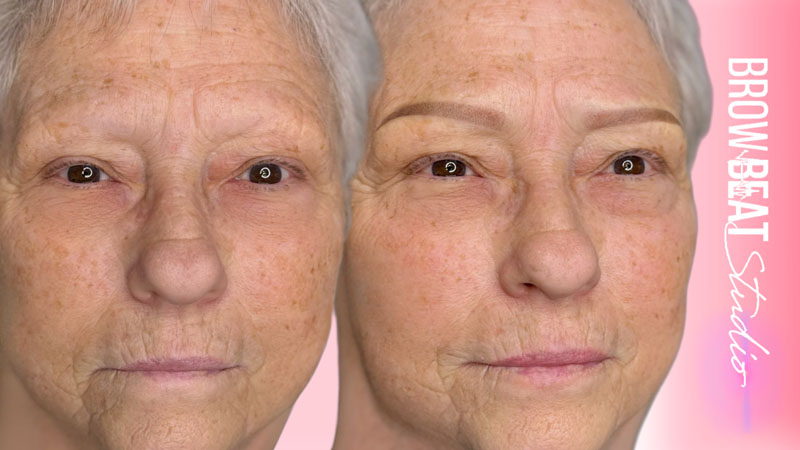
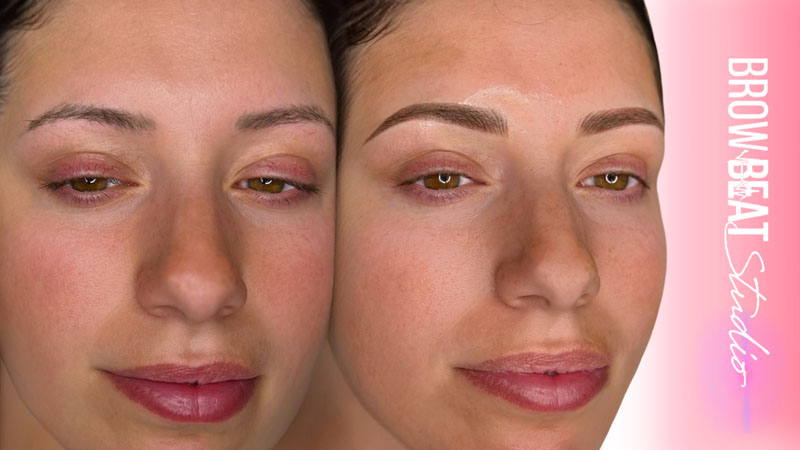
A client with medium-brown skin and naturally dark eyebrow hair may want additional definition without losing the texture of her existing brows. Hybrid Brows can combine manual hairstrokes with machine shading, while Ombré Brows use graduated shading without permanent hair-like lines. Both can create a soft beginning and a more defined tail. The difference becomes easier to appreciate when the results are photographed under consistent lighting and at comparable distances. Complexion does not automatically determine which technique is appropriate. The natural eyebrow, skin characteristics and desired balance of texture and density remain central to the decision.


A client with medium-deep skin and substantial natural eyebrow hair may already have the physical texture that permanent hairstrokes are intended to imitate. Her concern may instead be uneven density, a lighter tail or skin showing through the body. Powder Brow shading can add color beneath that existing hair while preserving its natural direction and texture. Combo Brows offer the additional option of manual hairstrokes if selected areas genuinely benefit from hair-like detail. At BrowBeat Studio Dallas, complexion and natural hair are evaluated independently of assumptions about which permanent brow technique a client should receive. The desired result—not ethnicity—guides the comparison.
On deep, melanin-rich skin, both Combo Brows and Microshading can be considered according to the client’s natural eyebrow, skin condition and preferred result. Combo Brows introduce manual hairstrokes alongside shaded density, while Microshading uses machine-created background color without those permanent lines. A client with substantial natural eyebrow hair may already have the texture she wants and prefer the simplicity of shading alone. Another may specifically value additional hair-like detail. At BrowBeat Studio Dallas, pigment selection and density are individualized rather than assuming that higher melanin requires one particular technique or a universally darker finish.

A client may say she wants a natural eyebrow and then show BrowBeat a photograph with substantial shading, strong density and a beautifully polished tail. What she often means is not:
“I need permanent hairstrokes.”
She may mean:
“Please don’t make this harsh.”
“Please don’t give me a block at the front.”
“Please make the brow belong on my face.”
Those goals can be achieved with either technique when the design is appropriate.
If BrowBeat is going to add permanent lines to a shaded eyebrow, we want a clearer reason. The client genuinely loves visible hairstroke texture. Her natural eyebrow benefits from additional hair-like detail in particular areas. The strokes contribute something to the design that shading alone would not.
Those are meaningful reasons. “Hairstrokes are more natural” is not enough by itself.
Our approach has evolved through years of seeing permanent brows on real clients rather than only through fresh photographs. We have become more interested in the complete eyebrow. How the shape reads. How the density balances.
How the natural hair participates. How much permanent detail is actually necessary to create the result. Sometimes that still leads us to Combo or Hybrid Brows. Increasingly, it can also lead to a beautifully shaded brow without permanent hairstrokes.
Of course we can. The more useful question is:
“Will adding hairstrokes make this eyebrow better for what this client actually wants?”
If the answer is yes, Combo or Hybrid Brows have a clear purpose. If the shading already gives the client the softness, density, shape and definition she wants, Powder/Ombré/Microshading may already be enough.
Both approaches can create coverage. Both can create structure. Both can be soft. Both can be defined.
Both can look natural. Combo adds permanent hairstroke texture. So before choosing the technique, ask: Do those permanent hairstrokes contribute something I genuinely want to see—or do I simply want a beautiful shaded eyebrow?
The next part looks at exactly how that choice changes the finished result through the front, body and tail, and how natural brow hair changes what the additional hairstrokes actually contribute.
Put the words Combo, Hybrid, Powder, Ombré and Microshading aside for a moment. Look at the eyebrow instead. Both approaches can give the brow permanent color. Both can create shape.
Both can increase density. Both can move from a softer front into a more defined body and tail. The additional visual ingredient in a Combo or Hybrid Brow is hairstroke texture. So the comparison becomes much more useful when we ask where that texture actually changes the finished result.
If permanent hairstrokes are going to be added, BrowBeat wants them to contribute something visible and intentional. Perhaps they create texture through a lighter front. Perhaps they visually connect an area where natural hair becomes sparse. Perhaps the client simply loves seeing individual hair-like detail within the permanent result.
Those are meaningful reasons to include them. But hairstrokes do not need to be added to every shaded eyebrow simply to make the service feel more complete.
Natural brow fronts tend to show individual hairs clearly. There is often more visible skin. The hair direction is easy to see. That makes the front an obvious place for clients to appreciate permanent hair-like detail.
For someone who particularly loves a textured beginning to the brow, Combo or Hybrid Brows can use hairstrokes to reinforce that effect.
This distinction matters because a soft front and a hairstroke front are not the same thing. Machine shading can be kept lighter at the beginning of the eyebrow and gradually become denser through the body. The client’s own natural hairs remain visible through that softer color. So a client does not necessarily need permanent lines simply because she does not want a heavy front.
This is particularly relevant for clients who already have a reasonable amount of natural eyebrow hair. The real hairs are providing texture. They are already breaking up the appearance of the shading. They already move through the eyebrow in natural directions.
Soft machine shading can then sit underneath that hair and provide the density that is missing. For some clients, that relationship is enough.

For another client, natural hair alone does not create the visual effect she wants. She may have a lighter front. She may have a section where the natural hair direction becomes inconsistent. Or she may simply love the look of permanent hairstrokes mixed through her natural brow.
Then the additional texture can have a clear purpose.
Once we move farther into the eyebrow, clients often begin judging the brow less by individual hairs and more by how complete the area looks. Does the body feel connected? Is there enough color underneath the natural hair? Does one section look noticeably lighter?
Does the shape read clearly? Those are density questions.
That is its job. Machine shading allows the artist to build soft color across an area rather than asking individual lines to create the impression of fullness on their own. The density can be adjusted. It can remain light.
It can become fuller. And it can change through different areas of the same eyebrow.
Texture. They can break up the visual field and add hair-like detail among the shaded color. Whether that improves the result depends partly on the client’s natural hair and partly on what she likes to see. A client with substantial natural texture may not notice a dramatic difference from adding more permanent lines through that area.
A client with lighter natural texture may value them much more.
Natural eyebrow tails frequently contain less hair than the front and body. Clients often want the tail to be visible, balanced and finished. Powder shading can create that visual structure through controlled density. Combo can use the same shaded support and add hairstroke detail where appropriate.
The question is whether those lines contribute something the client actually sees and values in the finished tail.
This is another place where the word natural can mislead the decision. A softly shaded tail can sit naturally within the complete eyebrow even though it is not constructed from individual permanent hairstrokes. What makes it feel appropriate is the relationship among shape, color, density, natural hair and the rest of the face.
One of the useful things about shading is that it allows BrowBeat to think about how much visual weight each part of the eyebrow carries. A front can remain lighter. A body can become more connected. A tail can become stronger.
One naturally lighter area can receive additional support. That can all happen without creating a hard border around the eyebrow.
This is why Combo Brows should not be described as the less structured alternative to Powder Brows. They contain shading too. The artist can still control density through the complete eyebrow. The hairstrokes simply add another type of detail on top of that foundation.
Powder Brows are shaded. Combo Brows are shaded too. The real comparison is: shaded density alone versus shaded density with added hairstroke texture.
That distinction is much more accurate than describing one technique as filled and the other as natural.
This can make the comparison surprisingly simple. If the client already has plenty of natural hair, she may already have all the physical texture the eyebrow needs. Her complaint may be that the skin underneath shows too much. Or the tail looks lighter.
Or the lower shape disappears unless she adds makeup. Those are problems shading can address without necessarily adding more hair-like lines.
The natural hair sits over the shaded background and visually breaks up the permanent color. The eye sees real hairs first. The shading simply gives those hairs more support. That is one reason a Powder Brow on a client with substantial natural hair can look very different from the heavy, solid eyebrow some people imagine when they hear the word powder.
She may genuinely love the additional permanent texture. Perhaps one section of the brow has much less natural hair than the rest. Perhaps she likes the appearance of hairstrokes through the front. Perhaps those details are an important part of the reference photographs she consistently chooses.
Then Combo can have a clear reason.
Now the permanent makeup is contributing more of what the eye sees. Powder shading can create the missing density and shape. Combo can create that density while also adding hair-like detail. Neither automatically becomes the correct choice simply because there is less natural hair.
The desired appearance still matters.
When there are fewer real hairs competing visually with the permanent detail, individual hairstrokes may become a more obvious part of the finished result. For a client who loves that texture, that can be appealing. For a client who primarily wants a smooth, balanced eyebrow with soft coverage, those additional lines may be less important.

A light brow may simply need more overall density. A patchy brow can contain substantial hair in one section and very little in another. That creates a visual imbalance. The question becomes how to make those areas belong to the same eyebrow.
This is important when natural hairs are coarse, wiry or distributed irregularly. Permanent hairstrokes can add texture, but they do not change the texture of the natural hair itself. And adding more lines into a sparse section does not necessarily give it the same visual weight as an area containing substantial real hair. Sometimes broader background density creates a more cohesive transition.
Because shading works across an area rather than as isolated lines, it can visually support sections where natural density changes. The result does not have to become heavy. The goal can simply be to reduce the contrast between a very hairy area and a lighter one. This is one of the practical reasons BrowBeat values shading so highly.
Most natural eyebrows are not identical. One may have more hair through the body. One front may grow higher. One tail may be thinner.
Those differences affect how the pair reads even if the mapped shapes are technically similar.
Shading gives the artist a way to adjust visual density rather than trying to match one brow to the other stroke by stroke. That can be useful when the natural hair itself is contributing different amounts of darkness or fullness on each side. The goal is visual balance—not pretending both natural eyebrows began exactly the same.
This should not be turned into an argument that lines have no value. If one area genuinely benefits from additional hair-like detail, strokes can contribute beautifully. Combo gives the artist access to both tools. The question remains whether both tools are necessary for the result.
That depends on the amount of shading chosen and the natural hair sitting over it. A softly shaded result can look like an eyebrow that naturally has more density. A more developed result can look polished and intentionally groomed. There is a broad range between barely there and heavily filled.
It can occupy that same range of shaded density while adding permanent hairstroke texture. The client may notice the lines most through softer areas. Or the natural hair and shading may dominate the overall impression while the strokes contribute subtle detail. How visible those strokes are depends on the complete design.
This is worth discussing because permanent makeup is often chosen from photographs. A close-up image can make individual strokes look like the defining feature of the eyebrow. They are beautiful details. But step back and the eye begins reading density, shape and balance much more strongly.
A client should choose the eyebrow she wants to wear at normal distance—not only the detail that looks impressive when a camera is inches from the skin.
Is it genuinely the hairstrokes? Would you miss them if they were removed? Or do you actually love the soft front? The clean shape?
The amount of coverage? The polished tail? The overall symmetry? Those features can come primarily from shading.
Imagine the same eyebrow with the same shape, color, soft front, density and tail—but without permanent hair-like lines. Would you still love it? If the answer is yes, that is useful. You may be attracted primarily to the shaded result.
Imagine the brow without those individual permanent hairstrokes. Does it suddenly lose the feature you loved most? Do you miss the texture? Does the front feel too smooth?
Do the hair-like details make the result feel more like you? Then Combo or Hybrid Brows have a stronger reason to be considered.
Choosing Combo does not mean you are getting more advanced permanent makeup. Choosing Powder does not mean you are settling for less. The services are using permanent pigment differently. The better choice is the one where every technique included has a job.
We do not add hairstrokes simply because clients have been taught to associate them with natural permanent brows. And we do not remove them simply because BrowBeat performs more shaded work today. We look at the natural eyebrow. We look at the desired density.
We look at the result the client keeps pointing to. Then we ask what the hairstrokes would actually contribute.
They add exactly the texture the client wanted. They support a lighter front. They create visual detail that shading alone would not provide. They make the combination feel right.
The natural hair provides the texture. The shading provides the density. The shape is balanced. The front is soft.
The body is connected. The tail has enough definition. Nothing looks missing. In that situation, adding hairstrokes simply because they are available may not materially improve the eyebrow.
The goal is to know which tools matter. Combo and Hybrid Brows give BrowBeat hairstrokes plus shading. Powder, Ombré and Microshading give us shading without the added lines. Both can create beautiful permanent brows.
The decision becomes much clearer when we stop asking which service contains more and start asking: What does this eyebrow actually need?
A fresh permanent eyebrow can make almost any detail feel important. The color is new. The shape is crisp. Hairstrokes are easy to see.
Shading is clearly visible. And photographs taken immediately after the procedure naturally capture permanent makeup at its most defined. But BrowBeat has been doing permanent brows long enough to know that the first photograph is only one moment in a much longer relationship with the client’s skin. That longer view has changed how we think about choosing between Combo Brows and a fully shaded Powder, Ombré or Microshading result.

A close-up of an Ombré Brow front can show how restrained pigment density creates softness while natural hairs remain visible. The beginning of the eyebrow does not need to be filled to the same strength as the body or tail. That gradual transition allows the natural hair to contribute texture against a lighter background. Combo Brows may add manual hairstrokes through the same area when the client specifically values permanent hair-like detail. But a client who simply wants an airy front may find that Ombré shading already provides the appearance she prefers. The difference becomes clearer when the photograph focuses on the actual shading rather than the service name.
Machine microshading can produce a delicate permanent background that allows natural eyebrow hair and visible skin to remain part of the result. On medium-melanin skin, the pigment color and density should be selected for the individual client rather than assuming a particular complexion requires stronger shading. Combo Brows can add manual hairstrokes to that background when hair-like permanent detail is important to the client. But if the desired result is simply more consistent color beneath existing brow hair, microshading may already provide what she wants. This comparison demonstrates that a shading-only eyebrow does not need to resemble a heavily filled conventional makeup look.


A long-term Combo Brow photograph can reveal how individual manual hairstrokes have changed since the original procedure. Some lines may remain visible, while others become softer or less distinctly separated. The shaded background may continue providing color and shape even when the finest details are harder to identify. Powder Brows do not contain those manual hairstrokes, so their long-term appearance depends on the remaining shaded pigment and natural eyebrow hair. Neither technique has a guaranteed retention advantage for every client. The important difference is that fine lines and broader shaded color rely on different visual characteristics to remain recognizable as permanent makeup ages.
On deep, melanin-rich skin, permanent brow design requires thoughtful attention to pigment color, natural eyebrow hair and the amount of visible definition the client wants. A client with dense dark natural hair may already have substantial texture, making machine microshading useful for creating background color and a more connected shape. Another client may prefer the appearance of additional permanent hairstrokes within that shaded result. Neither choice is determined by complexion alone. At BrowBeat Studio Dallas, the decision between Combo Brows and Microshading considers the actual eyebrow and skin characteristics rather than assuming every high-melanin client needs the same technique or density.

Approximately 80% of the clients BrowBeat sees are returning clients. Some are returning after one previous permanent-brow experience. Others have had their brows worked on several times over many years. That gives us a perspective we simply did not have when Microblading and combination techniques were newer.
We do not only see what goes into the skin. We see what comes back, and when it comes back, relating to combo and hybrid brow longevity.
Longevity matters, but it is not the only goal. A technique that remains visible for a long time is not automatically the right technique for every face. Color matters. Shape matters.
Natural hair matters. The client’s preferred level of definition matters. And the way permanent detail changes in the skin matters too. The longer view simply gives us another piece of information when deciding whether hairstrokes add enough value to justify including them.
A hairstroke is successful visually because the eye recognizes a line. One fine mark is separated from another. The spaces around those lines help create the illusion of individual hairs. Shading is not asking the eye to do that.
It is designed to be read as soft color across an area. That fundamental difference matters as permanent pigment ages in the skin.
If an individual permanent line gradually becomes softer, the visual character of that detail changes. The pigment can still be there while the stroke becomes less crisp. Over time, individual lines can become less distinct from the permanent color or natural hair around them. That is not a criticism of hairstrokes.
It is simply part of what happens when a fine permanent detail ages in living skin.
This is one reason shaded permanent brows can age differently visually. A field of machine shading is not trying to remain a collection of perfectly separated lines. It is intended to create density. As that density gradually becomes lighter and softer, it can still read as density.
The visual purpose of the technique can remain recognizable even though the pigment is no longer as strong as it once was.
Earlier in the permanent-brow industry, it was easy to become focused on the beauty of the individual hairstroke. And those strokes can be beautiful. But years of seeing brows return encourages a different question: How important is that individual line to the success of the complete eyebrow?
If the brow already has natural hair creating texture and soft shading creating density, permanent hairstrokes may be adding a detail the client loves. Or they may be adding detail the complete eyebrow does not actually depend on.
A permanent makeup appointment does not happen in isolation from every appointment that may follow it. The skin we work with in the future can contain pigment from the work performed today. That is why BrowBeat has become more thoughtful about what permanent detail deserves to be placed in the skin in the first place. More detail is not automatically more valuable detail.
Quite the opposite. Sometimes the more thoughtful decision is knowing what not to add. If the client’s natural hair already gives the eyebrow convincing texture, and machine shading gives it the density and shape she wants, the permanent result may not need another visual layer. If hairstrokes genuinely improve the result, then they have earned their place.
A newly created hairstroke begins as a fine permanent line. As that detail softens over time, future work does not necessarily begin on untouched skin. Residual pigment can remain. The original lines may no longer look exactly like the crisp strokes seen when they were new.
That existing permanent information becomes part of what the artist sees at a later appointment.

A client may remember how beautifully separated her original hairstrokes looked and understandably want that same effect again. But permanent makeup is not a drawing that gets erased completely before the artist redraws it. What remains in the skin matters. BrowBeat therefore looks at the existing eyebrow rather than assuming another layer of fine lines is always the answer.
Because shading is designed to create broader density, a softened shaded result can still give the artist useful information about the shape and color already present. It can become lighter. It can lose definition. It can eventually need maintenance.
But its visual job was never dependent on every tiny mark remaining separately readable.
No. There are too many variables for a universal promise. Skin characteristics matter. Pigment matters.
Color matters. Density matters. Sun exposure and skincare matter. Individual retention matters.
And Combo Brows contain shading too. The useful distinction is narrower: fine hairstroke detail and broader shaded density do not rely on the same visual characteristics as they age.
This is important because Combo should not be treated as though its entire result rises or falls with the hairstrokes. As the fine detail gradually softens, the shaded component can continue supporting the body, tail, color and overall shape. That is one of the reasons Combo can remain a strong option for someone who genuinely wants the texture.
A fully shaded brow does not depend on permanent hairstrokes at all. The client’s natural hair provides whatever physical texture is present. The permanent makeup provides the background density and shape. For a client who does not particularly care about permanent hairstroke detail, that can be a very straightforward relationship.
If a client already has substantial natural hair, those hairs continue providing real texture while the permanent shading underneath them becomes softer over time. She may never feel as though the brow lacks hair-like detail because she already owns it. For that client, permanent hairstrokes may have less long-term importance than they would for someone whose natural brow is much lighter.
This may be one of the biggest changes in our thinking. Close-up hairstroke photographs are compelling. They demonstrate technical precision. They show the artist’s work in extraordinary detail.
But a technique should not be chosen primarily because one element photographs impressively when magnified. The client has to wear the complete eyebrow.
And car-mirror distance. And across-the-table distance. And in photographs where the entire face is visible. At those distances, shape, balance, density and color can matter far more than whether somebody can identify every permanent hairstroke.
That does not make the strokes irrelevant. It puts them back into proportion.
Permanent makeup techniques become popular. Terminology changes. Beauty preferences shift. Clients see new styles online and become interested in different effects.
But permanent pigment is being placed into skin, not into a social-media feed. That makes it worth separating what is currently exciting from what actually contributes something useful to the eyebrow.
Not physically forever. Conceptually. If the client loves permanent hairstroke texture and that texture meaningfully improves the result, Combo Brows remain a completely logical choice. If the client primarily wants soft color, symmetry, coverage and definition, the fact that hairstrokes are popular does not create a reason to add them.
That framing would still be too simplistic. A softly shaded brow can look extremely natural. And a Combo Brow can be highly defined. The long-term conversation should not force the techniques into opposing aesthetic stereotypes.
The difference remains what type of permanent detail the client wants to place into the brow.
That phrase sounds attractive, but it skips the actual decision. If the client does not value permanent hairstrokes, adding them does not automatically improve a shaded brow. If she does value them, then the combination genuinely gives her something shading alone cannot. Both techniques should have a purpose.
BrowBeat’s approach to permanent brows has changed because our information has changed. We have seen more skin. More healed work. More returning clients.
More brows that have been maintained over multiple appointments. That does not invalidate the techniques we used earlier. It gives us a longer perspective when deciding what to do now.
That distinction matters. BrowBeat still values the texture that permanent hairstrokes can create. We simply want that texture to contribute enough to justify adding it. Today, we perform considerably more shaded work because many clients are ultimately asking for coverage, balance and definition.
When hairstrokes meaningfully improve that result, we can include them. When they do not, shading can stand beautifully on its own.
Instead of asking:
“Which technique looks most impressive when it is brand new?”
BrowBeat increasingly asks:
“Which permanent details actually need to be in this eyebrow?”
That is a more useful question when the client may return to us years from now.

Combo, Hybrid, Powder, Ombré and Microshading can all create beautiful brows. The final choice is not about declaring one technique the future and another the past. It is about deciding whether permanent hairstroke texture adds enough to this particular eyebrow to make Combo worthwhile—or whether shading already provides everything the client wants. The final part turns that into a practical decision: which result fits which preference, what to look for in your own brow and inspiration photographs, and the strengths and considerations of each approach.
By the time we reach this point, the decision is no longer really about which technique sounds more advanced. Both contain machine shading. Both can create density. Both can create shape and definition.
Both can be soft. Both can be more polished. Both can look natural when they are designed appropriately for the face. The remaining question is:
Do permanent hairstrokes add something you genuinely want? If they do, Combo or Hybrid Brows have a reason to be considered. If they do not, Powder, Ombré or Microshading may already provide the complete result you are looking for.
Permanent makeup terminology can make the decision feel more complicated than it needs to be. Combo. Hybrid. Powder.
Ombré. Microshading. Those names matter because they describe different approaches, but the client ultimately wears an eyebrow—not a service name. Start with the result.
This is the clearest reason to choose the combination. You genuinely like seeing hair-like permanent details. They are not simply something you have been told makes a brow natural. You notice them.
You like them. And if they were removed from the result, you would miss them. That gives the hairstroke component a purpose.
Perhaps what bothers you about your natural brows is not a lack of hair-like texture. You already have hair. What you see is skin between it. One area looks lighter.
The body lacks continuity. The tail disappears. Or the two brows do not carry the same visual density. Those are all problems shading can address directly.
This is worth repeating at the decision stage because it causes so much confusion. A Powder or Ombré Brow can have a very soft front. The shading does not need to begin at the same density as the body and tail. Your natural hairs can remain visible through lighter shading.
So if the only reason you were considering Combo was because you thought hairstrokes were required to avoid a hard front, they are not.
A client may specifically love the appearance of individual permanent lines through the beginning of the eyebrow. She does not merely want the front to be lighter. She wants visible hair-like texture there. That is a much clearer argument for Combo.
Your natural hair may already be giving you all the texture you need. Brush the brow into place and look at what still feels missing. If the answer is background color, density or a stronger shape, Powder shading may solve the problem without adding permanent hairstrokes. If there are areas where you genuinely want additional hair-like detail, Combo may contribute more.

Patchiness is not always a shortage of lines. Sometimes there are plenty of hairs in one area and much less visual weight in another. Adding hairstrokes can contribute texture. Shading can contribute broader density.
Think about which of those things the lighter area is actually missing.
Wiry natural hair already creates plenty of strong linear texture. What may be missing is continuity underneath it. Soft shading can give that natural hair a more consistent background and allow the complete eyebrow to read more cohesively. That does not mean every client with wiry hair should choose Powder Brows.
It means the artist should recognize what the natural hair is already contributing before adding more permanent lines.
Natural eyebrows rarely contain exactly the same number of hairs in exactly the same places. One side may simply look fuller. One tail may be stronger. One body may carry more natural color.
Shading gives BrowBeat a way to work with the overall visual density of each brow rather than trying to create symmetry one line at a time.
This is not a reason to automatically choose Powder over Combo. Combo contains machine shading too. It can use coverage to support symmetry and then add hairstrokes where those details improve the result. The question remains whether the added lines are contributing something meaningful.
Do not choose from the technique name. Define natural first. If you mean:
“I want visible hair-like permanent details,”
Combo may align more closely. If you mean:
“I want my brows to look fuller, but I don’t want them to look harsh or obviously tattooed,”
a softly shaded Powder or Ombré result may align beautifully. If you mean both, Combo can combine those goals.
Either service can provide substantial definition because both contain shading. The difference is whether the polished result also contains permanent hairstroke texture. Do not assume Powder is automatically polished and Combo automatically soft. The amount and placement of shading have far more to do with that distinction.
A lightly shaded brow can be extremely restrained. A lightly shaded Combo Brow can be restrained too. The decision still comes back to texture. If you want permanent lines among that softness, Combo adds them.
If your natural hairs already provide enough texture, soft shading may be all you need.
Look at why you use it. If you use powder to fill visible skin, strengthen the body and define the tail, you are already manually creating the effect that machine shading is designed to provide. The remaining question is whether you also want permanent hairstrokes within that shaded result.
Now your makeup routine is telling us something different. You value both visual effects. You deliberately create hair-like detail. Then you add broader density behind it.
That does not automatically select Combo Brows, but it gives the combination a very logical reason to be part of the discussion.

Then think carefully about what you want permanent makeup to change. You may simply want a little more density and shape while keeping the eyebrow visually quiet. Or you may have a specific area where hair-like detail is missing and important to you. Permanent makeup does not need to become more complicated than the problem you are trying to solve.
There is no universal winner. But there is a meaningful difference. Combo or Hybrid Brows may be the stronger fit when the client genuinely wants permanent hairstroke texture in addition to shaded coverage. Powder, Ombré or Microshading may be the stronger fit when the client primarily wants soft density, shape, symmetry and definition and does not need permanent hairstrokes to achieve the appearance she likes.
The word better only becomes useful when we finish the sentence: Better for what result?
Both can provide substantial coverage because both contain machine shading. The amount of density is a design decision rather than something automatically determined by whether the brow also contains hairstrokes.
Combo and Hybrid Brows add permanent hairstroke texture to the shaded result. Powder, Ombré and Microshading rely on the client’s natural brow hair for physical hair-like texture.
Either. Softness is influenced by pigment color, shading density, shape, edges, natural hair and the overall design. Hairstrokes are not required for softness.
Either. Both techniques use shading, so both can create a defined body and tail. The distinction is whether that definition also includes permanent hairstroke detail.
Neither technique owns natural. A beautifully designed Powder Brow can look completely at home on the face. A beautifully designed Combo Brow can too. The more useful question is whether permanent hairstrokes are part of what makes a brow look natural to you.
That question needs nuance. Fine permanent hairstrokes depend on line separation for their hair-like effect, while shading is designed to be read as broader soft color. That means the two types of permanent detail can change differently as they age in the skin. But skin, pigment, color, density, skincare, sun exposure and individual retention all matter, so this comparison should not be reduced to a universal lifespan promise.
There is no fixed winner because maintenance depends on retention and the appearance the client wants to preserve. A Combo client may notice the hairstroke detail softening while shaded density remains. A Powder client may eventually want more color as the overall shading becomes lighter. The individual Longevity pages own the detailed maintenance timelines.
Combo Brows include the hairstroke component in addition to machine shading. Combo hybrid and 3D brow cost should ultimately be considered in relation to the result the client actually wants rather than how many techniques appear in the service name.

Instead of asking the photograph what service was performed, ask what you actually like about it. The shape? The soft front? The density?
The tail? The color? The hairstrokes? If the hairstrokes are genuinely part of what attracts you, Combo has a clear role.
If everything you love would remain even without them, Powder may already contain the elements you are looking for.
Our work has evolved toward more shading because experience has changed what we pay attention to. That perspective informs the questions we ask. It should not replace the client’s own result preference. We do not want to put permanent hairstrokes into every eyebrow simply because we can.
We also do not want to remove them from a client who genuinely values what they contribute.
If hairstrokes add texture you genuinely want, let them have a reason to be there. If shading already gives you the softness, density, shape and definition you want, it may not need another permanent component added simply to make the service feel more complete. That is where BrowBeat’s approach has landed after years of working with permanent brows:
Do not choose the technique with the most ingredients. Choose the eyebrow in which every ingredient contributes something useful.
If you have read through the differences and still feel caught between the two, bring the decision back to what each technique actually adds to the eyebrow.
Combo & Hybrid Brows: Yes. Permanent hairstrokes are added to machine shading to create hair-like detail within the finished brow.
Powder, Ombré & Microshading: No permanent hairstrokes. Natural eyebrow hair provides the physical hair-like texture while machine shading creates the permanent background color.
Combo & Hybrid Brows: Yes. Shading provides the background density that supports the hairstrokes.
Powder, Ombré & Microshading: Yes. Machine shading creates the permanent brow result without adding manual hairstrokes.
Combo & Hybrid Brows: Can range from soft background color to considerably fuller coverage. The hairstrokes sit within that shaded result.
Powder, Ombré & Microshading: Can also range from very soft to considerably more defined. Powder does not automatically mean heavy coverage.
Combo & Hybrid Brows: Texture comes from both the client’s natural eyebrow hair and added permanent hairstrokes.
Powder, Ombré & Microshading: Hair-like texture comes from the client’s natural brow hair rather than additional permanent lines.
Combo & Hybrid Brows: Can be very soft when the shading is restrained and the hairstrokes remain part of the visual focus.
Powder, Ombré & Microshading: Can also be very soft. Pixelated shading can create gentle background density without requiring permanent hairstrokes.
Combo & Hybrid Brows: Can use permanent hairstrokes through the front, usually alongside lighter shading.
Powder, Ombré & Microshading: Can create a soft front through lighter, graduated shading while allowing the client’s natural hairs to remain visible.
Combo & Hybrid Brows: Shading creates the density while hairstrokes add another layer of visual texture.
Powder, Ombré & Microshading: Shading creates the density directly and can be adjusted according to how filled or soft the client wants the body to appear.
Combo & Hybrid Brows: Shading can give the tail structure and density while hairstrokes may contribute additional detail where appropriate.
Powder, Ombré & Microshading: Shading alone can create a soft or more defined tail without relying on permanent hair-like lines.
Combo & Hybrid Brows: Shading provides much of the definition while hairstrokes preserve visible texture within the result.
Powder, Ombré & Microshading: Definition comes directly from controlled shading and does not require a hard or solid outline.
Combo & Hybrid Brows: Can look natural when the hairstrokes, shading, color and shape work appropriately with the client’s natural eyebrow.
Powder, Ombré & Microshading: Can also look natural. Permanent hairstrokes are not a requirement for a soft, believable permanent eyebrow.
Combo & Hybrid Brows: May make sense when the client wants additional permanent hairstroke detail as well as background density.
Powder, Ombré & Microshading: Can make excellent use of existing natural hair by allowing the real hairs to provide texture while shading fills the skin underneath.
Combo & Hybrid Brows: Hairstrokes can add texture while shading helps connect areas with different amounts of natural hair.
Powder, Ombré & Microshading: Broader shaded density can help visually connect lighter and fuller areas without adding additional permanent lines.
Combo & Hybrid Brows: Contain both fine hairstrokes and broader shading. Those two types of permanent detail can soften differently as they age in the skin.
Powder, Ombré & Microshading: The permanent result is shading rather than fine lines, so the brow does not depend on individual hairstroke separation for its visual effect.
You genuinely want permanent hairstroke texture in addition to shaded coverage. If removing the hairstrokes would remove something you specifically love about the eyebrow, those strokes have a clear purpose.
You primarily want soft density, shape, balance and definition, and the shaded eyebrow already gives you the result you like without needing additional permanent hairstrokes.
Look at the eyebrow you want and mentally remove the permanent hairstrokes. Do you still love it? If you do, the shading may be what you were attracted to all along. If removing the hairstrokes takes away an important part of the result, Combo or Hybrid Brows may have something meaningful to add.
The goal is not to choose the service with more technique. It is to choose the eyebrow where every technique included has a reason to be there.

Combo Brows combine permanent hairstrokes with machine shading. Powder Brows use machine shading without permanent hairstrokes. Both can create density, shape and definition, but Combo adds hair-like permanent texture to the shaded result.
At BrowBeat Studio Dallas, Hybrid Brows belong to the same combined-brow family as Combo Brows. They contain manual hairstrokes plus machine shading. Powder Brows create the permanent eyebrow with machine shading and do not include the manual hairstroke component.
Both can contain machine shading that changes in density through the eyebrow. The difference is that Combo Brows also contain permanent hairstrokes. An Ombré Brow can move from a softer front into a more defined body and tail without adding permanent hair-like lines.
Combo Brows contain manual hairstrokes and machine shading. Microshading uses machine-created shaded density without the manual hairstroke component. The major visual difference is therefore permanent hairstroke texture versus shading alone.
Yes. Machine shading is a defining part of BrowBeat’s Combo and Hybrid Brow service. The shading creates background color and density while the manual hairstrokes add hair-like permanent detail.
No. Powder Brows create the permanent eyebrow through machine shading rather than permanent hairstrokes. The client’s natural eyebrow hair can still provide plenty of real hair-like texture within the shaded result.
Not when BrowBeat is referring to Ombré Brows as a fully machine-shaded service. The ombré effect comes from changing the density of the shading through the eyebrow rather than adding permanent hairstrokes.
No. Microshading creates areas of permanent shaded density. It does not create the manual hair-like lines used in BrowBeat’s Combo or Hybrid Brows.
Not automatically. Both can create natural-looking permanent eyebrows. Combo Brows add permanent hairstroke texture, while a softly shaded Powder Brow can work with the client’s real eyebrow hair to create a natural-looking result without additional permanent lines.
Yes. Permanent hairstrokes are not required for a natural-looking eyebrow. Soft machine shading can add background color beneath natural brow hair, keep the front light and create enough density for the eyebrow to look complete without appearing heavy.
Yes. Combo Brows can combine visible hairstroke texture with restrained machine shading so the permanent work integrates with the client’s natural eyebrow. Shape, color, density and the natural hair all influence how natural the complete result appears.
No. Powder Brows can range from very soft background shading to a more polished makeup-style finish. The word powder describes the shaded effect, not one mandatory level of density.
Combo Brows contain additional permanent hairstroke texture, while Powder Brows rely on the client’s natural eyebrow hair for physical hair-like texture. How noticeable the difference is depends on the client’s natural hair and how the Combo Brow is designed.
Both can provide substantial coverage because both contain machine shading. Combo Brows are not automatically fuller simply because they also contain hairstrokes. The amount of permanent coverage depends primarily on how much shaded density is built into the eyebrow.
Combo and Hybrid Brows. They add permanent hair-like lines to the machine-shaded result. Powder, Ombré and Microshading Brows do not contain those permanent hairstrokes.
Either. Combo Brows can use hairstrokes and lighter shading through the front, while Powder or Ombré Brows can create a soft beginning through lighter machine shading and the client’s natural eyebrow hair. A soft front does not require permanent hairstrokes.
Yes. An ombré effect is created by changing the density of the machine shading. The front can remain lighter and gradually transition into greater density through the body and tail without adding permanent hairstrokes.
Either can create a defined permanent eyebrow because both use machine shading. Combo adds permanent hairstroke texture to that definition, while Powder, Ombré and Microshading create the definition through controlled shaded density.
Either can be very soft. Combo Brows can use restrained shading around visible hairstrokes, while Powder Brows can use very light machine shading beneath the client’s natural hair. Softness depends on the complete design rather than the technique name alone.
It depends on what is missing from the natural brow. If the client already has substantial real hair and primarily wants background color, greater density or a more visible tail, Powder shading may provide what she needs. If she also wants additional permanent hair-like detail, Combo Brows may make sense.
Not necessarily. Natural eyebrow hair already provides real texture. If the main concern is visible skin between the hairs, uneven density or a weak tail, machine shading may address those concerns without adding permanent hairstrokes. Combo becomes more relevant when additional permanent hair-like texture is something the client genuinely wants.
Both can be considered. Powder shading can create broader density and shape through a lighter natural eyebrow. Combo Brows can create that same shaded support while adding permanent hairstroke texture. The preferred finished appearance helps determine whether those additional strokes are useful.
Patchy natural brows often need visual continuity as well as texture. Machine shading can help connect areas with different natural density. Combo Brows can add hairstrokes as well when hair-like detail contributes something useful to the lighter areas.
They can be. Wiry natural hair already provides strong physical texture, while the skin underneath may still lack consistent density. Soft machine shading can create a more continuous background beneath those natural hairs without requiring additional permanent lines.
Yes. The machine-shaded component can support lighter areas and create greater visual continuity, while hairstrokes can add texture where appropriate. The two components do not need to be used equally throughout every part of the eyebrow.
Both can use machine shading to help balance differences in visual density between the two eyebrows. Combo Brows can additionally use hairstrokes where hair-like detail is useful. Symmetry depends on the complete design rather than one technique automatically producing more balanced brows.
No. More techniques do not automatically create a better permanent eyebrow. Combo Brows make sense when both the hairstrokes and shading contribute something the client wants. If shading already creates the desired eyebrow, adding permanent hairstrokes simply because they are available may not improve the result.
No. Powder Brows are a complete machine-shaded permanent-brow technique rather than an incomplete Combo Brow. Shading alone can create shape, density, a soft front, a defined body and tail, and a broad range of permanent-brow finishes.
The strongest reason is that she genuinely wants permanent hairstroke texture in addition to shaded coverage. If removing the hairstrokes would remove an important part of the appearance she likes, Combo or Hybrid Brows have something meaningful to add.
Powder Brows can make sense when the client primarily wants permanent density, shape, balance and definition and does not need additional permanent hairstrokes to create the eyebrow she likes. Her natural brow hair can continue providing the physical texture.
Look at the permanent-brow results you consistently prefer and mentally remove the hairstrokes. If you still love the shape, softness, density and tail, shading may be what attracts you most. If removing the hair-like detail takes away an important part of the result, Combo Brows may fit your preference better.
That preference can be relevant to a Combo Brow design. A client may value permanent hair-like detail through the front while wanting machine shading to provide more density through the body and tail. The complete design does not need identical amounts of texture and shading from beginning to end.
You do not need Combo Brows solely to create a soft front. Powder and Ombré Brows can begin with lighter machine shading and gradually increase in density through the body and tail while the client’s natural hairs remain visible.
If brow powder is primarily being used to add background color, fill visible skin and strengthen the body or tail, machine shading directly addresses those goals. The remaining question is whether you also want permanent hairstroke texture, which would make Combo Brows more relevant.
That routine suggests you value both hair-like detail and broader density. Combo Brows contain those same two broad visual components: permanent hairstrokes for texture and machine shading for coverage. The permanent design still needs to be appropriate for your natural brow and skin.
Either can work with a minimal aesthetic. A softly shaded Powder Brow can create subtle permanent density, while a soft Combo Brow can add that density plus permanent hairstroke texture. The decision depends on what you want permanent makeup to add rather than how much other makeup you wear.
They contain different permanent details. Combo Brows contain fine hairstrokes and broader machine shading, while Powder Brows rely on shading without permanent lines. Fine hairstrokes depend on visible line separation for their hair-like effect, while shading is designed to be read as broader color, so the two types of detail can soften differently over time.
Yes. Permanent hairstrokes gradually soften and can become less individually distinct over time. Combo Brows still have the shaded component supporting the eyebrow as that fine detail changes.
Yes. Machine-shaded permanent makeup gradually becomes softer and lighter over time. Powder Brows are permanent makeup, but the visible density is not expected to remain at exactly the same intensity indefinitely.
There is no universal lifespan that makes one technique last longer on every client. Combo Brows contain both hairstrokes and shading, while Powder Brows contain shading alone. Skin characteristics, pigment color, density, UV exposure, skincare and individual retention all influence how the permanent result changes over time.
There is no universal winner. The important difference is that fine permanent hairstrokes rely on line separation for their hair-like appearance, while machine shading is already intended to read as broader soft color. Those permanent details can therefore change differently as they age.
There is no fixed maintenance winner. A Combo client may notice the hairstroke texture becoming softer while shaded density remains visible. A Powder client may eventually want more color as the overall shading fades. Maintenance depends on what remains and what the individual client wants restored.
They can become more shading-led visually as fine hairstroke detail becomes less distinct while broader shaded pigment remains visible. That does not mean the Combo Brow has technically changed into a Powder Brow; the balance of the original permanent details has simply evolved.
Possibly, but existing permanent makeup needs to be evaluated before additional pigment is placed. Old hairstrokes, residual shading, color, shape and saturation all become part of the starting point. A later appointment should be planned around what is actually present in the skin rather than assuming the brow is blank again.
Not automatically. If substantial previous pigment remains, BrowBeat needs to evaluate its color, shape, density and saturation before deciding what additional permanent work is appropriate. Faded permanent makeup is not necessarily absent permanent makeup.
Combo Brows can be priced differently because the service includes manual hairstrokes in addition to machine shading. Current BrowBeat pricing should be checked with the relevant service and booking information because the better comparison is the result being purchased, not simply the number of techniques involved.
Both use machine shading to create permanent density. In a Combo Brow, that shading is working alongside manual hairstrokes. In a Powder Brow, the machine shading creates the permanent brow result without the added hairstroke component.
Decide whether permanent hairstroke texture is something you genuinely want to see. If you want hair-like permanent detail as well as shaded coverage, Combo or Hybrid Brows may fit your goal. If soft density, shape and definition already create the eyebrow you want, Powder, Ombré or Microshading may be enough.
Both results can have machine-shaded density, soft fronts, defined bodies and visible tails. The defining difference is that Combo and Hybrid Brows add permanent hairstroke texture, while Powder, Ombré and Microshading create the permanent result through shading without those added lines.