
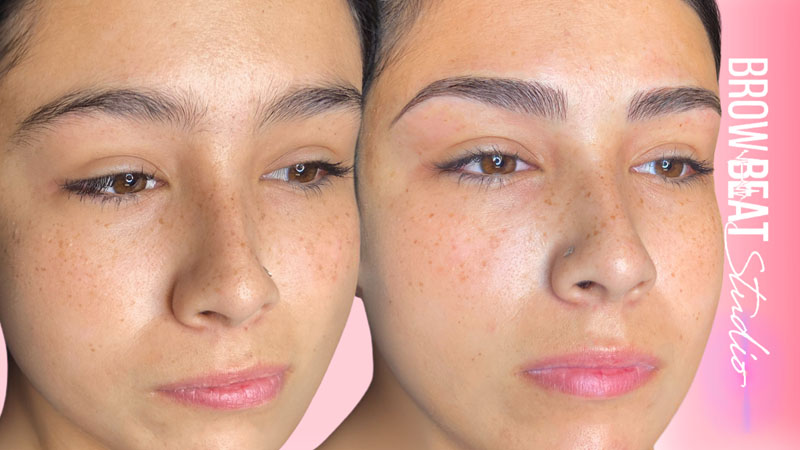
Microblading looks like hair at first — but how it looks years later depends on how gently, how spaced, and how often those strokes are applied.
Why Microblading Can Heal Solid Instead of Hair-Like
A microbladed stroke is designed to imitate a natural hair filament. Thin, tapered, directional, and individual. But unlike hair — pigment must remain suspended inside living skin. Skin absorbs. Skin spreads. Skin heals. And depending on pressure, oil activity, depth, and retouch frequency, strokes can gradually lose their separation and merge into one another.
Here are the primary reasons microblading sometimes heals or eventually appears solid:
- Pressure was slightly too firm — pigment sits deeper, appearing darker and wider
- Strokes placed too close — healed spacing collapses, merging into a shade
- Skin is thick or oily — strokes diffuse and expand microscopically
- Multiple refreshes over time — pigment layers stack into solid color
- Pigment healing inside melanin-rich skin — strokes can appear stronger and bolder
None of these factors automatically signal bad work — in many cases, they are simply a sign that microblading is maturing. The skin decides how tight, how crisp, and how long strokes remain visible. Some people will hold detail beautifully. Others will heal into a powdered background faster. Brow tattooing isn’t fixed — it evolves inside the canvas itself.
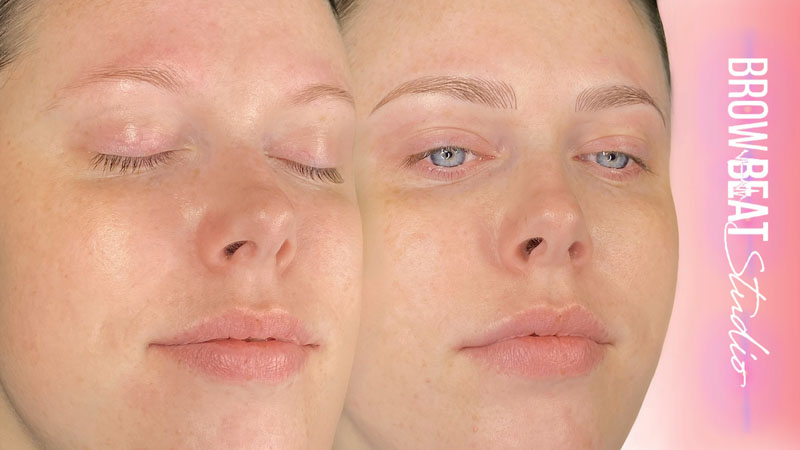
The Truth: Powder & Shading Brows Age More Consistently Over Time
Microblading is stunning when fresh — airy, detailed, hair-like. But longevity is where shading techniques often win. Powder brows, ombré brows, micropowder brows, and all forms of pixel shading have a more predictable long-term shelf life because the technique isn’t relying on negative space the way hairstrokes do. Powder heals as a gradient rather than a line — which means fading looks gradual, soft, and forgiving.
Shading heals like a tint. Microblading heals like a thread.
Threads move. Threads blur. Threads merge over time — especially after multiple touch-ups. But shading remains a field of tiny dots that soften evenly, often looking as natural during year two as it did in month one. This is why many long-term brow clients eventually transition into powder brows, even if they began with microblading. Not because microblading failed — but because shading maintains a more consistent appearance as the years pass.
“Tattoo-Like Brows” Are Often Just Repeated Microblading
After three or four microblading sessions over several years, the brow may no longer read as individual strokes. The skin holds pigment from every treatment — even when faded. What starts as crisp hairstrokes becomes layered color. And layered color = shading, whether intended or not. This is why the belief that microblading remains hairlike forever is a myth.
If you refresh microblading enough times, the result will eventually resemble powder — because the skin becomes saturated.
For some clients, this look is beautiful — full, defined, elegant. But for others who want to maintain subtle realism for many years, shading may be the smarter starting point. Light ombré techniques fade gently and are easy to refresh without compounding density. They look like “first-time brows” again every time they are refreshed.
So Why Do Some Brows Look Tattoo-Solid While Others Stay Soft?
The difference comes down to artistry, skin biology, and long-term approach. A light-handed artist can create hairstrokes that fade rather than stack. A client with dry skin may hold strokes cleanly for longer. But even perfect microblading will eventually evolve into something more shaded with time. Powder simply takes a straighter path — soft from day one, soft at year two, soft every renewal.
If you want your brows to look natural long term, shading is the technique with the most reliable future.
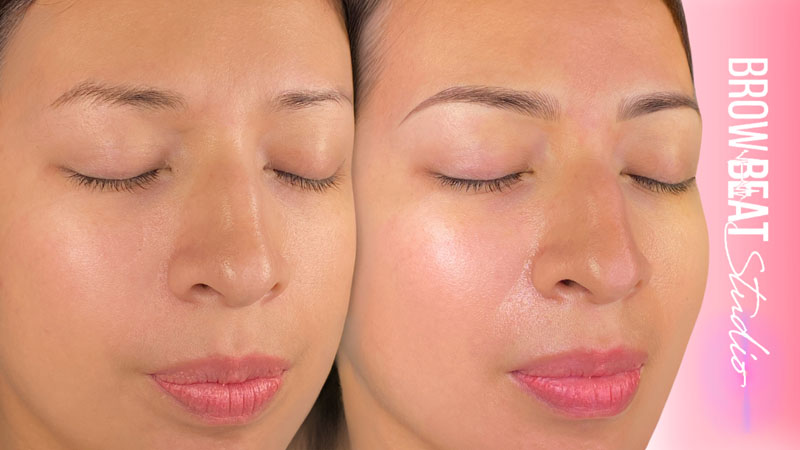
Not just because it ages gracefully — but because it ages predictably. Light shading can look softer than hairstrokes once healed. Transparent pixel work often appears more natural than strokes that merge in year two or three. Powder isn’t bold unless we build it bold. Just like microblading isn’t subtle unless we place it subtle.
Natural doesn’t come from the technique name — it comes from how it heals.
You can explore visual differences between healed powder brows and healed microblading strokes in our
/gallery/.
When Microblading Looks Perfect — And When Powder Brows Are the Better Choice
Fresh microblading is breathtaking for many clients. Day-one results show airy strands, beautiful spacing, and a realistic pattern that mimics real hair. This is the moment most people fall in love. But the healed appearance — not the first appointment — is where we learn which technique truly behaves “most natural” for that person’s skin.
Microblading remains most natural when:
- the artist works with light, controlled pressure
- strokes are placed with room to breathe
- the skin is dry or normal, not oily
- touch-ups are spaced appropriately, not repeatedly stacked
In these ideal cases, microblading can look beautifully natural for many months. The illusion is convincing. The separation between lines stays clean. Strands mimic reality. But this outcome lasts only as long as strokes retain their clarity — which is where powder shading can become the more reliable long-term choice.
Why Powder Brows Stay Soft and Natural for Longer
Powder brows — including all variations like ombré, micropowder, and pixel shading — behave differently in the skin. Instead of individual lines separated by untouched skin, powder brows settle into the epidermis as soft, tiny dots. These dots heal into a shadow-like finish that reads like natural fullness, rather than individual hairs.
And here’s the defining difference:
Microblading fades as strokes merge.
Powder fades as pixels soften — evenly.
No matter how many refresher appointments you receive, powder shading refreshes like a fresh brow every time because the healed look stays consistent. There’s no accumulating line width, no compounding stroke saturation. The healed brow doesn’t get darker automatically — it simply becomes soft again and is restored back to its original beauty with a gentle retouch.
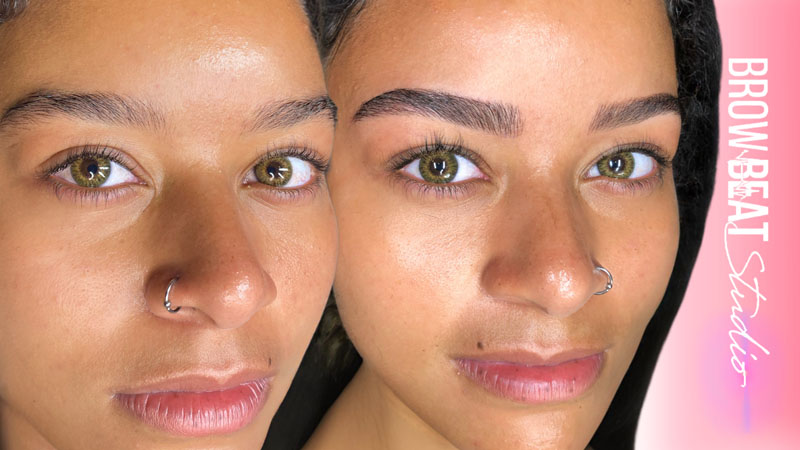
Powder brows age predictably. Microblading ages uniquely on each skin type.
This is why clients who want a “forever natural” appearance sometimes begin with powder brows instead of microblading — not because they don’t love stroke realism, but because they want the healed result to look like the first result every time.
If You Want Natural-Looking Brows Year After Year — Soft Shading May Be Your Answer
There is immense beauty in microblading, but there is also predictability in shading. If long-term subtlety matters more than day-one definition, powder brows offer a future-friendly option. They fade gracefully, refresh evenly, and maintain authenticity without ever becoming too bold unless you want them to. And when artists apply lightly, powder can appear even softer than microblading once healed.
Choosing shading doesn’t mean choosing “dark,” “blocky,” or “filled-in.” It means choosing a browscape that wears well over time. We can make it bold or feather-light — powder is simply the more stable canvas.
Clients who value soft results over many years will often thrive with:
- light translucent shading
- ombre front fade + soft spine flow
- pixel-soft powder concentrated at the tail
- a barely-there tint look that heals like makeup you didn’t apply
If you’re unsure which technique aligns with your skin, lifestyle, or long-term vision, you can learn more about how we assess and design individualized brow paths here:
/treatment-process/
The Technique You Choose Shapes How You Age — Not Just How You Look
Some brows are meant to look hairline crisp. Others are meant to melt softly into the skin. Some clients prefer microblading because realism matters most right now. Others prefer shading because natural consistency matters more later. Both are valid. Both are beautiful. The best choice is the one that matches your vision for months and years ahead.
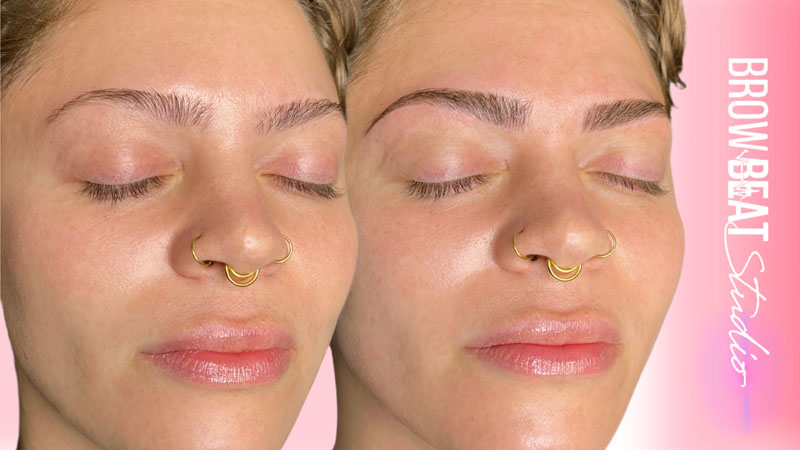
The most natural brow long term is often the one that heals softer — not sharper.
Just as we choose skincare based on how skin behaves over time, we choose brow techniques based on aging behavior. Powder stays soft through the years. Microblading evolves — sometimes subtly, sometimes significantly — depending on skin biology and refresh cycles. Understand this, and you won’t just choose a brow style. You’ll choose a brow future.
If you’d like to explore subtle shading options or microblading approaches that remain natural as they fade, you may schedule your appointment here:
Why Some Microblading Blurs Quickly While Others Stay Crisp
Two people can receive microblading from the same artist, on the same day, using the same pigment — and heal completely differently. One heals crisp. One softens fast. One stays hairlike for a year. The other merges within months. This is why the question “why does microblading look solid like a tattoo?” has no single answer. Skin is a living canvas, and every canvas responds differently.
Mature skin. Oily skin. High-melanin skin. Thin skin. Thick skin. Sun-exposed skin. Previously tattooed skin. These factors influence spread, saturation, retention balance, and the separation between strokes. The skin decides how much detail it’s willing to hold — and how long.
Microblading is a collaboration between technique and biology.
A light-handed artist gives the skin space to heal delicately. But if a client has naturally high oil flow or thick dermal structure, strokes may soften sooner. If a client refreshes yearly for many years, pigment accumulates. If the skin is sensitive, strokes may heal wider. This isn’t failure — it’s how organic tissue processes pigment through time.
Light-Handed Artists
Healed microblading success is rooted in pressure discipline. Heavy pressure drives pigment deeper, resulting in solid healing. Gentle pressure deposits pigment softly, allowing strokes to remain thin as they fade. A light-handed artist can produce microblading that stays closer to hair texture for longer — especially if refresh cycles are spaced thoughtfully.
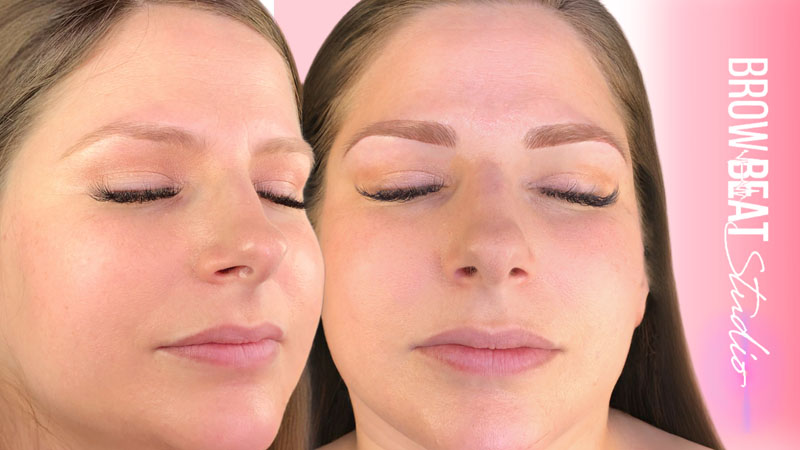
If a client prefers microblading specifically, choosing an artist known for subtle, breathable pressure is key. Light implementation keeps brows from converting into powder faster than expected — but no technique can lock strokes in indefinitely. Eventually, all hairstrokes soften. The goal is to soften beautifully, not abruptly.
Some artists tattoo.
Other artists paint.
Light-handed artists whisper pigment into the skin.
Why Powder Brows Look “First Time Fresh” Every Time You Refresh Them
Here is where shading transforms the longevity conversation. Because powder brows do not rely on hairlike line structure, they don’t suffer from stroke expansion or merging. As pixel dots fade, the brow simply becomes softly lighter — not blurrier. When refreshed, fresh pigment overlays evenly, restoring the brow to its original beauty instead of compounding density.
This is the difference:
- Microblading layers stack → risk of solidity.
- Powder shading layers refresh → consistency remains.
Clients who return for subtle powder retouches often notice something incredible — every appointment looks like their first appointment again. The brows don’t progressively darken unless requested. They don’t thicken unintentionally. Powder has a long-term advantage: renewability without accumulation.
If your goal is brows that stay soft and natural through many years, powder shading or hybrid artistry can give you exactly that outcome without the stroke saturation that occurs after multiple microblading cycles.
When to Transition From Microblading to Powder
There comes a point in many brow journeys when microblading begins to shift from strands to shade. Strokes lose contrast. Edges soften. Gaps fill. And rather than fighting that evolution — many clients choose to embrace it. Transitioning from microblading to powder often restores natural subtlety instead of amplifying density.
Ideal times to transition into powder include:
- after 2–4 microblading cycles
- once healed strokes begin to merge
- when the base color no longer looks airy
- if maintenance needs increase annually
- when subtle translucence becomes the goal
Powder brows require less correction, less pigment removal, and fewer structural adjustments long-term — which is why many clients eventually prefer shading for year-over-year authenticity. With powder brows, your future looks like your present. With microblading, your future is a shade heavier than your beginning.
Brows Don’t Just Look Different — They Age Different
Microblading ages visually. Powder brows age invisibly. Healed shading looks smooth, soft, and skin-integrated — as if it simply belongs. If the goal is longevity that feels effortless and natural, shading becomes a foundation rather than a compromise. The client isn’t giving something up — they’re gaining consistency.
You can learn more about how we evaluate skin type, long-term expectations, and healed outcomes right here:
/treatment-process/
If you’re at the stage where brows feel too solid, too thick, or not as airy as they used to — powder brows may be your restart button. You can schedule your brow renewal here:
When Microblading Heals Solid — It Isn’t “Bad Brows.” It’s Just Brow Evolution.
When clients see microblading evolve into a solid shape, the first thought is often, “Did my brows get too dark?” or “Was something done wrong?” In most cases, the answer is no. Brows are alive inside the skin — and pigment behaves like pigment. Strokes widen microscopically. Tissue shifts. Retouches stack tone. Nothing here is failure — it’s simply aging.
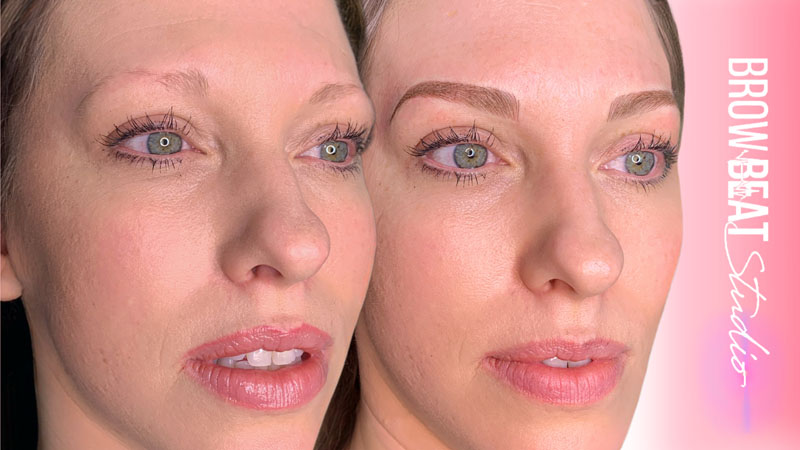
Think of microblading like handwriting on water-soluble paper. When new, the letters are perfect and distinct. But water — time — blurs the ink just slightly. The sentence is still there, but it’s softer, joined, less separated. Microblading behaves the same way. Years of tiny adjustments lead to gradual stroke consolidation. This isn’t a flaw — it’s natural compression. Brows don’t freeze in time. They grow, just like you do.
Solid microblading does not mean ruined brows.
It means the technique has reached its saturation stage.
And saturation is a phase when many clients discover something unexpected — subtle shading looks more natural now than microblading did then. The brows feel softer, lower maintenance, more refined. The look becomes effortless instead of detailed. The aesthetic moves from “hair-like” to “naturally present.” For many, this is not the end — this is the beginning.
The Natural Future of Brows Is Often Powder
Powder shading is not just a beauty trend — it is brow stability. It is predictable healing. It is long-term harmony instead of progressive density. Instead of fighting saturation, shading uses it. Instead of trying to keep hairs separate forever, it celebrates softness. The brow evolves into a tint, a mist, a gentle wash of depth and shape. Clients often report that powder looks like what they wanted microblading to look like at year two — clean, even, natural, effortless.
The longer the timeline, the more powder brows win.
This doesn’t mean microblading isn’t valuable. It is — incredibly. It creates detail that powder cannot. It frames expression in a way shading doesn’t mimic strand for strand. But detail has a shorter visible life. Shadow has a longer one. And when natural aging consistency matters most — powder prevails quietly and beautifully, year after year.
Your Brows Did Not Fail — They Just Changed
If your brows have merged, blurred, or healed more solid than expected, there is nothing wrong with you, your skin, or your past appointments. You are simply ready for the next phase of brow artistry. And that phase is soft shading — pixel-light or ombré gentle — the kind of brow that looks like skin first and pigment second.
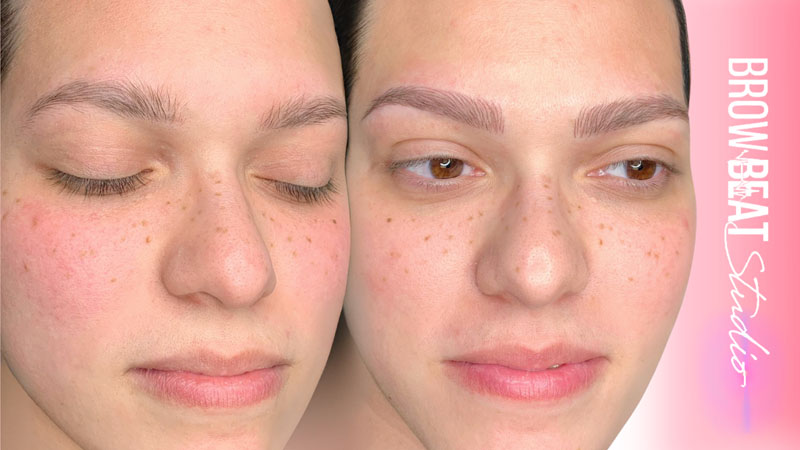
If you want to see what healed shading can look like, explore natural finish examples in our visual library:
/gallery/
And if you prefer a look more like your first microblading appointment again, powder may give you exactly that. It renews without building thickness. It softens without dimming. It restores without saturating. It is the option that lets brows come back home.
You Can Choose Brows That Age With You — Not Ahead of You
Your brows don’t have to stay solid. They don’t have to stay heavy. They don’t have to stay anything — you can change them, lighten them, soften them, rebuild them into something that feels like your face, your personality, your age, and your beauty.
If you’re ready to shift from dense microblading into a gentler brow future, you can reserve your visit anytime here:
For brows that fade like memory,
heal like skin,
and return renewed — every refresh.