
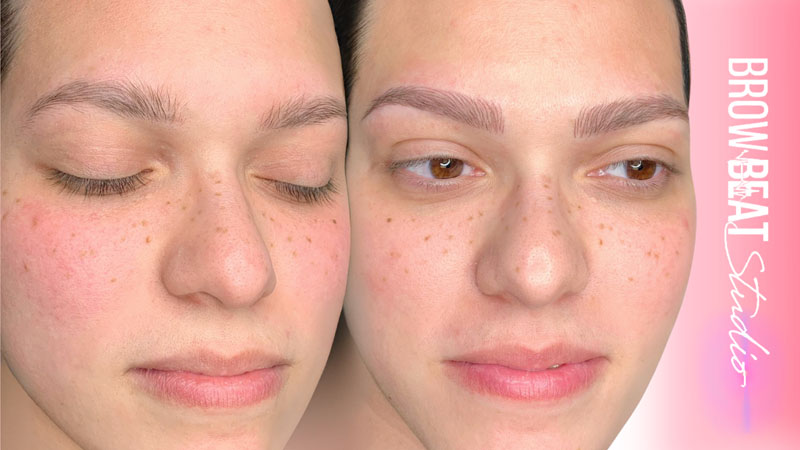
So what really are hairstrokes — and why do they look so different from one artist to another?
Hairstrokes Are Simply Imitation Hair — But No Two Artists Imitate Hair the Same
At the most fundamental level, a microblading hairstroke is a single simulated strand of eyebrow hair. The blade creates a tiny channel shaped like a hair, and pigment fills that space. When healed, it gives the illusion of individual hairs where none exist. But that simplicity is deceptive — because the result depends entirely on how the stroke is executed.
A hairstroke can look thin or thick. Crisp or blurred. Airy or dense. Soft or bold. All based on:
- pressure — deeper pressure heals bolder, lighter pressure heals finer
- spacing — too close merges, too far opens gaps
- stroke curvature — arcs reflect pattern realism
- skin type — oily/melanin-rich skin holds pigment differently
- needle sharpness — blade quality affects hair resolution
That’s why you can visit ten artists and leave with ten completely different brow aesthetics — even if everyone is “doing microblading.” The technique is standard. The artistry is not.
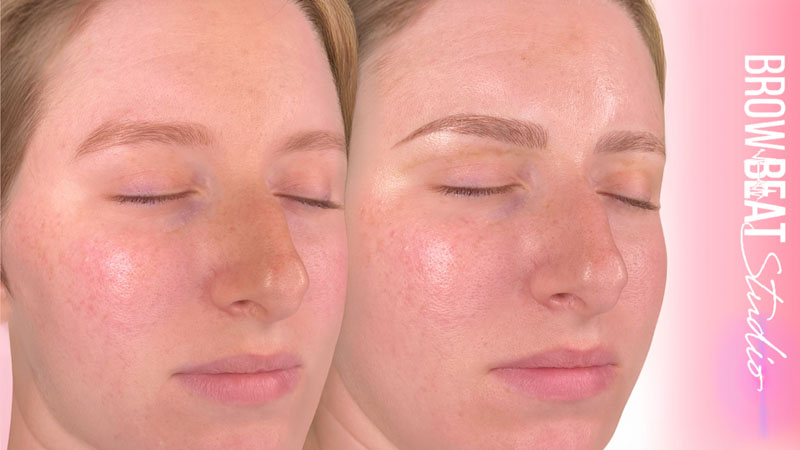
Microblading hairstrokes are not a logo — they’re handwriting.
And every artist writes differently.
All the Names for Hairstrokes — Different Words, Same Concept
The industry loves naming styles. What used to be called microblading strokes became feather brows, nano brows, brow strokes, hair stroke simulation, micro-stroking, and even blade-and-shade. Different countries use different terms, and sometimes artists invent new ones altogether — but at their core, they all refer to the same technique:
Pigment-implanted lines used to replicate the look of natural hair.
Where it gets more complicated is when “nano” enters the conversation. Nano can mean:
- manual hairstrokes (traditional microblading)
- machine hairstrokes (digital stroke simulation)
- fine-stroke feathering
- machine-shaded nano pixel work
The word nano has become a buzzword — useful, but not always precise. It may refer to machine-stroked lines, or it may refer to ultra-fine manual strokes. And sometimes, nano is used generically for subtle brows even if the technique used was not nano at all. Hairstroke naming is often marketing, not anatomy.
The truth: names differ. The concept doesn’t.
It is all hairstroke microblading — expressed through different tools, pressure levels, and creative palettes.
The Stroke Patterns — Why This Technique Is More Complex Than It Looks
Hairstrokes are not random. They are structured patterns, rooted in facial flow, bone direction, brow density, and symmetry. Each brow is broken into stroke zones — typically the head, upper strokes, lower strokes, spine, and tail — and each zone follows its own direction logic.
These patterns all come from the same foundation — the basic hairstroke structure. Artists build complexity from that blueprint, layering detail as skill matures and as client demand shifts. But no pattern is “best.” Each one exists to suit a different face, hair growth type, density goal, and healed expectation.
Hairstrokes are not one technique. They are dozens of interpretations of one technique.
Why Hairstrokes Heal Differently From Person to Person
No matter how perfectly strokes are placed, skin determines the final result. Oily skin softens strokes. Thick skin widens them. Melanin-rich skin may retain pigment differently. Fair skin may fade faster. Thin mature skin may blur faster or retain sharply depending on tissue moisture. Hairstrokes are alive — they are shaped by anatomy.
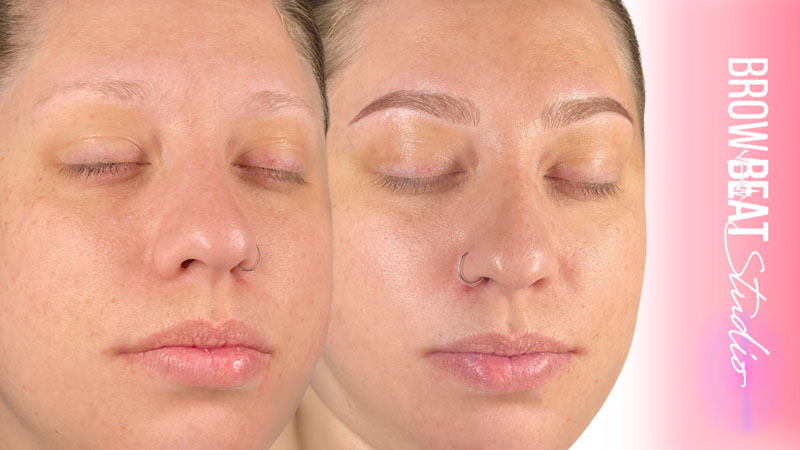
This is why no two hairstroke brows look identical — even from the same artist. Technique begins the design. Skin finishes it.
Microblading is a dialogue between blade and biology.
If you’re curious how we assess your skin to design the most natural hairstroke result possible, you can read more about our full treatment breakdown here: /treatment-process/
Why Hairstrokes Look Different From Artist to Artist
Two artists can create brows using the same blade, same pigment, same pattern, and same model — yet the healed results will never be identical. Microblading isn’t digital printing. It’s handwriting. Just as every person writes the letter A differently, every microblading artist forms hairstrokes differently. Some stroke like calligraphers — airy, elegant, faint as breath. Others stroke like pen ink — defined, bold, structured. Neither is wrong. They are simply different artistic dialects.
The three biggest factors behind hairstroke variation are:
- Depth + pressure — softer pressure = thinner healed line
- Stroke spacing — more space = more realism, less merging
- Blade sharpness + angle — crisp entry = crisp healed result
Pressure is the heart of hairstroke success. Deeper pressure implants more pigment, creating a dark line that may heal thick. Light pressure creates softer, more delicate lines — but requires mastery of control to avoid fading too quickly. An experienced artist reads the skin like a surface — adjusting pressure the way a painter adjusts brush weight.
Light-hand = airy strokes.
Firm-hand = bold strokes.
Both are intentional aesthetics — not better or worse.
The Myth of “The Best Hairstroke Style”
Online you’ll see arguments: feathering vs nano vs machine strokes vs hybrid vs blade-first vs pixel-first. Each group claiming their method is superior. In truth — no single stroke pattern is the best. The best hairstroke style is the one that matches the client’s skin and desired outcome.
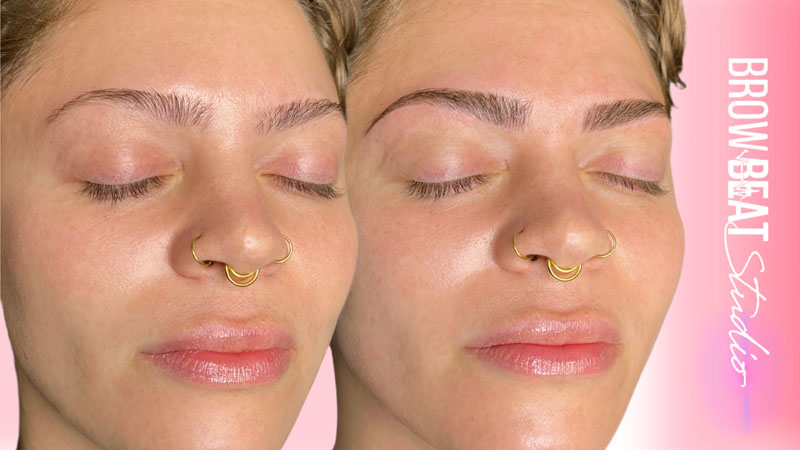
Some people want fluffy. Some want sleek. Some want airy. Some want density. The brow should be tailored — not forced into trend conformity. Hairstrokes should never look the same across every face. Bone structure, brow ridge angle, natural hair direction, pore density — all change the required stroke architecture.
Customization is the luxury.
Uniformity is not the goal.
This is why one client leaves with soft feather strokes while another receives denser strokes for structure. Why one brow flows upward and is a spinal pattern six where the hair strokes point towards the spine. Why some need microblading only, and others need hybrid shading for dimension. Hairstrokes are design — and good design never copies itself. It builds itself fresh each time.
Hairstrokes Heal Like Skin, Not Ink
Microblading hairstrokes are small incisions that deposit pigment into the upper layers of the skin. Unlike tattoo ink, which sits deeper, microblading fades, softens, and adapts to the biology of the client. This is why hairstrokes never heal exactly as they look on day one — they heal as skin.
And here is where expectations shift:
- Fine strokes can heal thicker if skin expands
- Even strokes can heal soft in normal/dry skin
- Perfect strokes can merge after 2–4 refresh cycles
- Strokes blur faster in oily or highly active skin
This isn’t error — it’s biology and time. The healed result is the truth, not the fresh photo. Which is why hairstroke microblading should always be discussed in terms of its journey — not just its birth.
Hairstrokes are most natural on day one —
but shading often becomes more natural at year one.
Clients who want the most natural long-term brow sometimes select powder instead of microblading or choose a hybrid design that offers stroke realism with shading consistency. You can compare results visually here: /gallery/
The Artist’s Role Is Not to Copy Hair — But to Interpret It Beautifully
Hair is imperfect. Hair overlaps, changes direction, splits, tapers, and frays. Real brows have chaos. Hairstroke artistry embraces that chaos — then refines it. A well-designed hairstroke pattern does not mimic hair exactly — it mimics how hair reads to the human eye. Structured at the spine. Soft at the front. Flowing at the arch. Tapered at the tail. Not every detail must be precise. The illusion is the art.
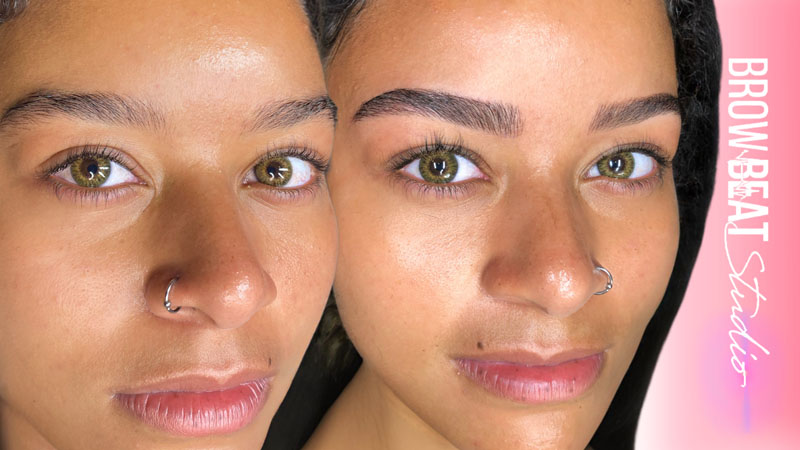
A client does not stand with a magnifying glass. They see shape. Flow. Harmony. They see whether the brows belong on their face. This is why a simplistic hairstroke pattern can still look natural — if it suits the face.
The brow must match the bone — not the trend.
And just as importantly, it must match the client’s long-term goals. If crisp strokes matter most, microblading shines. If consistency through the years matters, soft powder shading may be the better path. A good artist will ask where you want to be later, not just how you want to look now.
If you would like our team to design a personalized appointments for you book your treatment here: /booking/
How Artists Create Hairstroke Flow (The Mapping Behind the Magic)
Great hairstrokes are not drawn — they are engineered. Before a blade ever touches the skin, an artist maps the brow the way an architect sketches load-bearing beams. Every stroke direction has a purpose. Every opening has a reason. Every arc supports the next.
Stroke flow follows structure:
- Head: soft, upward, feather-light — never harsh
- Upper strokes: upper strokes that guide brow direction
- Lower strokes: grounding strokes for shape
- Spine strokes: the inner strokes
- Tail: controlled taper small inner tail strokes
A brow without flow may look drawn on. A brow with flow looks alive. Movement is what separates ink from hair. And the more an artist understands growth direction, and hair grouping — the more realistic healed hairstrokes become.
It is not the blade that makes brows natural.
It is the chosen direction of every single stroke.
Hairstrokes vs Powder vs Hybrid — What’s the Visual Difference?
Clients often ask, “Which one is more natural — powder or microblading?” The answer isn’t about labels — it’s about healed appearance. Hairstrokes create hairlike texture. Powder creates shadow. Hybrid creates both.
A quick breakdown:
- Microblading hairstrokes = line structure + hair simulation
- Powder/ombre brows = mist-like shading, soft and tinted
- Hybrid brows = hairstrokes + powder blend for fullness
Microblading looks the most like hair immediately — crisp, defined, true-to-filament. Powder looks the most like makeup — sheer or bold depending on density. Hybrid looks like hair with soft dimension behind it.
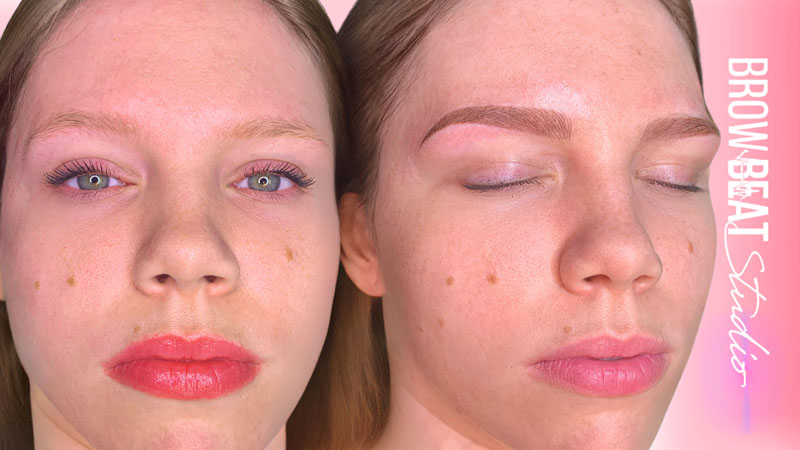
But over time, hairstrokes soften and may merge, while powder fades evenly like watercolor. This is why hairstrokes require gentle placement and may eventually transition into shading — and why powder brows often look the same each refresh cycle.
Why Hairstrokes Fade, Blur, or Merge Over Time
Microblading strokes are tiny incisions — and they are living within dynamic tissue. Over months and years, pigment disperses microscopically. This causes strokes to soften, widen or merge depending on:
- skin oiliness (oil spreads pigment faster)
- melanin density (darker skin can heal strokes deeper)
- pressure + depth of initial work
- how many years strokes have been refreshed
- aftercare quality + lifetime sun exposure
This merging is not “bad work” — it is physics. Powder brows handle this reality differently — instead of relying on negative space, powder uses pixel dot density as its structure. Meaning:
Lines diffuse.
Pixels soften.
When pixels soften, the brow looks the same — just lighter. When lines soften, the brow can look fuller or more shaded than expected. This is how some clients eventually shift from hairstrokes to powder or hybrid — not because hairstrokes failed, but because time transformed them.
This transition is normal. Even expected. Brows evolve — as they should.
Are Hairstrokes Still the Right Choice for You?
If you love the look of individual strands and want the most natural day-one appearance, hairstrokes may be the perfect match. If you love subtle shading, gentle tint, or long-term consistency, powder may suit you even better. If you want realism and shadow both — hybrid brows offer the best of both worlds.
There is no wrong decision — only the approach that aligns with your long-term vision.
If you’d like to see live examples of hairstrokes, hybrids, and powder brows on different ages and skin types, you can explore them here: /gallery/
If your goal is brows that heal realistically and suit your unique features, the right mapping and technique will get you there.
All brow clients begin their journey with a design conversation — how bold, how soft, how airy, how structured. Every brow is built individually, and no two sets of hairstrokes are identical. We create brows that belong to your face — not someone else’s trend.
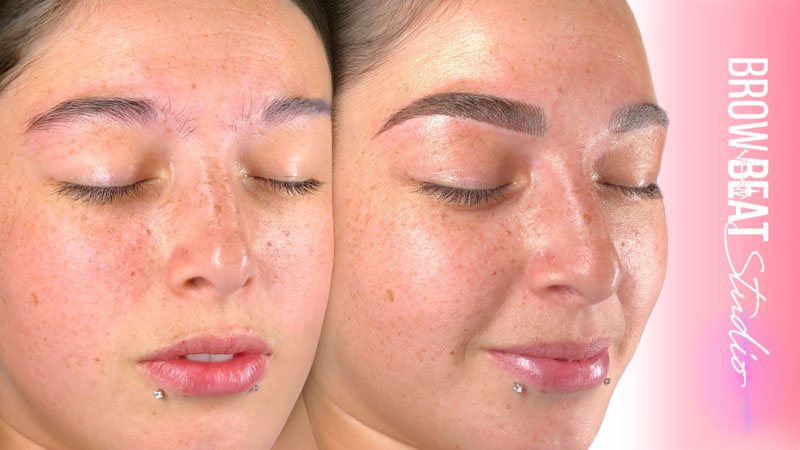
If you’d like to begin your personal brow design process, you may reserve your service anytime here: /booking/
The Future of Hairstroke Brows — Where the Industry Is Headed
As semi-permanent makeup evolves, the conversation is shifting. Instead of asking which technique is “the best,” clients now ask what will look the most beautifully healed. Brows are moving from trend-driven styles to results-driven longevity. And this has placed hairstrokes, powder, ombré, and hybrid brows into a new framework:
The technique is not the product —
The healed brow is the result.
Artists are no longer just technicians. They are long-term designers. They don’t create brows for day one — they create brows for year one. For lifestyle. For maintenance cycles. For future refreshes. For changes in age, skin, hormones, preferences, and trends. A brow that looks good today matters. A brow that still looks like *you* in 18 months matters more.
This is why hairstrokes are beloved — but also why many mature artists adopt powder tools over time. Pixels layer. Lines do not. Shading can refresh forever. Microblading will eventually soften. Both are beautiful when applied with awareness — they simply age differently.
Hairstrokes are the poetry.
Powder is the novel.
The future is likely not one technique, but combination thinking — brows built through structure and shade together. Many healed sets that clients adore today are not pure microblading or pure shading — they’re a fusion. A merging of reality and softness. A marriage of shape and tone. The end goal is never the method — it is harmony.
Why No Two Brows Should Ever Match
Some trends push symmetry as the ultimate achievement in brow design — but perfect twins rarely exist in nature. Brows are sisters, not clones. Balance matters more than duplication. Your left brow and right brow sit over different bone heights, muscle pulls, aging patterns, hair growth layouts — and great artists design with that in mind.
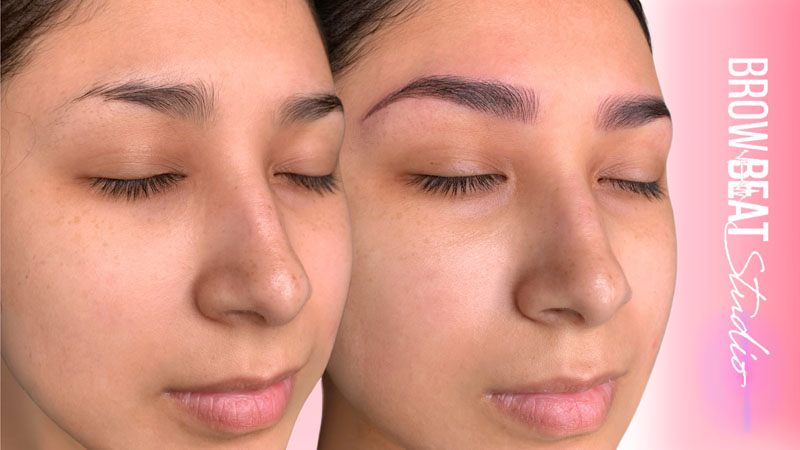
A perfectly mirrored brow can look artificial. A balanced brow looks like it belongs to you. Microblading studies your face — its asymmetry is part of its beauty. The artist’s job is not to erase uniqueness — but to refine it.
The best hairstroke work respects:
- the arch height that feels natural
- the density that suits your bone and eye shape
- the flow of hair as it actually grows, not as a template
- the long-term fade path over multiple refresh cycles
Your brows should not look like someone else’s — not even universally like the artist’s signature style. Your brows should look like yours.
Customization is luxury — and your face earns nothing less.
If You’re Considering Brow Tattooing, This Is the Moment to Begin
Whether you love microblading for its crisp strands, or powder brows for their velvety softness, the most important choice is choosing an artist who understands the healed result — not just the fresh appointment.
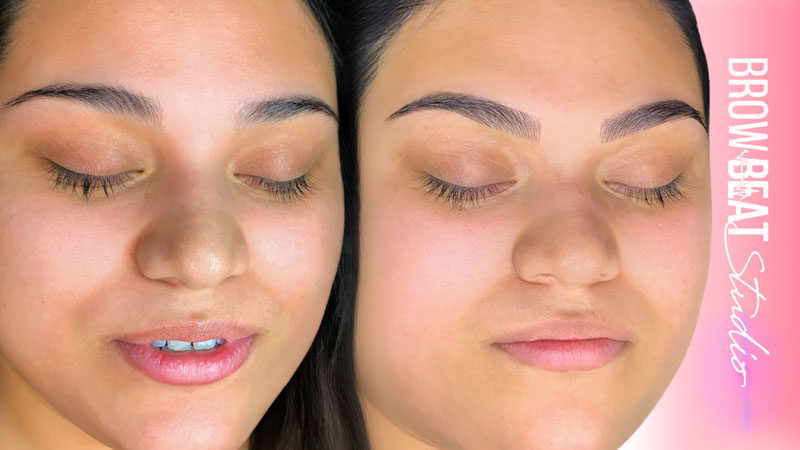
Our studio specializes in designing brows that match your skin, your genes, your lifestyle, your aging rhythm, and your long-term beauty plans. No two sets are the same — because no two faces are the same. We build brows the way couture is tailored — measured for fit, shape, and life expectancy.
You can explore healed, fresh, subtle, bold, airy, hybrid, and ombré examples here: /gallery/
And if you’re ready to experience custom-designed hairstrokes or softly layered powder brows, you may schedule your visit at: /booking/
If you have questions or would like guidance choosing between microblading, shading, pixel brows, or hybrid options, you may reach out directly through: /contact-us/
We believe brows should look like art. Healed like youth. Earned like confidence. If that is what you’re seeking, you are already in the right place.
Your brows can grow with you — and we would love to create them.