
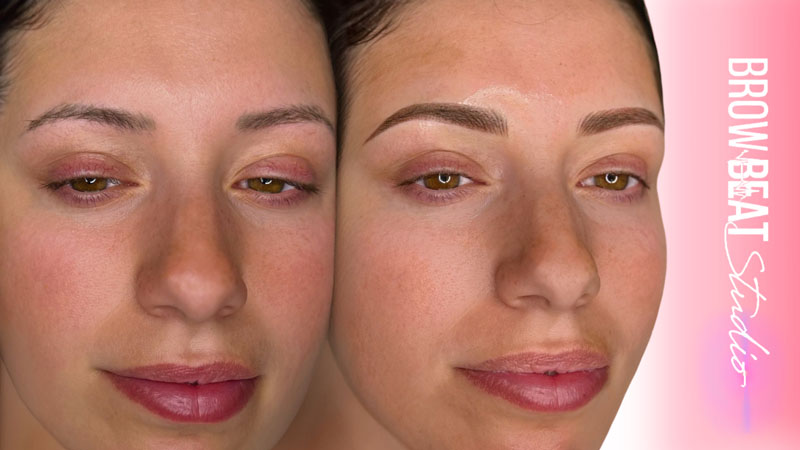
Microblading → Powder is a one-way street.
Powder → Microblading is like driving uphill against traffic.
This isn’t a warning — it’s clarity. It’s long-game thinking. It’s truth that most brows eventually become shaded brows, not because artists push it, but because biology does. Powder brows win the marathon, while microblading owns the opening lap. Which one a client chooses depends on who they are now — and who they want to be in 10 or even 20 years.
The Natural Evolution: Why Microblading Often Becomes Powder Over Time
Microblading is created with lines. Powder brows are created with dots.
Lines blur. Dots diffuse.
One merges; one softens.
Both beautiful — but they age differently.
- Microblading starts crisp → softens year by year
- Repeated refreshes = stroke merging / powder-like effect
- Most long-term clients move into ombré shading naturally
- No failure — just pigment aging and skin evolution
A client may return at year one, year two, year three with a healed brow that looks less like hair and more like a soft tint. At that moment, the question becomes:
Do you want to keep fighting for strokes — or lean into shading that is already forming on its own?
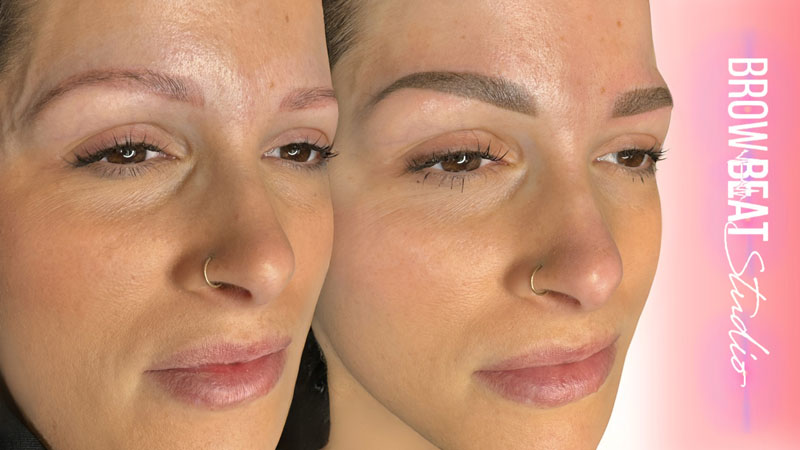
Powder brows don’t fight the fade. They use the fade. They turn it into structure, tone, dimension, and longevity. It is a smoother, more predictable future. Especially for clients with oily skin, thicker skin, high melanin density, gym-active lifestyles, or those who simply want brows that last.
Can You Go Backwards – Powder → Microblading?
Technically, it’s possible to microblade over a powder brow — But the more layers a client has, the less negative space exists. Strokes need empty skin to separate visually. Powder fills that space. Meaning:
- Strokes may not appear crisp
- Contrast may flatten or disappear
- Lines compete with pixels instead of standing alone
It’s like adding pen strokes over watercolor
Powder brows give density. Microblading gives separation. Once separation is gone, you cannot force it back into existence. You can place strokes, but will they heal like strokes? That depends on skin, pigment, time, and history. Which is why most clients move forward, not backward.
Two Types of Clients Dictate the Path
There are people who want brows for a year. And people who want brows for twenty.
Neither is wrong — but they don’t choose the same technique.
- The Beginner / Brow Curious
They want something soft, light, natural. Stroke-focused. They want to “try” brows. - The Long-Term Brow Client
They want brows every year, every decade — consistency over trend. They move toward powder.
Microblading is the perfect entry for the curious.
Powder is built for the committed.
If you think in months — microblading is magic.
If you think in years — powder is wisdom.
So When Should Someone Transition?
Transition is not an event. It’s a moment of recognition. Clients often say something like:
“My strokes used to be so crisp — now they’re soft and a little blurry.”
That’s the moment. The shift. The realization that the brow is evolving — and now shading can support it. Powder brow layering will smooth tone, reinforce shape, and look more natural over time than fighting for stroke sharpness that skin no longer wants to hold.
Think of it like hair color.
Retouching roots is normal.
Changing formulas over time is expected.
Brows are no different.
What About the Reverse — Powder to Microblading?
It can be done — but it should be done intentionally. Power over strokes must have:
- enough fade to create contrast
- strategic placement in negative space
- a client who understands they may not heal crisp

It’s not impossible — just uncommon. Because once clients feel powder longevity, comfort, low-maintenance routines and consistent healed tone, they rarely choose to go back. It’s like taking a luxury car off cruise control to drive manually uphill — you can, but why?
The Long-Game Brow Mindset
Brows are not a one-time decision — they are a lifelong relationship.
The first chapter is microblading.
But the novel is powder.
Ask yourself:
- Are you trying brows for the first time — or building a 20-year routine?
- Do you want gentle realism now — or longevity later?
- Does the fade bother you — or do you like adjusting color each appointment?
People who think in 8-month cycles love microblading.
People who think in decade cycles choose powder.
Powder brows are recyclable. Buildable. Adjustable. They can be bold one year, soft the next. Microblading always moves toward shading as time passes. Powder starts there — which is why the road is one-way more often than two.
If you’re wondering which road you’re on — look at your personality, not just your skin. Are you experimental? Or are you a lifer? Do you crave subtlety, or permanence? The brow you choose now determines how it ages later.
Explore real transformations here: /gallery/
Or begin your brow evolution with us: /booking/
How to Know When It’s Time to Switch
Most clients don’t walk in one morning and suddenly declare, “I’m ready for powder brows now.”
The transition is gradual — visual, emotional, obvious only once it’s happening.
The moment to switch is usually one of these:
- Your strokes look softer than they did last year
- You refresh often but the crispness doesn’t fully return
- Brows look good — but not hairlike anymore
- You want more density, more shape, more visibility
- You’re tired of quick refresh cycles and want longevity
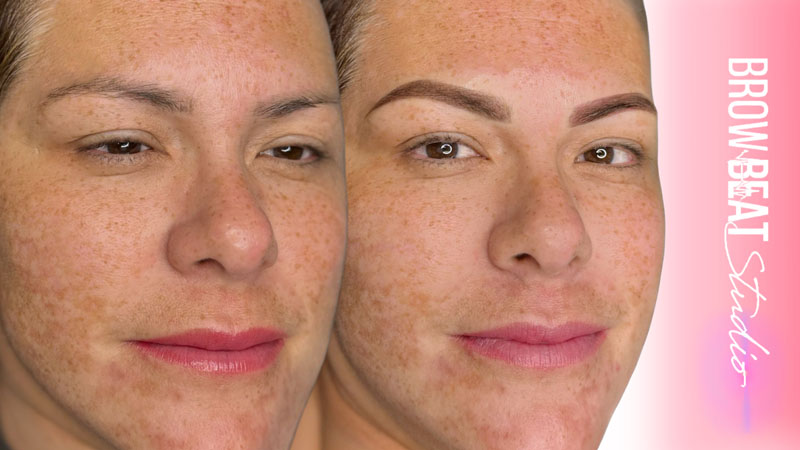
Clients don’t fail microblading — microblading simply completes its chapter.
When microblading fades into a shadow, powder picks up the story and writes a new page.
Why Powder Brow Feels Like “The Grown-Up Brow”
The older a brow becomes, the more it benefits from softness. Sharp lines draw attention.
Pixels ease attention. And aging gracefully in the brow world means knowing when to let softness take over.
Powder brows give what mature microblading can’t always maintain:
- Evenness instead of patching
- Structure instead of guesswork
- Longevity instead of urgency
- A fade that looks intentional — not accidental
A mature brow is like a well-tailored suit — polished without trying, timeless without effort. Most microblading lovers eventually sit in the chair one day and say something like:
“I loved the strokes, but I want something that stays.”
Powder gives that.
Hybrid gives that with dimension.
Microblading gave the beginning — but powder carries the future.
Microblading is the spark.
Powder is the flame that keeps burning.
So — Should Everyone Switch?
No. Not everyone.
Some clients want brows only for a little while.
Maybe just this season of life.
Maybe a trial, not a commitment.
For them, microblading is perfect. It gives natural texture without long-term density. It’s for the explorers — the dabblers — the ones who say “Let me try subtle first.”
If you’re here to explore, start with strokes.
If you’re here to stay, grow into powder.
You can see both paths here: /gallery/
Next — let’s talk about how this evolution actually happens.
How the Transition Happens Step by Step
Switching from microblading to powder isn’t a restart — it’s an upgrade. Instead of replacing your brows, we build on your history. Every year adds tone. Every layer stabilizes. Every refresh becomes softer, smoother, more even. The brow you start with won’t be the brow you have forever — and that is the beauty of evolution.
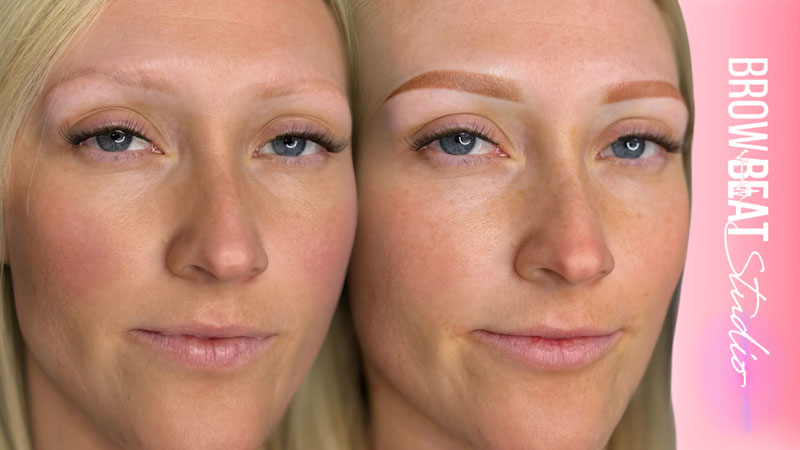
Typical transition looks like this:
- Initial microblading — crisp strokes, natural detail
- 1 year — strokes soften, merging begins
- 2 years — powder shading blends remaining structure
- Long-term cycles — powder brows carry the shape for life
You won’t wake up one day with a new brow identity — it will happen slowly, beautifully, intuitively. Powder brows don’t overwrite microblading. They cushion it, strengthen it, and make it easier to maintain with age.
If You’re Microbladed Today — You’re Already on the Road to Powder
Clients sometimes think powder brows are a “different world.”
They’re not. They’re just the next world.
Microblading is the accent. Powder is the voice.
One handwritten word grows into a paragraph, the paragraph into a story.
Most clients eventually want more — more visibility, more definition, more stay.
Powder delivers that without fighting the skin’s natural aging process.
Should You Ever Go Powder → Microblading?
You can. But only if:
- enough powder has faded for clean stroke space
- the skin is still supple and stable
- you truly want hair realism again
Most don’t — because powder feels easier. More predictable. More forgiving.
Once someone experiences low-maintenance brows that last, they rarely choose to return to stroke survival mode.
Microblading is the art.
Powder is the lifestyle.
The Real Question Is Not “Which Is Better?”
The real question is:
Are you a short-term brow thinker — or a long-term one?
Do you want brows for a phase?
Or brows for a decade?
Do you want to change every year?
Or hold shape for years at a time?
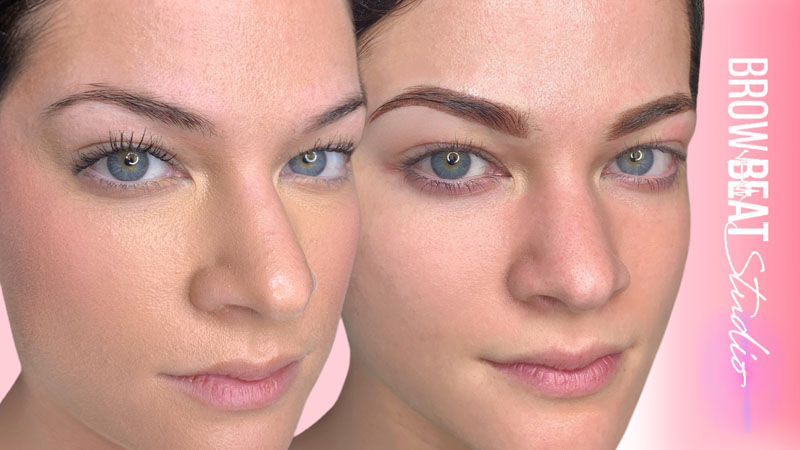
Both paths are valid. Brow journeys are personal, emotional, and evolutionary. You deserve brows that support who you are — not just who you were when you began.
If you’re curious about how your brows will age or when to switch techniques, we would love to walk that path with you. /booking/
Want guidance before choosing?/contact-us/
Your microblading story is only the beginning — powder brows are the chapter that lasts.