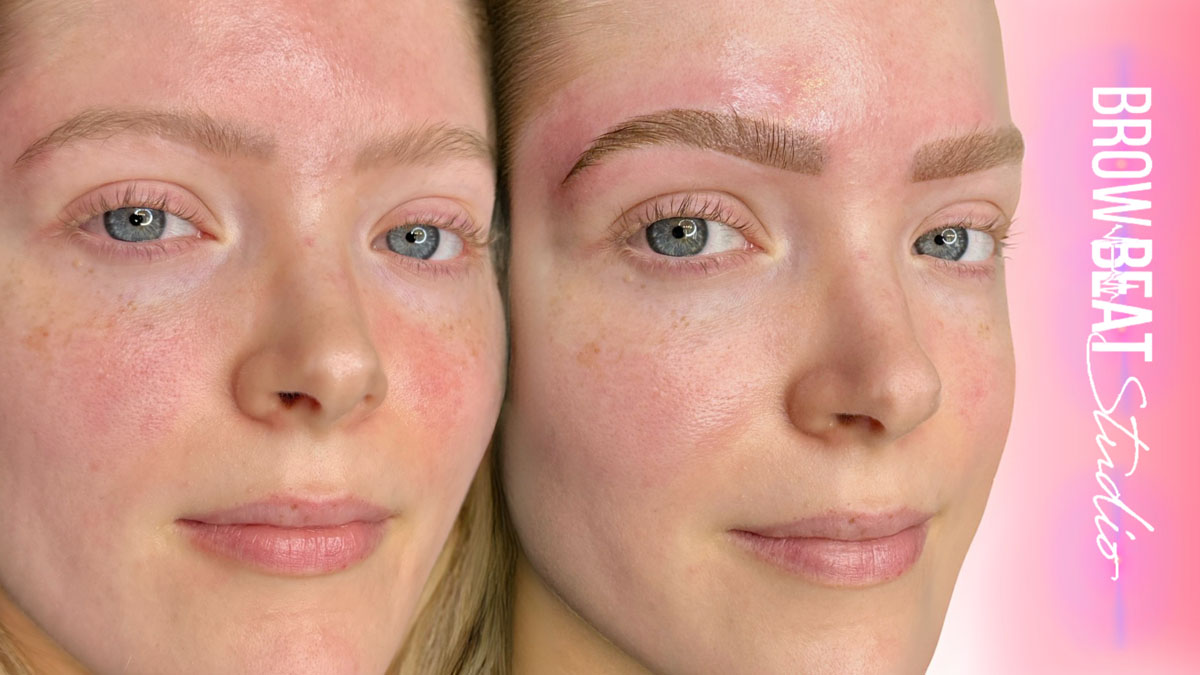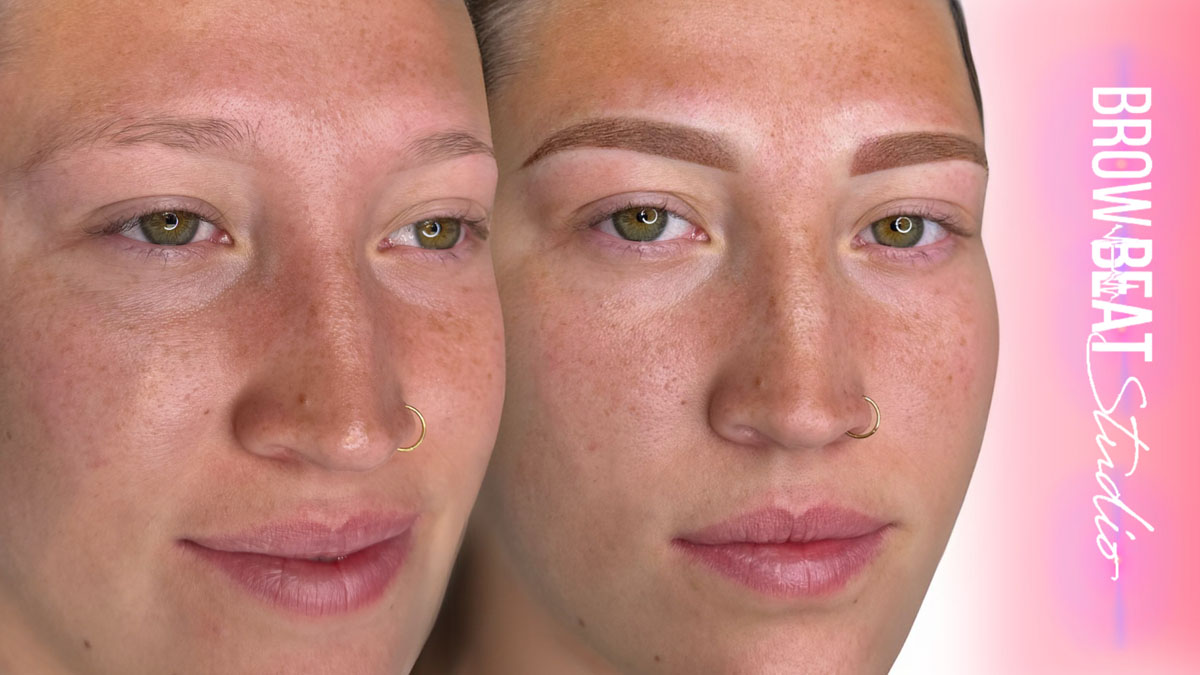
When clients search for answers about semi-permanent brows in Dallas, one of the most common questions is: “Will my brows scab?” The truth is, scabbing is a natural part of the healing process. But the type of scabbing, the severity of scabbing, and the impact it has on pigment retention depends entirely on the aftercare method you follow. At BrowBeat Studio Dallas Advanced Microblading Experts™, we provide updated 2025 scabbing facts that every client should know before and after their appointment.
In this section, we’ll explain what scabs really are, how lymph fluid causes them, why our studio uses a “wet healing” method instead of outdated “dry healing,” and how myths about scabbing continue to mislead clients. With the right understanding, you’ll see why scabbing is nothing to fear—when you care for your brows correctly, it’s simply one stage of the healing journey.
What Is Scabbing in Semi-Permanent Brows?
Scabbing is your body’s way of protecting a wound. During microblading and ombré brow treatments, tiny controlled abrasions are made in the skin to deposit pigment. The body responds instantly: blood flow increases, immune cells arrive, and lymph fluid begins to rise to the surface. When this lymph fluid dries, it hardens into a protective covering—what most clients see as scabs. These scabs are a mixture of lymph, pigment particles, and dead skin cells.
Scabbing itself is not harmful. It’s a sign your skin is healing. The real concern is how much scabbing occurs, because thick, heavy scabs can pull pigment out of the skin when they fall off. That’s why proper aftercare is critical: the goal is to minimize hard scabbing and instead encourage gentle flaking or soft peeling. This allows pigment to remain stable underneath while your skin regenerates.
Understanding Lymph: The Fluid Behind Scabbing
Lymph is the clear or yellowish fluid your body produces to protect and heal tissue. It’s sometimes called:
- Serous fluid
- Wound exudate
- Interstitial fluid
- Plasma filtrate
Lymph is mostly water, but it also contains proteins, salts, and white blood cells. Its purpose is to transport immune cells to the injured area, flush away waste, and create a barrier while new tissue forms. In semi-permanent brows, lymph rises quickly after treatment. It appears as a shiny or wet layer on the skin within minutes of your procedure ending.
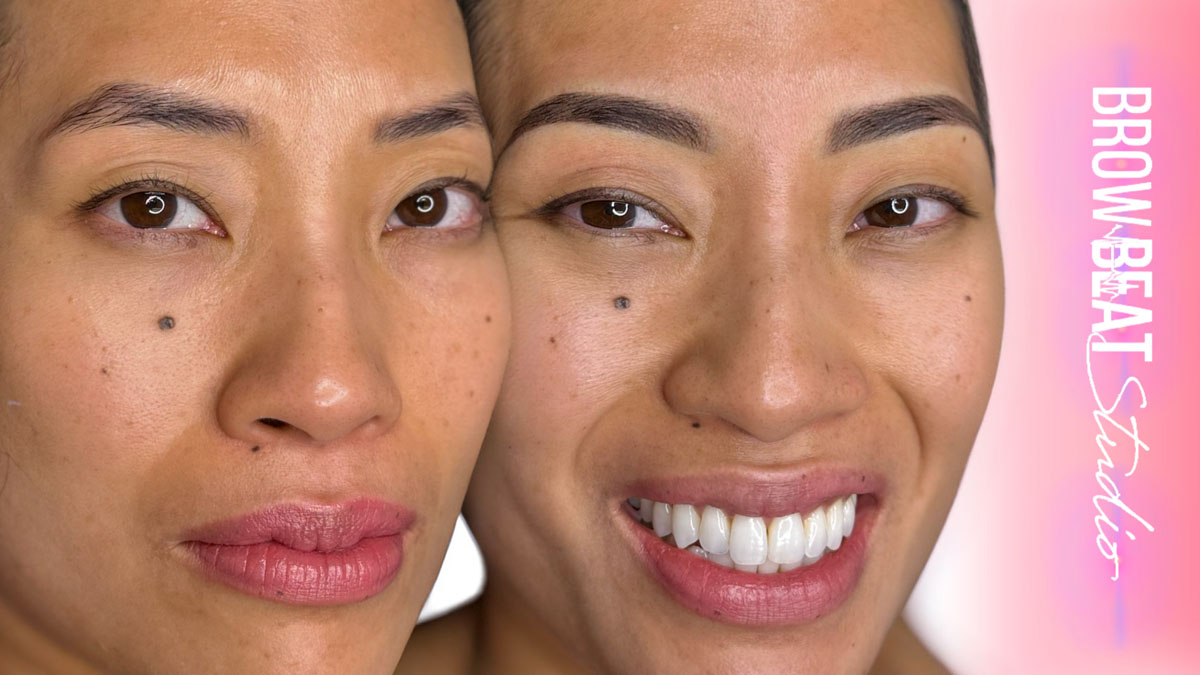
If lymph is left to dry on the skin, it hardens into a crust. That crust binds pigment particles and locks them into a scab. When the scab naturally falls away, some pigment is pulled out with it. This is why clients who follow “dry healing” (doing nothing after their appointment) often experience thicker scabs and more pigment loss.
Why We Wash Four Times on Day One
At BrowBeat Studio Dallas Advanced Microblading Experts™, our aftercare instructions include four gentle washes on Day One. These washes are not optional—they are the most important step to prevent heavy scabbing. Each wash removes fresh lymph from the brow surface before it has the chance to dry and harden.
Think of lymph like a spill on a countertop. If you wipe it while it’s still wet, it disappears. If you leave it, it dries into a sticky crust that’s harder to clean and leaves residue. Your skin works the same way. By washing lymph away during the first day, you prevent the buildup that creates thick scabs. This leads to lighter flaking, smoother healing, and better pigment retention.
Summary: The four washes on Day One = lymph removal. This is the foundation of wet healing and the reason our clients experience softer, more predictable results. For visual examples, explore our Gallery of healed brows.
Dry Healing vs Wet Healing: Which Is Better?
One of the most debated topics in semi-permanent makeup is whether to use dry healing (no washing, no ointment) or wet healing (gentle washes + ointment). Let’s compare the two methods:
Dry Healing
- No washing after the procedure
- No ointment or moisture applied
- Brows left “as-is” for 10–14 days
Result: Heavier scabs form, skin becomes tighter and itchier, and pigment is more likely to lift with the scabs. Many clients find dry healing uncomfortable and cosmetically alarming because scabs look large and unsightly.
Wet Healing (BrowBeat Method)
- Four washes on Day One to remove lymph
- Thin application of ointment every 2–3 hours
- Night-time band-aids for six nights to protect brows from friction and dryness
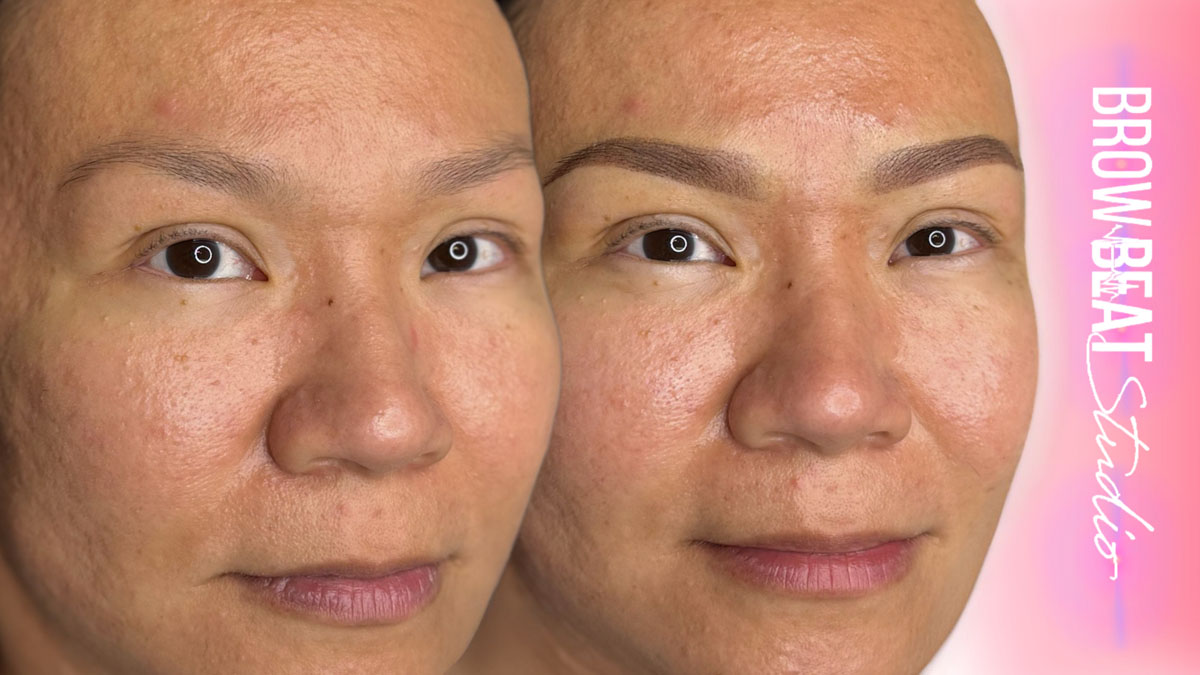
Result: Lighter flaking instead of thick scabs, less itchiness, improved pigment retention, and more even healed results. Clients are more comfortable and confident throughout the 14-day process.
Side-by-Side Comparison
| Aspect | Dry Healing | Wet Healing |
|---|---|---|
| Scabbing | Thick, hard scabs that risk pigment loss | Light flaking with minimal pigment disruption |
| Comfort | Tightness, itchiness, cosmetic concern | Softer skin, less irritation |
| Pigment Retention | Inconsistent, uneven healing | Stable, even results across the brow |
| Appearance During Healing | Thick crusts, patchy appearance | Natural-looking flakes, easier social downtime |
This is why our studio exclusively uses wet healing. It’s backed by science, it respects the role of lymph in scabbing, and it produces better healed results. To book your treatment with this advanced method, visit our Booking Page.
Scabbing Myths vs Facts (2025 Edition)
- Myth: “Scabbing means the artist did something wrong.”
Fact: Scabbing is a natural part of wound healing. The goal is to minimize hard scabbing, not eliminate it entirely. - Myth: “If you don’t scab, pigment won’t stay.”
Fact: Pigment retention depends on proper placement and aftercare, not scab size. Lighter flaking is healthier than thick scabs. - Myth: “All scabbing means pigment loss.”
Fact: Only picking scabs causes pigment to pull out. Left alone, most pigment remains intact beneath the skin. - Myth: “Dry healing is more natural.”
Fact: Wet healing is supported by biology. It minimizes scabbing by addressing lymph—the actual root cause of heavy crusting.
How Skin Types Affect Scabbing
Not every client experiences scabbing the same way. Skin type plays a role:
- Oily skin: Produces more lymph and sebum, which can lead to heavier scabbing without proper washes.
- Dry skin: May feel tighter and flakier, but scabs tend to be smaller and lighter.
- Sensitive skin: Can produce redness and more visible scabs, but wet healing reduces irritation.
- Thick skin: Often scabs more heavily due to stronger keratin layers.
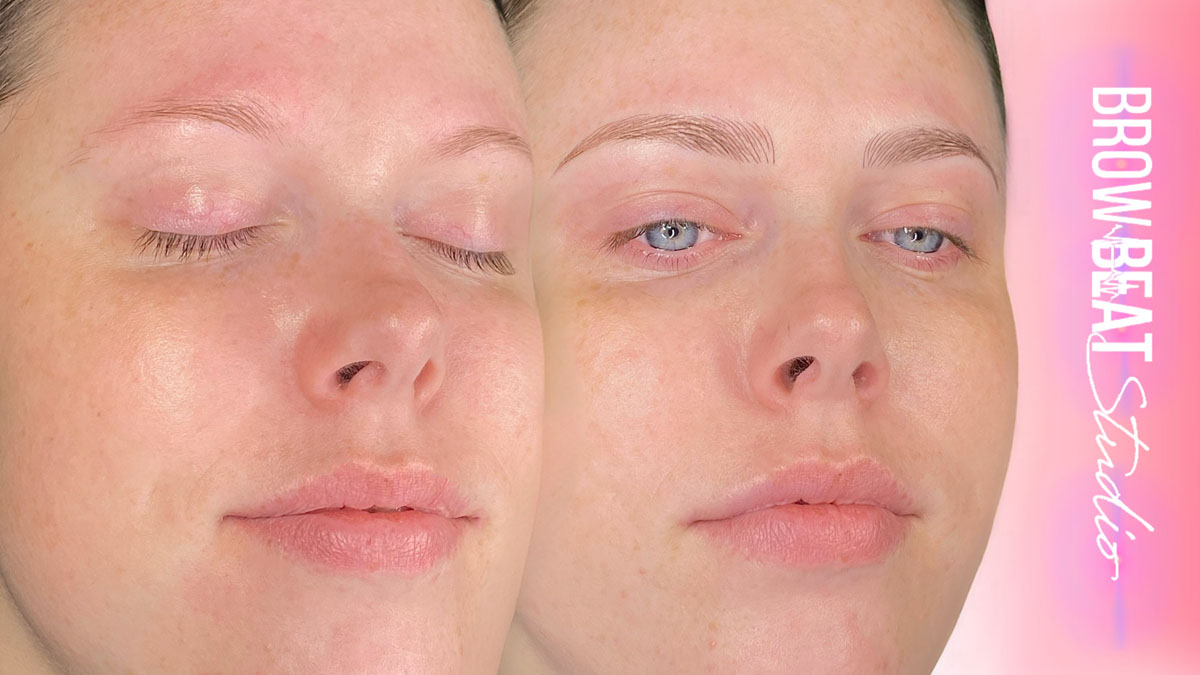
Our wet healing method balances these differences, ensuring consistent results for every skin type. For real-world transformations across skin tones and textures, see our before-and-after gallery.
Why 2025 Facts Matter
Many aftercare instructions online are outdated or contradictory. In 2025, with more than a decade of industry research, we know that wet healing provides better outcomes than dry healing. The four washes on Day One, the use of thin ointment layers, and the six-night band-aid system are proven to minimize scabbing, improve comfort, and enhance pigment stability.
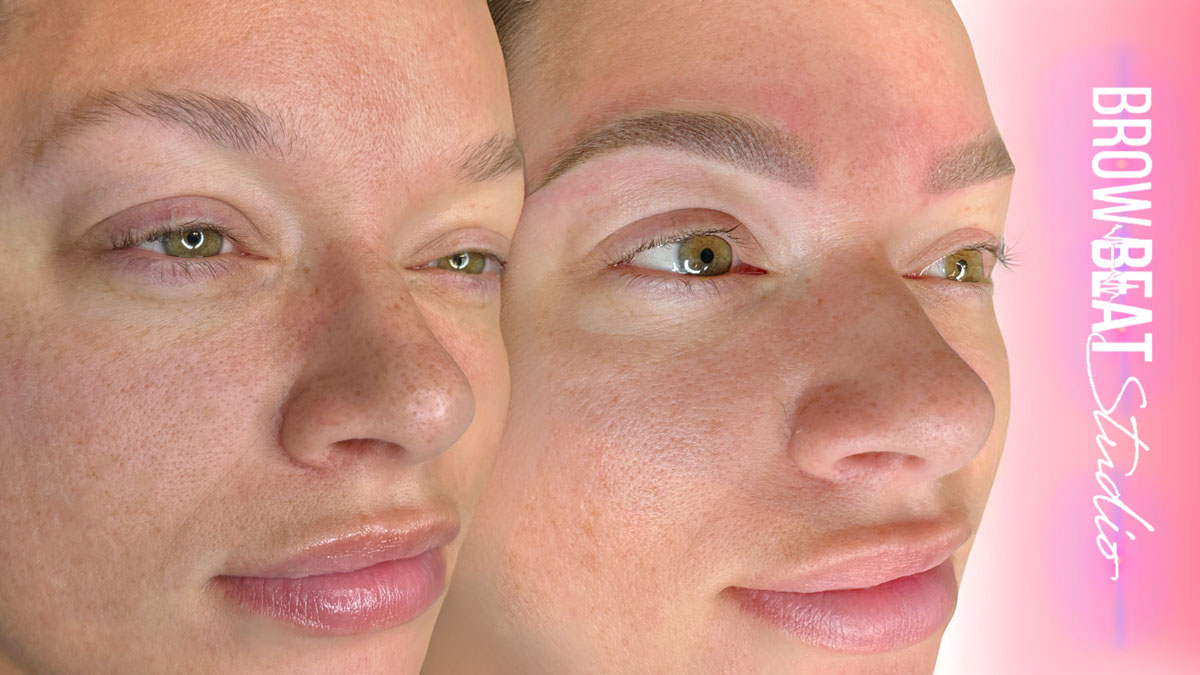
At BrowBeat Studio Dallas Advanced Microblading Experts™, we don’t just follow trends—we refine them with science. That’s why our clients experience brows that heal softer, last longer, and look more natural. Want to know more about how we design brows before healing even begins? Explore our Treatment Process page.
Links for Readers
- Learn the full Treatment Process at BrowBeat Studio.
- See healed results and scabbing stages in our Gallery.
- Secure your appointment today and follow our fail-proof wet healing method.
- Have scabbing questions? Use our Contact Page.
- Return to our Homepage for an overview of all services.
Scabbing is part of the healing journey—but it doesn’t have to mean stress, thick crusts, or pigment loss. With the wet healing method pioneered at BrowBeat Studio Dallas Advanced Microblading Experts™, scabbing becomes lighter, healing becomes smoother, and your final results are as stunning as the day they were created.

How to Manage Scabbing Step by Step
Now that you know the science behind scabbing, let’s talk about what to do. At BrowBeat Studio Dallas Advanced Microblading Experts™, we give every client a clear, practical system that prevents panic and keeps brows safe. Use this day-by-day guide to navigate the scabbing phase with confidence.
Day 1: Foundation for Success
As explained in Block 1, scabbing begins with lymph fluid. That’s why the first day is the most important. Here’s the BrowBeat method:
- Four gentle washes: spaced through the day, each wash removes fresh lymph before it can dry. Think of it as wiping away “liquid scabs” before they turn hard.
- Pat dry with gauze: never rub. Rubbing creates micro-tears that worsen scabbing.
- Apply ointment: use only a rice-grain amount. The goal is a breathable barrier, not a greasy layer.
- Night routine: Apply ointment and cover with night-time band-aids to prevent friction and absorb any overnight lymph.
Days 2–4: Scabbing Begins
This is when brows feel tight, shiny, and slightly raised. Here’s what to expect and what to do:
- Do not wash the brows directly. Keep them dry while gently cleansing the rest of your face.
- Apply ointment every 2–3 hours to keep the surface soft and prevent hard crusts.
- Do not touch or scratch. Even if brows itch, leave them alone.
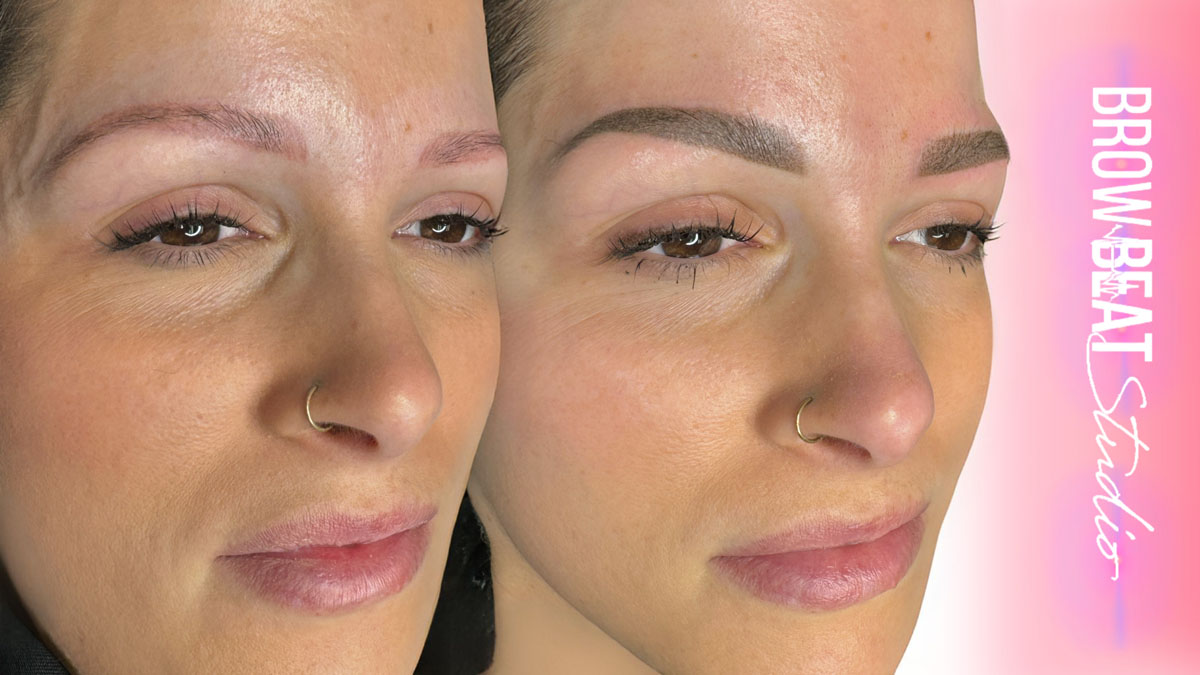
Normal: shiny surface, mild redness, early scab formation.
Not normal: severe swelling, yellow pus, or intense pain.
Days 5–7: The Peak of Scabbing
This is the phase most clients find uncomfortable. Brows may look patchy, uneven, or flaky. Remember:
- Do not pick flakes. Picking pulls pigment out with the scabs.
- Continue ointment application every few hours. This keeps flakes soft and lets them fall away naturally. It’s normal for some spots to look lighter during this stage. Pigment is still there beneath the new skin.
Days 8–10: Lightening Stage
By now, scabs are falling away. Clients often panic, thinking brows look “too light.” Here’s what’s happening:
- New skin is covering the pigment. This filters the color, making brows look faded.
- Pigment returns by Week 3–4. Don’t judge results too early.
- Stay the course: apply ointment if brows feel tight, but avoid over-saturating the skin.
Days 11–14: Transition Phase
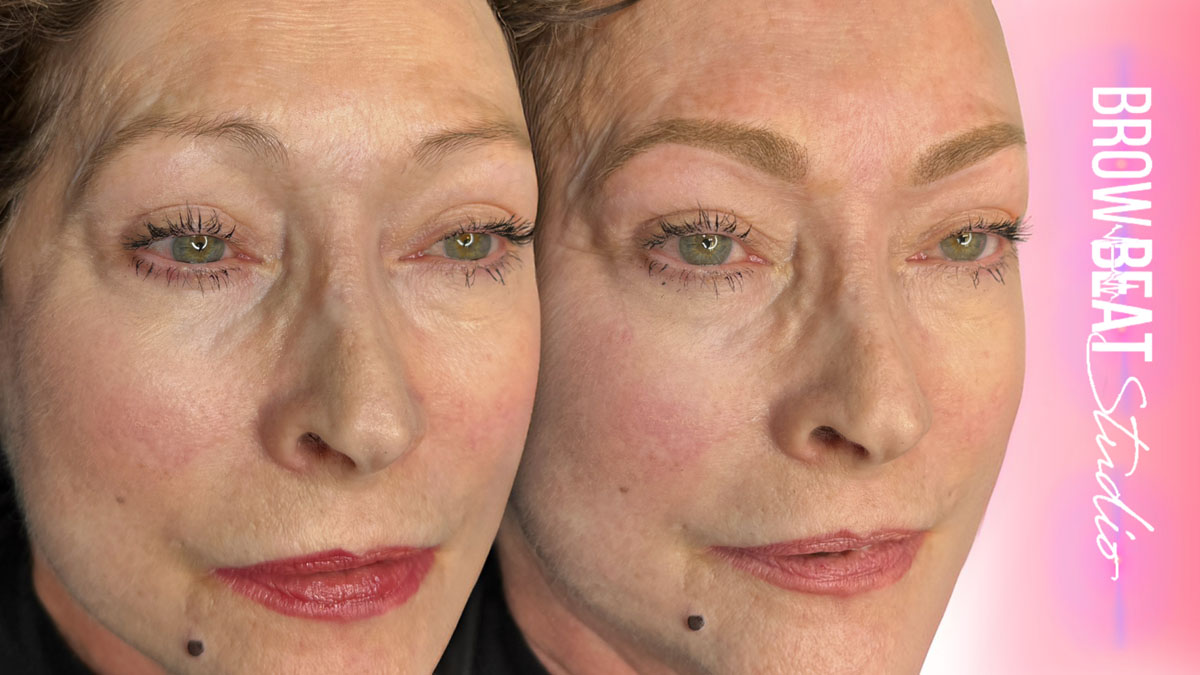
Most visible scabs are gone by now, and brows begin to look smoother. What to do:
- Resume gentle washing, letting water run across brows without scrubbing.
- Avoid exfoliants, retinoids, or acids near the brows for at least two more weeks.
- Protect from sun exposure with hats (not sunscreen yet—too heavy on healing skin).
Week 3–4: Pigment Returns
During this stage, brows “settle.” Patchiness evens out, and true color emerges. Clients often feel relief when brows finally look balanced.
- Normal: gradual pigment return, softer overall appearance.
- Abnormal: large blank spots or excessive pigment loss—this is rare, but refinements can be addressed at your second treatment.
Do’s and Don’ts for Scabbing Management
Do
- Follow the four washes on Day 1.
- Use thin ointment layers—never over-apply.
- Wear night-time band-aids for six nights.
- Stay patient through patchy phases.
- Contact us with any concerns via the Contact Page.
Don’t
- Don’t pick, scratch, or peel scabs.
- Don’t expose brows to water, sweat, or steam during Days 2–10.
- Don’t apply makeup or SPF directly on brows.
- Don’t judge results before Week 4.
- Don’t compare your healing to someone else’s—every skin type is unique.
When Scabbing Becomes a Problem
Scabbing is usually harmless, but there are warning signs.
- Scabs that ooze yellow or green fluid (possible infection).
- Intense swelling that worsens instead of improving.
- Pain that increases after Day 3.
- Unusual odor or severe redness spreading beyond the brows.
Why Wet Healing Minimizes Scabbing
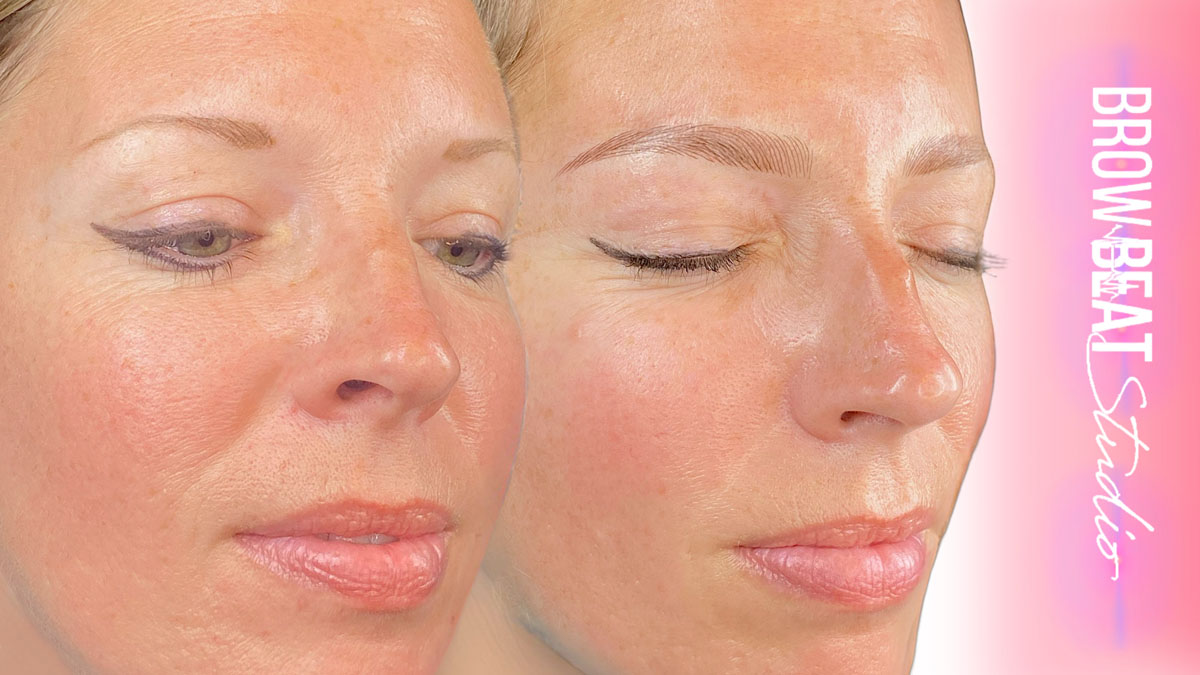
Everything in this guide comes back to one principle: lymph control. By washing lymph away on Day 1 and keeping brows lightly moisturized, you prevent thick scabs from ever forming. That’s why wet healing works. It doesn’t eliminate scabbing completely, but it transforms it into a lighter, softer process that preserves pigment and gives better results.
Links for Clients
- See scabbing stages in our Gallery.
- Read about our Treatment Process to understand how brows are designed.
- Reserve your second treatment to refine results.
- Have questions about scabbing? Visit our Contact Page.
- Return to our Homepage for all services.
Final Thoughts
Scabbing is not something to fear—it’s something to understand. In 2025, with years of updated knowledge, we know that wet healing is superior to dry healing because it controls lymph, prevents thick scabs, and preserves pigment. At BrowBeat Studio Dallas Advanced Microblading Experts™, we combine science with artistry, giving you both stunning brows and the education to care for them. Trust the process, follow your instructions, and enjoy results that last 12–18 months with confidence.