
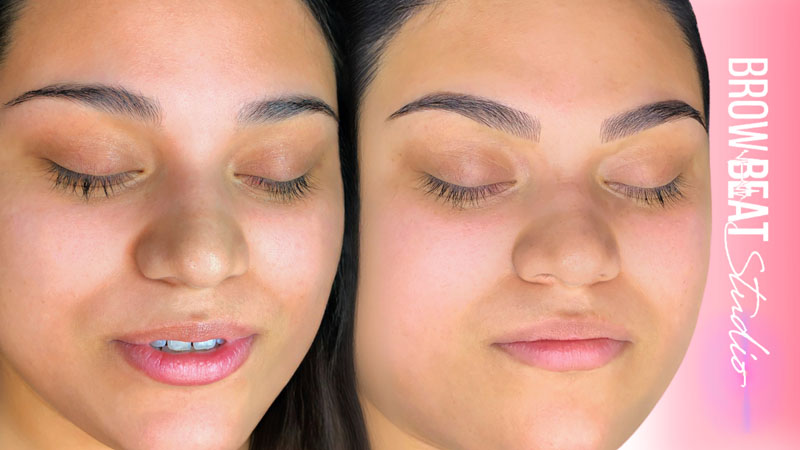
So is microblading the most natural brow option?
Yes — but only under the right conditions, done by the right hands, and maintained with the right expectations.
Microblading Begins Natural — But It Doesn’t Stay Frozen In Time
The “fresh microblading look” is what made the technique famous — defined hair strokes, feathered softness, the illusion of real brow growth. But that fresh result is not the healed result. And healed results are what truly matter. Because microblading lives close to the surface of the skin, it will fade, blur, and shift. That isn’t failure — it’s biology.
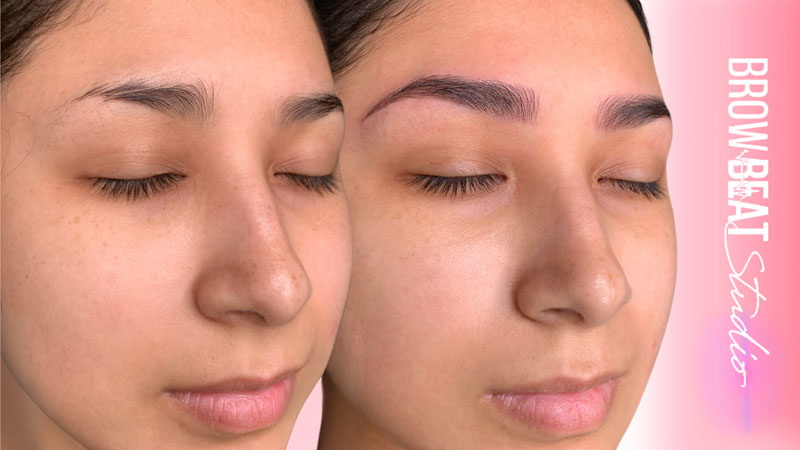
Over 6–18 months, strokes naturally soften. Depending on skin type, they may merge into one another. And after 3–4 microblading refresh sessions across several years, many clients notice their brows looking more like a powder brow than individual hairs.
This happens because microblading strokes rely on spacing to remain natural. If those spaces close over time (or through repeated treatments), the brows no longer read as “hair strokes” — they read as filled-in pigment.
Why Some Microbladed Brows Stop Looking Natural Over Time
Natural microblading requires three things:
- Light pressure — too deep = bold, too shallow = fade
- Stroke spacing — too tight = eventual merging
- Skin compatibility — some skin types blur faster
When pressure is heavy or strokes are stacked too closely, the crisp illusion doesn’t last. Combined with oil activity or melanin density, strokes begin to spread microscopically, creating a shaded effect. What once looked ultra-defined may evolve into something more solid because skin compresses detail over time.
Microblading is natural — but only while the strokes remain separate.
Powder brows, on the other hand, are designed to be soft and evenly distributed from day one. They don’t rely on negative space to appear natural — which is why subtle powder brows often heal more naturally long-term than microblading does.
Microblading Can Be Natural… If the Artist Understands Pressure Control
One of the biggest factors in natural microblading results is pressure. Too much depth results in bold strokes that heal dark. Too shallow and the strokes fade out quickly. Natural microblading lives in the in-between — light, consistent, controlled pressure that places ink into the upper epidermis without pushing too deep. This technique takes time, training, repetition, and sensitivity in the hand. It’s the difference between hair-like and heavy. Between refined and harsh. Between art and accident.
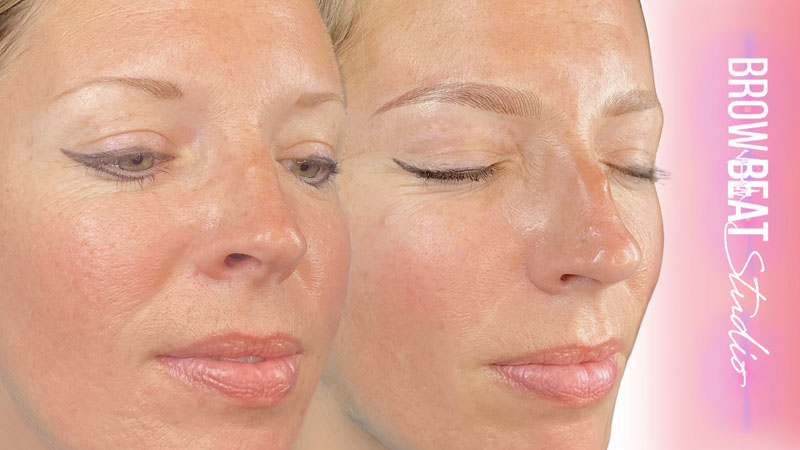
The most natural microblading always comes from an artist who understands how softly to implant and how to maintain stroke visibility without oversaturation.
If you want to learn the full brow journey — including mapping, healing, and technique outcomes — you can explore our detailed breakdown at
/treatment-process/.
Why Microblading Has a Shorter “Natural Window” Than People Expect
Microblading can be incredibly beautiful, but its realism is not permanent. Natural strokes last as long as the spacing holds — and spacing changes with time, healing, oil flow, age, and refresh frequency. Eventually, most microblading becomes powder-like as pigment accumulates and strokes blur. This is why many clients who start with microblading eventually choose hybrid or full powder brows later.
Not because microblading failed — but because it evolved.
Microblading begins natural.
Powder brows stay natural longer.
Natural longevity often belongs to soft powder instead of strokes — especially for mature skin, high-melanin skin, or clients who plan to refresh regularly.
Microblading Over Microblading = Powder Eventually
If you get microblading once — beautiful. Twice — still great. Three or four times over a period of years? The look changes. Pigment buildup replaces blank space. The airy separation that once defined the brows compresses. Strokes tighten. The brow starts to resemble shading instead of hair.
At that stage, many clients unknowingly end up with a powder brow created through microblading alone.
Which leads to an honest industry truth:
Most long-term microblading clients eventually transition into powder brows anyway.
When Microblading Is the Most Natural Choice
For certain people, microblading isn’t just natural — it is the most natural option possible. Clients with dry or normal skin, healthy elasticity, fine brow hairs, and well-distributed growth patterns often retain hairstrokes beautifully. On these skin types, strokes stay crisp longer, spacing remains visible, and the brows maintain that hairlike detail even as they fade.
Microblading shines brightest when:
- the client already has some natural brow hair
- the skin is dry-normal rather than oily
- the artist uses light pressure and controlled spacing
- the goal is subtle enhancement, not bold definition
- the client is comfortable with maintenance
For these individuals, microblading can look real — real enough that friends assume you simply woke up this way. And early in the journey, that assumption is accurate. Because the illusion of hair is incredibly effective, especially when the artist understands how to map, place, and taper strokes to flow with natural bone structure.
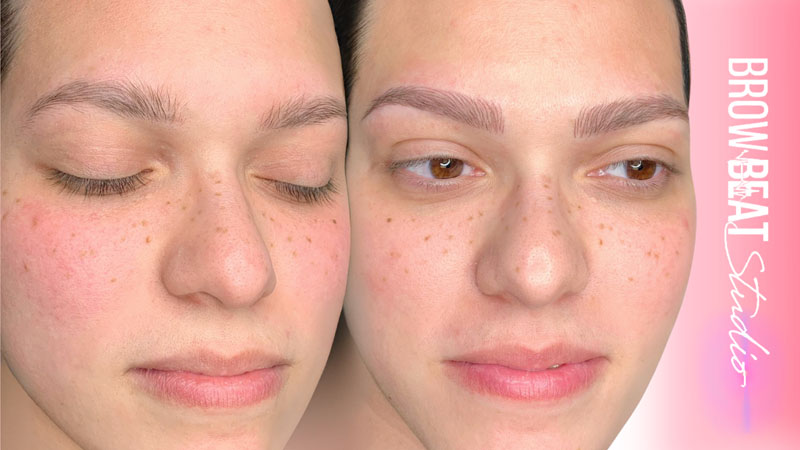
But even when microblading is perfect, it is still temporary art.
Brows evolve. Skin evolves. Pigment softens. And with each refresh, realism shifts. This doesn’t make microblading less valuable — it simply means clients should understand both the beauty and the evolution of the technique.
When Powder Brows Are More Natural — Yes, More Natural
Natural doesn’t always mean “hair-like.” Natural means belongs to the face. Natural means believable, appropriate, and seamless with the client’s coloring, bone structure, and expression. Powder brows accomplish this through pixel layering — a fine mist of pigment that heals into a gentle wash of color beneath existing hair.
If microblading is individual strands, powder is the soft shadow behind the strands.
Powder brows often heal softer, lighter, and more seamless than microblading long-term, especially for clients with:
- oily skin or large pores
- melanin-rich skin with strong retention
- mature or thin-textured skin
- previous microblading buildup
- a desire for subtlety over realism
In many cases, the most natural brow is the one that looks natural at month 12, not just day one. And powder shading — especially light-transparent shading — often wins that test.
The Real Difference Isn’t Technique — It’s Longevity
A fresh microbladed brow can look more natural than a fresh powder brow. But a healed powder brow can look more natural than a healed microbladed brow. Which one is “most natural” depends not just on application — but on time.
Microblading is natural at first because of detail.
Powder is natural later because of softness.
So the better question isn’t “which is more natural?”
The better question is: when do you want your brows to look natural?
If your priority is first impressions — microblading may be your choice.
If your priority is healed longevity — powder may appear more natural in the end.
The Most Natural Brows Are Custom — Not One Technique
Some clients want barely-there enhancement, others want bold sculpted definition. Some prefer every hair visible. Some prefer a tinted background that creates density without detail. Brow naturalness isn’t a single style — it’s a spectrum. True artistry comes from selecting the right point on the spectrum, not from assuming that one technique is universally superior.
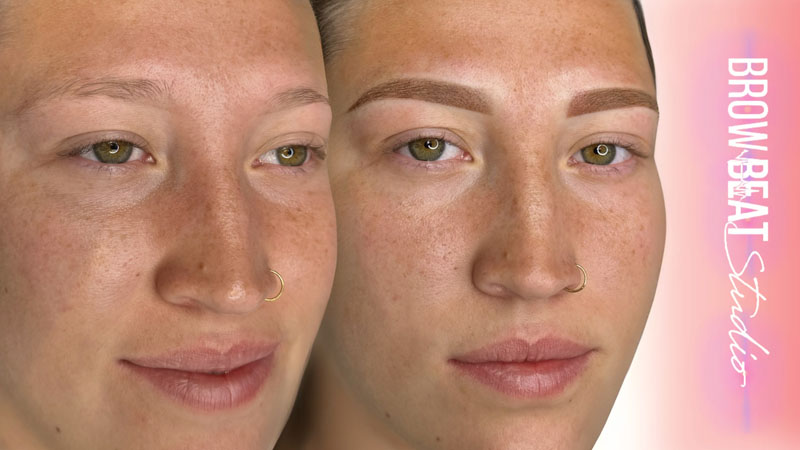
Naturalness is personal — not procedural.
And in reality, many of the most natural brows we design are hybrid brows: microblading hairstrokes paired with soft powder shading to support density. Hybrids offer the realism of strokes plus the seamlessness of shading, creating a balanced, believable brow that ages gracefully.
If you’re unsure which path fits your skin, lifestyle, and long-term vision, you can explore options in detail at
/treatment-process/.
The Role of Pressure — Where Natural Microblading Succeeds or Fails
A hairstroke only looks like hair if it heals like hair. That healing outcome is rooted in pressure — not ink, not needles, not mapping, not pigment marketing claims. Pressure is the true dictator of realism.
Too much pressure forces pigment deep into the skin, causing strokes to heal wide or dark. Too little pressure sits too shallow, causing premature fade, patching, or blowout gaps. Natural microblading is found in the middle — consistent, feather-light, rhythmic pressure that implants just enough pigment for detail without compacting the tissue over time.
This is why two artists can use the same tool and produce entirely different results.
Skill isn’t the blade. Skill is the hand behind it — the hand that floats rather than presses, places rather than scratches, glides rather than cuts. An artist trained to respect pressure produces strokes that heal thin, breathable, and believable. An artist unaware of pressure creates brows that blur long before expected.
Spacing — The Secret Behind Realism
Strokes must breathe. They must have separation. Natural brows are not a block of pigment — they are broken into thousands of tiny directional fibers that overlap but never fuse. Microblading must respect this structure to appear natural.
If strokes are placed too tightly — especially over multiple sessions — the healed spacing slowly closes. After 2–4 years of retouches, many brows begin to read as solid color rather than distinct hair. The look thickens. The illusion shifts. Realism evaporates.
This is not failure — this is physics and time.
Eventually, long-term microblading clients often transition to powder brows, either by choice or through natural pigment diffusion.
When Starting With Powder May Be Smarter
Some clients are best served by powder shading from the beginning. Not because microblading is wrong for them — but because healed powder simply looks more natural on certain skin types.
Powder belongs at the top of the decision tree for clients who have:
- oily skin that blurs strokes quickly
- melanin-rich skin that retains pigment deeply
- mature skin with thinning elasticity
- previous microblading buildup or saturation
These clients often experience more longevity, more consistency, and more natural aging progression with powder shading instead of repeated stroke work. Light, translucent shading can look less visible than merging microblading strokes — especially after the one-year mark.
What “Most Natural” Really Means — The Truth Brows Live By
Many people assume natural means hairstrokes. But natural means undetectable. Natural means guests at dinner don’t ask who did your brows. Natural means your face looks complete even without makeup, without your brows speaking louder than you do.
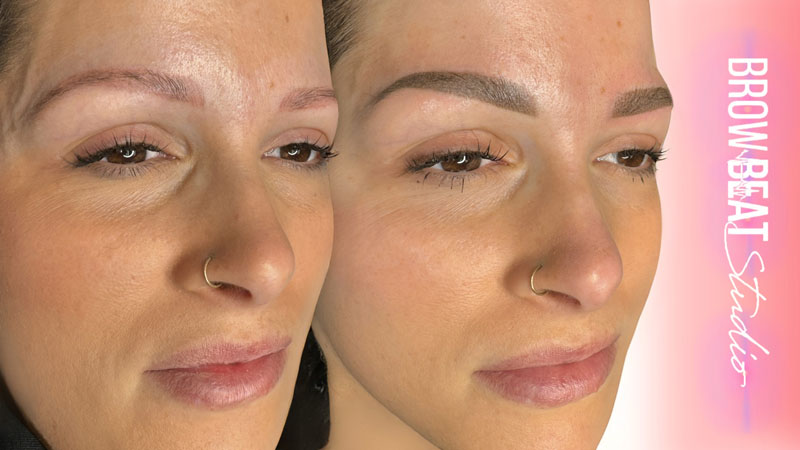
In this definition, powder brows may beat microblading over time — particularly when healed transparency is valued over hair-like detail. Microblading is precise. Powder is breathable. One reads like hair. One reads like skin. Both are natural — but in different timelines.
Microblading is natural today.
Powder may be more natural a year from now.
Which means the real question is:
Do you want the most natural look now — or the most natural look long-term?
Your answer determines your technique, your future appointments, and your healed aesthetic. The beauty of modern brows is that there is no wrong choice — only the choice that aligns with your lifestyle.
The Brow That Lasts Natural Is the Brow That Ages Gracefully
For those who love the look of microblading and understand its refresh cycle, it’s an exceptional technique. For those who want subtlety beyond year one, powder may carry more stability. For those who want the best of both, hybrid artistry blends the two.
Neither is universally superior. Both are tools. Your brow future is determined not by the technique name — but by how the technique behaves in your skin over time.
If you’d like to explore both in detail, you can read more about the healing timeline here:
/treatment-process/.
And when you’re ready to choose subtle or structured, feather-light or shaded soft, we welcome you to begin your journey by reserving your appointment online:
The Verdict: Microblading Can Be the Most Natural — But Only Under the Right Hands and With Realistic Expectations
So, is microblading truly the most natural choice? It can be — when placement is strategic, spacing is respected, pressure is gentle, and the artist knows how to build longevity without oversaturation. On the right skin type and with mindful maintenance, microblading can heal beautifully, subtly, and gracefully. It can look like authentic growth where hair was once sparse.
But natural is not a frozen moment. Natural is how brows behave through time.
If you plan to refresh your brows over multiple years, if your skin tends to merge strokes, or if longevity with softness matters more than initial realism, powder shading may ultimately carry a more natural appearance long-term.
Microblading = natural today.
Powder = naturally subtle tomorrow.
Neither technique is better — they simply serve different goals across different timelines. The most natural brows are not one method, one trend, or one stroke pattern. The most natural brows are the brows that heal beautifully on your skin, in your tone, at the intensity that matches your face and your confidence.
The Beautiful Truth: You Don’t Have to Choose One Technique Forever
Brows are not a lifelong decision — they are a journey. You might begin with airy microblading strokes for a realistic boost, then shift to powder as your preference evolves. You might love powder from the beginning. You may find the perfect balance in a hybrid. Your brow path grows with you — and that’s the beauty of semi-permanent makeup.
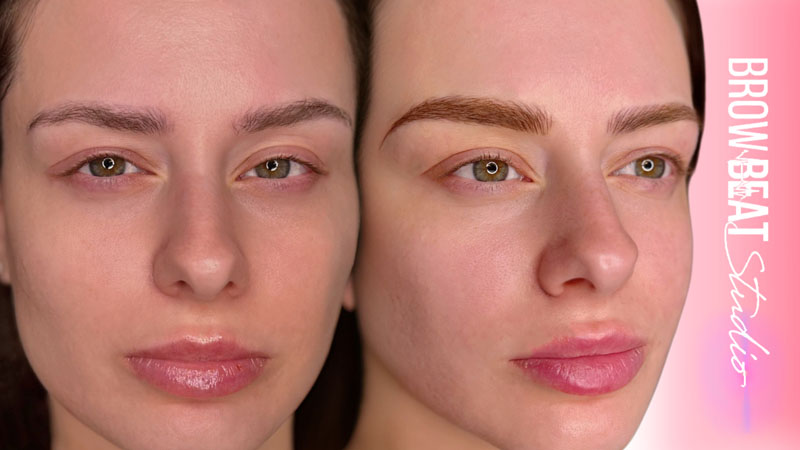
You don’t have to commit to a single look forever. Just the look that feels natural today.
Natural Isn’t the Technique — It’s the Result
Clients don’t stop you in the grocery store to say, “Is that microblading or powder shading?” They don’t analyze pixel spacing or stroke curvature. They simply see harmony — or disharmony. Naturalness is the feeling your brows give off. And that feeling depends on fit, healing behavior, tone, and technique selection.
If natural means hairlike detail to you — microblading may be your answer.
If natural means soft, tinted, barely-there color — powder may be more aligned.
If natural means “I never want to look drawn-on,” either can deliver that with the right artist.
And if you’d like guidance selecting the most natural path for your skin, our brow design approach walks you through both techniques and what they look like at month one, month six, and one year out. You can learn more about that here:
Your Most Natural Brows May Be Waiting to Be Designed
Whether you want feather-light realism, soft diffused shading, or a combination of both, we tailor brows to your skin, undertones, lifestyle, and preference for subtlety or structure. We don’t give you brows that look like someone else. We give you brows that look like home.
If you’re ready to see what natural could look like on your face — not someone else’s — you can reserve your appointment anytime online:
For brows that heal softly.
For brows that age gracefully.
For brows that feel like you.
Begin your natural brow journey with BrowBeat Studio Dallas Advanced Microblading Experts →