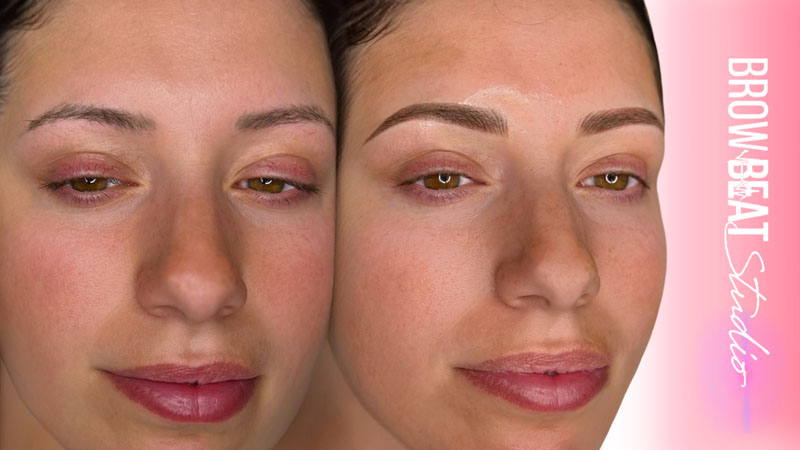
The difference between Microblading and Combo Brows begins with one additional technique.
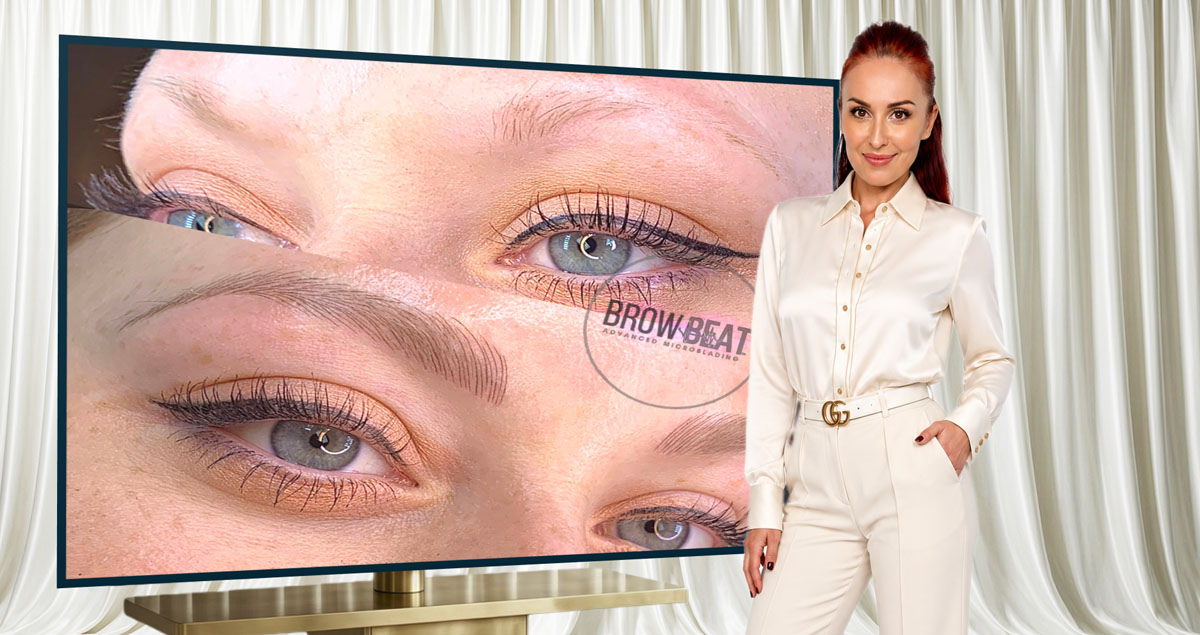
Microblading creates manual hairstrokes.
Combo and Hybrid Brows combine manual hairstrokes with machine shading.
That sounds like a small difference.
Visually, it can change the entire eyebrow.
Microblading uses individual hair-like strokes to create texture while allowing skin to remain visible between those strokes.
Combo / Hybrid / 3D Brows in Dallas keep that hairstroke texture but add permanent shaded color behind and around it.
That shading can create more coverage through the body, more definition through the tail and a more filled appearance overall and can affect how long combo, hybrid and 3D brows last.
So the real comparison is not simply one technique versus two.
Microblading is a hairstroke-led permanent brow. Combo Brows use hairstrokes and shaded density together.
For some clients, hairstrokes alone create exactly the eyebrow they want.
For many of the clients BrowBeat Studio Dallas sees, however, Microblading alone does not provide the amount of coverage they actually prefer.
Microblading and Combo Brows both contain manual hairstrokes, but Combo Brows add machine shading to the permanent eyebrow.
That means Microblading relies primarily on hairstroke detail, natural eyebrow hair and visible skin to create the finished result.
Combo Brows use those same visual elements while adding a background of permanent shaded color.
The practical difference is density.
Microblading can make the eyebrow look as though it contains additional hairs.
Combo Brows can create that hair-like texture while also making the complete eyebrow look more filled.
Microblading: manual hairstrokes, more visible skin between the permanent details, no machine-shaded background and a result in which hairstroke texture carries most of the permanent eyebrow.
Combo/Hybrid Brows: manual hairstrokes plus machine shading, more background color, greater potential density and a result in which texture and coverage work together.
Neither approach is automatically softer, more natural or better.
The difference is what each technique is being asked to contribute to the finished eyebrow.
Microblading became enormously popular for a reason.
For clients accustomed to pencils, powders and more obviously filled brows, the idea of creating individual permanent hair-like strokes was exciting.
Instead of seeing one continuous field of permanent color, the eye could see lines.
Texture.
Skin between the strokes.
And permanent detail that borrowed its visual language from real eyebrow hair.
For a client who genuinely wants a hairstroke-led eyebrow, that remains one of Microblading’s greatest strengths.
This distinction became increasingly obvious to BrowBeat after performing Microblading and seeing what clients actually wanted from the finished eyebrow.
A well-spaced Microblading pattern contains visible skin.
It needs to.
One stroke.
Then space.
Then another stroke.
That separation helps the eye recognize individual marks as hair-like detail.
But not every client wants that amount of visible skin when she looks at the complete eyebrow.
This was something BrowBeat heard repeatedly from Microblading clients.
A client would look closely at the finished stroke pattern, point between two lines and say:
“There’s a gap there. Can you fill that in?”
But sometimes there was no missing stroke.
The pattern was complete.
The visible skin was part of what allowed the hairstrokes to remain separated.
If every open space is filled with another line, eventually there is less room for those lines to read as individual hairstrokes.
What the client was often asking for was not another hair-like mark.
She was asking for coverage.

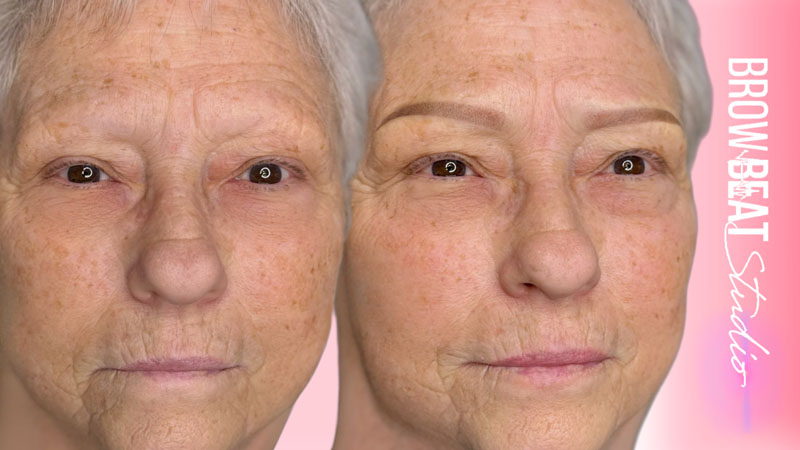
Clients between the ages of 60 and 80 choose BrowBeat Studio Dallas because we understand the unique needs of mature skin. This stage of life requires a different approach to semi-permanent makeup — one that prioritizes gentle techniques, controlled pigment placement, and natural-looking definition. From lighter complexions to high melanin skin tones, each powder brow and brow tattoo treatment is customized.
For clients in their 60s, 70s, and beyond traveling to BrowBeat Studio Dallas, fair powder brows require soft pigment layering and precise microshading control. Light beige and neutral ash tones are selected to enhance definition without overwhelming delicate mature skin. Our semi-permanent brow tattoo approach focuses on subtle structure and elegant blending, creating natural-looking results trusted by mature clients across the Dallas–Fort Worth area.

Cool gray powder brow tones are ideal for Dallas-area mature clients with silver or cooler hair tones. These pigments create clean structure while maintaining softness on aging skin. At BrowBeat Studio Dallas, microshading allows for even saturation and controlled layering, producing semi-permanent brow tattoo results that appear refined, subtle, and naturally blended across the DFW region.
If a client wants another hair-like detail, a hairstroke can answer that request.
If she wants the skin between those details to look less empty, she is asking the permanent makeup to do something different.
She wants background color.
She wants density.
She wants the complete eyebrow to feel more filled.
Trying to solve every request for coverage by adding more and more hairstrokes asks one technique to perform two different visual jobs.
Machine shading gives BrowBeat another way to create that density.
A Combo Brow still contains manual Microblading hairstrokes.
The texture that attracted the client to Microblading does not automatically disappear simply because shading is added.
What changes is the background around those strokes.
Machine shading creates permanent color through areas that would otherwise show more bare skin.
The result can therefore contain visible hair-like detail while also carrying more density through the complete eyebrow.
This is the simplest useful distinction between the two services.
Microblading gives the permanent hairstrokes the primary visual job.
Combo Brows allow hairstrokes and machine shading to divide that job.
The hairstrokes contribute texture.
The shading contributes background density.
How much shading is used can change the finished appearance considerably.
A Combo Brow can remain very soft and stroke-forward.
Or the shading can play a larger role and create a fuller, more polished result.
Because many clients liked Microblading but still wanted more eyebrow.
They liked seeing the hairstrokes.
They did not necessarily want those strokes removed or replaced.
But they continued filling between them.
They added color through the body.
Strengthened the tail.
Or used powder behind the permanent hairstrokes because the complete eyebrow still looked lighter than they preferred.
Combo Brows gave those clients a way to keep the texture they liked while adding the density they were creating for themselves with makeup.
This comparison is not an argument against Microblading.
There are clients who genuinely love an open hairstroke pattern.
They like seeing skin between the permanent details.
They want their natural eyebrow hair and the added hairstrokes to carry the result.
They do not look at the spaces between those strokes and feel as though something needs to be filled.
For that client, the absence of shading is not a limitation.
It is part of the result she prefers.
This is the other side of the comparison.
A client can genuinely love hairstrokes and still know that she wants more permanent color behind them.
She wants the body to feel connected.
She wants the tail to remain visible.
She wants less bare skin showing through parts of the eyebrow.
And she may already know that if she received Microblading alone, she would continue putting brow makeup over it.
For that client, shading is not simply an additional technique.
It is answering a part of the request that hairstrokes alone do not.
This is one of the easiest ways to understand your own preference.
Look at a Microblading result.
Look at the visible skin between the strokes.
Does that openness make the eyebrow feel light, textured and hair-like to you?
Or does your eye immediately want to put color into those spaces?
If you see beautiful separation, you may genuinely prefer a hairstroke-led result.
If you see areas you already know you would fill with makeup, Combo Brows may align more closely with the eyebrow you actually want to wear.

Machine shading adds permanent background color and density.
It can reduce visible skin between natural hair and permanent hairstrokes.
It can make the body of the eyebrow appear more connected.
It can give the tail greater visual presence.
And it can make the complete shape easier to see from normal viewing distance.
The amount of shading does not have to be heavy.
Its job is to provide whatever level of coverage the intended result requires.
This is one of the biggest misconceptions in the Microblading-versus-Combo decision.
Clients sometimes assume that Microblading is the natural option and anything containing shading must look more dramatic.
That is not how the techniques work.
Machine shading can be built softly.
The front can remain light.
The natural eyebrow hair can remain visually important.
The body can receive enough background color to feel complete without becoming heavy.
And the tail can carry greater definition without requiring the entire eyebrow to have the same density.
This is why shading solved the “gap” question so effectively for many BrowBeat clients.
A hairstroke creates another line.
Shading creates broader color.
Those are different visual tools.
Instead of forcing another permanent line into every area of visible skin, soft machine shading can create background density around the stroke pattern.
The client can still see hairstroke texture.
But the eyebrow no longer has to remain as visually open.
The difference is not just quantity.
It is the type of permanent detail being added.
More Microblading means more hair-like lines.
Machine shading creates a different visual effect entirely.
That is why adding shading changes the finished eyebrow rather than simply making the Microblading darker.
This is where the comparison becomes more interesting.
A client often sits down at BrowBeat and says:
“I want them really natural.”
Then she shows us the eyebrows she loves.
The body has visible color.
The tail is polished.
The complete shape is easy to see.
There may be beautiful hairstroke texture through the front, but there is considerably more density than a pure hairstroke pattern would create.
That tells us that her definition of natural is not necessarily “the least permanent makeup possible.”
Untreated eyebrow hair is not usually a perfectly filled field.
There are spaces between hairs.
Density changes throughout the brow.
One section may be fuller than another.
The tail may become lighter.
The edges are not naturally drawn as perfectly uniform lines.
Microblading can preserve more of that open, hair-led visual quality because visible skin remains part of the result.
When many clients say they want natural permanent brows, they are not necessarily asking for maximum visible skin.
They may be saying:
Do not overpower my face.
Do not make the front look blocky.
Do not give me an eyebrow that feels disconnected from my natural hair.
Do not make the permanent makeup announce itself before the rest of my face.
Those are completely reasonable requests.
And none of them automatically excludes shading.
A softly shaded Combo Brow can contain substantially more permanent density than Microblading alone and still feel appropriate on the face.
The body can look fuller.
The tail can be defined.
The front can remain softer.
Natural hair can continue contributing real texture.
The result may contain more permanent color while still avoiding the heavy or blocky appearance the client was worried about.
Microblading does not automatically equal natural.
Combo Brows do not automatically equal dramatic.
Shape matters.
Color matters.
Density matters.
The client’s natural eyebrow matters.
And what looks believable on one face may not be the result another client wants at all.
The technique contributes to the appearance, but the technique name alone does not decide whether the finished eyebrow looks natural.

High melanin mature brows require specialized pigment selection and advanced microshading techniques. At BrowBeat Studio Dallas, carefully balanced brown tones are used to enhance depth while maintaining softness on aging skin. Semi-permanent brow tattoo application focuses on smooth transitions and even coverage, delivering elegant results trusted by mature clients across the Dallas–Fort Worth area.
Dark brown powder brows provide deeper structure for mature Dallas clients who prefer stronger definition without heaviness. Rich neutral brown pigments are applied using precise microshading to maintain softness on aging skin. BrowBeat Studio Dallas tailors each semi-permanent brow tattoo treatment to deliver smooth blending, refined shaping, and polished results trusted throughout the DFW metroplex.


Brown powder brows are a classic choice for Dallas clients ages 50–80 who want natural warmth and balanced enhancement. Medium brown pigments provide gentle contrast while preserving softness on mature skin. BrowBeat Studio Dallas uses layered microshading and semi-permanent makeup techniques to create brow tattoo results that remain timeless, wearable, and beautifully proportioned for DFW clients.
Dark brown powder brows provide deeper structure for mature Dallas clients who prefer stronger definition without heaviness. Rich neutral brown pigments are applied using precise microshading to maintain softness on aging skin. BrowBeat Studio Dallas tailors each semi-permanent brow tattoo treatment to deliver smooth blending, refined shaping, and polished results trusted throughout the DFW metroplex.

Not every client wants permanent makeup to be almost undetectable.
Some clients like a visibly groomed eyebrow.
They like density.
They like structure.
They like a clear tail.
They already create that result with makeup and want permanent makeup to take over more of that work.
For those clients, greater shaded density can be an intentional preference rather than something the artist needs to apologize for.
If every eyebrow you save contains plenty of visible skin and individually separated hairstrokes, that tells BrowBeat something.
If every eyebrow you save contains hairstrokes through the front but substantial background color through the body and tail, that tells us something different.
The photograph shows us the amount of texture, density and definition you actually respond to.
That is far more useful than assuming everybody means the same thing when they use the word natural.
At BrowBeat, Hybrid Brows and Combo Brows belong to the same combined-brow family.
So Microblading vs Hybrid Brows comes back to the same central difference.
Microblading uses manual hairstrokes without machine-shaded background density.
Hybrid Brows combine those manual hairstrokes with machine shading.
The question is whether you want the permanent result to remain primarily hairstroke-led or whether you also want shaded coverage.
At BrowBeat, 3D describes the dimensional appearance that can be created when natural eyebrow hair, permanent hairstrokes and shaded density work together.
It is not a completely separate third procedure.
Microblading can create beautiful hair-like texture.
Adding shading introduces another visual layer behind that texture.
That relationship between hair, permanent lines, background density and visible skin is what gives the combined result its dimensional quality.
Microblading uses manual hairstrokes to create a hairstroke-led permanent eyebrow.
Combo and Hybrid Brows use those manual hairstrokes and add machine shading for background density.
Visually, that means:
Microblading asks texture to carry more of the permanent eyebrow.
Combo Brows allow texture and density to share the job.
For some clients, Microblading provides exactly enough.
For clients who love hairstrokes but know they also want more coverage, Combo Brows can create the part of the eyebrow they would otherwise continue adding with makeup.
Once the basic technique difference is clear, the visual comparison becomes much easier.
Microblading gives the eye individual hairstrokes, natural eyebrow hair and visible skin between those details.
Combo Brows keep the hairstrokes but add shaded color underneath and around them.
That background density changes how the complete eyebrow reads.
The body can look fuller.
The tail can carry more visual weight.
The shape can feel more connected.
And there can be less visible skin through areas where the client wants greater coverage.
Visible skin is an important part of a hairstroke-led eyebrow.
Individual strokes need enough separation for the eye to recognize them as individual hair-like details.
The client’s natural eyebrow hair contributes additional texture.
The skin between those elements helps preserve the open quality associated with Microblading.
For a client who loves that light, textured appearance, this can be exactly what she wants.
Combo Brows give BrowBeat another way to control how open or filled the eyebrow appears.
Machine shading can place permanent background color through areas that would otherwise remain more visibly skin-toned.
The shading does not have to eliminate every open space.
And it does not need to hide the hairstrokes.
It simply gives the artist another visual tool for creating density where density is wanted.
This is a surprisingly useful comparison question.
Some clients love seeing skin between individual hairstrokes.
That openness is part of what makes the eyebrow feel delicate and hair-like to them.
Other clients look at the same amount of visible skin and immediately imagine filling it with powder.
Neither preference is wrong.
They simply point toward different finished eyebrows.
Close-up photographs are excellent for showing Microblading detail.
You can see individual lines.
You can appreciate the stroke pattern.
You can see the spaces that allow those strokes to remain visually separate.
But clients do not spend most of their lives looking at their eyebrows from four inches away.
Across a table, in a photograph, in the mirror and during normal conversation, the eye reads the complete eyebrow.
That is where overall density becomes much more noticeable.
This is something BrowBeat learned from clients rather than from looking at close-up photographs.
Up close, a Microblading result could contain beautiful, complete hairstroke detail.
Step farther away and a client who preferred a fuller eyebrow could still feel as though something was missing.
The strokes had done their job.
What she wanted in addition was enough background color for the complete eyebrow to carry more visual presence.

Machine shading gives the complete shape additional support.
The client does not need to be close enough to identify every permanent hairstroke for the permanent makeup to contribute visibly to the face.
The body can read more continuously.
The tail can remain easier to see.
And the complete eyebrow can feel more finished because broader density is contributing alongside the fine detail.
The beginning of the eyebrow has enormous influence over how soft or strong the complete result feels.
Microblading can create a front dominated by individual hairstroke texture and visible skin.
A Combo Brow can preserve that same sense of texture while gradually introducing shaded density farther through the eyebrow.
So choosing Combo does not automatically mean giving up a soft, hair-like beginning.
If the client wants the open quality of hairstrokes to remain the defining feature from front through body and tail, Microblading may align more closely with that preference.
The permanent work continues speaking primarily through lines.
Natural hair and visible skin remain important parts of the complete appearance.
There is no machine-shaded background asking the eyebrow to become more filled.
This is one of the most useful visual differences between the services.
A client may love hairstrokes through the beginning of the brow but want substantially more coverage farther through the shape.
The front can remain lighter.
The body can become more connected.
The tail can carry greater definition.
The eyebrow does not need the same balance of texture and density from beginning to end.
The body occupies a large portion of the eyebrow.
If there is visible skin between the natural hairs and permanent strokes throughout that area, the complete brow can feel lighter than some clients expect.
Microblading can add additional hair-like detail.
Combo Brows can add those hairstrokes while also placing permanent shaded color through the spaces around them.
Those are different solutions to different visual requests.
If the existing stroke pattern already makes sense, repeatedly adding lines simply to make the body look fuller can work against the separation that allows those strokes to remain readable.
If the client’s real concern is:
“I want this entire area to look more filled,”
then background density addresses that request more directly.
This is one of the clearest reasons to distinguish between wanting more texture and wanting more coverage.
Natural eyebrow tails often become lighter than the front and body.
Microblading can extend hair-like detail into that area and create a visible permanent tail.
For some clients, that is exactly enough.
Others want the tail to carry more visual strength.
They want to see it clearly without reaching for a pencil.
Combo shading can give that area greater density without asking every bit of the definition to come from another hairstroke.
Greater coverage does not require coloring the eyebrow into one solid shape.
Machine shading can be built gradually.
The density can change through the brow.
Natural hair can remain visible.
Hairstroke texture can remain part of the result.
The eyebrow can therefore look fuller without losing all of the variation that keeps it visually interesting.
Softness and fullness are different qualities.
An open hairstroke pattern can look extremely delicate.
But if the client wants greater density, that softness may not provide enough of the result she wants.
She can genuinely love the hairstrokes and still feel that the body or tail needs more permanent color.
This is the opposite side of the same distinction.
Adding background density can make the eyebrow more complete without requiring maximum darkness or a hard outline.
A soft front, natural eyebrow hair, visible hairstroke texture and greater density through the body can all exist in the same result.
Fuller does not automatically mean harsher.
Neither Microblading nor Combo Brows universally looks more natural because the answer depends on what the client means by natural and how the permanent work fits her existing eyebrow and face.
If natural means visible skin, individually separated hairstrokes and a strongly hair-led result, Microblading may align more closely with that preference.
If natural means a complete eyebrow with soft coverage that does not look harsh or blocky, a softly shaded Combo Brow may align more closely.
The word becomes useful only after the client defines the appearance she actually wants.
Neither service exists independently of the eyebrow already growing on the client’s face.
Substantial natural hair already creates real texture.
Fine or sparse natural hair creates a different starting point.
A soft field of shading beneath dense natural hair can look very different from the same amount of permanent shading on a lighter natural brow.
Likewise, Microblading strokes can disappear more naturally among substantial existing hair than they do when the permanent detail is responsible for more of the visible eyebrow.

Full natural brows can work with either Microblading or Combo Brows, depending on what the client actually wants to add.
A client with substantial natural hair may already have plenty of texture.
What she may lack is background color.
She may see skin between the hairs.
The lower portion of the eyebrow may not feel as defined as she likes.
The tail may become lighter.
And she may currently solve those things with conventional brow makeup.
If the client’s own hair is already providing abundant texture, the missing element may not be more simulated hairs.
It may be permanent color underneath the natural eyebrow.
Machine shading can support that real hair and help the complete shape read more clearly.
This is why a client with full natural eyebrows should not automatically assume Microblading must be the more natural choice.
She may already own much of the texture Microblading is designed to create.
Perhaps most of the eyebrow is already exactly as dense as the client likes.
There may be one lighter area.
A small gap.
Or a tail that needs additional hair-like detail.
If the client does not want permanent background shading, Microblading may add the texture she wants without introducing coverage she did not ask for.
Both Microblading and Combo Brows can add permanent detail to thinner natural eyebrows, but they create different amounts of visual density.
Microblading can add the appearance of additional hairs while preserving more visible skin.
Combo Brows can add those hairstrokes while also using shading to create a fuller background.
The better fit depends on how much of the lighter natural brow the client actually wants to see after treatment.
For someone who likes a delicate result, that may be exactly the point.
She wants the permanent work to resemble added hairs.
She wants to see the strokes.
She is comfortable seeing skin between them.
She does not need every lighter area to look filled.
A hairstroke-led result can preserve that visual lightness.
Another client may look at those same lighter areas and know she would continue filling them with makeup.
She wants the suggestion of additional hairs, but she also wants the complete eyebrow to feel more substantial.
Machine shading can create background continuity while the hairstrokes preserve some of the texture she likes.
Microblading can place hair-like detail through a lighter area and help it connect visually with the surrounding natural brow.
Combo Brows can use that detail while also adding enough background density to prevent the area from continuing to look visually empty.
The question is whether the client wants the gap to remain hair-led or whether she wants more permanent coverage there too.
If very little natural eyebrow hair remains, permanent makeup is being asked to create much more of the visible eyebrow.
Shape, placement, texture and density become increasingly important because there is less natural framework supporting the result.
Alopecia, chemotherapy-related loss, substantial overplucking loss and other major brow-loss situations therefore need more extensive restoration planning than an ordinary Microblading-versus-Combo decision.
Microblading generally places greater visual emphasis on individual permanent hairstrokes because those lines are not sharing the finished result with a machine-shaded background.
Combo Brows still contain manual hairstrokes, but those strokes work alongside shading.
As the amount of shaded density increases, the complete eyebrow becomes less dependent on each individual line.
Combo Brows generally provide more permanent density than Microblading because they add machine shading behind and around the manual hairstrokes.
That shading can range from very restrained background color to considerably fuller coverage.
Microblading alone does not contain that machine-shaded density.
Combo or Hybrid Brows generally create the more filled appearance because the machine-shaded component reduces some of the visible skin between the natural hair and permanent hairstrokes.
The amount of filling depends on the density intentionally built into the result.
A soft Combo Brow can still remain relatively airy, while a more defined combination can look substantially more polished.
Combo Brows can provide greater definition when the client means more visible background color through the body, a stronger tail and a complete shape that reads more clearly from normal viewing distance.
Microblading can provide delicate hair-like definition while preserving more visible skin.
The difference depends on whether the client defines a finished eyebrow through individual texture or through broader density as well.
Microblading generally gives the individual permanent hairstrokes a larger visual role because the finished result is not supported by machine shading.
Combo Brows still contain hair-like strokes, but the client is choosing a service in which those strokes share the eyebrow with another type of permanent detail.
Combo Brows can create a more polished appearance when the client wants greater density through the body, a more visible tail and less skin showing between the permanent details.
That does not make Combo universally more attractive or more advanced.
It means machine shading gives the artist another way to create the kind of finished structure some clients prefer.
Microblading does not have to be barely visible.
Combo Brows do not have to be heavily shaded.
There is range within both services.
The meaningful distinction is not:
subtle versus dramatic.
It is:
hairstroke-led versus hairstrokes supported by permanent shaded density.
Look at what you do rather than simply what you call it.
Do you draw a few hair-like lines and stop?
Do you put powder between your natural hairs?
Do you fill the body?
Do you strengthen the tail?
Do you deliberately keep the front light while making the rest of the eyebrow more defined?
Your routine shows which visual elements you repeatedly add when your natural eyebrow does not already provide them.
The important question is how you use it.
If you mainly add a few hair-like lines through gaps, you may be more attracted to a hairstroke-led result.
If you use the pencil to build the body and tail into a more continuous shape, then coverage and definition are clearly part of what you want too.
The product matters less than the visual job you are asking it to perform.

High melanin mature brows require specialized pigment selection and advanced microshading techniques. At BrowBeat Studio Dallas, carefully balanced brown tones are used to enhance depth while maintaining softness on aging skin. Semi-permanent brow tattoo application focuses on smooth transitions and even coverage, delivering elegant results trusted by mature clients across the Dallas–Fort Worth area.
Dark brown powder brows provide deeper structure for mature Dallas clients who prefer stronger definition without heaviness. Rich neutral brown pigments are applied using precise microshading to maintain softness on aging skin. BrowBeat Studio Dallas tailors each semi-permanent brow tattoo treatment to deliver smooth blending, refined shaping, and polished results trusted throughout the DFW metroplex.


High melanin mature brows require specialized pigment selection and advanced microshading techniques. At BrowBeat Studio Dallas, carefully balanced brown tones are used to enhance depth while maintaining softness on aging skin. Semi-permanent brow tattoo application focuses on smooth transitions and even coverage, delivering elegant results trusted by mature clients across the Dallas–Fort Worth area.
Brow powder is usually being used to create broader color and reduce visible skin through the eyebrow.
If you love hairstroke texture but consistently place powder behind or around it, you are already showing BrowBeat that texture alone does not create your preferred finished brow.
That is useful information when comparing Microblading with Combo Brows.
Then you may already be manually creating two different visual effects.
Hair-like detail.
And broader density.
That does not automatically make Combo Brows the right permanent service.
But it provides a strong clue that you value both texture and coverage when you create your own eyebrows.
Imagine that your Microblading has healed beautifully.
The hairstrokes are clear.
The shape makes sense.
The permanent detail works with your natural hair.
Would you still put powder behind it?
Would you still fill the
If you already know you would continue adding color behind beautifully healed Microblading, then hairstrokes alone may be stopping short of the eyebrow you actually prefer.
You may love the texture.
You may love the individual lines.
But you also want more density.
That is exactly the distinction this comparison is trying to uncover.
Combo Brows allow the permanent result to include both.
Perhaps you look at an open Microblading pattern and think:
“That is exactly enough.”
You like seeing skin between the strokes.
You like the lighter body.
You like the way the permanent marks resemble additional hairs rather than background makeup.
If adding shading would take the result farther than you want, Microblading may align more closely with your preference.
You do not need to arrive at BrowBeat knowing which tool should be used.
Start with the eyebrow.
How much texture do you want?
How much skin do you want to see?
How much coverage do you expect?
How strong do you like the tail?
How filled do you like the body?
Do you want the permanent work to resemble additional hairs, or do you also want it to replace some of the background color you normally create with makeup?
Once those preferences are clear, the technique difference becomes much easier to understand.
Two clients can prefer the same eyebrow photograph and still have different natural brows and different skin characteristics.
That matters because Microblading and Combo Brows both contain fine manual hairstrokes.
Those strokes need to remain visually useful as hair-like detail.
Combo Brows add machine shading, but they do not remove the hairstroke component.
So skin remains part of the comparison whichever of the two services is being considered.
A Microblading result relies primarily on the eye continuing to recognize individual permanent hairstrokes.
Those lines are carrying most of the permanent visual result.
There is no machine-shaded background providing additional density underneath them.
That makes the readability of fine detail particularly important.
Combo Brows contain those same manual hairstrokes, so skin still matters there too.
The difference is that the complete eyebrow is not relying on the strokes alone.
Machine shading gives the combination another visual layer.
It can provide background color through the body.
Support the tail.
Reduce visible skin.
And help the complete eyebrow remain readable without asking every part of the result to come from a fine permanent line.
That shaded support does not make skin characteristics irrelevant.
It changes how much responsibility the hairstrokes carry within the complete result.
Oily skin does not automatically disqualify someone from Microblading, and it does not automatically make Combo Brows the correct choice.
The relevant difference is how much the desired result depends on fine hairstroke detail.
A Microblading-only brow places greater visual responsibility on those lines.
A Combo Brow still contains manual hairstrokes, but machine shading can provide additional permanent density around them.
BrowBeat therefore considers the amount of oil, skin texture, natural eyebrow and the result the client actually wants rather than choosing a service from the word oily alone.
This distinction matters.
Combo Brows still contain Microblading strokes.
Adding shading does not make the skin behave differently around those fine lines.
If a client wants an extremely stroke-forward Combo Brow with very little shading, the result still depends heavily on fine hairstroke detail.
If she wants more shaded density through the body and tail, the complete eyebrow depends less heavily on every individual stroke remaining visually dominant.
Dry skin does not automatically make Microblading the better choice.
It also does not guarantee that every hairstroke will remain perfectly crisp for a particular amount of time.
If the skin is appropriate for treatment, the visual decision still matters.
A dry-skinned client who genuinely wants an open, hairstroke-led eyebrow may prefer Microblading.
A dry-skinned client who wants hairstrokes plus background density may prefer Combo Brows.
This is where simple online technique charts can become misleading.
Skin characteristics matter.
But they are not the only consideration.
BrowBeat also needs to understand the natural eyebrow and the finished result the client expects.
A technically possible procedure that creates an eyebrow the client does not actually want is not a useful outcome.

A client with substantial natural eyebrow hair already has real texture contributing to the result.
She may need relatively little permanent hairstroke support.
Another client with lighter natural density may depend much more heavily on the permanent work.
So BrowBeat considers the skin and natural eyebrow together rather than treating either one as an isolated deciding factor.
Mature skin can change the way BrowBeat evaluates fine hairstrokes, shading, natural brow density and the amount of permanent detail appropriate for the eyebrow.
Chronological age alone does not decide between Microblading and Combo Brows.
The actual skin and natural eyebrow matter.
A mature client may still be considered for a hairstroke-led result, a combination result or another permanent-brow approach depending on what her skin and desired result support.
Our dedicated permanent makeup information for mature skin explores those considerations in greater depth.
Both Microblading and Combo Brows need time for the treated skin and permanent pigment to settle.
The main visual difference is that a Microblading client is primarily watching hairstrokes heal, while a Combo client is watching both hairstrokes and machine shading heal within the same eyebrow.
That can make Combo Brow healing look more visually complex at certain stages even though both services are moving through a permanent makeup healing process.
Fresh Microblading strokes can initially appear darker, sharper and more obvious.
As the skin heals, those lines can soften.
At certain stages, individual strokes can temporarily become harder to see.
Because the hairstrokes are the primary permanent component, changes in their visibility naturally attract the client’s attention.
With Combo Brows, the hairstrokes are changing while the shaded background is changing as well.
At one point the eyebrow may appear more stroke-led.
At another, the shading may be more visually noticeable.
One area may soften before another.
And the combination can temporarily look less blended while the skin is still recovering.
Once healing progresses, the two components become easier to evaluate as one eyebrow again.
There is no useful universal rule that every Combo Brow takes a specific number of days longer to heal than every Microblading result.
Both procedures involve treated skin and permanent pigment.
Combo simply contains an additional shaded component whose appearance is also changing during the healing period.
The practical difference for the client is often what she sees changing rather than a guaranteed difference in the exact length of healing.
Not simply because another permanent component is present.
It can make the healing process look busier because the client is watching both fine hairstrokes and broader shading settle.
The shading may look stronger when fresh.
The hairstrokes may look particularly crisp.
Then both begin softening as the skin recovers.
Those changing visual relationships are part of healing a combination brow.
Both services are permanent makeup procedures performed within treated skin, so aftercare matters whichever technique is chosen.
BrowBeat provides instructions for the procedure performed, including how the brows should be cared for while the skin is recovering.
The important comparison here is that neither service should be treated as though the client can ignore the healing process simply because one contains less permanent shading.
There is no universal pain score that makes one service predictably more uncomfortable for every client.
Microblading contains the manual hairstroke portion.
Combo Brows contain those manual hairstrokes and add machine shading.
The two components can feel different, individual sensitivity varies, and BrowBeat incorporates numbing into the permanent-brow appointment.
The additional technique tells us what procedure is being performed—not exactly how one individual client will experience it.
Combo Brows include an additional machine-shading component, so there is more permanent procedure involved than creating manual hairstrokes alone.
At BrowBeat, permanent brow appointments are reserved for approximately 3 to 4 hours.
That time includes much more than the minutes when a tool is touching the skin.
Discussion, pre-numbing, evaluation of the natural brows, mapping, client feedback, color selection, permanent work and final checks all need room within the appointment.
With Microblading, the permanent design is primarily concerned with how the hairstrokes work with the natural eyebrow and overall shape.
With Combo Brows, BrowBeat is also evaluating the shaded component.
How much background density is needed?
Where should the brow remain lighter?
How much coverage does the body need?
How defined should the tail become?
And do the hairstrokes and shading still read as one eyebrow?
Those additional visual decisions are part of the combination.
Once the brows are healed, both permanent results gradually change over time.
The difference is what each eyebrow contains at the beginning of that long-term process.
Microblading contains the manual hairstrokes.
Combo Brows contain those hairstrokes plus a shaded foundation.
That matters because fine lines and broader fields of permanent color do not necessarily remain visually useful in exactly the same way.
Microblading hairstrokes gradually soften over time.
The color can become lighter.
The edges can become less distinct.
And individual strokes can become harder to read as clearly separated hair-like lines.
Because those strokes carry most of the permanent result in a Microblading-only brow, changes in their definition can have a noticeable effect on the complete eyebrow.
Combo Brow hairstrokes soften too.
Adding shading does not preserve the manual lines indefinitely.
But the eyebrow also contains broader permanent density.
As the hairstrokes gradually lose some of their original definition, the shading can continue providing background color, shape and coverage.
Later, that shading softens too.
So the complete combination can change in layers rather than depending on one type of permanent detail throughout its entire lifespan.

Microblading places more responsibility on the continued visual readability of the hairstrokes.
Combo Brows give those strokes permanent shaded support.
That does not make Combo Brows permanent at one intensity.
The shading fades as well.
But it gives the complete eyebrow another visual layer that can continue contributing after some of the original hairstroke crispness has softened.
There is no responsible universal rule that every Combo Brow will remain visibly stronger longer than every Microblading result on every client.
Skin characteristics, pigment color, natural eyebrow hair, original density, UV exposure, skincare and individual retention all influence longevity.
What is different is the structure of the permanent result.
Combo Brows contain broader shaded pigment that can continue supporting the eyebrow even after some fine hairstroke definition has become softer.
Do you mean how long any permanent pigment remains?
How long the individual hairstrokes remain clearly separated?
How long the complete eyebrow remains visible without makeup?
Or how long the client remains satisfied with the amount of permanent definition?
Those are different questions.
A Combo Brow may lose some of its original hairstroke crispness while the shaded background continues giving the client a very usable permanent eyebrow.
The client may no longer be able to identify every original hairstroke as a perfectly separated line.
But the body can still contain permanent color.
The tail can still have shape.
The natural eyebrow hair can still sit against a shaded foundation.
The permanent result can therefore continue doing useful work even though the fine detail has changed.
If the client chose Microblading specifically because she loved clearly separated permanent hairstrokes, then changes in that fine detail may become particularly noticeable to her.
She may still have visible pigment.
She may still have an enhanced eyebrow.
But the visual feature she valued most is becoming softer.
That can influence when she begins thinking about maintenance.
Neither Microblading nor Combo Brows has one universal maintenance schedule that applies identically to every client.
A Microblading client who strongly values crisp hairstroke separation may notice long-term softening sooner.
A Combo client may continue enjoying shaded support after some stroke definition has changed.
But a client who prefers a strongly defined combination may also notice when that shading becomes lighter.
Maintenance depends on what remains and which part of the original result the client wants more of again.
The fact that a particular number of months has passed does not automatically make either service ready for more pigment.
Existing color matters.
Remaining hairstroke detail matters.
Remaining shaded density matters.
Natural eyebrow hair matters.
And the client’s preference matters.
The useful question is what the permanent eyebrow is still doing—not simply how old it is.
A permanent-brow service should first create the eyebrow the client actually wants.
If someone genuinely wants open hairstroke texture, choosing more shading simply because broader pigment may remain visually useful differently over time would change the result she asked for.
Likewise, choosing Microblading because it sounds more delicate makes little sense if she already knows she wants permanent coverage behind the strokes.
Keeping the wrong visual result for longer would not make it the right technique.
Start with the finished eyebrow rather than the service name.
If you want the permanent result to remain primarily about individual hair-like strokes, visible skin and texture, Microblading may align more closely with your preference.
If you want those hairstrokes but also want permanent background color, greater density through the body or more definition through the tail, Combo or Hybrid Brows may align more closely.
Neither is universally better.
The useful question is what you want the permanent eyebrow to do.
Some clients genuinely love the openness of a hairstroke-led eyebrow.
They want to see the individual lines.
They like the skin between them.
They want their natural eyebrow hair and permanent strokes to create the result together.
They do not feel that a shaded background is missing.
For that client, Microblading can provide exactly what she is asking for.
A Combo candidate likes the texture Microblading creates but wants more from the complete eyebrow.
She wants less visible skin through certain areas.
More continuity through the body.
A Combo candidate likes the texture Microblading creates but wants more from the complete eyebrow.
She wants less visible skin through certain areas.
More continuity through the body.
More permanent color underneath her natural eyebrow hair.
And a tail that remains visible without needing to be strengthened with conventional makeup.
For her, shading has a clear job.
It is not being added because two techniques sound better than one.
It is creating the part of the finished eyebrow that hairstrokes alone would not provide.
This is one of BrowBeat’s most practical ways to think about the comparison.
Imagine your Microblading has healed beautifully.
The shape is there.
The hairstrokes are there.
The permanent lines work naturally with your existing eyebrow hair.
Now ask yourself:
Would you still reach for brow powder?
Would you still fill between the strokes?
Would you still strengthen the body?
Would you still darken the tail?
If the answer is yes, then you may already know that hairstrokes alone do not create the complete eyebrow you prefer.
Perhaps you imagine beautifully healed hairstrokes and want nothing behind them.
You like the visible skin.
You like the separation.
You like that the permanent work reads primarily as additional hair-like detail.
You do not want a powder effect underneath it.
That is a strong indication that the thing Combo Brows add may not be something you actually want.
Rarely wearing brow makeup does not automatically mean Microblading is the better fit.
A client may wear almost no conventional makeup and still prefer an eyebrow with soft permanent density.
She may want enough background color to make the shape visible and then leave her brows completely alone.
Another client may prefer only a few hair-like additions because she genuinely likes her natural brow exactly as open as it is.
The amount of makeup you currently wear matters less than what you want the permanent result to accomplish.
Your routine can provide useful evidence, but it still needs to be interpreted.
If you spend most of your time drawing individual hair-like marks through a few lighter areas, Microblading may resemble the effect you already create.
If you repeatedly fill the skin between your hairs, strengthen the body and build a more visible tail, then density is clearly part of your preferred eyebrow.
If you do both, a combination result may resemble the visual balance you already create manually.
Then be specific about what you currently fill.
If you only add a few hair-like details, Microblading may replace more of that work.
If you fill the body, add background color and strengthen the tail, hairstrokes alone may leave some of your existing routine untouched.
Combo Brows can provide more permanent coverage because machine shading is contributing alongside the hairstrokes.
Permanent makeup does not prevent you from changing the intensity of your eyebrows with conventional makeup later.
You may want a soft permanent foundation for ordinary days and still enjoy making the brows stronger for a particular look.
The important question is how much you want the permanent result to accomplish before you add anything else.
Define natural before choosing the technique.
If you mean maximum visible hairstroke separation, more skin and a result dominated by hair-like detail, Microblading may be closer to what you mean.
If you mean a complete eyebrow with soft coverage, a gentle front and enough density to look finished without appearing harsh, Combo Brows may be closer.
Natural describes the finished relationship between the brow and the face. It is not the exclusive property of one technique.
Combo Brows have an additional tool for creating fullness because machine shading can build permanent density behind and around the hairstrokes.
That allows the complete eyebrow to look fuller without requiring every area of visible skin to be replaced with another permanent line.
If fullness is a major part of the result you want, that difference becomes particularly relevant.
Both Microblading and Combo Brows can create soft permanent results.
Microblading creates softness through individual hairstrokes, visible skin and an open pattern.
Combo Brows can create softness through restrained machine shading supporting those strokes.
The difference is not whether the brow can be soft.
It is whether you want any permanent background density within that softness.
Combo Brows can provide greater permanent definition when the client wants more background color through the body and a tail with greater visual presence.
The shading can make the complete shape easier to read without requiring a hard outline around the eyebrow.
If that kind of definition is already something you create with makeup, it is useful information when comparing the two services.
Look at what your natural hair already gives you.
If it provides all the density you like and you simply want additional hair-like detail through a few areas, Microblading may be enough.
If you have plenty of hairs but continually fill the skin underneath them because the complete eyebrow looks too light, the shaded component of Combo Brows may be the part you are actually missing.
Both services can be considered depending on the intended result.
Microblading can add hair-like detail through lighter areas while preserving more visible skin.
Combo Brows can add those strokes while also creating background density through the thinner portions of the eyebrow.
The question is whether you want those areas to look primarily more textured or more textured and more filled.
When very little natural eyebrow hair remains, permanent makeup becomes responsible for much more of the visible eyebrow.
That changes the design problem.
Alopecia, chemotherapy-related brow loss, substantial overplucking loss and other significant restoration needs require careful decisions about shape, texture, density and how the permanent eyebrow functions when very little natural framework remains.
Not automatically.
Combo Brows include another permanent component, but more procedure only has value when the client actually wants what that component creates.
If you genuinely want an open hairstroke-led eyebrow, paying for shading you did not want does not improve the result.
If you know you want coverage in addition to hairstrokes, then the machine-shaded component has a clear purpose.
Combo Brows can be priced differently because the service includes both manual hairstrokes and machine shading within one permanent-brow design.
Current pricing can change, so BrowBeat keeps exact service pricing with its current cost and booking information.
When comparing combo / hybrid and 3D brow cost, the more useful question is what permanent result the price is purchasing.
A lower price is not better value if the finished eyebrow still requires you to add the coverage you wanted in the first place.
If a client chooses Microblading primarily because it costs less and then spends the next year filling behind it because she actually wanted more density, the lower initial price did not solve the complete problem she was trying to address.
The reverse is equally true.
If she genuinely wants only hairstrokes, paying for additional shading would add something she did not ask for.
Value comes from choosing a result that aligns with the eyebrow she actually wants to wear.
Neither Microblading nor Combo Brows is universally better.
They create different permanent-brow results.
Microblading may fit a client who wants individual manual hairstrokes to remain the primary permanent feature, with more visible skin and no machine-shaded background.
Combo or Hybrid Brows may fit a client who wants those hairstrokes but also wants permanent coverage, density and greater definition.
The useful question is not simply “Which is better?”
It is:
Which result better matches what you want your eyebrows to look like?
If the feature you repeatedly notice and love is the individual permanent hairstroke, Microblading gives that detail more visual room.
You can see the lines.
You can see the spaces between them.
Natural eyebrow hair participates in the result.
And there is no permanent shaded background changing the open character of the brow.
If you love hairstrokes but repeatedly prefer photographs with more color through the body and tail, that is a different result.
The machine shading in a Combo Brow can create that background density while the manual hairstrokes preserve hair-like texture.
The combination makes sense because both components are answering something you actually want.
Some clients see the spaces between hairstrokes and think they make the result believable.
They enjoy the openness.
They do not want those areas permanently filled.
For them, visible skin is part of the design rather than an empty space waiting to be corrected.
Other clients see the same open areas and immediately imagine putting powder there.
They know they prefer greater continuity.
They want the complete eyebrow to carry more color.
They want a stronger body or tail.
That preference gives machine shading a reason to be part of the permanent result.
That is the central visual language of Microblading.
The permanent marks are individual lines designed to contribute hair-like detail.
If that is the main thing you want permanent makeup to add, there may be no reason to introduce a shaded component.
This is where the combined service goes beyond added hair-like detail.
The shading can replace some of the background color the client normally creates herself.
That can reduce the amount of conventional brow makeup she feels she needs through the body and tail while still preserving visible texture.
Look at the eyebrows you repeatedly save.
Ignore the service labels for a moment.
How much skin can you see?
How obvious are the individual hairstrokes?
Is there permanent-looking density through the body?
Is the tail soft and hair-like or more polished and defined?
Are the hairstrokes creating most of the eyebrow?
Or are they adding texture to an eyebrow that also has substantial background color?
Those photographs often reveal the answer before the terminology does.
If you mean:
“I want to see individual hair-like strokes and plenty of skin,”
say that.
If you mean:
“I want coverage, but I do not want the front to look harsh,”
say that.
If you mean:
“I want my brows to look finished without looking blocky,”
say that too.
Those descriptions give BrowBeat far more useful information than the word natural by itself.
Microblading asks:
Can permanent hairstrokes create enough of the eyebrow this client wants?
Combo Brows ask:
Does she want those hairstrokes, but also need permanent shaded density to complete the result?
For some clients, hairstrokes alone are exactly enough.
For many of the clients BrowBeat sees, they are not enough coverage.
That is not a failure of Microblading.
It is the reason a combined technique exists.
If you choose Microblading and immediately want to fill every intentional space between the strokes, the permanent result and your preferred eyebrow may not be aligned.
If you choose Combo Brows and spend your time wishing the shading were gone so you could see only the hairstrokes, the mismatch happened in the opposite direction.
The goal is not to choose the service with more technique.
It is to choose the service whose finished appearance is already closer to the eyebrow you actually want to wear.
Look at your natural eyebrows.
Look at what they already provide.
Look at what you add with makeup.
Look at the photographs you consistently prefer.
Think about how much visible skin you like.
How much permanent density you want.
How strong you want the body and tail to appear.
And how important individual hairstroke texture is to you.
Then ask the question that matters most:
Do I want hairstrokes to carry my permanent brow, or do I want shading to help them?
That is the practical difference between Microblading and Combo Brows.

Microblading creates manual hair-like strokes without a machine-shaded background. Combo Brows use those manual hairstrokes and add machine shading for permanent background color and density. The simplest distinction is hairstrokes versus hairstrokes plus shading.
No. Microblading is the hairstroke component used within BrowBeat’s Combo Brow service, but Combo Brows also include machine shading. That additional shading changes how much coverage and density the complete eyebrow can have.
No. At BrowBeat, Hybrid Brows belong to the same family as Combo Brows. They combine manual Microblading hairstrokes with machine shading rather than relying on hairstrokes alone.
Not at BrowBeat. We use 3D within the Combo/Hybrid family to describe the dimensional appearance created when natural eyebrow hair, permanent hairstrokes and shaded density work together.
Yes. BrowBeat’s Combo Brows contain manual Microblading hairstrokes. The difference is that those strokes are supported by machine shading rather than being the only permanent detail within the eyebrow.
Either can look natural depending on the client and what she means by natural. Microblading creates a more open, hairstroke-led result with visible skin between the strokes. Combo Brows can create a complete eyebrow with soft background density while still retaining visible hair-like texture.
Microblading places greater visual emphasis on individual hair-like strokes because there is no machine-shaded background sharing the result. Combo Brows still contain those strokes, but they are one part of a broader permanent eyebrow.
Combo Brows generally look more filled because machine shading adds permanent color behind and around the hairstrokes. The amount of shading can range from extremely soft background density to a considerably more polished result.
Combo Brows provide more opportunity for permanent coverage because they include machine shading. Microblading creates hair-like detail but intentionally leaves visible skin between individual strokes.
Microblading generally gives the hairstrokes a larger visual role because the permanent result depends primarily on individual lines. Combo Brows retain hairstroke texture, but the shading shares some of the visual work.
Yes. A Combo Brow can retain visible hairstroke texture and lightness through the front while using more shaded density through the body and tail. Choosing Combo does not require the entire eyebrow to have the same amount of coverage.
They do not have to. Machine shading can be built gradually and at different densities through the eyebrow. A Combo Brow can have a soft front, visible hairstroke texture and greater coverage through the body without becoming one solid block of permanent color.
It can look more open than some clients prefer because visible skin is intentionally part of a hairstroke pattern. If a client knows she would fill the spaces between beautifully healed strokes with brow powder, she may prefer the additional density of Combo Brows.
Hairstrokes need enough separation for the eye to continue reading them as individual hair-like lines. If the client wants broader background coverage rather than another piece of hair-like detail, machine shading addresses that visual need more directly.
Yes. Visible skin between hairstrokes helps preserve their separation and allows the eye to read individual lines. A client who likes that openness may prefer Microblading, while someone who sees those spaces as gaps she would fill may prefer Combo Brows.
That routine suggests that background density is important to you. If you also like permanent hairstroke texture, Combo Brows may align more closely with the two visual effects you are already creating yourself: hair-like detail and broader coverage.
Possibly. If the main thing you want permanent makeup to add is a small amount of hair-like detail and you do not want permanent background shading, a hairstroke-led Microblading result may align more closely with your preference.
You may already be creating two different visual effects: individual detail with the pencil and broader density with the powder. If you want both effects represented in your permanent result, that can make the Combo Brow comparison particularly relevant.
Not automatically. A client with full natural brows may already have plenty of real texture and primarily want background color underneath it, making shading especially useful. Another full-brow client may only need a few additional hair-like details and prefer Microblading. The natural brow and desired result determine which component is actually needed.
Not universally. Microblading can add hair-like detail while preserving a lighter, more open appearance. Combo Brows can add that texture plus shaded density for a fuller-looking result. The amount of coverage the client wants is an important distinction.
Microblading can add hair-like detail through lighter areas. Combo Brows can add those strokes while also placing background color through the gap. Which approach makes more sense depends on whether you want the area to remain primarily hair-like or look more filled as well.
When natural brow hair is significantly reduced, permanent makeup has to create much more of the visible eyebrow. Shape, placement, texture and density therefore require more extensive planning than a simple Microblading-versus-Combo decision. BrowBeat treats significant brow loss as a broader restoration consideration.
Oily skin does not automatically select one service. Both techniques contain manual hairstrokes, so fine detail still matters with Combo Brows. The difference is that Combo Brows also have shaded support, meaning the complete eyebrow is not relying entirely on the hairstroke pattern for permanent density.
Dry skin does not automatically make either technique the better choice. If the skin is appropriate for treatment, the decision still depends heavily on whether the client wants a hairstroke-led result or hairstrokes supported by permanent shading.
The main visual difference is that a Microblading client is watching hairstrokes settle, while a Combo Brow client is watching both hairstrokes and machine shading settle. During Combo healing, the balance between those two components can temporarily change before the complete result becomes easier to evaluate.
There is no universal rule that every Combo Brow requires a specific number of additional healing days. Both are permanent makeup procedures involving treated skin. Combo simply has an additional shaded component whose appearance is also changing during healing.
Individual sensitivity varies. Combo Brows contain the manual hairstroke portion used in Microblading and add machine shading, but that does not create one predictable pain level for every client. BrowBeat incorporates numbing into permanent brow appointments.
Combo Brows include machine shading in addition to manual hairstrokes, so there is an additional permanent component to create and balance. BrowBeat reserves approximately 3 to 4 hours for permanent brow appointments, including discussion, pre-numbing, mapping, feedback, color selection, the procedure and final checks.
There is no universal lifespan that makes one technique last longer on every client. The important structural difference is that Combo Brows contain broader shaded pigment that can continue providing color and density after some of the fine hairstroke definition has softened. Skin, pigment color, UV exposure, skincare and individual retention still influence both results.
Yes. Combo Brow hairstrokes are still manual permanent hairstrokes, and they gradually soften over time. Adding machine shading does not preserve those lines indefinitely.
The shaded component can continue supporting the eyebrow with permanent color, shape and density. The result may become less stroke-forward over time while still remaining visibly useful as a permanent brow.
Microblading relies more heavily on the hairstroke pattern for the permanent result. As those fine lines soften and become less individually distinct, the change can be more noticeable because there is no machine-shaded background providing another permanent layer of density.
There is no fixed answer for every client. Someone who values crisp Microblading strokes may notice their softening sooner, while a Combo client may remain satisfied because shading continues supporting the eyebrow. Maintenance depends on retention and which parts of the original result the client wants to preserve.
Sometimes additional permanent work may be possible, but old Microblading needs to be assessed first. Residual pigment, shape, color and saturation all affect what can reasonably be added. Faded previous work should not automatically be treated as blank skin.
Combo Brows can be priced differently because they include both manual hairstrokes and machine shading. Current pricing should be checked with BrowBeat’s service and booking information. The more useful comparison is whether the additional shaded component creates something you actually want in the finished eyebrow.
They can be. Permanent makeup does not have to eliminate every future use of brow products. The question is how much you want the permanent result to accomplish on an ordinary day. Some clients want a strong permanent foundation and still enjoy adding more definition for certain makeup looks.
Not solely because of the word natural. If you want visible skin and a strongly hairstroke-led result, Microblading may fit that definition. If you want soft coverage without a harsh or blocky appearance, a Combo Brow may fit your definition of natural more closely.
Combo Brows are particularly relevant when fullness means more permanent background density as well as hairstroke texture. Machine shading gives the artist a way to make the body and tail look fuller without trying to create all of that visual weight with additional lines.
Yes. The shading can be restrained so the hairstrokes and natural brow hair remain visually important. A Combo Brow does not need to look heavily filled simply because machine shading is included.
Yes. Microblading can create a clear permanent shape through the relationship between the hairstrokes, natural hair and overall design. Its definition simply comes from a more hairstroke-led visual structure rather than broader machine-shaded density.
Imagine beautifully healed Microblading on your own eyebrows and ask whether you would still fill behind it. If you would leave the visible skin and hairstroke pattern alone, Microblading may be closer to the result you want. If you know you would add powder through the body or strengthen the tail, Combo Brows may more closely reflect your preference for both texture and coverage.
Microblading asks permanent hairstrokes to carry most of the cosmetic result. Combo Brows allow hairstrokes and machine shading to share that job. Microblading is hairstroke-led; Combo Brows are hairstrokes supported by permanent shaded density.