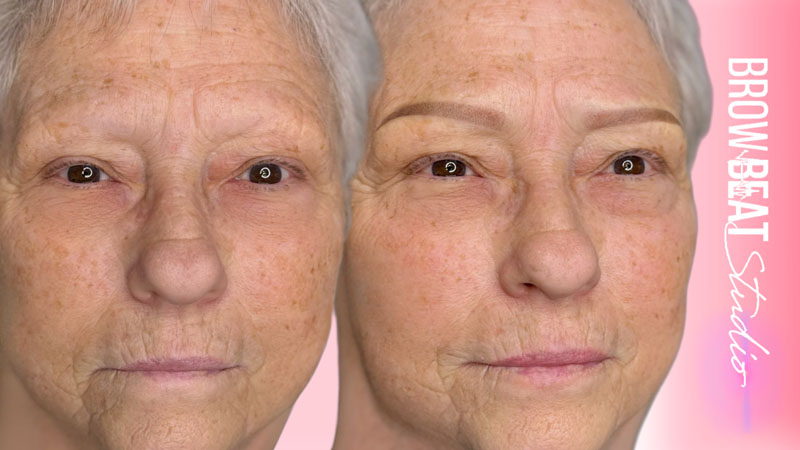
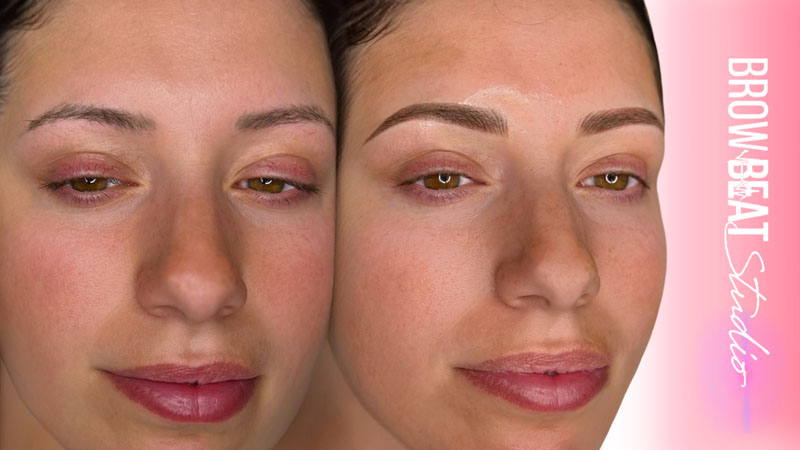
There is no single powder-brow candidate. You do not need oily skin. You do not need sparse eyebrows. You do not need full eyebrows. You do not need to wear makeup every day. And you definitely do not need to want a dark, heavily filled brow. Powder brows, ombré brows and microshading are all forms of machine shading, and one of the strengths of shading is how many different natural eyebrows it can work with.
At BrowBeat Studio Dallas, candidacy begins with three things: the skin we are working with, the natural eyebrow you already have and the result you want us to create. Those three pieces tell us much more than trying to identify one “perfect” powder-brow client.
A good powder-brow candidate can begin with many different kinds of natural eyebrows. You may have substantial brow hair but want more permanent color underneath it. You may have thin, sparse or patchy areas that need more visual density. Your brow hair may be very light.
Your tail may disappear. Or you may already fill your eyebrows every morning and want some of that polished definition permanently present. Machine shading can be adjusted across those different starting points because the amount and placement of permanent density can be customized.
Ombré brows can suit clients who like machine shading but prefer the density to change through the eyebrow. You may want an airy beginning, more color through the body and greater definition toward the tail. That gradient can create a polished permanent brow without requiring the front to carry the same density as the rest of the shape.
The word ombré does not create a separate candidate population. We are still considering your skin, natural eyebrow and preferred finish within the broader machine-shading family.
Microshading can suit many of the same clients because it also creates permanent shaded density through the eyebrow. One client may want only a subtle background beneath her natural hair. Another may want considerably more definition.
Another may prefer a gradient through the brow. The individual client determines what the shading needs to accomplish.
A useful way to answer that question is to stop asking whether you have the “correct” eyebrows for powder brows and ask what you want permanent makeup to change. Do you want more visible density? Do you want color behind your natural eyebrow hair?
Do you want the shape to read more clearly without conventional makeup? Do you like a shaded finish? Do you want anything from a subtle permanent background to a more polished filled-in brow? If those goals sound familiar, machine shading may make sense for you.

You might have plenty of natural eyebrow hair and still wish your brows looked more defined. Perhaps the hairs are dense but the skin underneath is visible, or the overall shape disappears when you’re not wearing makeup. Powder brows can create permanent background color that gives your existing hairs greater presence without covering them. At BrowBeat Studio Dallas, we consider how shading can work with the natural eyebrow rather than assuming everyone needs more hair. The goal is to understand what your brows already provide and whether a carefully shaded foundation could give you the definition you’re missing.
If your natural eyebrows are delicate and narrow, you may want to preserve that appearance rather than suddenly wearing a much fuller shape. Powder shading can be considered at different densities and within carefully mapped proportions. A thin natural eyebrow doesn’t automatically require a dramatic expansion to make permanent makeup worthwhile. Some clients simply want the existing brow to appear more visible and consistent. The important question is whether the amount of shading and the proposed shape align with your preferences. Permanent makeup should not automatically replace a delicate eyebrow with a completely different style.


If your eyebrow hair is naturally blonde, you may have more density than people realize. The hairs are there, but their light coloring makes the overall shape difficult to see. Powder brows can introduce a soft background that gives those hairs greater visibility without requiring a dramatic brunette appearance. Pigment selection matters because the objective is to complement your natural coloring rather than overpower it. A carefully planned light powder effect can be worth considering when your brows need more visual presence, not necessarily more apparent hair. Skin characteristics and personal preferences remain part of suitability.
If you describe your skin as sensitive, that could mean many different things. Perhaps you become red easily, react to certain products or experience occasional irritation. Another client may have an active condition affecting the eyebrow area. Those situations shouldn’t be treated as identical. Powder brows may still be worth discussing, but relevant reactions, skin condition and health history should be understood before treatment. If the skin is actively inflamed or compromised, postponement or appropriate medical guidance may be necessary. The goal is to make an informed decision rather than assuming sensitive skin always means yes or no.

Yes. Permanent makeup is often associated with missing eyebrows, but having plenty of natural hair does not mean the eyebrow already has everything you want. You can have substantial hair and still fill underneath it every morning. You can have dense hair but very little visible color behind it.
You can have a full front and a tail that disappears. You can have wiry hairs that separate and leave visible skin between them. In those situations, shading can create a permanent background that helps the natural hair read as a more complete eyebrow.
A client can have plenty of natural eyebrow hair and still feel that the shape lacks definition. The hairs may be thick but light. The lower edge may disappear visually.
The growth may be uneven through different sections. Or the client may simply prefer a more polished brow than her natural hair creates on its own. Machine shading can add definition without treating healthy natural hair as something that needs to be covered.
Wiry hair can create plenty of texture without creating an even-looking eyebrow. The hairs may separate, cross one another or grow strongly through one section while leaving more visible skin through another. A controlled amount of shading underneath can help those areas read together more consistently.
They can be. When natural hair is present but inconsistent, machine shading can create permanent color through the spaces between it. The eyebrow no longer has to depend entirely on the remaining hairs for its visual density.
A thin natural brow can be kept delicate or built into a fuller-looking permanent shape depending on what suits the client. Patchy natural growth can also benefit from a more continuous background of color beneath the hair.
Machine shading can create visible permanent eyebrow color even when natural hair is limited. But as the amount of natural hair decreases, permanent makeup begins doing more of the visual work. Shape, proportion, density and how the eyebrow sits on the face become increasingly important. Someone with very little natural brow hair may still be able to use shading, but the design needs to account for the fact that there is less natural hair supporting the finished result.
Powder brows can be considered when years of tweezing have left the natural eyebrow thinner or less complete. If a recognizable natural brow remains, shading can add color through the thinner areas and reinforce the overall shape. When natural hair is much more limited, the permanent design simply has to carry more of the eyebrow visually.
Yes. Sometimes the natural eyebrow is not particularly sparse—it is simply difficult to see. Blonde or very light brown hair can disappear visually against the skin, especially from normal viewing distance.
Permanent shading can give that hair a visible background without requiring the client to become dramatically darker. The objective is not to create a dark eyebrow because permanent makeup is involved. It is to select a color and density that gives the existing brow enough presence on the client’s face.
Then we do not need to reinvent it. A client can be an excellent powder-brow candidate because she wants more density inside a shape she already likes.
Permanent makeup does not have to mean a dramatic shape change. Sometimes the natural framework is already doing its job. It simply needs more color.
That does not automatically make you a poor candidate. Natural eyebrows commonly differ. One may have a stronger tail. One may have more hair beneath the arch.
One front may naturally look fuller. Shading gives the artist another tool for creating visual balance without pretending every natural asymmetry needs to be erased. The goal is a pair of brows that works well together on your actual face.

That can be a strong indication that permanent shading aligns with what you already like. Look at what you repeatedly do with your brow makeup.
Are you adding density? Filling the same gaps? Strengthening the tail?
Creating a cleaner lower edge? Making the entire brow more visible? Those habits are useful information because they show what you consistently feel is missing from your natural eyebrows.
That does not exclude you. It tells us something about the level of permanent definition you may feel comfortable wearing every day. A client who rarely fills her eyebrows may prefer very soft shading that supports her natural hair without creating an obvious makeup effect.
Machine shading can be built lightly. Candidacy is not reserved for people who love bold brows.
Machine shading creates density. It does not require maximum density. A soft powder brow can place enough permanent color behind the natural hair to make the eyebrow easier to see while still allowing the hair to remain visually dominant.
And natural does not have to mean almost invisible. You can have visible shape, a finished tail and useful permanent density without the eyebrow feeling heavy.
Some clients genuinely like a filled eyebrow. They like structure. They like visible density. They like waking up and already seeing a polished brow.
Those clients can be good powder-brow candidates too. Permanent makeup is not automatically more sophisticated simply because less of it can be seen.
A client’s skin may be appropriate for permanent makeup and her natural eyebrow may provide a good starting point. But we still need to know whether machine shading creates the type of eyebrow she actually wants. Technique and expectation need to meet in the same place.
These terms overlap within the same broader machine-shading family. Powder does not belong to one skin type.
Ombré does not belong to one age group. Microshading does not require one amount of natural hair. The more useful question is how the shaded result should be designed for the individual client.
Often, this is a question about finish rather than three fundamentally different procedures. Do you want the front especially soft? Do you prefer more consistent density through the eyebrow?
Do you want a barely-there permanent background? Or do you like a stronger filled-in effect? Those preferences tell us more than simply choosing a name from a list.
There is no single skin type that gets to claim powder brows. Oily skin can be considered. Dry skin can be considered.
Normal and combination skin can be considered. Sensitive or delicate skin needs more context rather than an automatic yes or no. At BrowBeat Studio Dallas, skin type is part of candidacy—not a simple pass-or-fail category.
Powder brows can be a useful permanent brow option for clients with oily skin. Machine shading creates a field of permanent color through the eyebrow rather than asking the entire result to depend on extremely fine individual detail. That makes shading worth considering when oil production is part of the client’s skin characteristics.
But oily skin exists on a spectrum. Someone who becomes slightly oily through the forehead is not necessarily starting with the same skin as someone with substantial oil production throughout the brow area. And oily skin does not determine how dark the finished eyebrow should be. A client can have oily skin and still want extremely soft permanent shading.
Yes. Oily skin does not automatically exclude someone from ombré brows or microshading. Both remain within the broader machine-shading family. The individual result is adjusted around the skin, natural eyebrow and amount of permanent density the client wants.

If your eyebrow area becomes shiny throughout the day, you may have heard conflicting advice about permanent makeup. Powder brows can be worth considering because machine shading creates a field of pigment density rather than depending entirely on extremely fine individual marks. That doesn’t mean every oily-skinned client should automatically receive the same shading design. Oil production varies, and the condition of the actual brow area matters. You can have oily skin and still prefer an extremely soft result. At BrowBeat Studio Dallas, skin characteristics help inform suitability without dictating how bold your permanent eyebrows must look.
Sometimes an eyebrow has a strong front and a recognizable tail, but the area through the body appears noticeably lighter. This can interrupt the visual continuity of the brow even when the overall shape is already established. Machine shading may help connect those sections with a controlled background of permanent color. The amount of pigment should be considered in relation to the existing hairs rather than automatically making the entire eyebrow darker. If the middle is the only area that bothers you, that’s useful information when discussing whether powder or microshading could support your natural brow.


Having sparse eyebrows doesn’t automatically make you an ideal powder brow candidate, just as having full eyebrows doesn’t exclude you. Natural hair density is only one part of the discussion. The condition of your skin, the amount of definition you want and whether machine shading creates the appearance you’re hoping for all matter. Someone with thick brows may want a soft background, while another client with finer hair prefers a more defined result. Good candidacy is about how those characteristics work together rather than meeting one particular standard of natural eyebrow fullness.
The term microshading sometimes makes people imagine a fully filled eyebrow, but machine shading can be applied at different levels of density. Some clients want only a faint background beneath their natural hairs. Others prefer a more noticeable cosmetic result. If your goal is subtle definition, it’s important to communicate how much color feels comfortable rather than assuming the procedure must create one particular look. Microshading candidacy is about whether permanent shaded density aligns with your features and preferences, not whether you want the strongest possible version of the technique.

Dry skin can also be well suited to machine-shaded brows. There is nothing about powder brows that requires the client to have oily skin. The shading can be customized around the natural eyebrow and desired finish while the artist considers the actual skin being treated.
Normal skin can absolutely be considered for powder, ombré or microshaded brows. You do not need a skin concern to justify choosing machine shading. Some clients simply prefer the appearance it creates.
Combination skin also demonstrates why broad labels only take us so far. A client may be oilier through one part of the face and drier elsewhere, so the characteristics of the actual brow area matter most.
Sensitive skin deserves context because the word can describe very different things. One client may simply become red easily. Another may react to particular skincare products.
Another may have an active skin condition affecting the brow area. Those are not identical candidacy situations. Tell BrowBeat what “sensitive” means for your skin so the treatment area can be considered properly.
Permanent makeup is still a skin procedure. If the brow area appears particularly delicate, that information matters.
The answer is not to ignore the skin because the client likes a particular eyebrow photograph. It is also not useful to assume every delicate-looking client is automatically unsuitable. Candidacy requires looking at the actual skin in front of us.
If the brow area is currently irritated, inflamed, broken or otherwise not in its normal condition, BrowBeat needs to know before treatment. The same applies if eczema, psoriasis or another skin condition is active in or around the planned treatment area. A history of a skin condition and an actively affected treatment area are not necessarily the same situation. The condition of the skin we would actually be working on matters.
Shape and color are the exciting parts of permanent makeup. But pigment is being placed within skin. That skin matters. A beautiful design still needs an appropriate treatment surface.
Yes. Powder brows, ombré brows and microshading can be customized across low to high melanin skin. Pigment selection and shading density should be considered in relation to the client’s complexion, natural eyebrow hair, skin characteristics and desired result. There is no single melanin level that defines a good candidate for machine shading.
A client can have higher melanin skin and oily skin. Lower melanin skin and dry skin. Or any number of combinations in between.
Melanin level describes one aspect of the skin. Skin behavior describes another. Both can be considered without treating them as though they mean the same thing.

Fitzpatrick classifications can provide information about how skin responds to sun exposure, but they do not replace looking at the individual client. BrowBeat considers the skin we are actually treating, the natural brow and the intended result together rather than allowing one classification to decide the entire eyebrow.
An oily-skin client can want an extremely subtle result. A dry-skin client can want a polished makeup effect. A combination-skin client can love an ombré gradient.
The skin helps us evaluate the treatment. The client’s aesthetic preference helps us design the finish.
Skin matters. Natural eyebrow hair matters.
But there is another candidacy question: Do you actually want the kind of eyebrow machine shading creates?
A client can have appropriate skin and a natural brow that could work beautifully with powder shading. But if the result she is imagining is completely different from a shaded eyebrow, that matters too.
Machine shading gives the eyebrow permanent color and density. How much of that color you see can vary enormously.
It can be a barely-there background behind natural brow hair. It can create a soft powder finish. It can transition from an airy front into a more defined body and tail. Or it can be built into a more polished, filled-in eyebrow.
So candidacy is not about whether you want one specific “powder-brow look.” It is about whether some level of permanent shading aligns with what you want to see on your face every day.
That can absolutely fit within machine shading. You do not have to want an obvious makeup effect to be a good powder-brow candidate. A very soft result can place enough permanent color behind the natural eyebrow to make the shape easier to see while allowing the hair to remain visually dominant. The important question is whether that subtle amount of shading gives you enough of a result to make permanent makeup worthwhile for you.
That can fit too. Some clients already love the way their eyebrows look after they fill them.
They want visible density. They want a cleaner shape. They want the tail to remain defined.
And they want more of that polished appearance present before conventional brow makeup is added. Machine shading can be built with greater density for a client who genuinely likes that finish.

If you regularly fill your eyebrows, you have already been making decisions about what you like. You know how much color you add through the front. You know whether you strengthen the body. You know how defined you make the tail.
You know which gaps you repeatedly fill. And you know when your eyebrows finally look like “you.” That history can be useful when deciding how much permanent shading feels appropriate.
That is one of the most common permanent makeup goals. Usually the client is not asking us to create a completely different eyebrow. She wants to preserve the things she already recognizes about herself while improving the areas that bother her.
Keep the softness. Keep the general personality of the brow. But make the shape easier to see. Give the tail enough presence.
Add density where the natural brow loses it. Machine shading can be considered for exactly that kind of result.
Machine shading can support a more structured aesthetic too. The mapped shape provides a framework, and the permanent density makes that framework more visible. A client can want a polished body and tail without wanting the front of the eyebrow to enter the face heavily. Clean does not automatically mean harsh.
Then the density can be designed to transition through the eyebrow. The front remains lighter.
The body carries more permanent color. The tail becomes more defined. If that transition repeatedly catches your eye in brow photographs, an ombré presentation may align very naturally with your aesthetic preference.
You do not need one. A shaded brow can still begin gently without making a dramatic gradient the defining feature of the result.
Some clients specifically love a visible ombré transition. Others simply do not want the beginning of the eyebrow to feel too heavy. Both preferences can be accommodated within machine shading.
That concern does not automatically mean shading is wrong for you. It may mean you need a softer density.
The front can remain airy. Natural eyebrow hair can stay visually dominant. The permanent background can be subtle.
Tell BrowBeat what “too heavy” means to you. That gives us a much more useful boundary than simply saying you want natural brows.
That matters just as much. If you are choosing permanent makeup because you want visible definition, an excessively timid result may not satisfy you.
Tell us how much brow you normally wear. Show us photographs of results you like.
If you like the way you normally fill your own brows, that can be useful information too. Your permanent result should be designed with a realistic understanding of what feels finished to you.
Natural is not a competition. Some clients want barely-there shading. Some want visible powder. Some want a polished makeup effect.
None of those preferences automatically makes someone a better or worse candidate. The important question is whether the result is appropriate for the person and whether she actually wants to wear it.
You are not choosing eyebrows for one photograph. You are choosing a permanent makeup result that will be on your face when you are dressed up and when you are not.
When you are wearing a full face of makeup. And when you just walked the dog. That everyday reality should be part of deciding how much shading feels right.

You may have plenty of natural eyebrow hair but find that the lower border never looks particularly clear. The hairs might grow unevenly through the bottom of the brow, making the shape appear softer than you prefer. Powder shading can be considered when the goal is to create more visible definition within an appropriate mapped outline. That doesn’t mean drawing a harsh line underneath the entire eyebrow. The amount of density should reflect your preferred appearance. A naturally full brow can still benefit from thoughtful shading when structure, rather than hair quantity, is the concern.
If you reach for brow powder every morning rather than drawing individual hair-like strokes, you may already know that you enjoy a softly filled eyebrow. That preference is useful when considering permanent machine shading. Powder brows can create lasting color through the eyebrow, although the final design and density still need to suit your skin and natural features. The goal isn’t to copy conventional makeup exactly, but to understand the effect you consistently prefer. Your daily cosmetic habits can reveal whether a shaded finish aligns with the eyebrow appearance you enjoy.


Fine natural eyebrow hairs can be difficult to see even when there are quite a few of them. The eyebrow may have a recognizable shape up close but lack definition from a normal viewing distance. Microshading can introduce a delicate background of pigment that gives those fine hairs more visual presence. The goal doesn’t have to be a strongly filled eyebrow. A carefully selected color and restrained density may be enough to make the natural structure easier to recognize. Fine hair alone doesn’t establish suitability, but it can help explain why someone is interested in permanent shaded definition.
Some natural eyebrows end relatively early, leaving the outer portion less defined than the client prefers. That doesn’t automatically mean the entire eyebrow needs to become larger or darker. Powder shading may help establish a more complete-looking outer shape when the proposed design is appropriate for the client’s features. The important part is mapping the intended tail carefully rather than simply extending pigment as far as possible. If your brows feel shorter than you’d like, the discussion should focus on realistic proportions and how permanent shading might support the existing eyebrow.


Your eyebrows may look perfectly defined in the bathroom mirror but seem much lighter outdoors or under bright overhead lighting. This can happen when natural brow hair is fine, light-colored or widely spaced, allowing more skin to show through. Permanent shading may help create a more consistent background of color so the shape remains easier to recognize in different environments. The goal isn’t to make the eyebrow dramatically darker. It’s to consider whether additional density would give your natural brow the visibility you want throughout everyday life.
Then that preference matters. Powder brows, ombré brows and microshading create permanent shaded density. Microblading creates manual hair-like strokes, while nano brows create hairstroke-style detail with a machine. If the feature you consistently love is the appearance of individual strokes rather than a shaded background, a hairstroke technique may align more closely with the result you are imagining.
Some clients like the detail of hairstrokes but also want permanent density through the eyebrow. That is where a combination or hybrid approach can become relevant.
The important point for candidacy is simple: if you want shading, machine-shaded brows belong in the conversation. If you want something visually different from shading alone, that preference should be identified before the permanent design is created.
Does machine shading fit your skin? Does it work with the natural eyebrow we are starting with? Can it create the amount of permanent color you want?
Does the finish match the kind of brow you actually like? When those pieces line up, powder, ombré or microshaded brows can make a great deal of sense.
Even when the natural brow, skin and desired result appear to be a good fit, permanent makeup is still performed within skin. That means BrowBeat needs to know about relevant circumstances that could affect whether treatment is appropriate at that time. Screening is not about making the process intimidating. It is about making sure important information is considered before permanent makeup begins.
If you have a health condition, take regular medication or have something happening in the treatment area that you think might be relevant, tell us before the procedure. You do not need to decide by yourself whether the information matters. And mentioning something does not automatically mean you cannot have permanent makeup. The useful starting point is accurate information so the individual situation can be considered appropriately.
Pregnancy and breastfeeding should be disclosed before permanent makeup. BrowBeat can explain the studio’s current treatment policy and whether any additional guidance is needed for your individual situation. A cosmetic tattoo appointment should not replace individualized healthcare advice when that is appropriate.
Do not stop or alter prescribed medication simply to have permanent makeup performed unless the clinician responsible for that medication has specifically instructed you to do so.

Health conditions vary too widely for one generic paragraph to determine candidacy for every client. If you have a condition that may affect your skin, healing or the procedure itself, disclose it before treatment. BrowBeat can then determine whether additional information or appropriate medical guidance is needed before proceeding.
If the skin we would be treating is currently irritated, inflamed, broken or experiencing an active skin condition, BrowBeat needs to know. A history of eczema, psoriasis or sensitivity is not necessarily the same situation as actively affected skin in the treatment area. The condition of the skin at the time of treatment matters.
Show us. Do not hide it under makeup and hope nobody notices.
If the treatment area is not in an appropriate condition to work on, the fact that an appointment exists on the calendar does not make the skin ready. A permanent brow does not become better because it was performed sooner.
That is different from saying someone can never have powder brows. A temporary skin issue or another circumstance may simply mean the timing is not appropriate. Permanent makeup gives us no reason to force a procedure into the wrong day.
There is no birthday when someone automatically becomes too old for powder, ombré or microshaded brows. Age alone tells us much less than the condition of the skin, natural eyebrow, relevant health considerations and the result the client wants. A mature client can absolutely be considered for machine shading. The treatment still needs to be designed around the skin and person in front of us.
Having very little natural hair does not automatically make machine shading impossible. It does mean the permanent makeup will carry more of the visual responsibility for creating the eyebrow. Shape, proportion and density therefore become especially important. The less natural hair there is, the more carefully the permanent design needs to function as an eyebrow on its own.
Tell BrowBeat what has happened to the natural eyebrow and what hair remains. Machine shading can still provide permanent density when natural hair is limited, but substantial brow loss changes the starting point. The design needs to account for the amount of eyebrow the permanent makeup itself will be creating.
You do not need to arrive saying: “I have combination skin, medium-density natural hair and therefore require microshading at 42 percent density.” Please don’t.
Tell us what you actually know. Tell us how your skin behaves. Show us your natural eyebrows. Tell us about relevant health, medication or skin considerations.
And tell us what you want your brows to look like. That information is much more useful.
Do not hide an active skin issue because you are worried the appointment may need to move. Do not tell us you never wear brow makeup when you actually love a filled eyebrow and think “natural” is the answer you are supposed to give. There is no correct client profile to perform. We need the real one.
A good candidate is someone whose skin can appropriately receive the treatment and whose natural eyebrow and desired result can be supported by machine shading. That person can have substantial natural hair or thinner areas. She can have blonde, light brown or deeper natural brow hair.
She can have oily, dry, normal or combination skin. She can have low to high melanin skin. She can want an extremely soft powder effect or a more polished permanent brow. There is no single face, skin type or makeup style that qualifies.
What natural eyebrow do you have? What is the skin in the treatment area like? What do you want permanent makeup to accomplish?
How much permanent density feels right on your face? And is there anything about your skin, health or medication that needs to be considered before treatment? Those questions tell us far more than a generic candidacy checklist.
Powder brows, ombré brows and microshading are versatile because machine shading can be adjusted around very different clients. But versatile does not mean automatic.
We still look at the skin. We still look at the natural eyebrow. We still ask what the client actually wants to wear. And we still consider whether permanent makeup is appropriate for that individual at that time.
You do not need perfect skin, perfect eyebrows or one particular makeup style to be a powder-brow candidate. We need to understand what you have, what you want and whether machine shading is an appropriate way to connect the two.

A good powder-brow candidate is someone whose skin can appropriately receive permanent makeup and who wants some level of permanent shaded density. Clients can have full, thin, sparse, light or uneven natural brows.
Ombré brows can suit clients who want machine shading with a softer front and greater density through the body and tail. Skin, natural brow hair and the desired finish all contribute to candidacy.
Microshading can suit clients who want permanent shaded color beneath or through their natural eyebrows. The shading can range from very subtle to considerably more defined.
Powder brows can be considered across oily, dry, normal and combination skin. Sensitive or delicate skin requires individual evaluation, particularly when there is active irritation or another skin concern in the brow area.
Yes, oily skin can be considered for powder brows. Machine shading creates a field of permanent density through the eyebrow, and the amount of shading can be customized for the individual client.
Yes. Oily skin does not automatically exclude someone from ombré brows. The gradient and overall density can be designed around the client’s skin, natural eyebrow and preferred result.
Microshading can be considered for oily skin because it creates machine-shaded permanent density. The client’s actual skin characteristics still need to be evaluated individually.
Yes. Dry skin can also be suitable for powder brows. Machine shading does not require oily skin, and the permanent density can be customized around the natural eyebrow and desired finish.
Yes. With combination skin, the characteristics of the skin through the actual brow area are more useful than assuming one general skin label describes the entire face.
Possibly. “Sensitive skin” can mean anything from temporary redness to active skin conditions, so BrowBeat needs to understand what sensitivity means for the individual client and the brow treatment area.
Yes. Full natural brows can still benefit from permanent background color, greater visual continuity or additional definition without covering or replacing healthy natural hair.
They can be. Permanent shading can add visible density to a thinner natural brow while the final shape and strength are customized around the client.
Yes. Machine shading can add permanent color through spaces between natural hairs, allowing sparse areas to read more consistently as part of the complete eyebrow.
Yes. When natural growth varies through different sections, permanent shading can provide a more continuous background of color beneath the existing hair.
Yes. Wiry brows can have plenty of hair while still showing visible skin or inconsistent density. Shading underneath the natural hair can help the eyebrow read more cohesively.
Machine shading can create visible permanent color when natural hair is limited. As the amount of natural hair decreases, the permanent design carries more responsibility for creating the visible eyebrow.
They can be. If years of tweezing have left thinner or incomplete areas, shading can add permanent density and support the remaining natural brow structure.
Yes. Blonde or very light natural eyebrow hair can be given more visual presence with appropriately selected pigment and shading density without requiring the finished brow to become unnecessarily dark.
Yes. Powder brows, ombré brows and microshading can be customized across low to high melanin skin, with pigment selection and density considered for the individual client’s skin, natural brow hair and desired result.
No. Melanin level and skin behavior are different considerations. A client can have higher melanin skin with oily, dry or combination characteristics, just as a lower melanin client can.
Yes. There is no single age at which someone automatically becomes unsuitable for machine-shaded brows. The condition of the skin, natural eyebrow, relevant health considerations and desired result matter more than age alone.
Yes. Machine shading can be created at low density so the permanent color sits softly behind natural eyebrow hair while still giving the brow more visible shape and continuity.
Yes. Machine shading can also be built with greater density for clients who prefer a more polished, filled-in permanent eyebrow.
No. Clients who rarely wear brow makeup can choose soft permanent shading, while clients who fill their brows regularly may prefer greater permanent density.
These terms overlap within the machine-shading family. The more useful decision is how much density you want, how soft the front should be and how defined you want the finished eyebrow to look.
If individual hair-like strokes are the defining result you want, a hairstroke technique such as microblading or nano brows may align more closely with your aesthetic preference than shading alone.
A combination or hybrid brow can bring hairstroke detail and permanent shading together. This may suit clients who want both texture and additional background density.
Active irritation, inflammation, broken skin or another active condition in the treatment area needs to be disclosed and evaluated before permanent makeup is performed.
They can. Relevant health conditions and regular medications should be disclosed before treatment so BrowBeat can determine whether additional information or appropriate medical guidance is needed.
BrowBeat considers the skin being treated, the client’s natural eyebrow, the desired permanent result and any relevant health, medication or skin considerations. There is no single skin type, brow density or makeup style that defines the ideal candidate.