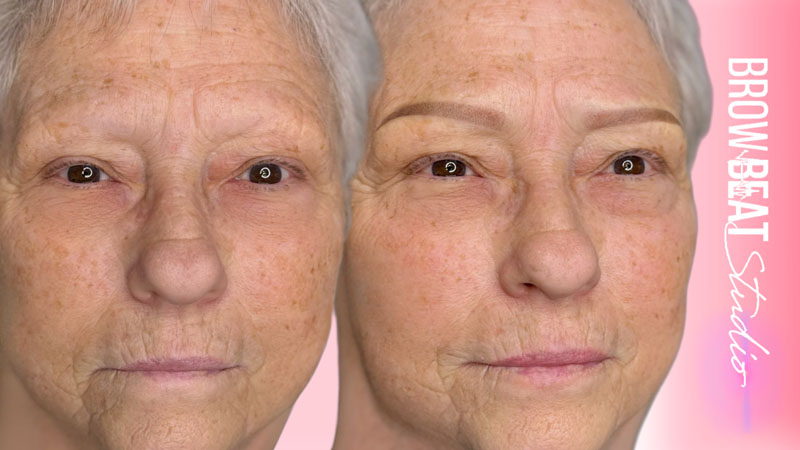
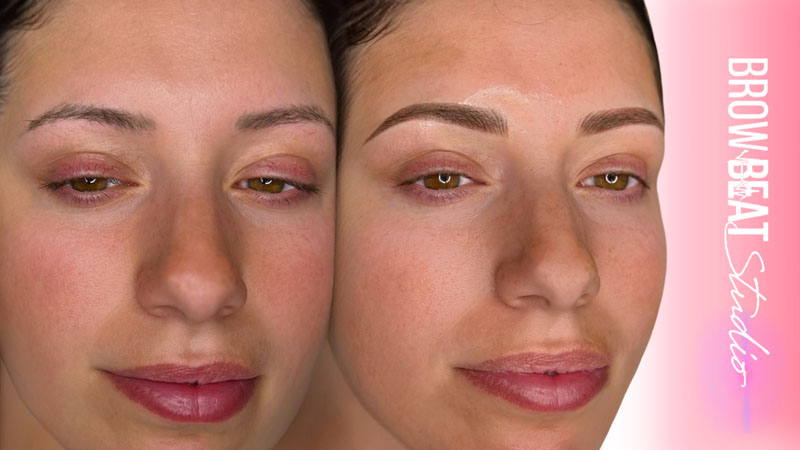
Your powder brows have healed.
The fresh intensity is gone. The color has settled. The shading is sitting comfortably behind your natural brow hair, and you are no longer thinking about ointment, flaking or what the brows are going to look like tomorrow.
Now a completely different clock begins. Not healing.
Longevity.
At BrowBeat Studio Dallas, we generally describe powder brows, ombré brows and microshading as lasting up to around 18 months, with individual retention varying from client to client.
But that number needs context.
A powder brow does not look exactly the same for 18 months and then disappear on a Tuesday.
It changes gradually. The color becomes softer. The density becomes lighter.
The shape can lose some of its original crispness. An ombré gradient can become increasingly subtle.
And through much of that change, the permanent makeup can still be doing something very useful.
A powder brow does not expire. It softens.
Powder brows can remain visible for up to around 18 months, although there is no universal lifespan that applies identically to every client.
Some clients notice meaningful softening sooner. Others retain substantial permanent color for longer.
Skin characteristics, pigment color, original density, natural brow hair, sun exposure, skincare and individual retention can all influence how visible the shading remains over time.
That is why BrowBeat uses a broad longevity expectation rather than promising an exact expiration date.
It does not mean the eyebrow remains at one exact intensity for 18 months.
It also does not mean every trace of pigment disappears when that period ends.
It means machine-shaded permanent makeup can continue providing visible brow color while gradually becoming softer.
Think about the difference between a newly healed powder brow and the same eyebrow many months later.
The later brow may be lighter. It may be less crisp. The powder effect may be more transparent. But the shape can still be recognizable and useful.
Lasting and looking freshly healed are not the same thing.
Healing and longevity describe two different kinds of change.
During healing, freshly treated skin can make the brows look darker, drier, flaky, temporarily lighter or uneven.
Once the skin has recovered and the permanent color has settled, those early healing changes are behind you.
From that point forward, the longer-term question becomes how the healed permanent shading changes over the months that follow.
That is powder brow longevity.
Ombré brows belong to the same broader machine-shading family, so BrowBeat generally describes them within the same longevity range of up to around 18 months.
The difference is the way density was distributed through the eyebrow. The front began softer. The body carried more visible color. The tail generally provided greater definition.
As the permanent makeup fades, the entire gradient becomes quieter. The brow is still ombré. It is simply a softer version of the result you started with.

The same general brown color family can create different visual contrast depending on the client’s natural skin tone and eyebrow hair. On fair skin, a medium brown may appear relatively strong, while against deeper coloring it may look softer. As permanent pigment gradually loses intensity, those differences can influence how noticeable the remaining shading appears. That doesn’t mean complexion alone determines pigment retention. It means the relationship between skin color, natural hair and selected pigment affects the visible result. Long-term appearance is both about how much color remains and how that color reads against the client’s natural features.
Natural eyebrow hair doesn’t guarantee that permanent pigment will remain in the skin longer. What it can change is how the eyebrow looks as the shading fades. When substantial natural hair remains, even a softer background of microshading may continue making the brow appear full and connected. Someone with very little natural hair may notice the same reduction in permanent color more quickly because the pigment contributes more of the visible eyebrow. This is an important distinction between pigment retention and perceived fullness. Your natural hair changes the overall appearance, not necessarily the biological lifespan of the pigment.


If your forehead and eyebrow area naturally produce more oil, you may wonder whether your powder brows will fade sooner. Oil production is one characteristic worth considering, but it cannot predict an exact lifespan. Two clients with oily skin may retain permanent shading differently because their skin texture, original pigment density, color and daily routines also vary. A slightly oily brow area isn’t identical to skin with substantial oil production. At BrowBeat Studio Dallas, we consider the individual rather than assigning every oily-skinned client the same expiration date for their permanent eyebrows.
Retinol is a common part of long-term skincare routines, and clients often wonder whether it affects permanent eyebrow pigment. Retinoids influence skin turnover, while some resurfacing treatments can alter the appearance of cosmetic tattoos. The effect of a particular product depends on its formulation, application area and how it is used; a specific fading rate cannot be predicted. If you use retinol regularly, be mindful of the tattooed brow area and discuss relevant products with your skincare professional. Permanent makeup and effective skincare can coexist, but it’s worth understanding how treatments around the brows may affect their appearance.

Microshading can also remain visible for up to around 18 months, with individual retention varying.
Because microshading belongs to the same broader machine-shading family as powder and ombré brows, it does not need an artificially different lifespan simply because the terminology changes.
The actual result matters more than the label.
A softly microshaded eyebrow and a densely shaded eyebrow begin with different amounts of visible color, and that affects how quickly the client notices the result becoming lighter.
Not simply because they have different names. Powder, ombré and microshading all describe related forms of machine-shaded permanent eyebrows.
One result may appear visible for longer because it began with greater density or deeper color.
Another may become visually subtle sooner because it was intentionally designed to be extremely soft.
Those are differences in the brows themselves, not proof that each service name comes with a completely different biological lifespan.
The brow matters more than the label.
Powder brow fading is usually better understood as a gradual reduction in visual density.
The eyebrow does not simply switch off. The permanent color becomes lighter. More natural skin may become visible through the shading. The natural eyebrow hair begins carrying more of the visual weight again.
The edges can become gentler. The tail may lose some of its original crispness. The complete powder effect becomes increasingly subtle. One of the most useful ways to understand that process is:
the intensity can leave before the structure does.
Imagine gradually turning down the opacity of the eyebrow. The shape does not necessarily disappear. It simply becomes less visually dominant.
The background color beneath the natural brow hair may become more transparent. The lower edge may look softer. The tail may become less obvious.
What once looked like a clearly filled permanent brow can eventually look more like a soft shadow supporting the natural eyebrow.
A powder brow does not need to remain at newly healed intensity to continue being useful.
Months later, there may still be enough pigment to make the overall shape easier to see.
The tail may still have a foundation. Natural hair may still sit over permanent color rather than bare skin.
The eyebrow can require less effort even though the powder effect is considerably softer than it once was.
Permanent makeup can continue being useful long after it stops looking freshly healed.
This distinction matters when discussing how long powder brows last.
A brow can lose a noticeable amount of its original intensity and still remain visible.
The client may still see the shape. She may still see the tail. There may still be background color connecting areas of natural hair.
So the question “Are my powder brows still there?” can have a very different answer from “Do my powder brows still look newly healed?”
A newly healed powder brow is generally at its most polished permanent stage.
The color has settled from treatment-day intensity, but the permanent shading is still relatively strong.
Months later, the brow may be noticeably softer while still retaining useful shape and color.
This is why longevity cannot be measured only by asking how long the brow maintains its strongest appearance.
The softer stages are part of the lifespan too.
The gradient becomes more delicate as the permanent color fades.
The front began as the lightest area, so it has less visible density to lose before the change becomes noticeable.
The body gradually becomes softer. The tail loses some crispness.
The basic relationship between those areas can remain visible even as the complete brow moves to a lower intensity.
The front is still softer. The tail is still more defined. The contrast between them is simply quieter.

Because it began with less density. The front of an ombré brow is intentionally airy.
There is therefore less visible permanent color in that area before the client starts noticing that it has softened.
The denser body and tail have more visual depth to lose. This does not automatically mean the front retained pigment poorly. It began softer by design.
Yes.
As the entire eyebrow becomes lighter, the contrast between the softest and strongest areas can become more subtle.
A pronounced ombré gradient can eventually resemble a very soft shaded brow. That is part of the way machine-shaded permanent color can age visually.
Microshading follows the same broader pattern. The shaded field of permanent color gradually loses intensity. Natural brow hair becomes more visually prominent as the background color softens.
The shape may remain readable after the original density has become considerably lighter.
How quickly that change becomes noticeable depends partly on what the microshaded brow looked like when it was healed.
Powder brows can become extremely soft over time, but BrowBeat does not promise that every client’s permanent makeup will completely disappear.
Individual pigment retention varies. Some clients may eventually have very little visible color. Others may retain a faint shadow for considerably longer.
The responsible expectation is gradual fading—not a guaranteed return to completely untreated skin on a particular date.
Ombré brows also fade progressively rather than reaching one universal disappearance date.
The softer front may eventually become difficult to see while denser areas remain more visible.
How much pigment remains over the longer term depends on the individual brow and the person wearing it.
Microshading can become very light, but complete disappearance cannot be promised for every client.
It is permanent makeup, not temporary brow tint. “Fading” means the visible result gradually becomes softer.
It should not be interpreted as a guarantee that every trace of pigment will vanish.
A one-year-old powder brow can look very different from one client to another.
Some may still have substantial density. Others may have softened considerably. A blonde brow may appear much lighter than a deeper brunette result.
Natural brow hair may become more visually dominant as the permanent background color decreases.
Often, the simplest description is that the eyebrow looks like a softer version of the brow the client started with.
For many clients, the shading may be noticeably softer by this stage. The powder effect can become more transparent. The tail may be less crisp.
The shape may still be visible. Another client at the same point may retain considerably more color.
Eighteen months gives useful context, but it does not create one standard appearance that every eyebrow should match.
By two years, some clients may have very soft remaining pigment while others continue showing a more visible field of shading.
There is no responsible way to turn two years into one guaranteed photograph.
The original color and density, skin characteristics, sun exposure, skincare and individual retention all influence what remains.
The calendar tells us how old the permanent makeup is. It does not tell us exactly what the eyebrow must look like.
Permanent makeup changes.
It should not be described as though it remains at its original intensity indefinitely.
It also should not be promised to disappear completely after a predetermined number of years.
The reality sits between those extremes.
Machine shading gradually becomes softer, and the amount of visible pigment that remains is individual.
There is no single factor controlling longevity. The result comes from the relationship between several things: the original density of the shading, the depth of the pigment color,
the client’s natural eyebrow hair, skin characteristics, individual pigment retention,
sun and UV exposure, skincare and skin treatments, and lifestyle over time.
That is why two beautifully created powder brows / ombré brows / microshaded brows can look quite different many months later.

Natural eyebrow hair can gradually become gray, silver or white with age, while permanent cosmetic pigment follows its own fading process. That means the relationship between your brow hair and the shading underneath may change over time. A brown powder brow that once blended closely with brunette hair may become more noticeable as the natural hairs lighten. This doesn’t automatically mean the pigment has changed color. Sometimes the surrounding hair has changed instead. Long-term powder brow maintenance should consider both the retained pigment and the natural eyebrow coloring you have today.
More pigment isn’t automatically the answer to longer-lasting permanent eyebrows. A brow can be carefully defined through its shape, appropriate color and thoughtfully distributed shading without becoming excessively dark. The goal is a result that suits the client’s features while acknowledging that pigment will change over time. Choosing unnecessary density simply to extend visibility can compromise the appearance the client actually wants. Long-term satisfaction involves more than how many months a brow remains strong. It also involves enjoying the color and definition while the permanent makeup is present.


It’s understandable to want your permanent eyebrows to remain consistently defined, but adding pigment at the first sign of fading isn’t always necessary. Microshading can remain useful even when it becomes softer than the original result. Before considering maintenance, look at the remaining color, overall density and how the shading works with your natural hair. Additional pigment should be considered thoughtfully rather than automatically. The goal is to maintain an appropriate cosmetic result over time, not to repeatedly increase saturation simply because the shading has become a little lighter.
If you have substantial eyebrow hair, that natural texture continues contributing to your overall brow appearance even as permanent shading becomes lighter. The hairs provide their own color, direction and density, while the remaining pigment supports the spaces beneath them. Someone with less natural hair may notice fading more readily because the permanent color contributes a larger portion of the visible eyebrow. This doesn’t necessarily mean the pigment is fading faster on one client. The difference may simply be how much natural hair remains to support the appearance of fullness.

A very soft powder brow begins with less visible permanent color. A more defined powder brow begins with more.
If both become lighter over time, the softer brow has less visual distance to travel before the client notices the change.
A more densely shaded brow has more color to soften through while still remaining visibly filled.
That does not make one style better than the other. They simply begin at different intensities.
Soft powder brows can be beautiful precisely because they do not overwhelm the face.
But softness means there is less permanent color creating the effect.
As that color gradually becomes lighter, a relatively small change may be easier to see.
That is part of the relationship between choosing an extremely subtle result and watching that result age.
A permanent eyebrow is not only an amount of pigment. It is also a color. Different color depths have different amounts of visual presence to lose.
This becomes especially noticeable when comparing very light blonde powder brows with deeper brunette results.
A blonde brow begins softer.
There is less visual distance between the newly healed color and the point where the permanent shading begins looking very light.
A relatively small reduction in intensity can therefore become noticeable sooner. That does not make blonde pigment a poor choice.
A blonde client still needs a brow color that works naturally with her brow hair and overall coloring.
We would rather use the right color than give someone an unnecessarily dark eyebrow simply to make it look visible for longer.
A deeper color has more visual depth to soften through. It can lose some intensity and still look clearly present.
Then soften further and continue providing background color beneath darker natural brow hair.
That greater visual range can make the shading appear useful for longer.
But longevity should never become a reason to choose a pigment that is too dark for the client.
A light color at low density begins extremely soft. A light color at greater density has more visual presence. A deeper color at restrained density can still look subtle. A deeper color at greater density creates a stronger permanent brow.
Those brows can all appear to age differently because they did not begin at the same visual intensity.
This is one reason “How long will my powder brows last?” cannot be answered completely by one number.
The permanent shading is only one part of the eyebrow the client sees.
Natural hair remains part of the picture.
A client with substantial dark natural brow hair may continue feeling that her eyebrows look complete even after much of the permanent background has softened.
A client whose permanent shading provides more of the visible eyebrow may notice the same reduction in density much sooner.
The permanent makeup may have faded similarly. The visual effect can still be very different.
Two clients can receive beautifully shaded brows, follow their aftercare and still have noticeably different amounts of permanent color remaining many months later.
That does not automatically mean one treatment was performed better than the other.
Permanent makeup lives in skin. And skin is individual.
Oil production, skin characteristics, sun exposure, skincare, original pigment color and density all contribute to the long-term picture.
Even after accounting for those factors, individual retention can still vary.
Human skin is not standardized material.
It can.
The skin remains the environment in which permanent pigment is sitting long after the brows have healed.
Some clients retain machine shading extremely well. Others become visibly softer sooner.
Skin type is therefore relevant, but it should not be treated as a formula capable of predicting an exact number of months.

There is no separate countdown that applies to every client with oily skin.
Oilier skin can influence how permanent makeup retains and changes over time, but the amount of oil production, pigment color, original density and individual retention still matter.
One client may be slightly oily through the forehead. Another may have much greater oil production throughout the brow area. Those are not identical starting points.
The word “oily” alone cannot tell us exactly how long a powder brow will remain visible.
Dry skin has its own characteristics, but it still does not create a guaranteed lifespan.
A client with dry skin may retain permanent shading very well, while another may experience a different long-term result.
Color, density, skincare, sun exposure and individual biology continue to matter.
No skin-type label is strong enough to tell the entire longevity story by itself.
Combination skin makes broad labels even less precise.
A client may be oilier through one part of the face and drier elsewhere.
For permanent brows, what is happening through and around the eyebrow area is more relevant than simply attaching one skin-type word to the entire face.
Sometimes two clients simply retain permanent makeup differently, and that may relate to their powder brow candidacy in the beginning.
You can compare their skin. You can compare pigment depth. You can compare density.
You can talk about sun exposure and skincare. And there can still be individual variation. That uncertainty is not a problem with permanent makeup.
It is a reason to avoid pretending every client will reach the same level of fading at exactly the same point in time.
Once powder brows have healed, repeated sun and UV exposure can become part of the way permanent color changes over time.
This is different from caring for freshly treated skin during the initial healing period.
Here, we are talking about months and years of ordinary exposure. Permanent makeup exists in skin that continues being exposed to the environment.
If preserving visible brow color matters to you, long-term sun exposure belongs in the longevity conversation.
Texas sunshine is not exactly shy. Clients drive. Walk outside. Sit on patios.
Travel. Spend weekends outdoors. And simply live in a climate where UV exposure can be substantial. You do not need to hide indoors because you have powder brows.
But it would be unrealistic to discuss permanent makeup longevity as though repeated sun exposure has nothing to do with the skin carrying that color.
It can. Modern skincare is designed to influence the skin. Renew. Exfoliate.
Resurface. Increase turnover. Improve texture. Those can all be valuable skincare goals.
They also mean the products and treatments regularly used around permanent brows can become part of the long-term fading picture.
Retinol is commonly used as part of long-term skincare routines and is associated with increased skin turnover.
When active skincare is regularly used around permanent makeup, it can become one of the factors influencing how the visible result changes over time.
That does not mean someone with powder brows can never use effective skincare again.
It means permanent brows and skincare do not exist in completely separate universes.
Regular exfoliation, resurfacing products and professional skin treatments are designed to influence the skin.
If those routines regularly involve the brow area, they can also become relevant when discussing how permanent brow color ages.
The point is not to become afraid of skincare.
It is to understand that an active skincare routine can be one of several influences on how quickly permanent shading becomes softer.
This is another reason longevity cannot be predicted perfectly on treatment day.
You may not use the same skincare one year from now that you use today.
You may begin retinol. You may start professional skin treatments. You may become more serious about exfoliation. You may simplify your routine.
The environment surrounding the permanent makeup can change even though the original brow treatment does not.

Lifestyle can contribute to the bigger picture because permanent makeup exists on a person who has a life.
People exercise. Travel. Spend time outdoors. Swim.
Use skincare. Change routines. None of those things needs to become a list of permanent restrictions.
They simply help explain why the same permanent makeup service does not age identically on every person.
Permanent makeup is supposed to make everyday life easier.
It would be fairly ridiculous if keeping your eyebrows required never going outside, never swimming, never exercising and never using effective skincare again.
That is not the goal. Live your life. Protect your skin sensibly. Understand that permanent color changes gradually.
Permanent makeup should fit into your life. Your life should not have to revolve around preserving your permanent makeup.
Imagine two clients looking at their powder brows one year after treatment.
One has a deeper brunette pigment, substantial natural brow hair and greater original shading density.
The other has a soft blonde pigment, less natural hair and an intentionally delicate powder effect.
Even before considering skin, sun exposure or skincare, those two brows began with very different visual characteristics.
Now add individual retention and lifestyle.
It becomes much easier to understand why “one year old” does not describe one universal powder brow appearance.
This may be the most overlooked part of the longevity question. What does “lasting” mean to you? Does it mean any permanent pigment is still visible?
Does it mean the overall shape is still easy to see? Does it mean the tail still has enough definition?
Does it mean the brow still gives useful background color beneath your natural hair?
Or does it mean the eyebrow still looks almost as polished as it did when newly healed?
Those are different thresholds.
Two people can look at similarly softened brows and give completely different answers to the question:
“Are they still lasting?”
A brow may contain only a soft amount of permanent shading and still provide a noticeable benefit.
The client may have an easier shape to follow. There may still be enough color to support sparse areas. The tail may remain easier to see.
Natural brow hair may look more connected because there is still a soft background beneath it.
This is why longevity should not be measured only by asking whether the permanent makeup still looks strong.
Longer is not automatically better if achieving it would require creating a brow that is too dark, too dense or simply wrong for the client.
A soft blonde result may become visually delicate sooner than a deeper brunette.
An extremely natural powder effect may show fading sooner than a more defined result.
That does not make either brow inferior.
The permanent makeup has to look appropriate while it is on the client’s face.
Longevity is one consideration.
Looking like yourself is another.

Eyebrow mapping establishes the intended shape before permanent shading begins. Although the pigment gradually becomes lighter, the original design influences how the remaining color supports your natural brow. A carefully planned arch, front and tail can continue providing recognizable structure as the shading softens. Mapping doesn’t guarantee that pigment will last a particular number of months, but it helps establish the cosmetic shape you’re wearing throughout that period. Long-term appearance involves more than pigment retention alone. The original design also matters because the brow should remain appropriate as its color becomes less dominant.
Permanent makeup is created by placing pigment within the skin, and appropriate application depth is an important part of professional technique. Pigment placed too superficially may not retain as intended, while excessive depth can contribute to unwanted spreading, altered appearance or other complications. More pigment or deeper application isn’t a responsible shortcut to longer-lasting eyebrows. The goal is controlled machine shading at an appropriate depth for the individual skin. Long-term results depend on proper technique alongside pigment characteristics and individual retention, not on trying to force the color to remain indefinitely.


Powder brows, ombré brows and microshading all involve machine-applied cosmetic pigment, but the machine itself cannot promise how long a particular eyebrow will remain visible. The artist controls the application and creates the intended shading density, while the pigment continues existing within individual skin long afterward. Two clients can receive carefully performed machine shading and experience different long-term retention. That’s why artist technique, pigment selection, skin characteristics and aftercare all belong in the broader longevity conversation. The equipment helps create the result; it doesn’t determine one universal lifespan.
A deeper brunette powder brow begins with more visible color contrast than a very light blonde result. As both gradually soften, the darker eyebrow may remain more noticeable simply because it has greater visual depth to lose. That doesn’t mean darker pigment is automatically better or that everyone should choose a stronger eyebrow to extend longevity. Your permanent brow color still needs to complement your natural hair and overall appearance. The interesting part is how starting color affects the way fading is perceived. Two brows can age differently to the eye even when both are gradually losing intensity.


The artist’s machine work determines how the intended shading is built within the eyebrow. A softly distributed powder effect looks different from a more densely shaded design, even when both use the same general technique family. Those original differences continue influencing the appearance as pigment gradually becomes lighter. The machine itself doesn’t guarantee longevity, and more pigment isn’t automatically better. What matters is creating an appropriate result through controlled application, thoughtful density and suitable color selection. Long-term appearance begins with the eyebrow that was originally designed, not with a universal promise about the equipment used.
Not skin type alone. Not pigment color alone. Not density alone.
Not sun exposure alone. Not skincare alone. And not the words powder, ombré or microshading alone.
Longevity comes from the relationship between the permanent brow that was created, the skin carrying it and the life being lived around it.
It looks increasingly soft. The permanent color carries less visual weight. The powder effect becomes more transparent. The edges become gentler.
The tail may lose some crispness. Natural hair and skin become more visually prominent again. But the eyebrow can remain recognizable through much of that process. Long-term fading does not require the brow to suddenly collapse or disappear.
The gradient becomes quieter as a whole. The soft front can become increasingly delicate. The body loses some density. The tail becomes less defined.
The difference between those areas may become subtler, but the brow can continue reading as one connected permanent shape while color remains visible.
Microshading gradually becomes less dense and more transparent.
The natural eyebrow begins contributing more strongly to the overall appearance as the permanent background color softens.
Because microshading can be created at different densities, the exact long-term appearance depends heavily on the result that existed at the beginning.
The terminology describes differences in how machine shading may be designed and presented.
But we do not need to invent three unrelated aging processes.
All three involve permanent shading that begins with a particular color and density, heals, and then gradually becomes softer over time.
The exact visual journey depends on the individual brow.
The brow matters more than the label.
For many clients, up to around 18 months is a useful general expectation for visible powder-brow longevity.
But the number only makes sense when it is understood correctly.
The brows are not expected to remain at one fixed intensity throughout that period.
They gradually soften. A light blonde brow may become visually delicate sooner. A deeper or denser result may remain obvious for longer.
One client’s skin may retain more permanent color than another’s. Sun, skincare and lifestyle can contribute to the way the result changes.
And visible pigment may remain beyond the point when the powder effect is at its strongest.
Ombré brows share the same broad expectation of up to around 18 months, with individual variation.
The front, body and tail do not begin at equal densities, so they may not remain equally obvious as the permanent color softens.
The gradient can become increasingly subtle without the eyebrow suddenly ceasing to exist.

Microshading can also remain visible for up to around 18 months, with the exact appearance over time depending on the original result and the individual client.
A very delicate microshaded brow has less visible density to lose than a stronger shaded result.
The service name alone cannot predict the exact lifespan.
Newly healed. Then softer. Lighter. More transparent.
Less crisp. Still recognizable. Perhaps eventually extremely subtle.
That is a much more realistic picture of permanent eyebrow shading than imagining a brow that remains frozen for 18 months and then disappears.
One year tells you how much time has passed. Eighteen months tells you how much time has passed. Two years tells you how much time has passed.
None of those dates can tell you exactly how much pigment a particular client will still see.
For that, you have to look at the actual brow. Its original color. Its original density. The natural hair around it.
The skin carrying it. The way that skin has been treated. And the way that individual client retains permanent makeup.
Permanent makeup is not frozen in time. The healed result gradually becomes softer because it exists in living skin. That change does not automatically mean something has gone wrong. It is part of understanding what permanent makeup actually is.
A powder brow can begin beautifully, settle beautifully and remain useful as it gradually becomes lighter.
If you ask BrowBeat Studio Dallas how long powder brows, ombré brows or microshading last, the useful answer is:
up to around 18 months, with individual retention varying.
Then comes the context. The color does not remain identical throughout that period. The shading gradually softens.
Some clients notice the change sooner. Others retain stronger permanent color for longer.
And some pigment may remain visible beyond the point when the brow has become considerably softer.
That is the simplest way to understand the entire longevity story. There is no switch. No universal disappearance date.
No single photograph showing what every client’s brows must look like at one year, 18 months or two years.
There is a gradual change in permanent color occurring within individual skin. The powder effect becomes lighter. The ombré gradient becomes quieter.
Microshading becomes more transparent. Natural hair becomes more visually dominant again. And the exact pace of that change belongs to the individual client.
The calendar gives you context. The brow shows you what actually remained.

At BrowBeat Studio Dallas, powder brows are generally described as lasting up to around 18 months. Individual retention varies, and the shading gradually becomes softer rather than remaining at one fixed intensity.
Ombré brows can remain visible for up to around 18 months, with individual variation. The gradient gradually softens as the front, body and tail lose visible density over time.
Microshading can remain visible for up to around 18 months. How long it looks noticeable depends on factors such as original density, pigment color, skin characteristics and individual retention.
No. Eighteen months is a broad longevity expectation, not an expiration date. Some clients notice substantial fading sooner, while others retain visible permanent shading for longer.
No. Powder brows generally become softer gradually. The color loses intensity, the powder effect becomes more transparent and the edges can become less crisp over time.
Powder brows can become extremely soft, but complete disappearance cannot be guaranteed for every client. Some people may retain a faint amount of permanent pigment for considerably longer.
Ombré brows gradually fade, but BrowBeat does not promise that every trace of pigment will disappear on a specific timeline. Denser areas may remain visible longer than the intentionally softer front.
Microshading can become very light, but complete disappearance varies by client. It is permanent makeup, so fading should not be interpreted as a guarantee that every trace of pigment will vanish.
Fading powder brows generally look like a softer, more transparent version of the healed result. The background color becomes lighter, edges become gentler and the tail may lose some crispness.
The entire ombré gradient becomes softer. The airy front can become increasingly delicate, the body loses density and the tail becomes less defined.
The front begins with less pigment density by design. Because there is less visible color there initially, a reduction in intensity can become noticeable sooner than in the denser body and tail.
Yes. As the complete brow becomes lighter, the contrast between the soft front and stronger body and tail can become more subtle.
Microshading gradually becomes lighter and more transparent. As the permanent background color decreases, natural brow hair and skin become more visually prominent.
There is no universal longevity winner based only on the service name. Original color, shading density, skin characteristics and individual retention are more useful predictors of how long a particular result remains visible.
After one year, some powder brows still have substantial density while others have softened considerably. The result often looks like a lighter version of the original healed brow.
Around 18 months, the shading may be noticeably softer, more transparent and less crisp. Some clients still retain substantial visible color, so there is no single 18-month appearance.
Yes. Some clients can retain visible permanent shading beyond two years, while others may have much softer remaining pigment. Individual retention varies considerably.
Longevity is influenced by several factors, including original color and density, skin characteristics, natural brow hair, sun exposure, skincare and individual pigment retention.
Skin characteristics can influence permanent makeup retention, but skin type alone cannot predict an exact lifespan. Color, density, lifestyle and individual biology also matter.
There is no universal lifespan for powder brows on oily skin. Oil production can influence retention, but the amount of oil, original shading, pigment color and individual client all affect the result.
Dry skin does not create a guaranteed longevity timeline either. Some clients with dry skin retain shading very well, but pigment color, density, skincare and individual retention still influence how the brows age.
Yes, visually. A client with substantial natural brow hair may continue seeing a complete-looking eyebrow after the permanent background has softened, while someone relying more heavily on shading may notice fading sooner.
Starting density affects how quickly fading becomes noticeable. A very soft brow has less visible color to lose, while a denser result can soften considerably and still remain obvious.
Blonde pigment begins with less visual depth. A relatively small reduction in intensity can therefore become noticeable sooner than it would in a deeper brunette result.
Deeper brows can remain visually noticeable longer because they have more color depth to soften through. That does not mean a darker pigment should be chosen when a softer color is more appropriate for the client.
Repeated sun and UV exposure can influence how permanent brow color changes over time. Long-term sun exposure is one of several factors involved in permanent makeup fading.
It can. Skincare that regularly affects the brow area, particularly routines focused on exfoliation, resurfacing or increased skin turnover, can become part of the long-term fading picture.
Retinol influences skin turnover, so regular use around permanent brows can be relevant to how the visible pigment changes over time. It is one factor among several rather than the only cause of fading.
Regular exfoliation and resurfacing treatments around the brow area can influence the skin carrying the permanent color and may contribute to how quickly the visible shading softens.
Powder brows, ombré brows and microshading can remain visible for up to around 18 months, with individual retention varying. They do not expire on a specific date; the permanent shading gradually becomes softer over time.