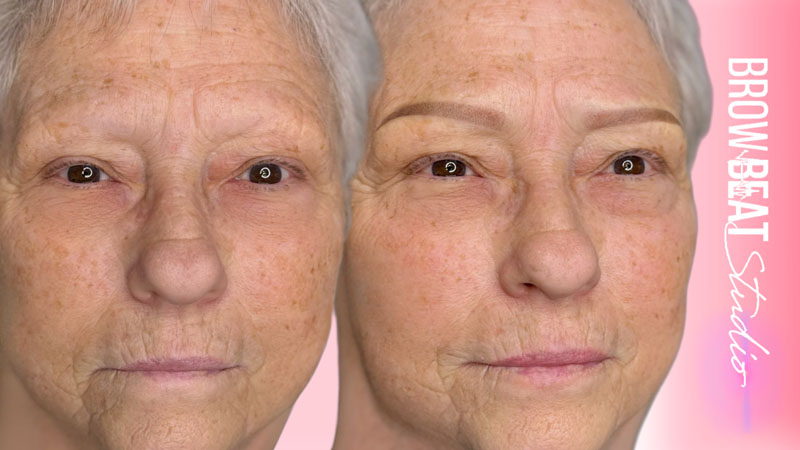
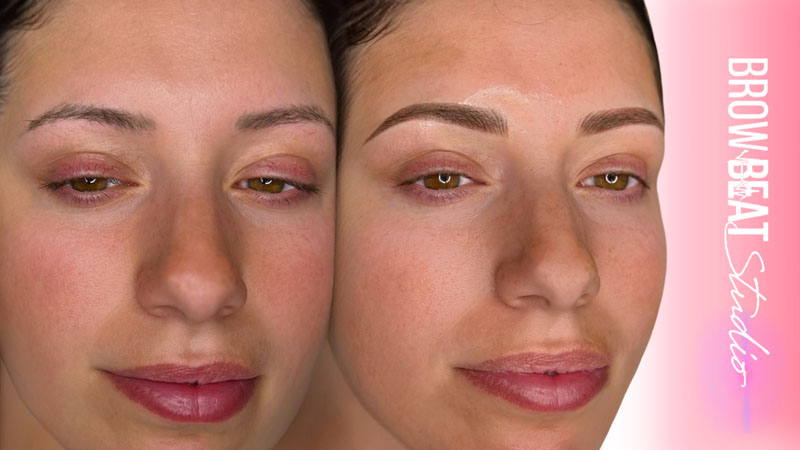
Nano Brows are the machine evolution of permanent eyebrow hairstrokes. The word nano essentially means very small. In permanent makeup, Nano Brows use a PMU machine and a very fine needle configuration—often a single needle—to create individual hair-like strokes through the eyebrows.
The finished look can be remarkably similar to Microblading. That is important because Nano Brows are sometimes marketed as though they create an entirely different visual category of eyebrow. They do not have to.
Both techniques can create fine, realistic permanent hairstrokes. The major difference is how those strokes are placed into the skin. Microblading creates a hairstroke through a manual cutting motion.
Nano creates a hairstroke through repeated machine perforations. Those are different implantation methods capable of producing a very similar visual idea: an eyebrow built from individual permanent hair-like strokes.
At BrowBeat Studio Dallas, we offer Nano Brows because there are clients for whom soft machine hairstrokes can be beautiful. But Nano is not the right technique simply because it is newer. The natural eyebrow still matters.
The skin still matters. And perhaps most importantly, what the client actually wants her finished eyebrows to look like matters. Nano is at its best when the client wants less.
Less visual weight. Less solid coverage. More visible separation between individual strokes.
More of a wispy, hair-like eyebrow effect. When that matches the starting brow and the client’s expectations, Nano Brows can be incredibly natural.

Imagine already liking your eyebrows but wishing they looked slightly more complete without adding a filled-in makeup effect. Nano Brows can provide that extra detail through fine machine-created hairstrokes placed among existing hair. This BrowBeat Studio Dallas result includes a magnified view of the eyebrow’s middle section, revealing how delicate the permanent lines are. From normal viewing distance, the strokes contribute to one cohesive eyebrow rather than drawing attention to themselves. For Dallas clients seeking soft, hair-like permanent brows, that understated detail is often the entire appeal.
Some clients love the airy appearance of individual hairstrokes but feel their eyebrows need slightly more definition between those lines. This BrowBeat result shows fine machine-created strokes alongside delicate background shading, creating a softly enhanced eyebrow without an overly heavy appearance. The visual effect offers a little more density while preserving recognizable hair-like detail. At BrowBeat Studio Dallas, pure Nano refers to machine hairstrokes, while added shading creates a combined effect. For clients exploring Nano Brow results in Dallas, seeing these differences helps communicate the finish they actually prefer.


A softly textured brow front can be beautiful, but some clients prefer the remaining eyebrow to have more visible structure. This result shows delicate machine-created hairstrokes at the head transitioning into additional shaded definition through the body and tail. The magnified tail reveals how that stronger finish contributes to the complete shape. At BrowBeat Studio Dallas, clients can use examples like this to explain the balance they want between softness and definition. The result combines hairstrokes and shading rather than representing a pure Nano stroke-only treatment.
Nano Brows are designed to look like eyebrow hair rather than a continuous field of shading. Up close, the permanent makeup is made from individual machine-created strokes. From normal viewing distance, those strokes can blend with the client’s existing eyebrow hair and create the appearance of a more complete brow. The result can be:
But those words describe a particular type of result. Nano is not naturally a dense technique — it is a hairstroke technique. That distinction becomes extremely important when deciding whether Nano actually matches what a client is asking for.
This is probably the simplest way BrowBeat can explain Nano Brows. Nano is beautiful when less is the goal. If you want to look closely at your eyebrows and still see individual permanent hairstrokes with skin showing between them, Nano makes sense.
If you want a very light enhancement to an already good natural eyebrow, Nano can make sense. If you want to fill smaller gaps while preserving a wispy appearance, Nano can make sense. If you want soft machine hairstrokes that blend into fine natural brow hair, Nano can be a beautiful option.
But if what you actually want is significant density, stronger definition or consistent coverage throughout the entire eyebrow, then you are asking a hairstroke technique to behave like something it is not. That does not make Nano a poor technique. It means the result and the technique need to match.
Permanent makeup does not exist separately from the natural eyebrow. The most believable Nano results usually happen when the permanent strokes have something compatible to blend with. Fine natural brow hair is an excellent starting point.
Hair that lies relatively close to the skin is helpful. Relatively even spacing through the natural brow gives permanent strokes room to integrate into the existing pattern. A client who already has a generally good eyebrow but wants a little more continuity, definition or fullness can therefore be an excellent Nano candidate. In that situation, the permanent makeup is supporting the natural brow rather than trying to completely rebuild it.
There is no single perfect eyebrow required for Nano. But some starting points make it much easier to create the soft, believable hairstroke result people associate with the technique.
Fine natural hair can blend beautifully with machine-created Nano hairstrokes. The difference in visual weight between the real hair and the permanent stroke is smaller, which helps the finished eyebrow read as one integrated pattern. This is one of Nano’s strongest starting points.
Hair that sits relatively flat can make permanent hairstrokes easier to integrate visually. The tattooed strokes live within the skin. When the natural hairs also sit close to that surface, the two can work together particularly well.
A client does not need a completely full eyebrow. But relatively even natural hair distribution can give Nano strokes a believable framework to work within. The artist can add where needed without having to use hairstrokes to solve an enormous difference between extremely dense areas and completely empty areas.
Nano can be particularly useful when the basic eyebrow already works but has smaller areas where additional hair-like texture would improve continuity. Those strokes can visually bridge gaps without changing the entire eyebrow into a shaded result.
Some clients genuinely do not want a highly defined permanent eyebrow. They want air between the strokes. They want texture.
They want to see skin. They want their permanent makeup to feel almost like a few additional eyebrow hairs were placed exactly where they were needed. That is where Nano can be at its most beautiful.
Nano does not have to begin with a brow problem. A client may already like her natural eyebrows and simply want them improved. A little more structure through the front.
A few more visible hairs through a sparse section. A slightly stronger tail. Better continuity from one part of the brow to another. When the starting brow is already strong, a subtle permanent hairstroke technique can add without overwhelming it.

Not everyone considering Nano Brows is trying to correct a dramatic eyebrow concern. Some clients already have attractive natural brows and simply want a little more visible texture. This magnified BrowBeat result shows individual permanent hairstrokes working among fine existing eyebrow hairs, adding detail without overwhelming the original shape. The pigmentation support the brow rather than replacing it. For Dallas clients who already like their eyebrows but want them to look slightly more complete, Nano can offer a refined enhancement that preserves the character of their existing hair.
A beautifully defined eyebrow does not always require continuous permanent color. This close-up Nano result shows individual machine-created hairstrokes with visible skin remaining between them, giving the eyebrow an open, airy appearance. The spacing allows the permanent lines to read as separate hairs rather than one solid field of pigment. At BrowBeat Studio Dallas, this is a particularly appealing result for clients who dislike heavily filled brows but still want greater definition. The finished eyebrow has more presence while retaining the light texture that makes Nano hairstrokes distinctive.


A convincing eyebrow has movement. The hairs near the front grow differently from those through the body, arch and tail, and permanent hairstrokes should respect that visual flow. This magnified Nano result reveals how individual machine-created lines change direction across the eyebrow rather than repeating one identical angle. At BrowBeat Studio Dallas, the goal is a complete brow that looks cohesive from beginning to end. For clients reviewing Nano Brow results, this kind of detail helps explain why a realistic permanent eyebrow involves more than simply drawing thin lines.
The appeal of Nano Brows is often found in the finished eyebrow rather than any single permanent stroke. This magnified result shows fine machine-created hairstrokes contributing to a more complete shape while existing natural hair remains clearly visible. The permanent work adds continuity without creating the appearance of a heavily drawn-on brow. At BrowBeat Studio Dallas, this type of enhancement suits clients who prefer a softer cosmetic result and want their eyebrows to remain visibly hair-like. The difference may be subtle up close, but meaningful when looking at the complete face.

The other side of good Nano work is knowing when hairstrokes are being asked to solve the wrong problem. Many clients arrive saying they want Nano because they have seen beautiful close-up photographs of machine hairstrokes. But when we start talking about what they actually want their eyebrows to look like, they describe something different.
They want density. They want significant coverage. They want the entire brow to look consistently filled.
They want large empty areas to disappear. Those are not necessarily hairstroke goals. At BrowBeat, technique follows the result rather than the trend.
Very coarse, wiry natural brow hair can be difficult to imitate convincingly with fine tattooed strokes. The natural hairs may sit high above the skin, curve strongly or move in several different directions. A delicate permanent line underneath them may not create the integrated texture the client imagined. The natural hair pattern has to be considered before deciding that adding more lines is the answer.
Some eyebrows have a beautifully consistent growth pattern. Others do not. Hairs may cross, curl, point downward, stand outward or change direction abruptly through different sections of the brow. Trying to insert a perfectly organized permanent hairstroke pattern underneath a highly irregular natural pattern can sometimes create more visual activity rather than greater harmony.
Hairstrokes can fill gaps. But there is a difference between filling a small sparse area and trying to use delicate tattooed strokes to visually equal the density of a neighboring area packed with coarse natural hair. The greater that contrast becomes, the harder it is for a stroke-only technique to create consistent visual density.
If the sentence you keep repeating is: “I want more coverage,” then we should pay attention to that.
Nano creates hairstrokes. Coverage is created more naturally by techniques designed to place a field of color through the brow. Choosing Nano and then asking the artist to keep adding more and more strokes until almost no skin remains visible defeats much of the reason for choosing a hairstroke technique in the first place. The technique should support the result rather than fight it.
Nano is often presented as the new generation of hairstroke brows. In one sense, that is fair. The machine gives artists another way to create permanent hair-like strokes without using the manual cutting motion associated with Microblading. But newer does not mean universally better. Nano still creates hairstrokes. And hairstrokes still have the basic limitations of a stroke-based result.
They need enough space to remain visually separate. They are not the most efficient way to create substantial density. They soften as permanent makeup ages. And the quality of the healed result still depends heavily on skin, application, depth and the natural eyebrow the strokes are trying to imitate. Nano expands the hairstroke toolbox. It does not eliminate the need to choose the right technique for the right brow.
If you placed an excellent Nano Brow result beside an excellent Microblading result, many clients would not immediately know which technique created which eyebrow. That is because both techniques are trying to create the same visual language: individual permanent strokes that resemble eyebrow hair.
The difference is primarily in the implantation method. Microblading uses a manual hand tool to create the stroke through a controlled cutting motion. Nano uses a PMU machine and a fine needle to build the stroke through repeated perforations.
From a client’s perspective, that difference matters—but it should not distract from the more important question: Do hairstrokes actually suit the eyebrows and the result you want? If the answer is yes, Nano can be an excellent machine-based way to create them. For clients deciding specifically between these two hairstroke techniques, our Nano Brows vs. Microblading guide compares them in greater detail.
This is the defining identity of Nano Brows. Nano is not machine shading. It is not Powder Brows. It is not Combo Brows. The PMU machine is being used to create individual hairstrokes. That distinction matters because several permanent brow techniques use a machine but create very different visual results.
Nano Brows = machine-created hairstrokes. Powder and Ombré Brows = machine-created shading. Combo and Hybrid Brows = hairstrokes combined with shading. The tool alone does not define the finished eyebrow. What the artist creates with that tool does.

The word nano refers to something extremely small. In the permanent makeup world, the name became associated with the very fine needle configurations used to create machine hairstrokes. At BrowBeat, Nano Brows means hairstroke-style permanent eyebrows created with a PMU machine rather than Microblading’s manual hand tool.
The purpose of the word is not to promise that every healed stroke will remain microscopically thin forever. Permanent pigment lives in skin. Fresh strokes soften as they heal and continue aging over time. “Nano” describes the machine hairstroke technique—not a guarantee that permanent pigment will remain frozen at fresh-photo sharpness.
Not necessarily. The terminology online is inconsistent. Some people use nanoblading as though it were simply another name for Nano Brows.
Others use it to describe a very fine manual blade technique. Those are not the same procedure. That is why BrowBeat prefers the clearer term Nano Brows for machine-created hairstrokes.
If you are researching an artist who uses the word “nanoblading,” ask what tool is actually creating the stroke. If a manual blade is creating it, that is different from the machine Nano technique described on this page.
Some clients specifically prefer the idea of machine-created hairstrokes. The machine creates the line through a sequence of tiny needle perforations rather than a manual cutting motion. That changes what is happening mechanically in the skin even though the visual result can resemble Microblading. It also gives the artist a different way to control the creation of the stroke. But machine application does not remove the importance of depth. Nano is still permanent makeup.
The pigment still needs to be implanted appropriately. Too superficial and the healed result may retain poorly. Too much depth and the stroke can lose the fine visual character that made a hairstroke technique desirable in the first place. The machine changes the method. It does not remove the need for skilled application.
This is important because Nano is sometimes marketed as though moving from a manual tool to a machine solved every long-term problem associated with permanent hairstrokes. It did not. A Nano stroke is still a permanent line of pigment within skin. It can soften. It can become less distinct over time. Closely packed strokes can lose visual separation as they age.
And retention varies from client to client. In BrowBeat’s experience, Nano does not last longer than Microblading simply because a machine created the strokes. Machine hairstrokes can sometimes be more challenging to establish at an effective depth, and a very superficial Nano application may have a relatively short visible life. This is one reason we do not sell Nano with the promise that it is a longer-lasting version of Microblading. It is another way of creating hairstrokes.
When clients want more density, the natural instinct can be: “Just add more strokes.” But there is a point where that stops making sense.
Hairstrokes need negative space. The skin visible between the lines is part of what allows the eye to read each line as a separate hair. If more and more permanent strokes are packed into the same area, that separation decreases.
Freshly, the result may look extremely detailed. But permanent makeup does not stay fresh forever. As pigment heals and ages, very closely packed strokes can begin to visually merge. If the client wants a brow with very little visible skin between permanent pigment, a shading-based technique may express that goal more honestly from the beginning.
Nano works beautifully when the objective is to create the appearance of a few more hairs. A gap can be bridged. A sparse front can gain additional texture. A tail can become more complete. An area where natural hair becomes inconsistent can gain better continuity. The result is visual density created through separate hairstrokes.
That is different from coverage. Density says: “I want this brow to look like it has a few more hairs.” Coverage says: “I want this entire area to look filled.” Those goals can require different techniques.
Existing natural brow hair can be one of Nano’s greatest advantages. The permanent strokes do not have to carry the entire visual responsibility for the eyebrow. They can sit among real hairs and support them.
When the natural hair is fine, relatively organized and compatible with the stroke pattern, it can become difficult at normal viewing distance to identify exactly where natural hair stops and permanent hairstroke begins. That is the type of integration that makes Nano particularly convincing. The client still looks like she has eyebrows made from hair. There are simply more visible “hairs” than nature originally provided.

The word sparse covers an enormous range. A client with an otherwise healthy brow and a few thin sections can be an excellent Nano candidate. A client with large areas of complete brow loss is asking the permanent makeup to do a much larger job.
That difference matters. Nano can create hairstrokes in sparse areas, but the finished result still needs to make visual sense next to whatever natural hair remains. The more dramatic the difference between dense natural hair and completely empty skin, the harder a stroke-only technique has to work to create consistent visual fullness.
Fine brow hair is one of our favorite starting points for Nano. The machine hairstrokes can be designed at a visual weight that complements the existing hair rather than competing with it. The natural hairs and tattooed strokes can work together to create a soft, layered eyebrow texture. This is particularly effective when the client wants enhancement rather than dramatic reconstruction.
Nano can make an eyebrow look fuller by adding the appearance of additional hairs. It does not grow new hair. It does not physically change the density of the natural follicles.
The fullness is visual. For a client who already has a good framework and wants a little more presence, that may be exactly enough. For someone who wants a strongly filled brow from front to tail, individual hairstrokes may not create the level of coverage she is imagining.
“Natural” is one of the most overused words in permanent makeup. It is often treated as though natural means barely noticeable. It does not.
A natural-looking Nano Brow can still have beautiful definition. The strokes can still clearly improve the shape. The brow can still look fuller.
What makes it natural is that the permanent work makes visual sense with the client’s face and existing brow hair. The stroke pattern, color, spacing and overall design work together. Natural is about believability—not invisibility.
Fine machine strokes are part of Nano’s appeal. Freshly created, they can appear extremely crisp and detailed. But BrowBeat believes clients should understand the difference between a fresh photograph and a permanent healed result.
Skin is not paper. Pigment does not remain an untouched line sitting on the surface. The strokes soften as the skin heals around the implanted pigment.
That does not mean the result stops being hair-like. It means healed permanent makeup should be judged as healed permanent makeup rather than against the sharpest close-up photograph taken immediately after treatment. For the full fresh-to-healed journey, see Nano Brows Healing & Aftercare.
Nano Brows should not begin with a standard eyebrow shape that is simply transferred from one client to the next. The natural eyebrow gives us information. Where does the hair already grow? Where is it strongest? Where does it become sparse? What direction does the natural hair travel?
Where does the existing brow begin and end? And how much change does the client actually want? Those questions matter even more with hairstrokes because the pigmentation need to make sense as part of an eyebrow hair pattern. The objective is not simply to create a beautiful outline and fill it with lines. The permanent strokes need to belong inside the eyebrow.
Mapping establishes the overall shape before permanent machine hairstrokes are created. At BrowBeat, this is part of the appointment. The client sees the design before permanent work begins and has time to look at it, discuss it and request appropriate adjustments.
Some clients approve their mapping quickly. Others want to sit up, look again, compare both brows and make sure the shape feels like them. That decision time matters.
It is your face. Once the overall design is established, the individual Nano hairstrokes can be planned within that structure.
Natural eyebrow hair does not grow like a row of identical fence posts. Hair direction changes through the eyebrow. The front behaves differently from the body. The arch and tail have their own visual movement. There are differences in spacing. Some hairs overlap.
Some areas are naturally more open. A realistic Nano Brow therefore needs more than thin lines. The permanent pattern has to read like eyebrow hair. That does not mean copying every natural hair individually. It means designing a permanent texture that makes visual sense beside the client’s existing growth.

Some clients want their permanent eyebrows to look as though they have gained a few additional hairs rather than a layer of makeup. This open Nano pattern illustrates that preference with individual machine-created strokes and generous space between them. The result is designed to feel light, textured and visibly hair-like. At BrowBeat Studio Dallas, pure Nano Brows follow this stroke-based approach. For clients who prefer softer eyebrow definition and dislike solid coverage, an airy pattern can communicate the appearance they are hoping to achieve before their permanent brow appointment.
Not every client wants the lightest possible eyebrow. Some prefer visible hair-like texture but also enjoy a little more cosmetic definition throughout the shape. This illustration shows individual machine-created strokes with shading layered across the brow, creating a fuller visual effect than pure Nano alone. At BrowBeat Studio Dallas, examples like this help clients recognize how much permanent color they actually want to see. Although the result contains Nano-style strokes, the additional shading makes it a combined effect. The important choice is the finished appearance rather than the technique label.


Some clients like a delicate brow front but prefer a little more color through the middle, where the eyebrow provides much of its visible structure. This illustration shows individual machine-created hairstrokes alongside shading concentrated through the central brow. The result creates a different balance between texture and definition without making every section equally dense. At BrowBeat Studio Dallas, visual examples help clients communicate these preferences before permanent work begins. The shading makes this a combined treatment effect, but the image demonstrates how small changes in pigment placement can alter the finished appearance.
An eyebrow can begin with delicate individual hairstrokes and gradually transition into a more defined body and tail. This illustration shows that visual progression, with machine-created front strokes giving way to shaded permanent color through the remaining brow. The result appeals to clients who enjoy the softness of visible hairs at the front but want stronger structure elsewhere. At BrowBeat Studio Dallas, we use examples like this to understand the client’s preferred balance of texture and definition. Because shading is included, the result represents a combined effect rather than pure Nano alone.

The empty skin between Nano strokes is part of the design. Without that negative space, the eye has less ability to distinguish one permanent stroke from the next. This is why BrowBeat does not believe that more strokes create a better Nano Brow.
There has to be room for the hairstroke effect to breathe. That becomes even more important when we think about how permanent pigment ages. A fresh Nano stroke can look incredibly fine.
Over time, permanent pigment naturally softens. If the strokes began extremely close together, that softening can make the spaces between them less distinct. Thoughtful spacing is therefore part of both the fresh design and the long-term appearance.
Nano Brow color should work with the client’s existing eyebrow hair and overall coloring. The objective is not to select the darkest pigment available simply because a stronger color is easier to see. A blonde client may need a much softer brow direction than someone with naturally deep brunette hair.
A medium-brown brow may need enough depth to blend with the existing hair without becoming unnecessarily heavy. And clients with very dark natural brow hair still need a pigment choice that makes sense once it heals within the skin. The pigment bottle is only the starting point. The healed color is what matters.
Blonde Nano Brows can be particularly delicate. When natural eyebrow hair is light and fine, a heavy permanent brow can overpower it quickly. Machine hairstrokes allow the artist to introduce additional visible structure while preserving spaces between the strokes.
The goal is not to turn a naturally light brow into a dark eyebrow. It is to create enough permanent definition for the brow to become more complete while still belonging to the client’s natural coloring.
Darker natural hair can support greater visual depth, but that does not mean every brunette needs an extremely dark permanent pigment. The existing brow hair already contributes a large amount of visible color. The Nano strokes need to integrate with that hair rather than sitting underneath it as unnecessarily dark tattoo lines. Color selection should support the natural brow pattern and the result the client wants.
Nano Brows are not limited to one complexion. Machine-created hairstrokes can be designed for clients across a broad range of skin tones. What changes is the relationship between pigment, skin characteristics, natural brow hair and the desired result.
The question is not simply whether someone’s skin is light, medium or deep — it is whether a hairstroke technique makes sense for the actual skin and eyebrow in front of us. For clients trying to determine whether their particular skin characteristics and natural brow pattern suit Nano, see Who Is a Good Candidate for Nano Brows?.
Nano Brow before-and-after photographs should show more than a new eyebrow shape. They should show what machine hairstrokes actually contributed. Did they fill smaller gaps?
Did they create greater continuity through a fine natural brow? Did they add texture without making the eyebrow look solid? Did the permanent strokes blend with the client’s natural hair?
Did the finished brow still look believable at normal viewing distance? Those are the questions that make a Nano before-and-after useful.
When looking at Nano Brow photographs, zooming in is useful—but zooming out is equally important. A macro photograph may show beautifully fine individual strokes. But eyebrows live on a face.
Step back and look at the entire result. Does the brow suit the client? Does the density make sense beside the natural hair?
Does the front look believable? Does the tail belong to the same eyebrow? Does the shape enhance the face without becoming the first thing you notice? A technically beautiful stroke pattern still needs to create a beautiful eyebrow.
Fresh Nano Brows can look exceptionally crisp. The individual lines are newly created, the pigment is fresh and the skin has not yet completed its healing response. Healed Nano Brows are the more meaningful evidence of how the technique actually performed.
The strokes will generally be softer. The color will be less intense. The relationship between the permanent lines and the natural eyebrow hair becomes easier to evaluate.
This is why BrowBeat believes healed work matters when choosing a permanent makeup artist. The goal is not to own beautiful Nano Brows for one photograph at the end of the appointment. The goal is to have a result that continues making sense after the skin heals.
Nano Brows are permanent makeup, but the visible hairstrokes gradually soften and fade over time. They should not be sold as permanent lines that remain unchanged indefinitely. Individual retention depends on the skin, application, pigment, depth, lifestyle and other factors.
Because Nano relies on visible separation between individual strokes, long-term appearance matters just as much as whether pigment technically remains in the skin. A stroke can still contain pigment while becoming softer and less distinct than it was when fresh. For a full explanation of retention, fading, stroke softening and maintenance, see How Long Do Nano Brows Last?.

No. The fact that Nano uses a machine does not create a universal longevity advantage. In BrowBeat’s experience, very superficial machine hairstrokes can sometimes have a shorter visible life than clients expect.
Nano also has its own depth challenges. The artist needs enough implantation for retention while still maintaining the fine character of the stroke. Skin type, technique, depth and the way the individual client retains pigment all matter.
This is why BrowBeat does not market Nano as simply “Microblading that lasts longer.” They are two different ways to create permanent hairstrokes.
Nano and Powder Brows can both be created with a PMU machine, but the visual objective is different. Nano uses the machine to create separate hairstrokes. Powder Brows use the machine to build shading and coverage.
If you want visible individual hairs and skin showing between them, Nano may align more closely with that goal. If you want consistent color and density throughout the brow, shading may make more sense. The fact that both techniques use a machine does not make them the same service. For the full decision comparison, see Nano Brows vs. Powder & Ombré Brows.
Nano is a stroke-based result. Combo and Hybrid Brows combine hairstrokes with shading. That additional shading changes the amount of coverage and visual density available through the eyebrow.
A client who likes the idea of hairstrokes but repeatedly asks for more filled-in areas may ultimately be describing a combined technique rather than Nano alone. For a detailed comparison, see Nano Brows vs. Combo & Hybrid Brows.
Nano Brow pricing reflects more than the amount of time the machine is physically creating strokes. The appointment includes evaluation of the natural brow, mapping, design, color decisions, client feedback, permanent hairstroke application and the time required to create the result carefully. Experience also matters because the artist is making decisions about stroke placement, spacing, depth and how the permanent work should interact with the natural eyebrow. For BrowBeat’s complete pricing discussion, see Nano Brows Cost & Pricing.
Nano Brows are a permanent makeup procedure, so clients can expect some sensation while the machine-created hairstrokes are being placed into the skin. Numbing is used as part of the BrowBeat appointment to make the procedure more comfortable. Individual sensitivity varies.
Some clients are very relaxed throughout permanent brow procedures, while others are naturally more sensitive. The important distinction is that Nano uses a machine and fine needle perforations rather than the manual cutting motion used to create Microblading strokes. For a full explanation of the Nano Brow procedure, numbing, mapping and machine application, see What Are Nano Brows & How Do They Work?.
BrowBeat permanent makeup appointments are not designed around rushing a client through the chair. Time is needed before permanent work begins. The natural eyebrows need to be evaluated. The shape needs to be mapped. The client needs to look at the design and participate in the decisions being made about her face. Color needs to be considered.
Then the individual machine hairstrokes have to be created carefully within that design. Some clients make decisions quickly. Others want to look again. They may sit up, check the brows from another angle or request a small adjustment. That is part of the appointment. We realize it is your face. Permanent makeup should leave enough room for careful decisions rather than treating mapping and client feedback as obstacles to finishing quickly.
Fresh Nano Brows are not the final appearance. The color begins stronger. The strokes can look particularly crisp.
Then the skin moves through its normal healing response and the permanent pigment begins settling. The finished healed result is softer than the immediate fresh work. Aftercare also matters because the skin needs time to recover without unnecessary interference. The full healing timeline, aftercare instructions and fresh-to-healed changes belong in our Nano Brows Healing & Aftercare guide.

The strongest Nano candidates generally have a good starting eyebrow and genuinely want a hairstroke result. Fine natural hair can be an excellent match. Hair that sits relatively close to the skin can blend beautifully with permanent machine strokes.
Small gaps and mildly sparse areas can be ideal opportunities for additional hair-like texture. And clients who specifically want a wispy, light permanent eyebrow can be very well suited to Nano. The more the client asks for dense coverage, the more important it becomes to question whether a stroke-only technique still matches the goal.
Skin characteristics matter too. For a deeper candidacy discussion, see Who Is a Good Candidate for Nano Brows?.
If you are searching for a Nano Brow artist in Dallas, look specifically for machine-hairstroke work. Do not assume that every permanent makeup portfolio demonstrates the same experience. Look at different clients.
Look at fine natural brows. Look at brows with existing hair. Look at close-up stroke patterns.
Then look at the entire face. Most importantly, look for healed Nano results when they are available. A fresh photograph demonstrates what the artist created that day. A healed photograph demonstrates what remained after the skin completed the first part of the process.
A Nano Brow artist should understand more than how to make a thin line with a machine. Look for evidence of:
That final point matters. A good permanent makeup artist should not need every client to choose the same technique. The technique should make sense for the eyebrow.
BrowBeat Studio Dallas approaches Nano as a specialized hairstroke option rather than a trend that replaces every other permanent brow technique. We like Nano when the starting point supports it. We like it when a client genuinely wants a light, wispy eyebrow.
We like it when fine natural hair gives the permanent strokes something believable to blend with. And we like it when adding a relatively small amount of permanent texture can make an already good eyebrow more complete. We are equally interested in recognizing when the client’s request has moved beyond what hairstrokes do best.
If the goal is substantial density, broad coverage or a consistently filled eyebrow, the right answer may not be “add more Nano strokes.” Technique selection should begin with the desired result.
BrowBeat’s Nano Brow portfolio should be read as a collection of different starting points rather than examples of one standard eyebrow. Some clients begin with fine natural hair and a few gaps. Some need more structure through the front.
Some want a stronger tail. Some want the lightest possible permanent enhancement. Others want clearly visible hairstrokes while still maintaining skin between them.
Those differences are useful. They show what Nano can do when the technique is adapted to the person rather than forcing every client into the same result.
A natural Nano Brow should make sense on the client’s face. It should make sense beside her existing hair. The permanent strokes should support the brow rather than compete with it.
The color should belong. The density should belong. And the finished shape should still feel like the client’s eyebrow. That is more important than simply creating the maximum possible number of tiny lines.
Nano can be extremely worthwhile for the right client. The key phrase is the right client. If you have a good natural starting brow and want soft, wispy permanent hairstrokes, Nano may give you exactly the kind of enhancement you have been looking for.
If you want strong coverage, maximum density or a heavily filled permanent eyebrow, you may be asking Nano to produce a result better suited to another technique. There is no prize for choosing the newest-sounding service. The value comes from choosing the technique that creates the eyebrow you actually want.
If you are considering Nano Brows at BrowBeat Studio Dallas, the design decisions are part of your appointment. We look at your natural eyebrow hair. We look at the way it grows.
We discuss how much permanent definition you actually want. We map the brows. You look at them.
And only then do we move into permanent machine hairstrokes. Nano can be beautifully soft, wispy and realistic. Its strongest results happen when the starting eyebrow, the skin and the client’s expectations all support what hairstrokes are designed to do.

Yes. Machine-created hairstrokes are the defining feature of Nano Brows. The PMU machine is used to create separate hair-like lines rather than the field of shading used for Powder or Ombré Brows.
The natural eyebrows are evaluated and mapped before permanent work begins. A PMU machine and fine needle are then used to create individual hairstrokes within the planned brow design. Numbing is used during the procedure for comfort.
Yes. Nano Brows are cosmetic tattooing and permanent makeup. The visible strokes gradually soften and fade over time, but the procedure should be approached as permanent pigment placed within the skin.
They can look extremely natural when the starting eyebrow and desired result suit a hairstroke technique. Fine natural hair, good stroke spacing and a believable hair pattern can allow permanent machine strokes to blend closely with the client’s existing eyebrow hair.
Neither technique is better for every client. They create hairstrokes through different implantation methods. The more important decision is whether a hairstroke result suits the client’s natural brow, skin and desired level of density.
No. Nano uses a machine, but that does not create a universal longevity advantage. Depth, skin characteristics, application, pigment and individual retention all influence how long machine hairstrokes remain visibly distinct.
Yes. Existing natural hair can help Nano strokes look particularly believable because the permanent lines can blend among real eyebrow hairs rather than carrying the entire visual responsibility for the brow.
Yes. Nano can work beautifully with fine blonde eyebrow hair when the pigment and stroke weight are selected to support the client’s natural coloring rather than overpower it.
Look specifically for machine-hairstroke work, realistic stroke patterns, appropriate spacing, custom shapes and results across different natural brows. Healed Nano photographs are particularly valuable because they show how the machine strokes actually settled into the skin.
Nano can be very worthwhile for a client with a good starting brow who wants soft, wispy, hair-like permanent enhancement. The technique is less well matched to someone whose primary goal is strong coverage or a densely filled permanent eyebrow.